Choosing between the best forex brokers Malaysia traders can actually open an account with comes down to three things most listicles skip: what a round-turn trade really costs you, how you get Ringgit into a USD-denominated account without bleeding on conversion, and whether the broker is licensed by anyone who can help you if something goes wrong. This guide covers all three, with figures verified in July 2026.
- Best Forex Brokers in Malaysia at a Glance
- Is Forex Trading Legal in Malaysia? What BNM and the SC Actually Say
- The licensing rule
- Where the offshore brokers stand
- Check the two alert lists before you deposit
- The fully domestic alternative
- Top 10 Best Forex Brokers Malaysia Reviewed
- 1. IG — Best Overall
- 2. Interactive Brokers — Best for Serious and Multi-Market Traders
- 3. Saxo — Best Platform Suite and Asset Range
- 4. FOREX.com — Best Mobile Trading Experience
- 5. XTB — Best for Beginners Who Want One Clean Platform
- 6. Pepperstone — Best for Scalpers and EA Users
- 7. IC Markets — Tightest Raw Spreads for Algo Traders
- 8. XM Group — Lowest Barrier to Entry
- 9. AvaTrade — Best Education and Risk Tools
- 10. Exness — Best MYR Funding and Local Payment Rails
- Also Worth Considering
- How to Choose a Forex Broker in Malaysia: A 6-Point Framework
- What Forex Trading Actually Costs: A Worked Example
- Forex Trading Tax in Malaysia
- Funding a Forex Account From Malaysia
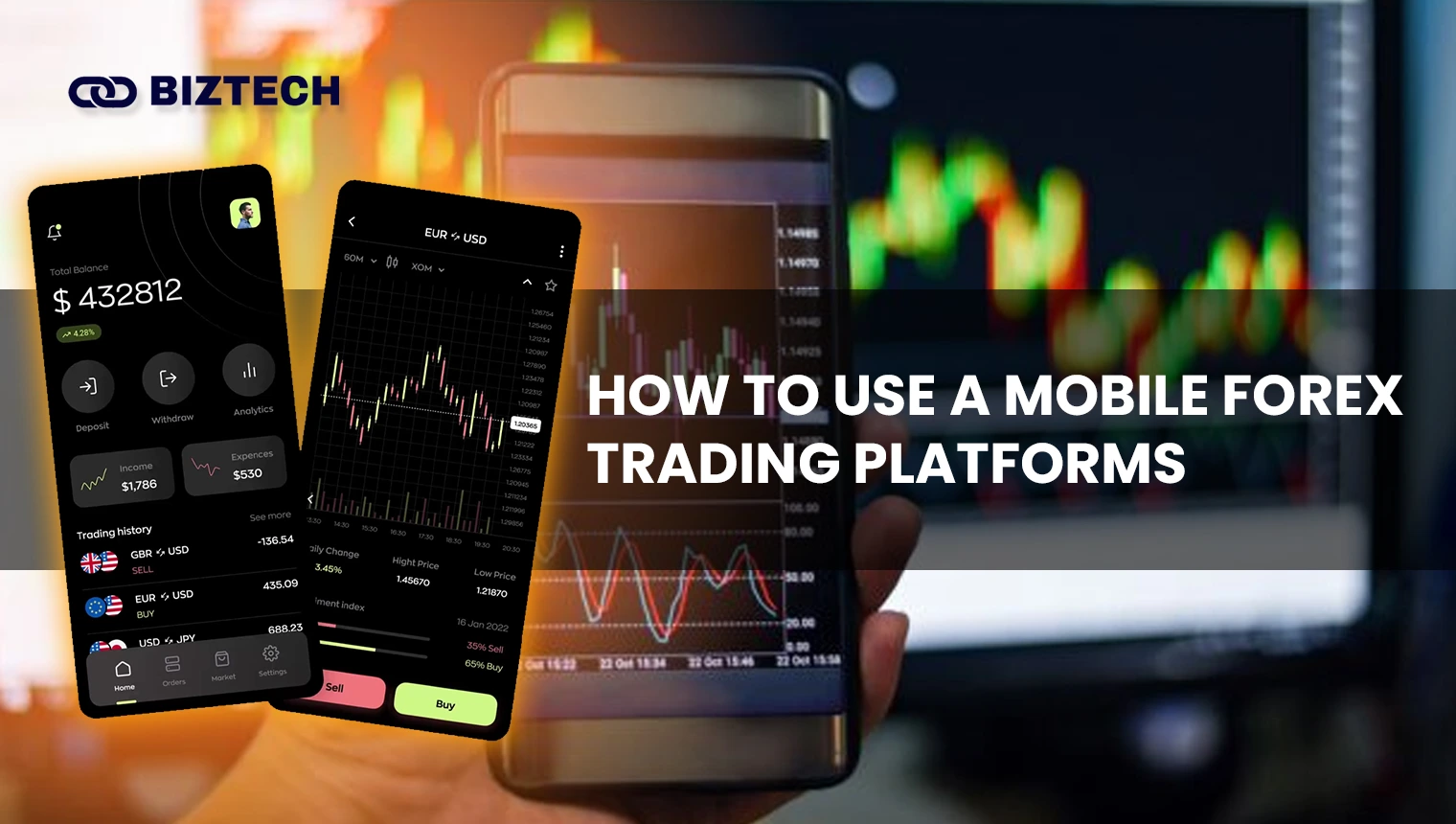
- How to Open and Use a Mobile Forex Account
- Step 1 — Open and verify the account
- Step 2 — Download the right app
- Step 3 — Deposit
- Step 4 — Start on demo, then go small
- Step 5 — Trade a written plan
- Common Mistakes Malaysian Forex Traders Make
- Pros & Cons of Mobile Forex Trading
- Conclusion
- Forex Risk Disclaimer
- Frequently Asked Questions
One thing to be upfront about before you read any further: almost none of the big international forex brokers hold a Malaysian licence. That does not automatically make them scams — several are among the most heavily regulated firms in the world — but it does change your risk profile, and any guide that glosses over it is not doing you a favour. We deal with that properly in the regulation section below.
Best Forex Brokers in Malaysia at a Glance

Spreads below are typical averages on EUR/USD in a standard account. Raw-spread accounts show tighter numbers but add a commission — see the cost section for how to compare them fairly.
| Broker | Best for | Min. deposit | Typical EUR/USD spread | Main regulator for MY clients | MYR-friendly funding |
|---|---|---|---|---|---|
| IG | Best overall | ~US$50 by card | ~0.9 pips | MAS (Singapore); 8 Tier-1 licences globally | No — USD/SGD account, card or TT |
| Interactive Brokers | Serious & multi-market traders | US$0 | ~0.2 pips + commission | MAS (Singapore) | Yes — MYR via Wise or bank wire |
| Saxo | Platform quality & asset breadth | US$0 (Classic) | ~1.0–1.1 pips | MAS (Singapore) | No — USD/SGD base currency |
| FOREX.com | Mobile-first traders | US$100 | ~1.0 pips | MAS (Singapore); StoneX is NASDAQ-listed | No |
| XTB | Beginners who want one clean platform | US$0 | ~0.9 pips | FCA (UK), CySEC (Cyprus) | No |
| Pepperstone | Scalpers & EA users | US$0 (≈US$200 advised) | From 0.0 + ~US$3.50/side | FCA, ASIC, CySEC, DFSA | No |
| IC Markets | Raw spreads & algo trading | US$200 | ~0.1 pips + ~US$3.50/side | ASIC, CySEC, FSA (Seychelles) | No |
| XM Group | Smallest starting balance | US$5 | ~2.0 pips (Standard) | CySEC, ASIC, IFSC | No |
| AvaTrade | Education & risk tools | US$100 | ~0.9 pips | CBI (Ireland), ASIC, FSCA and others | No |
| Exness | MYR funding & local bank rails | US$10 | Varies by account type | FCA, CySEC, FSA (Seychelles) | Yes — MYR base currency, local banks |
Spreads, minimums and licences verified July 2026. These figures move — confirm on the broker’s own site and check which legal entity your account will sit with before you deposit.
Read more: Best Share Trading Malaysia Platforms to Use
Is Forex Trading Legal in Malaysia? What BNM and the SC Actually Say
This is the part of the topic that gets handled badly almost everywhere, so it is worth being precise.
The licensing rule
Leveraged forex and CFD trading sits under the Securities Commission Malaysia (SC), which licenses firms through a Capital Markets Services Licence (CMSL). A broker that wants to legally offer these products to Malaysian residents needs that licence. Holding one means the firm must segregate client money, hold adequate capital, disclose pricing transparently and assess client suitability.
Domestically licensed CMSL holders — Phillip Capital and the bank-backed brokers among them — do offer CFDs, but their line-up is generally weighted toward shares and indices rather than the deep FX pair selection an active currency trader wants. Bank Negara Malaysia (BNM), separately, oversees money services businesses and physical currency dealing.
Where the offshore brokers stand
The practical consequence is that Malaysian retail traders who want a genuine forex offering end up with international brokers regulated somewhere else — most commonly Singapore’s MAS, the UK’s FCA, or Australia’s ASIC. That is a legitimate route used by a very large number of Malaysians, but understand what you are trading:
- Your money leaves the country. With IG, Interactive Brokers, Saxo or FOREX.com you are typically onboarded to a Singapore entity under MAS supervision. That is genuinely strong oversight — it is simply not Malaysian oversight.
- Malaysian investor-protection schemes do not cover you. If there is a dispute, you are dealing with a foreign regulator and possibly a foreign court.
- The offence provisions target the operator, not you. Carrying on a regulated activity in Malaysia without a licence is what the law goes after. Commentary differs on the individual trader’s exposure, so if this matters to your circumstances, get proper legal advice rather than relying on a blog — including this one.
Check the two alert lists before you deposit
Both regulators publish public warning lists, and they are the single most useful five minutes of due diligence you can do:
- BNM’s Financial Consumer Alert List — roughly 400 entities that are not authorised or approved under the laws BNM administers. BNM added the well-known retail broker OctaFX to this list in August 2022, alongside its social media accounts.
- The SC’s Investor Alert List — unauthorised websites, products, companies and individuals, updated regularly. OctaFX was added here too, on the basis that it was dealing in derivatives without a licence. The SC has also publicly stated that eToro is not licensed or registered to carry on regulated activities in Malaysia.
An important nuance: appearing on these lists does not always mean a firm is fraudulent. Some are legitimate, well-regulated businesses abroad that simply are not authorised here. But it does tell you exactly where you stand on protection. You can also verify any licence claim directly against the SC’s public register of licensed and registered persons.
The fully domestic alternative
If regulatory cover inside Malaysia is your priority, the licensed route is a CMSL-holding broker trading Bursa Malaysia Derivatives — FKLI (FTSE Bursa Malaysia KLCI futures) and FCPO (crude palm oil futures) are both Ringgit-denominated, exchange-traded and cleared through a central counterparty, which removes broker default risk from the equation. They are still leveraged and still high-risk, but you are inside the Malaysian system. It is not spot FX, and for some traders that trade-off is worth it.
Top 10 Best Forex Brokers Malaysia Reviewed

1. IG — Best Overall
IG is the default answer for most Malaysian traders who want size, safety and a serious platform in one package. It is listed on the London Stock Exchange, holds licences from eight Tier-1 regulators, and Malaysian clients are typically onboarded to IG Singapore under MAS supervision — the closest thing to Tier-1 oversight in this region that an offshore broker can offer.
Average EUR/USD spread runs around 0.9 pips, and the platform suite gives access to more than 19,000 instruments, so a forex account doubles as a route into global equities, indices and commodities. The mobile app is consistently rated among the best in the industry.
The catch for Malaysians: accounts are denominated in USD or SGD, not MYR. You will fund by card or international telegraphic transfer and eat a conversion cost each way. High-volume traders should look at the Forex Direct (DMA) account for better pricing.
✅ Pros
- Regulatory strength: MAS-regulated entity for regional clients plus eight Tier-1 licences globally.
- Market depth: 19,000+ instruments from a single login.
- Best-in-class app: chart trading, news overlays and multiple concurrent indicators on mobile.
- Publicly listed: financials are open to public scrutiny.
❌ Cons
- No MYR account: conversion friction on every deposit and withdrawal.
- Not the cheapest: raw-spread specialists undercut IG on pure cost.
- No Malaysian licence: no local recourse if a dispute arises.

2. Interactive Brokers — Best for Serious and Multi-Market Traders
Interactive Brokers (IBKR) is the most interesting option on this list for Malaysians specifically, and it is underrated locally. It is MAS-regulated, has no minimum deposit, and provides access to over 150 global markets — including Bursa Malaysia. That means local stocks and FKLI futures sit in the same account as your currency positions, which no offshore competitor matches.
Pricing is institutional: IBKR routes orders across roughly 17 major interbank dealers, producing EUR/USD spreads near 0.2 pips before commission. Crucially for Malaysian residents, you can fund in MYR via Wise or bank wire, which removes a meaningful chunk of the FX friction that plagues the rest of this list.
The catch: a roughly US$2 minimum commission per FX trade makes micro-lot trading disproportionately expensive, and Trader Workstation has a genuinely steep learning curve. IBKR rewards size and punishes dabbling.
✅ Pros
- MYR funding: deposit in Ringgit via Wise or wire without forced conversion.
- Bursa Malaysia access: local equities and futures alongside global FX.
- Near-interbank pricing: ~0.2 pips on EUR/USD from smart order routing.
- No minimum deposit and professional-grade algo and order-type tooling.
❌ Cons
- ~US$2 minimum commission: punitive on small positions.
- TWS is dense: overwhelming for casual traders.
- No MetaTrader: a dealbreaker if your strategy runs on MT4/MT5 EAs.

3. Saxo — Best Platform Suite and Asset Range
Saxo gives Malaysian clients a MAS-regulated, banking-grade experience with access to over 70,000 instruments. SaxoTraderGO strikes an unusually good balance — powerful enough for professionals, clean enough that newer traders do not drown. Analysis syncs across devices, so trendlines drawn on desktop appear instantly on mobile.
Saxo dropped its minimum deposit to US$0 on the Classic account, which removed the old barrier to entry. Be aware that entry-tier spreads average around 1.0–1.1 pips on EUR/USD — the real pricing advantage arrives at the Platinum and VIP tiers, which require meaningful capital or volume.
✅ Pros
- 70,000+ instruments: FX, global equities, ETFs and bonds in one account.
- Excellent platform: 60+ indicators, integrated Autochartist, true cross-device sync.
- MAS-regulated with a banking-grade compliance culture.
- US$0 minimum on the Classic tier.
❌ Cons
- Classic-tier spreads are only average — you pay for the platform, not the pricing.
- Best rates need scale: Platinum/VIP tiers are out of reach for most retail traders.
- No MYR base currency.
4. FOREX.com — Best Mobile Trading Experience
Backed by NASDAQ-listed StoneX Group and operating under MAS for regional clients, FOREX.com’s strength is software choice. Casual traders get a TradingView-powered web platform with close to 100 indicators; experienced traders get the Advanced Trading desktop platform with 200+ indicators and deep customisation.
The proprietary mobile app is the standout — TradingView charts are built directly into it, with drawing tools, 80+ indicators and watchlist syncing. If most of your trading happens on a phone, this is a meaningful upgrade over the standard MetaTrader mobile app. Minimum deposit is US$100 and EUR/USD averages about 1.0 pip.
✅ Pros
- Outstanding mobile app with native TradingView charting.
- Three platform tiers matched to experience level.
- MAS-regulated and backed by a NASDAQ-listed parent.
❌ Cons
- Average pricing: ~1.0 pip is mid-table.
- US$100 minimum is higher than XM or Exness.
- MT5 availability varies by region.
5. XTB — Best for Beginners Who Want One Clean Platform
XTB is publicly traded, authorised by two Tier-1 regulators (FCA and CySEC), and serves over a million clients globally. Its xStation 5 web and mobile platform is the reason to pick it: intuitive, fast, and packed with sentiment data, heat maps and embedded education. Around 7,100 tradeable symbols including 70+ forex pairs, with EUR/USD averaging roughly 0.9 pips and no minimum deposit.
The Trading Academy runs 200+ structured lessons — genuinely useful if you are still building a process rather than executing one.
Important limitation: XTB has discontinued MetaTrader support. If you rely on MT4/MT5 Expert Advisors or a custom indicator library, XTB is not for you.
✅ Pros
- xStation 5 is one of the best proprietary platforms available.
- No minimum deposit and competitive ~0.9 pip spreads.
- Strong education and publicly listed with FCA + CySEC oversight.
❌ Cons
- No MetaTrader — a hard stop for algo traders.
- No MAS entity, so oversight is further from home than IG or Saxo.
- Spreads are competitive, not class-leading.
6. Pepperstone — Best for Scalpers and EA Users
Pepperstone is built for traders whose profitability depends on execution cost. The Razor account offers raw spreads from 0.0 pips on majors plus roughly US$3.50 per side in commission — an effective round-turn cost on EUR/USD of around 0.8 pips equivalent, which is competitive without being the absolute floor.
Regulation is broad: FCA, ASIC, CySEC and DFSA. There is technically no minimum deposit, though Pepperstone itself recommends starting around US$200 — sensible advice, since undercapitalised accounts get stopped out by ordinary volatility. Full MT4, MT5, cTrader and TradingView support makes it a natural home for automated strategies.
✅ Pros
- Razor raw spreads from 0.0 pips with transparent commission.
- Four platforms including MT4, MT5, cTrader and TradingView.
- Four Tier-1 and Tier-2 regulators.
- No enforced minimum deposit.
❌ Cons
- Commission maths required — headline “0.0 pips” is not the real cost.
- No MYR funding.
- Thinner research than IG or Saxo.

7. IC Markets — Tightest Raw Spreads for Algo Traders
IC Markets aggregates pricing from up to 25 institutional sources, and it shows: the Raw Spread account averages about 0.1 pips on EUR/USD, with commission of roughly US$3.50 per side on MT4/MT5 (US$7 round-turn) or about US$6 per lot round-turn on cTrader — a genuine saving for high-frequency strategies.
Regulation spans ASIC, CySEC and the FSA in Seychelles. Note which entity you are onboarded to: the Seychelles entity typically offers higher leverage with correspondingly weaker protections than the Australian or Cypriot ones. Minimum deposit is US$200 across both Standard and Raw Spread accounts.
✅ Pros
- ~0.1 pip average EUR/USD on Raw Spread — among the tightest available.
- cTrader commission is lower (~US$6 round-turn) than the MT4/MT5 equivalent.
- 25 liquidity sources and infrastructure built for scalping and EAs.
❌ Cons
- US$200 minimum is a real barrier for first-timers.
- Entity matters: Seychelles registration carries weaker protection than ASIC or CySEC.
- Cost advantage is irrelevant if you trade infrequently.

8. XM Group — Lowest Barrier to Entry
XM’s headline feature is a US$5 minimum deposit on Standard and Ultra Low accounts, which makes it the realistic starting point if you want to trade live with genuinely small stakes rather than paper-trade. Education and market research are strong, MetaTrader support is solid, and TradingView has been added to the platform line-up.
The trade-off is pricing. Standard-account EUR/USD spreads average around 2.0 pips, roughly double the better options here. The Ultra Low account improves on that, but XM is not a low-cost broker in absolute terms. It buys you a cheap way to start, not a cheap way to trade.
✅ Pros
- US$5 minimum deposit — the lowest realistic entry point on this list.
- Strong education and research for newer traders.
- MT4, MT5 and TradingView all supported.
❌ Cons
- ~2.0 pip standard spreads — expensive for active trading.
- Narrower market range than the top-tier brokers.
- Shares account requires US$10,000, a steep jump.

9. AvaTrade — Best Education and Risk Tools
AvaTrade’s differentiator is breadth of platform plus a structured learning path. You get MT4, MT5, WebTrader, AvaTradeGO on mobile, AvaOptions for FX options and AvaFutures for exchange-traded futures, plus copy trading through AvaSocial, ZuluTrade and DupliTrade. Coverage runs to roughly 1,260 instruments including 53 forex pairs and 44 forex options.
AvaAcademy provides structured courses with progress tracking and quizzes, and AvaProtect — which lets you pay a fee to insure a position against loss for a set window — is an unusual and genuinely useful risk tool for traders still learning to size positions. Minimum deposit US$100, EUR/USD around 0.9 pips.
✅ Pros
- Widest platform line-up including FX options and futures.
- AvaProtect offers downside protection that most brokers do not.
- Structured education with tracked progress, not just a video dump.
- Three copy-trading integrations.
❌ Cons
- US$100 minimum.
- ~1,260 instruments is modest next to Saxo or IG.
- Platform choice can overwhelm — most traders need one, not seven.
10. Exness — Best MYR Funding and Local Payment Rails
Exness earns its place for one Malaysia-specific reason: it supports MYR as a base currency and accepts online banking transfers from Maybank, CIMB, Public Bank and RHB. That eliminates the conversion drag that quietly costs Malaysian clients of every other broker on this list on both deposit and withdrawal. Minimum deposit is around US$10 on a Standard account.
Be clear-eyed about the trade-off. Exness holds no SC or BNM licence — like most of this list — and operates through a group of international entities including FCA, CySEC and Seychelles FSA registrations. The entity you are assigned to determines your actual protection, and it is often not the FCA one. The very high leverage Exness advertises is available precisely because of the lighter-touch jurisdictions involved; treat that as a warning, not a feature.
✅ Pros
- MYR base currency — no forced conversion on deposits or withdrawals.
- Local Malaysian bank transfers supported directly.
- Low ~US$10 minimum and fast withdrawal processing.
❌ Cons
- Entity risk: most retail clients land under lighter-touch regulation.
- Extreme leverage is a liability, not a benefit, for most traders.
- No Malaysian licence and thinner research than the top tier.
Also Worth Considering
eToro (image below) remains the leading copy-trading platform, and its CopyTrader tool has genuine appeal for beginners. Be aware, though, that the SC has publicly stated eToro is not licensed or registered to carry out regulated activities in Malaysia, and its forex pair selection is thin compared with dedicated FX brokers. Plus500 offers a very simple web-based CFD platform but no MetaTrader and limited research. OANDA brings seven Tier-1 regulators and strong research, though standard spreads are high and its Core Pricing tier needs a US$10,000 deposit. FP Markets, FXCM, FxPro and Tickmill are all credible mid-table options worth a look if the ten above do not fit.
A broker to check carefully: OctaFX appeared in earlier versions of this guide. It has since been added to BNM’s Financial Consumer Alert List and the SC’s Investor Alert List, so we no longer include it in our ranking. Malaysian traders should treat that as a clear signal to look elsewhere.

How to Choose a Forex Broker in Malaysia: A 6-Point Framework
Work through these in order. The sequence matters — cost optimisation is pointless if you got step one wrong.
- Identify the exact legal entity you will be onboarded to. “Regulated by the FCA” often means a sister company is FCA-regulated while your account sits in Seychelles or Vanuatu. Find the entity name in the client agreement, then verify its licence on that regulator’s register. This single check separates the serious from the careless.
- Match cost structure to your trading frequency. Scalpers and EA users should take raw spread plus commission (Pepperstone Razor, IC Markets Raw). Someone placing a handful of swing trades a month is usually better off on a commission-free standard account — the spread difference across 4 trades is trivial, and the commission is not.
- Calculate your funding round-trip cost. If you are converting MYR to USD on the way in and back on the way out, that spread applies to your whole balance, not just your trades. A broker that saves you 0.3 pips per trade but costs you 2% on conversion is a bad deal for a small account. This is where Interactive Brokers and Exness have a structural edge for Malaysians.
- Confirm the platform actually runs your strategy. If your process depends on MT5 Expert Advisors, XTB and Interactive Brokers are out immediately regardless of how good they otherwise are. Decide this before you compare spreads.
- Test withdrawals early with a small amount. Deposits are always smooth — every broker makes it easy to give them money. Withdrawal speed, fees and documentation demands are where problems appear. Withdraw a small sum in your first month, before you have meaningful capital at stake.
- Ignore the leverage headline. A broker advertising 1:2000 is telling you which jurisdiction it operates from, not offering you an advantage. Most consistently profitable retail traders use a fraction of the leverage available to them.
What Forex Trading Actually Costs: A Worked Example
Comparing “0.0 pips” against “0.9 pips” is meaningless until you convert both to the same unit. Here is one standard lot (100,000 units) of EUR/USD, where one pip is worth about US$10.
| Cost component | Standard account (~0.9 pips) | Raw spread account (0.0–0.1 pips) |
|---|---|---|
| Spread cost | ~US$9.00 | ~US$1.00 |
| Commission (round-turn) | US$0 | ~US$7.00 |
| Total per round-turn lot | ~US$9.00 | ~US$8.00 |
| Cost over 20 lots/month | ~US$180 | ~US$160 |
| Cost over 200 lots/month | ~US$1,800 | ~US$1,600 |
The lesson most beginners miss: at low volume the two structures are close to identical. Raw-spread accounts only pull meaningfully ahead once you are trading serious size — and at high volume, the gap compounds fast. Choose based on your actual monthly volume, not the volume you imagine you will reach.
Three costs the comparison tables tend to hide:
- Swap (overnight financing): charged or credited on every position held past rollover. On a carry-negative pair held for weeks, swap can dwarf your spread cost entirely.
- Currency conversion: MYR to USD and back. Often the single largest cost for a small Malaysian account, and almost never shown in broker comparisons.
- Inactivity and withdrawal fees: minor individually, but they quietly erode a dormant account.
Read more: Trading vs Investing: What are The Differences?
Forex Trading Tax in Malaysia
Malaysia does not impose a general capital gains tax on trading gains, which is why forex profits are often described as tax-free. That is an oversimplification worth understanding properly.
LHDN applies the “badges of trade” test to decide whether an activity amounts to a business rather than an investment. The factors it weighs include frequency and volume of transactions, whether there was a profit-seeking intention, how the activity was financed, holding period, and how systematically it is organised. Occasional trades typically look like personal investment. High-frequency, systematically organised, leveraged trading conducted as your main income source starts to look like a business — and business income is taxable at your applicable rate.
There is no bright-line threshold, and the assessment is fact-specific. If forex is a significant part of your income, speak to a Malaysian tax agent rather than relying on general guidance. Keep complete trade records regardless — reconstructing a year of trades after the fact is miserable.
Funding a Forex Account From Malaysia
Most international brokers denominate accounts in USD or SGD, so getting Ringgit in and out is a genuine cost centre rather than an afterthought.
- MYR base currency: Exness supports MYR directly with local bank transfers from Maybank, CIMB, Public Bank and RHB. Interactive Brokers accepts MYR funding via Wise or bank wire. These are the two cleanest routes.
- Wise or a multi-currency account: converting MYR to USD through Wise before wiring often beats your bank’s retail FX rate by a wide margin, particularly on larger transfers.
- Debit or credit card: fastest and simplest, but your card issuer’s conversion rate plus any foreign transaction fee usually makes it the most expensive option.
- International telegraphic transfer: reasonable on large amounts where the flat wire fee is diluted, poor on small ones.
Whatever you choose, run the round-trip maths before you commit. On a RM5,000 starting balance, a 2% conversion cost each way is RM200 — real money that has nothing to do with whether your trades work.
How to Open and Use a Mobile Forex Account
Step 1 — Open and verify the account
Choose your broker using the framework above, then complete onboarding. You will need identity documents and proof of address, and verification typically takes anywhere from a few minutes to two business days. Check which entity is named in the agreement you are signing before you accept it.
Step 2 — Download the right app
Either the broker’s proprietary app (IG Trading, SaxoTraderGO, xStation, AvaTradeGO) or MetaTrader 4/5 if your broker supports it and your strategy needs it. Proprietary apps generally offer a better mobile experience; MetaTrader offers portability between brokers and EA compatibility.
Step 3 — Deposit
Minimums vary widely — around US$5 at XM, US$10 at Exness, US$100 at AvaTrade and FOREX.com, US$200 at IC Markets, and nothing at all at Interactive Brokers, Saxo, XTB or Pepperstone. Ignore the minimum and fund what your risk management actually requires: an account too small to survive a normal drawdown will not survive one. Only deposit money you can afford to lose entirely.
Step 4 — Start on demo, then go small
Every broker here offers a demo account. Use it to learn the platform mechanics — order types, margin display, how stops behave — not to convince yourself you can trade. Demo results are misleading because the emotional load of real money is absent. When you go live, start with position sizes small enough that a losing streak is annoying rather than damaging.
Step 5 — Trade a written plan
Define entry criteria, stop loss, target and position size before you place a trade, not during it. Set your stop at order entry every single time. Mobile trading makes impulsive entries dangerously easy, which is precisely the risk that comes bundled with the convenience.
Common Mistakes Malaysian Forex Traders Make
- Chasing maximum leverage. High leverage is a jurisdiction signal, not an edge. It magnifies the losses of undercapitalised accounts far more often than it magnifies gains.
- Skipping the alert lists. Five minutes on the BNM and SC lists would have saved a lot of people a lot of money. Check before you deposit, not after a withdrawal is delayed.
- Ignoring conversion costs. Traders obsess over a 0.2 pip spread difference while losing 2% each way converting Ringgit.
- Confusing a demo record with skill. Demo trading teaches the platform. It does not teach you how you behave when real capital is at risk.
- Copy trading without understanding the strategy. A copied trader’s risk tolerance and time horizon are almost certainly not yours. Their historical returns say nothing about their drawdown behaviour.
- Trading without a tax record. If LHDN later assesses your activity as a business, you will need the documentation. Keep it from day one.
Read more: Investor Psychology: Are You The Victim of These Investment Psychological Traps?
Pros & Cons of Mobile Forex Trading
| Factor | ✅ Advantage | ❌ Drawback |
|---|---|---|
| Accessibility | Trade from anywhere with a connection — useful across Asian, London and New York sessions. | Constant access encourages overtrading and impulsive entries. |
| Execution | Real-time pricing and instant order placement. | Unstable mobile data can delay or fail a time-critical exit. |
| Analysis | Modern apps carry 80+ indicators and full drawing tools. | Small screens make multi-timeframe analysis genuinely harder. |
| Alerts | Price and news notifications keep you informed without watching charts. | Alert overload pushes reactive trading over planned trading. |
| Environment | No need to be at a desk to manage open positions. | Trading while distracted causes fat-finger errors and skipped checks. |
Read also: Best Stock Trading Technical Analysis Tools to Use and our TradingView review.
Conclusion
For most Malaysian traders the shortlist is short. IG is the strongest all-round choice thanks to MAS regulation and platform quality. Interactive Brokers is the best fit if you want MYR funding, Bursa Malaysia access and institutional pricing in one account, provided you trade enough size to absorb its minimum commission. Pepperstone and IC Markets are the cost leaders for high-volume and automated strategies. XM and Exness are where you start if capital is genuinely limited, with Exness the better option specifically because of MYR funding.
Whichever you pick, do the two checks that matter: confirm the exact legal entity holding your money and verify it against that regulator’s register, and run both alert lists before you deposit. Get those right and the spread comparison becomes a genuine optimisation rather than a distraction from a much larger risk.
If leveraged FX turns out not to suit your temperament — and for many people it does not — Malaysian blue chip dividend stocks and Malaysian REITs offer a slower path with far less to go wrong.
All spreads, minimum deposits and regulatory details in this guide were verified in July 2026. These change frequently — always confirm current terms directly with the broker before opening an account.
Forex Risk Disclaimer
Foreign exchange and CFD trading involve a high degree of risk, including the potential loss of your entire deposit. Leveraged products can move against you faster than you can react, and losses may exceed your initial investment with some brokers. Before participating, consider your investment objectives, level of experience and risk appetite carefully, and only trade money you can afford to lose.
KayaToday publishes this guide for general information only. It is not financial, investment, legal or tax advice, and we are not licensed financial advisers. Broker terms, spreads and regulatory status change without notice — verify everything independently and consult a licensed professional before making financial decisions.