Exploring the realm of cryptocurrency in Malaysia unveils a landscape ripe with potential yet fraught with misconceptions. It’s a world where tradition meets innovation, and understanding its nuances is key for the aspiring investor.
- Legal Status of Cryptocurrency in Malaysia
- Legality and Regulatory Framework
- Registered Digital Asset Exchanges (DAX)
- Understanding Cryptocurrencies and Bitcoin
- Basics of Cryptocurrencies and Bitcoin
- Cryptocurrencies vs. Bitcoin: A Distinctive Comparison
- Tax Implications for Cryptocurrency Investors in Malaysia
- How Cryptocurrency Gains Are Taxed
- Record-Keeping and Enforcement
- Cryptocurrency Investment for Malaysians
- Is It Worth Investing?
- Starting Your Investment Journey Safely
- Understanding the Risks
- Cryptocurrency Popularity in Malaysia
- Factors Driving Popularity
- Frequently Asked Questions
While the buzz around digital currencies grows, the Malaysian perspective offers unique insights, often overshadowed by global narratives. This guide — verified August 2026 — aims to shed light on these lesser-discussed facets, giving beginners both the fundamentals and the local context that shapes how crypto is adopted and used in Malaysia.
Legal Status of Cryptocurrency in Malaysia
Legality and Regulatory Framework
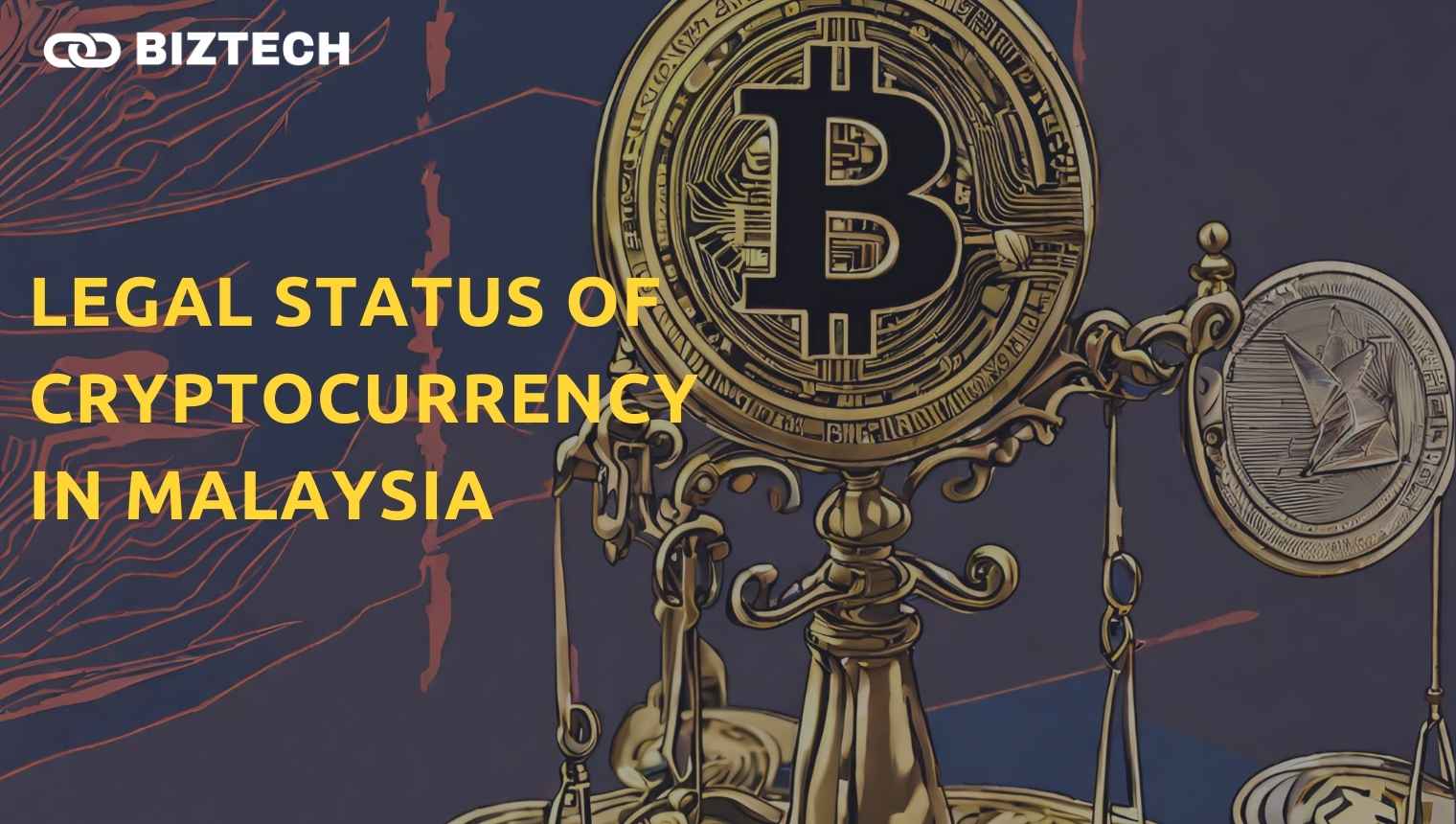
Cryptocurrency is legal to buy, hold and trade in Malaysia, but it is not legal tender — you cannot compel anyone to accept Bitcoin as payment the way they must accept the ringgit. Instead, digital assets sit under securities law. Since 2019, tokens that meet the definition of a “digital asset” are regulated by the Securities Commission Malaysia (SC) under the Capital Markets and Services (Prescription of Securities) (Digital Currency and Digital Token) Order.
The SC’s approach is best described as cautious acceptance: it licenses a small number of exchanges to operate legally while keeping unregistered platforms firmly out of bounds. This structure is designed to nurture innovation without sacrificing investor protection or national financial stability.
In 2026 the SC tightened this framework further. A revised set of Guidelines on Recognized Markets took effect on 20 May 2026, sharpening rules on custody, disclosure and operational resilience for licensed operators. From 2026, every registered exchange also becomes a member of the Financial Markets Ombudsman Service, giving investors a formal, independent channel to resolve disputes — a meaningful upgrade to consumer recourse.
Registered Digital Asset Exchanges (DAX)
Only exchanges registered with the SC as Digital Asset Exchanges (DAX) may legally offer crypto trading to Malaysians. As of the SC’s list dated 26 June 2026, there are five registered operators:
| Registered DAX (2026) | Operating brand |
|---|---|
| Luno Malaysia Sdn Bhd | Luno |
| HATA Digital Sdn Bhd | Hata |
| MX Global Sdn Bhd | MX Global |
| SINEGY DAX Sdn Bhd | SINEGY |
| Kinetic DAX Sdn Bhd | KDX |
Note that Torum International, which had appeared on the register since 2024, dropped off the list in 2026 — a reminder that registration status can change, so always confirm an exchange is currently listed on the SC website before depositing funds. For a deeper comparison of fees, coin selection and ringgit deposit options, see our guide to the best crypto trading platforms in Malaysia.
Registration is the cornerstone of Malaysia’s policy: it forces exchanges to meet standards on user security, segregation of client assets and financial transparency. If a platform is not on the SC list, using it is at your own risk and outside any local investor-protection framework.
Understanding Cryptocurrencies and Bitcoin
Basics of Cryptocurrencies and Bitcoin
Understanding cryptocurrencies and Bitcoin begins with recognizing their digital essence. Unlike traditional currencies, they exist solely in the digital realm, secured by cryptography rather than backed by a central bank.
Bitcoin, the trailblazer of cryptocurrencies, introduced a decentralized financial system that operates independently of central-bank governance. It runs on blockchain technology — a shared, tamper-resistant ledger that makes transactions transparent and verifiable without a middleman. Bitcoin’s launch in 2009 sparked a global movement, and today thousands of alternative cryptocurrencies (altcoins) exist, each with its own attributes but all sharing that core principle of decentralized finance.
Bitcoin remains by far the largest. In August 2026 it traded around US$65,000 per coin and accounted for roughly 57% of the entire crypto market’s value — still well below its all-time high of about US$126,080 set in October 2025. That gap between record highs and current prices is a vivid illustration of crypto’s defining trait: volatility. Prices move fast in both directions, so treat any figure you read as a snapshot, not a promise.
In Malaysia, adoption has grown steadily rather than exploded. Statista projects roughly 4.7 million Malaysian crypto users (about 13% of the population) in 2026, and total on-exchange transaction volume climbed from about RM5.4 billion in 2023 to RM13.9 billion in 2024. Malaysia consistently ranks among the top handful of countries worldwide for crypto ownership per capita, reflecting a tech-savvy population and very high e-wallet penetration.
For beginners, the appeal of crypto is the promise of financial autonomy — holding assets you control directly — but that same self-custody shifts responsibility onto you. Understanding the basics is not just about how the technology works; it is about appreciating both the opportunity and the risk before committing money.
Cryptocurrencies vs. Bitcoin: A Distinctive Comparison
Understanding the landscape of digital currencies involves distinguishing Bitcoin from the broader universe of altcoins. Bitcoin, as the first cryptocurrency, sets the foundational standard; altcoins such as Ethereum, Solana and thousands of others build on that idea with different features, from smart contracts to faster settlement.
Malaysian investors tend to gravitate toward Bitcoin first, drawn by its established track record, deep liquidity and reputation as “digital gold.” Altcoins can offer higher upside but typically carry higher risk and less brand recognition — a trade-off worth understanding before you diversify beyond Bitcoin.
| Aspect | Bitcoin | Altcoins |
|---|---|---|
| Foundation | The original cryptocurrency, introducing blockchain technology. | Variety of blockchain projects, each with unique features and purposes. |
| Market Position | Largest market capitalization (~57% of the total crypto market in 2026), widely recognized and used. | Smaller market cap individually, but innovative and niche-focused. |
| Adoption in Malaysia | The usual starting point for new Malaysian investors. | Growing interest for diversification, but higher risk. |
| Primary Use | Seen as digital gold; a store of value. | Range from utility tokens to smart-contract and project-specific currencies. |
| Investor Perception | Perceived as more established and liquid. | Viewed as high-risk but with potential for high rewards. |
Tax Implications for Cryptocurrency Investors in Malaysia
How Cryptocurrency Gains Are Taxed
Here is the single most important point for beginners: Malaysia has no capital gains tax for individuals and no dedicated crypto tax law. Whether your crypto is taxed depends entirely on how you use it, not on the asset itself. The Inland Revenue Board (LHDN) looks at the nature of your activity to decide if it counts as taxable income under the Income Tax Act 1967.
As a working rule of thumb:
- Long-term, passive holding of crypto as an investment is generally not taxed when you sell.
- Active, frequent trading that resembles running a business — along with income from mining, staking or providing crypto services — can be treated as taxable income.
LHDN weighs factors such as how often you transact, how long you hold, and your evident intent (often summarised through the “badges of trade”). Where income is taxable, it is charged at the normal progressive personal rates (0% up to 30%), while companies pay corporate tax (generally 24%, subject to SME rates and incentives).
Record-Keeping and Enforcement
Even if you believe your gains are non-taxable, LHDN expects you to keep transaction records for at least seven years. Enforcement has stepped up noticeably: LHDN’s joint “Ops Token” operations have specifically targeted undeclared crypto profits, so casual assumptions that “crypto isn’t tracked” no longer hold.
Detailed records — dates, amounts, ringgit values and the purpose of each transaction — are also what let you argue that a disposal was an investment rather than trading. Because the line between “investment” and “trading” is a matter of interpretation, and because your personal circumstances matter, it is genuinely worth consulting a Malaysian tax professional before filing if crypto is a meaningful part of your finances. Nothing here is a substitute for tailored advice.
Cryptocurrency Investment for Malaysians
Is It Worth Investing?
There is no universal answer — it depends on your goals, timeline and tolerance for loss. Cryptocurrencies offer genuine opportunities and exposure to a fast-moving technology, but they are among the most volatile assets an ordinary investor can buy. A useful discipline is to only commit money you could afford to lose entirely, and to size crypto as a small slice of a diversified portfolio rather than the whole thing. If you want a fuller framework, read our deeper dive on whether cryptocurrency is a good investment.
Starting Your Investment Journey Safely
Entering the crypto market rewards a methodical approach. A simple beginner checklist for Malaysians:
- Use a registered exchange. Stick to an SC-registered DAX so your account sits within Malaysia’s regulatory and dispute-resolution framework.
- Learn before you buy. Understand the fundamentals of blockchain and the specific coin you are considering.
- Start small and diversify. Spreading modest amounts across assets reduces the impact of any single collapse.
- Secure your holdings. For anything beyond pocket money, consider moving coins off the exchange into a wallet you control — our guides to the best crypto cold wallets and the safest ways to store Bitcoin walk through the options.
- Stay skeptical. Any scheme promising guaranteed returns or “risk-free” profits is a red flag — learn to spot crypto scams before they cost you.
Understanding the Risks
Risk in crypto is multifaceted, and being clear-eyed about it is the best protection:
- Market volatility: value can swing sharply within days, as Bitcoin’s 2025–2026 round-trip from record highs illustrates.
- Regulatory change: rules on exchanges, tax and permitted tokens continue to evolve both locally and globally.
- Technology and fraud risk: hacks, phishing and lost keys are real; secure storage and good security habits matter.
Manage these with a defined budget, secure storage, and a plan for when — not if — prices move against you. When you eventually want to realise gains, our guide on how to cash out Bitcoin covers moving funds safely back to a Malaysian bank account.
Cryptocurrency Popularity in Malaysia
The rise of cryptocurrency in Malaysia is part of a global digital-currency wave, yet unique local factors shape its popularity.
Factors Driving Popularity
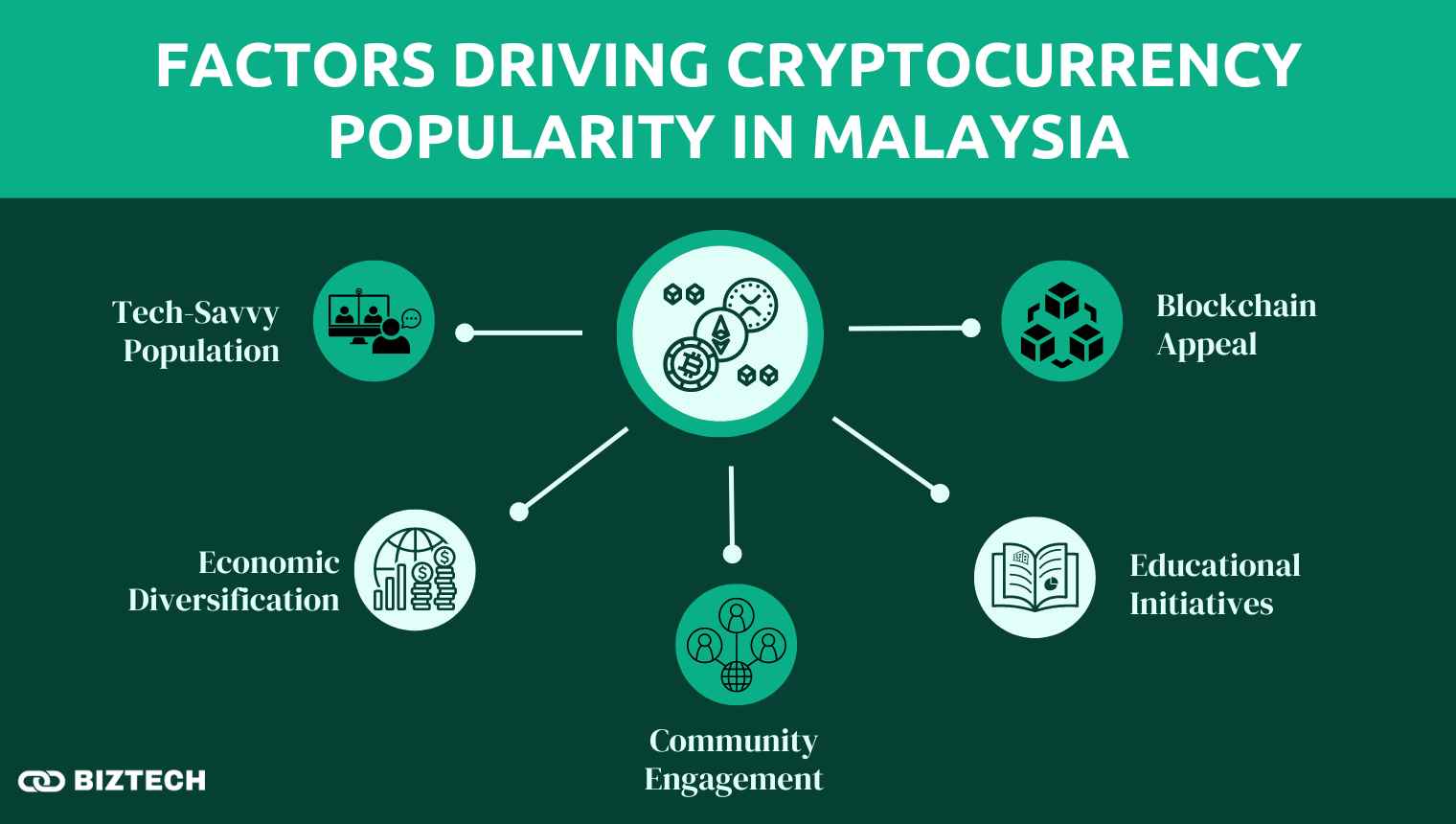
- Tech-Savvy Population: High digital literacy and e-wallet penetration above 87% make digital assets a natural next step.
- Economic Diversification: Crypto is increasingly seen as an alternative asset class alongside stocks, gold and property.
- Community Engagement: An active local community shares knowledge and drives wider acceptance.
- Educational Initiatives: Growing efforts by exchanges and media to educate the public build understanding and trust.
- Regulatory Clarity: A defined SC framework and registered exchanges give newcomers a safer on-ramp than in many unregulated markets.
Together these factors explain why Malaysia punches above its weight in global crypto-ownership rankings. But rising popularity is not a reason to skip the fundamentals — the safest participants are the ones who understand the technology, use registered platforms, and manage risk deliberately.
Frequently Asked Questions
Figures verified August 2026 from the Securities Commission Malaysia, LHDN and market data sources; crypto prices, tax rules and the DAX register change over time, so always confirm the latest details with the relevant provider or authority before acting.
Disclaimer: This article is provided by KayaToday for general educational purposes only and does not constitute financial, investment, legal or tax advice. Cryptocurrency is a high-risk asset. Do your own research and consult a licensed professional before making any investment or tax decision.