Blockchain technology lets people record ownership on a shared, tamper-resistant ledger, and tokenization is the process of turning an asset — digital or real-world — into a token on that ledger. Two of the most misunderstood token types are Non-Fungible Tokens (NFTs) and Semi-Fungible Tokens (SFTs).
- What are NFTs?
- Key characteristics of NFTs
- NFT common uses and examples across industries
- NFT benefits and problems
- What are SFTs?
- How SFTs differ from NFTs and traditional fungible tokens
- SFT potential uses with examples
- SFT benefits and problems
- ERC-721 vs ERC-1155: the token standards behind NFT vs SFT
- Comparing NFT vs SFT
- Non-Fungible Tokens (NFTs) case studies
- Semi-Fungible Tokens (SFTs) case studies
- When to use NFT vs SFT
- NFTs and SFTs in Malaysia & Singapore: access and tax
- How to buy NFTs and SFTs locally
- Tax treatment at a glance
- Common pitfalls and risks to watch
- Future outlook and innovations
- Conclusion
- Frequently Asked Questions (FAQs)
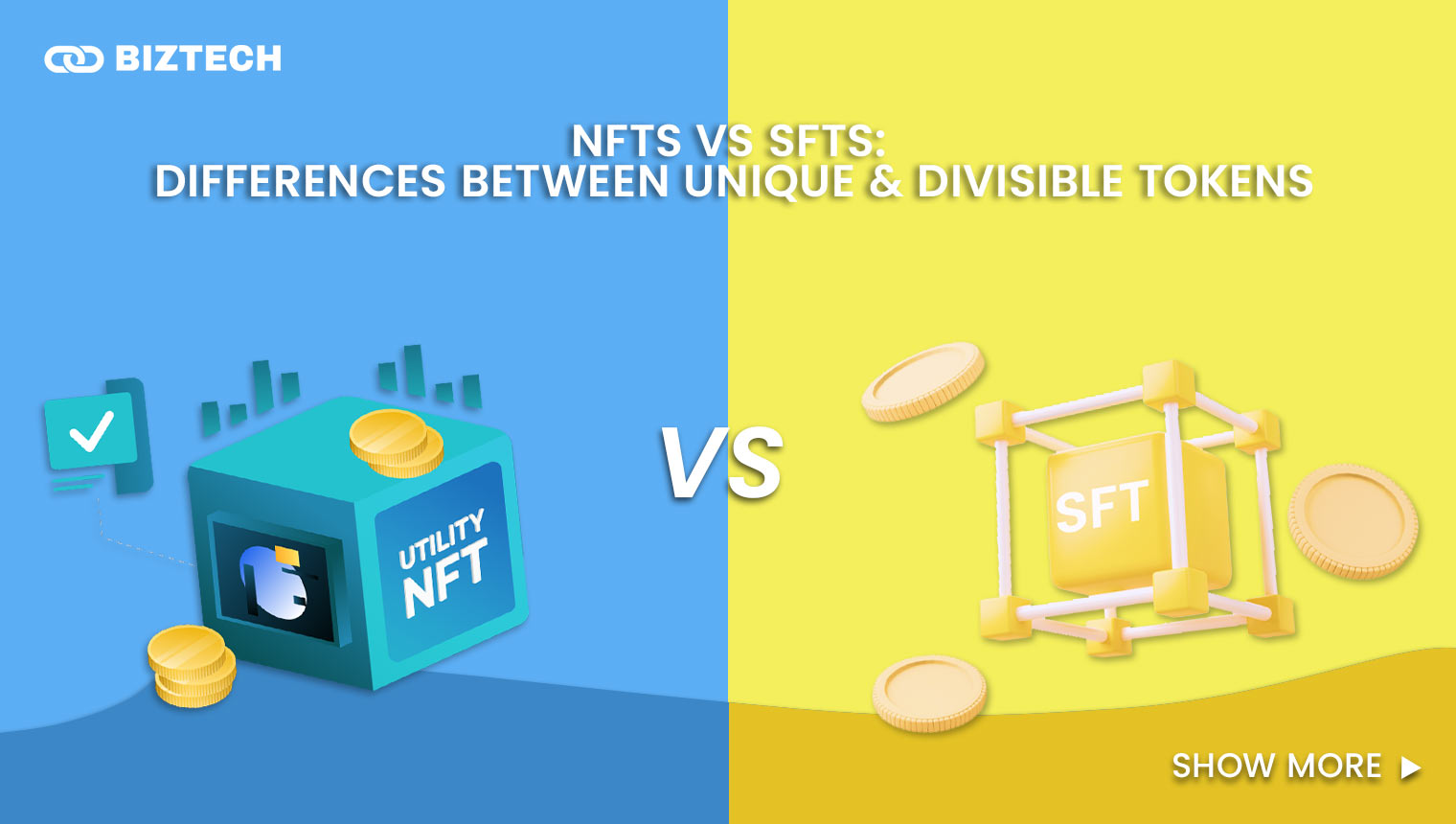
Non-Fungible Tokens (NFTs) are one-of-a-kind digital assets used for things like art, collectibles and proof of ownership, while Semi-Fungible Tokens (SFTs) blend unique and interchangeable properties, which makes them a natural fit for gaming items, event tickets and memberships. Technically, the difference usually comes down to the token standard behind them: NFTs are typically built on Ethereum’s ERC-721 standard, while SFTs are built on ERC-1155.
Understanding NFT vs SFT matters for anyone identifying, choosing or investing in digital assets — and it matters more now that the market has matured. After peaking at roughly US$40 billion sent to NFT marketplaces in 2021, trading cooled to around US$5.5 billion in 2025 before showing early signs of a utility-driven recovery in 2026. In other words, the hype has passed, but the technology and its use cases have not. This guide explains what each token is, how they differ, how Malaysians and Singaporeans can access and are taxed on them, and how to choose between the two.
What are NFTs?
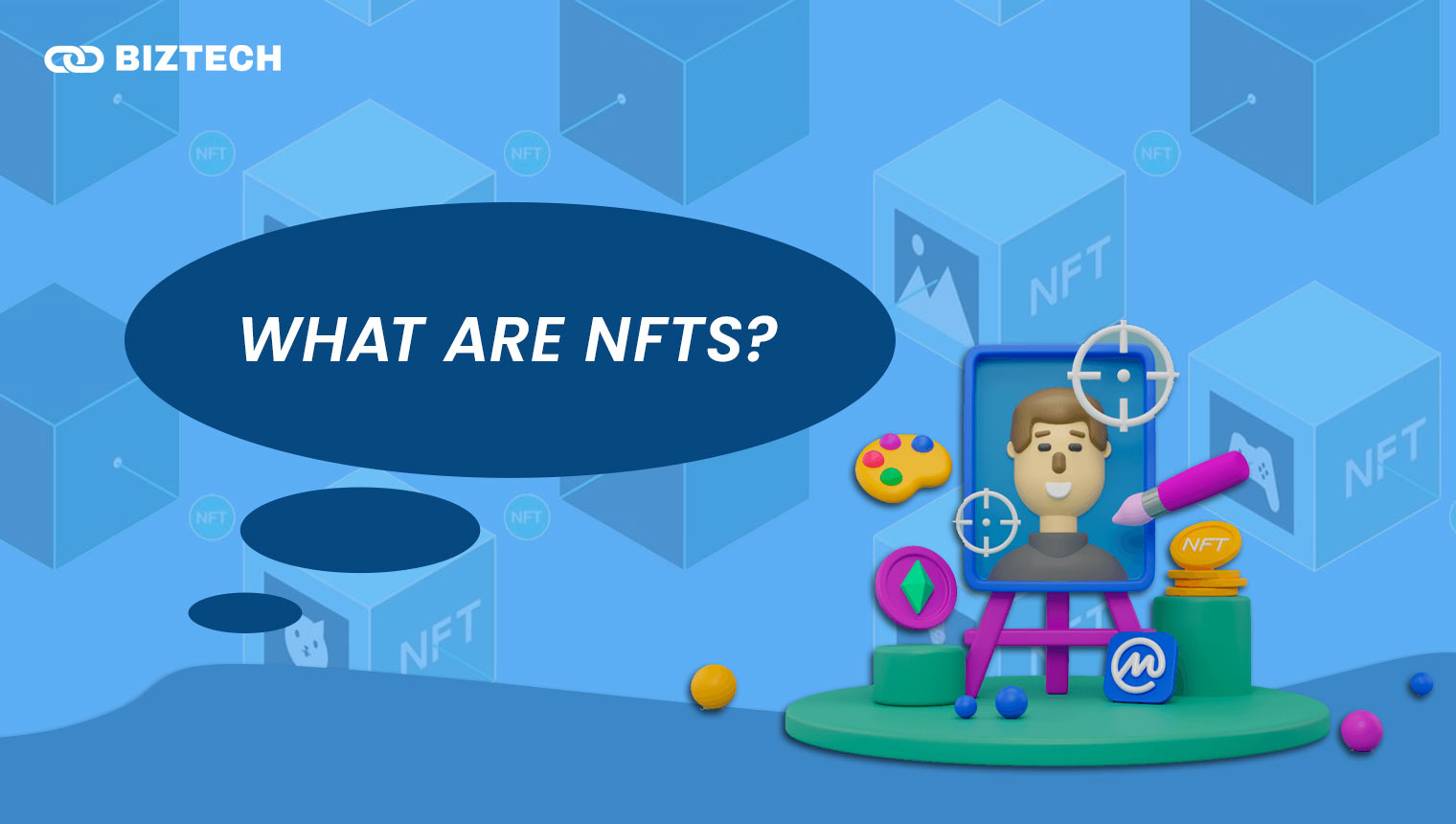
Non-fungible tokens, or NFTs for short, are unique digital assets recorded on a blockchain. “Non-fungible” simply means each token is one-of-a-kind and cannot be swapped one-for-one with another of the same type.
This is the opposite of a fungible asset. Cryptocurrencies like Bitcoin and Ethereum are fungible: any one bitcoin is identical in value to, and interchangeable with, any other bitcoin — just as any RM10 note is worth the same as any other RM10 note. The market value of different coins still differs (in August 2026, for example, one bitcoin was worth roughly 30 times one ether), but within a single currency every unit is interchangeable. An NFT is the reverse: no two are the same, so one cannot simply replace another.
The core idea behind NFTs is digital scarcity and provable ownership. Because every NFT is registered on a blockchain, anyone can verify who owns it and confirm it is authentic. On Ethereum, NFTs are usually issued using the ERC-721 token standard, which gives each token its own unique ID (we compare ERC-721 and ERC-1155 in detail below). If you are new to the vocabulary here, our glossary of key crypto terms is a helpful companion.
Key characteristics of NFTs
- Uniqueness: Every NFT is a one-of-a-kind item that cannot be copied or reproduced at the token level.
- Indivisibility: NFTs are not divisible or fractionalized on their own, unlike cryptocurrencies, which can be split into smaller units.
- Verifiable ownership: The blockchain creates a transparent, verifiable record of ownership, allowing transfers and origin tracking.
- Scarcity: Because supply is limited, perceived value and scarcity can increase.
- Interoperability: NFTs can be bought, sold or traded on NFT marketplaces, creating a broad ecosystem for digital assets.
- Programmability: NFTs can carry special features such as exclusive content access, on-chain royalties for the creator, or integration with supported apps.
NFT common uses and examples across industries
Art and memorabilia
- The digital collage “Everydays: The First 5000 Days” by Beeple sold at Christie’s in March 2021 for US$69.3 million — still one of the highest prices ever paid for an NFT. See our roundup of the most expensive NFTs ever sold.
- Anonymous artist Pak and WikiLeaks founder Julian Assange sold the “Clock” NFT in February 2022 for around US$52.7 million; the clock counts the days Assange has spent in detention.
- Bored Ape Yacht Club (BAYC), by Yuga Labs, doubles as a collectible and a membership pass. Every ape is a cartoon variation with different traits, backgrounds and accessories.
Identification and certification
- Duke University issued NFTs as certificates for students in its fintech program.
- The University of Georgia’s New Media Institute was among the first to provide degree certificates as both paper and NFTs.
NFT domains
- Services such as Unstoppable Domains offer NFT domains — similar to a “.com” address but ending in “.crypto” or “.eth” and recorded on-chain.
- Unlike fee-based Web 2.0 domains that must be renewed annually, many Web3 domains are a one-time purchase and are user-owned, so a centralized registrar cannot easily seize or censor them.
- Domain NFTs can also act as a human-readable crypto wallet address, letting the owner send and receive payments without long alphanumeric strings.
NFT benefits and problems
Benefits of NFTs:
- Ownership and authenticity: NFTs offer a transparent way to establish ownership and authenticity of digital assets — useful for artists, collectors and creators.
- Monetization opportunities: Creators can sell work as unique assets and, where enforced, earn royalties on secondary sales.
- Democratization of art and collectibles: NFTs simplify creating, buying and selling digital art, opening new markets.
- Programmable assets: Smart contracts can distribute royalties or unlock gated content automatically.
- Transparent record of ownership: Provenance and transaction history are recorded on-chain, which can build market trust.
Problems and challenges with NFTs:
- Speculation and volatility: Many 2021-era projects were driven by hype. As noted above, overall NFT trading fell sharply from its 2021 peak, and the long tail of speculative collections has effectively stopped trading — a reminder that most NFTs are illiquid.
- Royalties are no longer guaranteed: After marketplace fee wars in 2023, on-chain royalties became optional on major platforms, so creators can no longer assume secondary-sale income (more on this in the pitfalls section).
- Legal and regulatory uncertainty: Rules on intellectual property, tax and consumer protection are still evolving worldwide, including in Malaysia and Singapore.
- Fraud and scams: Rug pulls, fake mints and wallet-draining “approval” scams are common — see our guide on how to spot crypto scams.
- Environmental concerns (now much smaller on Ethereum): Proof-of-work minting was energy-intensive, but Ethereum’s move to proof-of-stake in September 2022 cut its energy use by about 99.95%, largely addressing this issue on the network where most NFTs live.
What are SFTs?
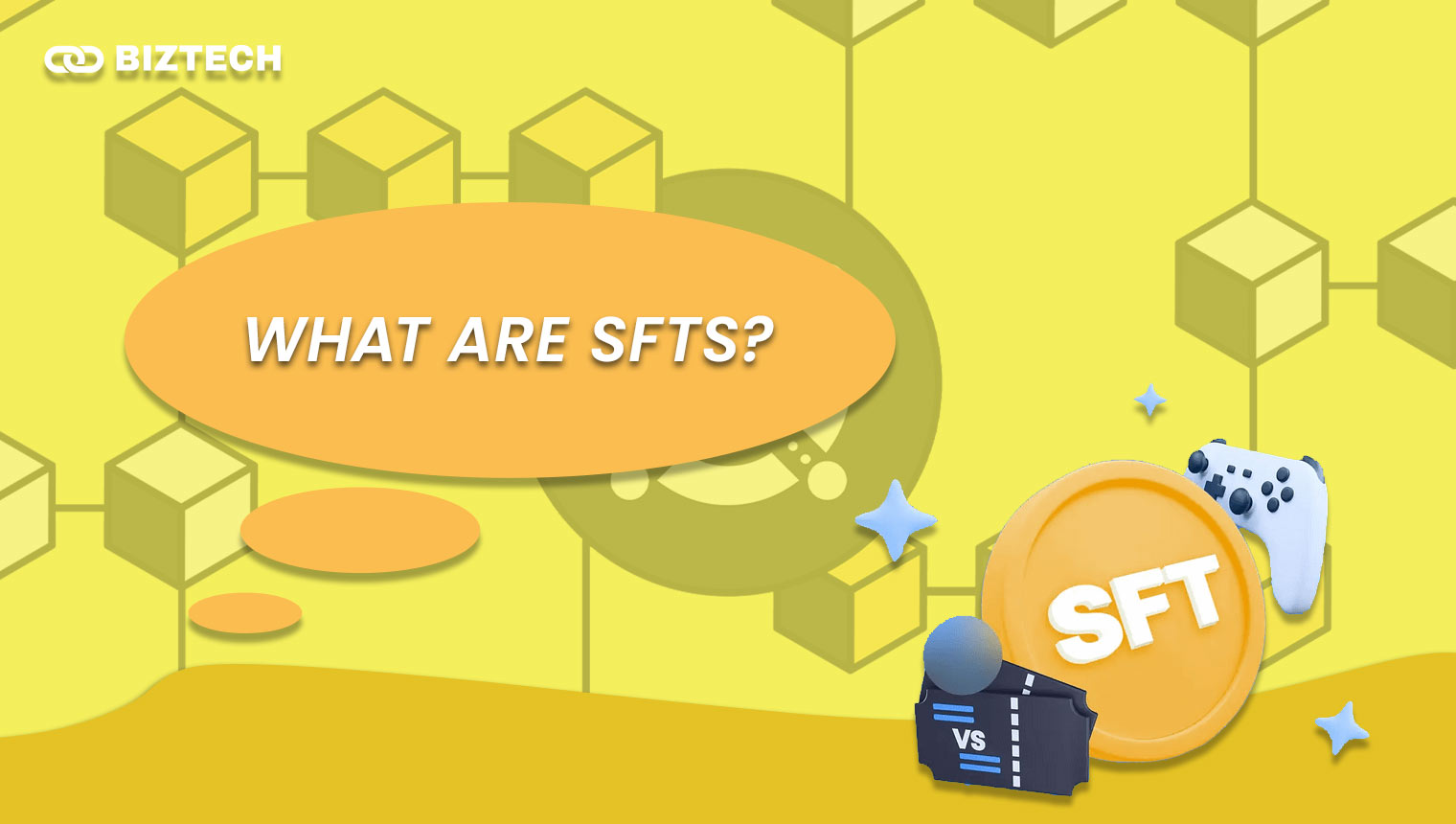
Semi-fungible tokens, or SFTs, are digital assets that combine features of non-fungible and fungible tokens. The idea is a hybrid: the uniqueness of an NFT plus the divisibility and interchangeability of a cryptocurrency.
A classic example is an event ticket. Before the event, every “General Admission” ticket is identical and interchangeable — that is the fungible phase. Once the event passes, each used ticket becomes a unique, non-transferable collectible or proof of attendance — the non-fungible phase. Most SFTs are built with the ERC-1155 multi-token standard (originally developed by the gaming platform Enjin), which is why gaming and ticketing are their most natural homes.
How SFTs differ from NFTs and traditional fungible tokens
Difference from NFTs:
- Divisibility: Unlike an NFT, which represents a single indivisible asset, an SFT can be issued in multiple identical units, allowing partial or shared ownership.
- Composability: SFTs of the same type can be batched and managed together within one smart contract — something the one-token-per-contract ERC-721 model does not do as efficiently.
Difference from traditional fungible tokens:
- Uniqueness: SFTs carry their own metadata, attributes and properties, whereas fungible tokens like cryptocurrencies are indistinguishable from one another.
- Scarcity: SFTs can be issued in limited quantities, creating scarcity; fungible tokens such as Bitcoin and Ether usually have far larger supplies.
- Programmability: Like NFTs, SFTs can embed smart-contract rules for usage, transfer and revenue-sharing.
SFT potential uses with examples
Here are real-world ways semi-fungible tokens can be applied:
- Gaming assets: SFTs can represent in-game items such as potions, ammunition or event passes — identical while stackable, then unique once used or upgraded. This is the original ERC-1155 use case.
- Event tickets and memberships: Interchangeable before an event, then unique afterwards as a collectible or loyalty record.
- Real estate: SFTs can represent fractional ownership in a property, letting investors buy and sell shares of an otherwise illiquid asset. This overlaps with the fast-growing field of real-world asset (RWA) tokenization.
- Art and collectibles: Shared ownership of a valuable piece, with different investors holding different portions.
- Intellectual property: Fractionalized licensing rights to patents, copyrights or trademarks.
- Tokenized funds and commodities: Fractional exposure to a fund, a basket of stocks, or commodities like gold, improving accessibility and liquidity.
- Supply chain and logistics: Tracking ownership or custody of batches of goods as they move through a network.
SFT benefits and problems
Benefits of SFTs:
- Fractional ownership: Lets several parties co-own a high-value asset that a single buyer might not afford.
- Increased liquidity: Splitting traditionally illiquid assets (property, fine art) into tradeable units can improve liquidity.
- Lower barrier to entry: Smaller ticket sizes democratize access to markets once reserved for the wealthy.
- Programmability and automation: Smart contracts can automate royalty splits, profit sharing and governance.
- Efficiency: The ERC-1155 standard supports batch transfers, cutting gas costs when moving many tokens at once.
Problems and challenges with SFTs:
- Regulatory uncertainty: Fractional ownership can look like a security, which raises compliance questions — in Malaysia the Securities Commission may treat such tokens as regulated capital-market products.
- Valuation and pricing: Pricing a fraction of a unique asset fairly is difficult.
- Governance and decision-making: Coordinating many co-owners of a single asset can be complex.
ERC-721 vs ERC-1155: the token standards behind NFT vs SFT
The clearest way to understand NFT vs SFT is to look at the Ethereum token standards that power them. A “standard” is simply an agreed set of rules a smart contract follows so that wallets and marketplaces know how to handle the token.
- ERC-721 is the original NFT standard (finalized in 2018 and popularized by CryptoKitties). Each token has its own unique ID, and a collection typically lives in its own smart contract. It is ideal for genuinely one-of-a-kind items like 1/1 art.
- ERC-1155 is a multi-token standard created by Enjin. A single contract can mint fungible, non-fungible and semi-fungible tokens at once, and it supports batch transfers — sending many token types in one transaction to save on fees. This flexibility is what makes SFTs practical, which is why ERC-1155 dominates blockchain gaming.
- ERC-3525 is a newer, more explicit semi-fungible standard that combines a unique ID with a divisible “value,” designed specifically for financial instruments and tokenized real-world assets.
| Feature | ERC-721 (NFT) | ERC-1155 (SFT / multi-token) |
| Token types supported | Non-fungible only | Fungible, non-fungible and semi-fungible |
| Contract model | Usually one contract per collection | One contract can manage many token types |
| Batch transfers | No (one token per transaction) | Yes (many tokens in a single transaction) |
| Gas efficiency | Lower for large collections | Higher — cheaper for bulk minting/transfers |
| Best suited for | 1/1 art, unique collectibles, domains | Gaming items, tickets, memberships, RWAs |
Comparing NFT vs SFT
| Aspects | NFT | SFT |
| Interchangeability | Not interchangeable | Partially interchangeable (within a collection) |
| Utility | Represents ownership and provenance of a unique item | Represents assets with varying degrees of fungibility and divisibility |
| Transferability | Transferable | Transferable |
| Uniqueness | Unique at the individual token level | Unique to a collection, not at the individual level |
| Divisibility | Non-divisible | Divisible |
| Ownership | Single owner | Multiple / shared owners |
| Typical standard | ERC-721 | ERC-1155 (or ERC-3525) |
Interchangeability: NFTs are distinct and non-interchangeable — each represents a unique, indivisible asset, ideal for original artwork or exclusive items. SFTs are interchangeable among members of the same collection but not across different collections, which enables divisibility and fractional ownership.
Utility: NFTs mainly signal the origin and ownership of unique digital assets across art, gaming and collectibles. SFTs tokenize assets with varying divisibility — stocks, commodities, real estate — to enable fractional ownership and simpler transfers.
Transferability: Both can move from owner to owner on-chain. SFT transfers may involve extra verification, especially where fractional ownership or legal obligations apply.
Uniqueness: Every NFT has a unique on-chain identifier. SFTs are unique at the collection level rather than the individual-token level.
Divisibility: NFTs are inherently indivisible. SFTs can be divided within their collection, allowing multiple parties to hold portions.
Ownership: NFTs typically map to a single, clearly identified owner. SFTs support shared ownership of the same asset or collection.
Non-Fungible Tokens (NFTs) case studies
Digital art and collectibles (uniqueness, ownership):
Beeple’s “Everydays: The First 5000 Days” sold at Christie’s in 2021 for US$69.3 million, showing how NFTs could make ownership of purely digital art possible — and marking the top of the 2021 art-NFT boom.
Gaming and virtual worlds (utility, transferability):
Axie Infinity used NFTs for in-game creatures (“Axies”) that players could breed, collect and trade, powering a play-to-earn economy. It is also a cautionary tale: the game’s Ronin bridge was hacked for about US$625 million in March 2022, and the play-to-earn boom cooled sharply afterward — useful context on how quickly hype can reverse.
Sports and entertainment memorabilia (uniqueness):
Dapper Labs’ NBA Top Shot lets fans own official NBA highlights as NFTs, each minted as a distinct collectible. Like most of the market, its trading volumes are far below their 2021 highs, but the platform remains a leading example of licensed, utility-backed NFTs.
Semi-Fungible Tokens (SFTs) case studies
Real estate tokenization (divisibility, fractional ownership):
Platforms such as Propy have explored tokenizing property so investors can buy and sell fractions, making real estate more accessible and liquid.
Investment funds and asset management (transferability, fractional ownership):
Companies like Securitize and Polymath built platforms to issue and manage tokens representing stocks, funds or other financial assets under a compliance framework.
Commodity tokenization (divisibility, interchangeability):
Projects have tokenized commodities such as gold, enabling fractional ownership and easier trading of tangible assets — a theme that overlaps heavily with RWA tokenization today.
When to use NFT vs SFT
Use NFTs when:
- The asset is genuinely unique and one-of-a-kind.
- The asset should not be fractionalized into smaller units.
- Clear, immutable single ownership and provenance tracking are essential.
Use SFTs when:
- The asset needs to be divided into shares for fractional ownership.
- Items within a collection are interchangeable (like tickets or in-game items).
- The use case must satisfy specific legal or compliance requirements.
- The main goal is to add liquidity and traceability to previously illiquid assets.
NFTs and SFTs in Malaysia & Singapore: access and tax
Because Kayatoday’s readers are mostly in Malaysia and Singapore, here is how these tokens fit the local landscape — both how to buy them and how any gains are treated.
How to buy NFTs and SFTs locally
Securities Commission (SC)-registered Malaysian exchanges — the Digital Asset Exchanges (DAX) such as Luno, HATA, MX Global and SINEGY — let you buy mainstream cryptocurrencies like Bitcoin and Ether, but they generally do not list NFTs. The usual path is therefore: buy ETH (or SOL) on an SC-registered DAX, withdraw it to a self-custody NFT wallet such as MetaMask, then buy on a global NFT marketplace like OpenSea, Blur or Magic Eden. For a broader primer on getting started safely, see our cryptocurrency guide for Malaysia. Singapore investors follow a similar route using MAS-regulated on-ramps.
Tax treatment at a glance
Neither Malaysia nor Singapore imposes a general capital gains tax on individuals, so a genuine long-term investor who occasionally sells is often not taxed. The key question in both countries is whether your activity looks like trading (a business) rather than investing — if so, profits can be taxed as income.
| Question | Malaysia | Singapore |
| Capital gains tax? | No general CGT on individuals | No CGT on individuals |
| Active/frequent trading | Taxable as income (LHDN “badges of trade”) | Taxable as trading income (IRAS) |
| Occasional investor / hobby collector | Generally not taxed (no CGT) | Generally not taxed if held as investment/hobby |
| Main regulator | SC (markets) & LHDN (tax) | MAS (markets) & IRAS (tax) |
Malaysia’s LHDN has not published NFT-specific rules, but treats digital assets under existing principles: regular, profit-seeking NFT trading is likely income-taxable, while infrequent disposals by an investor usually fall outside the tax net because there is no capital gains tax. Singapore’s IRAS takes a comparable view in its “Income Tax Treatment of Digital Tokens” guide (updated January 2026): frequent trading for profit is taxed as income, while an NFT bought as a personal collectible and occasionally sold is generally not. In both countries, intent and frequency are what matter — so keep good records and, when in doubt, confirm your position with LHDN, IRAS or a licensed tax professional.
Common pitfalls and risks to watch
Whether you are collecting NFTs or exploring SFTs, a few recurring pitfalls deserve attention:
- Wallet-draining “approval” scams: Malicious mint sites trick you into signing a token approval that lets a scammer move your assets. Only mint from official links, and periodically review and revoke approvals with a tool like Revoke.cash.
- Rug pulls and wash trading: Teams can abandon a project after the sale, and fake volume can make a collection look more liquid than it is. Treat outsized “floor price” claims with scepticism — our crypto scams guide covers the red flags.
- Royalty erosion: After marketplace fee wars, on-chain creator royalties became optional on major platforms in 2023. If you are a creator, do not bank on secondary-sale royalties; if you are a buyer, factor this into a project’s long-term “utility.”
- Liquidity risk: Most 2021-era collections now trade thinly or not at all. Only a small set of blue-chip and utility-driven projects retains genuine liquidity, so assume you may not be able to sell quickly.
- Regulatory and tax risk: Fractional SFTs can be treated as securities, and active trading is taxable income in both Malaysia and Singapore — plan for compliance early.
Future outlook and innovations
The 2021 mania is over, and that is arguably healthy. NFT marketplace volume fell from roughly US$40 billion at the peak to about US$5.5 billion in 2025, and art NFTs in particular collapsed more than 90% from their high. But 2026 has brought early signs of a reset toward utility rather than speculation — monthly Ethereum NFT volume averaged around US$720 million in early 2026, a meaningful rebound from the 2024 trough, with active participation up sharply year-on-year.
For NFTs, expect continued emphasis on real utility: memberships, ticketing, gaming, identity and “dynamic” NFTs whose traits change over time. On the environmental front, Ethereum’s proof-of-stake transition removed most of the energy criticism that dogged the 2021 boom.
For SFTs, the most exciting frontier is real-world asset (RWA) tokenization — using ERC-1155 and ERC-3525 to fractionalize property, funds and commodities — alongside deeper integration with decentralized finance and blockchain gaming. In short, both token types are becoming less about hype and more about practical ownership, liquidity and access.
Conclusion
We have covered NFT vs SFT in depth. Here is the recap.
NFTs are unique, indivisible digital assets (usually ERC-721) that prove ownership — ideal for art, collectibles and one-of-a-kind items. SFTs (usually ERC-1155) are a hybrid that is interchangeable within a collection yet divisible, making them a natural fit for gaming items, tickets, memberships and fractional real-world assets.
As a simple decision rule: choose an NFT when the asset is truly unique and should stay whole, and an SFT when you need fractional ownership or interchangeable units within a collection. Whichever you use, remember that the market has matured — prioritize genuine utility over hype, watch for scams, and understand the tax position where you live.
Glossary of terms on NFT vs SFT (Appendix)
NFT: Non-Fungible Token — a unique digital asset on a blockchain that signifies ownership of a specific item or piece of content. Commonly used for digital art, collectibles and virtual real estate.
SFT: Semi-Fungible Token — a digital asset that combines interchangeable and unique characteristics, often used for gaming items, tickets and fractional assets.
Fungible: Interchangeable and identical in value — any one unit can replace another (e.g., one bitcoin for another, or one RM10 note for another).
ERC-721: The Ethereum standard for non-fungible tokens; each token has a unique ID.
ERC-1155: A multi-token Ethereum standard (created by Enjin) that supports fungible, non-fungible and semi-fungible tokens in one contract, with batch transfers.
ERC-3525: A semi-fungible token standard combining a unique ID with a divisible value, aimed at financial instruments and RWAs.
Royalties: A percentage paid to a creator on secondary sales — now optional on most major NFT marketplaces since 2023.
DAX: Digital Asset Exchange — a crypto exchange registered with the Securities Commission Malaysia (e.g., Luno, HATA, MX Global, SINEGY).
Wallet drainer: A scam that tricks you into approving a transaction that lets an attacker move assets out of your wallet.
Blockchain: A decentralized, distributed ledger that records transactions securely and transparently across many computers.
Minting: Creating a new token on a blockchain — how artists or projects issue NFTs and SFTs.
Rug pull: A scam where developers abandon a project after raising funds, leaving holders with worthless tokens.
Figures, prices and rules in this guide were verified in August 2026. Cryptocurrency prices, marketplace policies and tax rules change frequently — always confirm the latest position with the provider, the Securities Commission Malaysia, LHDN, MAS, IRAS or a licensed professional before acting.
Disclaimer: This article is provided by KayaToday for general educational purposes only and does not constitute financial, investment, legal or tax advice. Digital assets are volatile and high-risk; do your own research and consider your circumstances before investing.