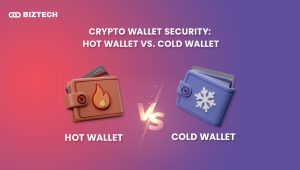
As of August 2026, cryptocurrency has firmly moved into the mainstream. The global crypto market is worth roughly US$2.3 trillion, and more than 560 million people now hold digital assets — with some estimates approaching one billion. Bitcoin still leads, trading around US$64,000 and commanding about 56% of total market value, while altcoins such as Ethereum and Solana keep attracting active traders. Most of this activity now happens on mobile: the majority of retail investors buy, sell and manage coins through a crypto app rather than a desktop exchange. With that convenience come the twin concerns of security and fees — and, for readers in Malaysia and Singapore, the added question of which platforms are actually regulated locally.
- What is a Crypto App?
- Are These Crypto Apps Legal in Malaysia and Singapore?
- How to Choose the Best Crypto App
- Overview Table of the 10 Best Crypto Apps (2026)
- 1. Binance – The King of Crypto Trading Apps
- 2. KuCoin – Best App for Altcoin Variety
- 3. Crypto.com – Best App for Card Rewards
- 4. OKX – Best for a Low-Fee CEX/DEX Hybrid
- 5. Coinbase – Best App for Beginners
- 6. Cash App – Best App for Fast Bitcoin Buys
- 7. Kraken – Best Crypto App for Security & Support
- 8. eToro – Best Crypto App for Social Trading
- 9. Bybit – Best Crypto App for Derivatives Trading
- 10. Pionex – Best Crypto App for Trading Bots
- Which Crypto App Should You Choose?
- Conclusion
- Frequently Asked Questions (FAQs)
This review breaks down the best crypto apps to use in 2026 — their fees, features, security record and where they stand with local regulators. Whether you are a first-time buyer or an active trader, choosing the right app makes a real difference to your costs and your peace of mind. If you are still weighing the basics, our guide to cryptocurrency in Malaysia is a good place to start.
What is a Crypto App?
Crypto apps, also known as crypto exchange apps, let you trade cryptocurrencies from wherever you are. They connect you to either centralized or decentralized exchanges. On a centralized exchange (CEX), the platform matches buyers and sellers and holds your funds in custody. A decentralized exchange (DEX) uses smart contracts to match a buy order directly with a sell order, so you keep custody of your assets in your own wallet. Creating an account on a CEX usually takes a few minutes; once you complete identity verification (KYC), you can fund your account and start buying the coins you want.
Are These Crypto Apps Legal in Malaysia and Singapore?
This is the single most important point for local readers, and most global “best crypto app” lists ignore it. In Malaysia, owning and trading crypto is legal, but only exchanges registered with the Securities Commission Malaysia (SC) as a Digital Asset Exchange (DAX) are authorised to serve residents. As of the SC’s list updated 26 June 2026, there are just five registered DAX operators: Luno, HATA, MX Global, SINEGY and Kinetic DAX (KDX). You can confirm the current list on the official SC register.
Of the ten global apps reviewed below, none are SC-registered DAX operators. Using them is not automatically illegal for individuals, but you trade outside the SC’s investor-protection framework — including the new Financial Markets Ombudsman Service dispute-resolution scheme that all registered DAX joined in 2026. The SC tightened its rules in May 2026 and has been actively targeting unregistered platforms, even working with Google to block their ads from 14 April 2026. (Bybit, notably, was removed from the SC Investor Alert List in April 2026 after meeting the regulator’s requirements.) If you specifically want a locally regulated option, see our roundup of SC-registered crypto trading platforms in Malaysia.
In Singapore, crypto service providers must be licensed by the Monetary Authority of Singapore (MAS) under the Payment Services Act. Availability of the global apps below varies by their licensing status, so always check that an app can legally onboard Singapore residents before depositing funds.
How to Choose the Best Crypto App
When choosing a crypto app, weigh these factors together rather than in isolation:
- Regulation & availability: Can the app legally serve you where you live? Local regulation (SC in Malaysia, MAS in Singapore) affects your recourse if something goes wrong.
- Supported assets: Some apps list only a handful of coins; others offer 400–900+. Make sure your target assets are actually available in your country.
- Fees: Look beyond the headline spot fee. Card-purchase fees (often 2–3%), spreads and withdrawal costs can quietly eat your returns.
- Security: Prioritise two-factor authentication, cold-storage of reserves, proof-of-reserves and a clean track record. How an exchange handled past incidents matters as much as marketing claims.
- Customer support: Responsive support is invaluable for beginners — check for 24/7 live chat and a real help centre.
- Reputation: Read recent reviews and news. A platform’s behaviour during a hack or outage tells you more than its ad campaigns.
A quick worked example on fees: imagine you buy US$1,000 of Bitcoin every month for a year. On a 0.10% spot app like Binance that’s about US$12 a year in trading fees; on a 1% platform like eToro it’s roughly US$120; and if you buy with a credit card at ~2.99%, you could pay close to US$360. Over time, the “cheap” app can save you hundreds — which is why fees deserve real attention.
Overview Table of the 10 Best Crypto Apps (2026)
| Crypto App | Spot Fees (2026) | Supported Cryptos | Best For |
| Binance | 0.10% (0.075% with BNB) | 400+ | Lowest overall trading fees |
| KuCoin | 0.10% | 900+ | Widest altcoin selection |
| Crypto.com | 0.25%–0.50% (lower with CRO) | 350+ | Visa card rewards |
| OKX | 0.08%–0.10% | 350+ | CEX/DEX hybrid & trading pairs |
| Coinbase | 0.40%–0.60% | 260+ | Beginners (US-listed) |
| Cash App | 0.75%–3% (incl. spread) | Bitcoin only | Fast BTC buys (US) |
| Kraken | 0.25%–0.40% | 200+ | Security & support |
| eToro | ~1% (built into spread) | 100+ | Social & copy trading |
| Bybit | 0.10% | 600+ | Derivatives trading |
| Pionex | 0.05% | 370+ | Built-in trading bots |
Fees shown are entry-tier spot rates; most apps discount them as your 30-day volume rises or when you hold their native token. For a broader look at how the biggest platforms stack up, see our guide to the best crypto exchanges in the world. Below, we review each app in detail.
1. Binance – The King of Crypto Trading Apps

Binance remains the world’s largest crypto exchange by trading volume in 2026, giving you access to 400+ cryptocurrencies including its own BNB token. Spot trading carries a standard 0.10% maker/taker fee, which drops to 0.075% when you pay fees with BNB, and lower still at higher VIP tiers. That makes it one of the cheapest ways to buy and sell at retail scale.
Beyond simple buying, Binance offers spot, margin and futures trading, staking, copy trading, an Earn suite and an NFT marketplace. The mobile app mirrors the desktop platform, with a “Lite” mode for beginners and an advanced mode with professional charts. Its breadth is also its main drawback — new users can find the interface overwhelming. Malaysian and Singaporean readers should note Binance is not an SC-registered DAX, so it sits outside local investor protections.
Pros:
- Access to 400+ crypto tokens
- Very low spot fees (0.10%, or 0.075% with BNB)
- Deep margin, futures and Earn products
- Supports copy trading and a built-in NFT marketplace
Cons:
- Can be confusing for beginners
- Not registered with the SC in Malaysia
2. KuCoin – Best App for Altcoin Variety
KuCoin is a widely used crypto app serving over 30 million users, best known for its enormous selection of 900+ cryptocurrencies — often listing smaller altcoins before larger rivals do. Spot maker/taker fees start at 0.10%, and holding KCS tokens or trading higher volumes reduces them further.
KuCoin also offers margin and derivatives trading, automated trading bots, and Earn features such as staking and yield products. Its non-custodial wallet supports NFTs and multi-chain swaps. The trade-off: some products are restricted in certain countries, and following a 2024 US settlement, availability can vary — always confirm what’s accessible from your region.
Pros:
- Access to 900+ cryptocurrencies
- Low spot and derivatives fees
- Offers a non-custodial wallet
- Earning and yield options built in
Cons:
- Some features are restricted in certain countries
3. Crypto.com – Best App for Card Rewards
Crypto.com rose to prominence during the 2021 bull market on the back of heavy marketing — a Super Bowl ad, a Matt Damon cameo and the naming rights to Los Angeles’ Crypto.com Arena. Today it serves tens of millions of users and lists more than 350 cryptocurrencies, alongside an NFT marketplace and a popular Visa card programme.
Spot fees start at 0.25% maker / 0.50% taker at the entry tier and fall sharply as you stake CRO or trade more — heavy CRO stakers can pay under 0.10%. Its standout feature is the Visa card, which pays crypto cashback on everyday spending. Watch the card top-up fees, though: buying crypto with a credit or debit card can cost around 2.99%.
Pros:
- Access to 350+ cryptocurrencies
- Crypto cashback via the Visa card
- Built-in NFT marketplace and integrated wallet
- Fees drop significantly for CRO stakers
Cons:
- High fees for credit and debit card purchases
4. OKX – Best for a Low-Fee CEX/DEX Hybrid

OKX is one of the largest exchanges in the world and a top choice for traders who want both a centralized platform and a self-custody Web3/DEX experience in one app. The DEX side is KYC-free, while the CEX lists 350+ cryptocurrencies with staking, trading bots and crypto-collateral features.
Spot fees start at 0.08% maker / 0.10% taker, with discounts tied to how much OKB you hold — keeping OKX highly competitive. The app is clean enough for beginners yet powerful for pros. Access has historically been restricted in some markets (including a phased US relaunch), so confirm availability from your region.
Pros:
- No KYC needed for decentralized (DEX) trading
- 350+ cryptocurrencies with staking and bots
- Very competitive spot fees
- Combines CEX and self-custody in one app
Cons:
- Availability varies by country
5. Coinbase – Best App for Beginners
Coinbase is a US publicly listed crypto company, known for strong regulatory compliance and a genuinely beginner-friendly design. It supports 260+ cryptocurrencies including Bitcoin, Ethereum and Dogecoin, though some tokens are restricted by location.
Fees fall as your volume rises: on Coinbase Advanced, the lowest tier ($0–$10,000) pays 0.40% maker / 0.60% taker. The simpler one-click “buy” experience costs more but is the easiest on-ramp for newcomers. Coinbase also runs a “learn-to-earn” programme that rewards you for completing short lessons — a nice touch if you’re still finding your feet.
Pros:
- Publicly listed and highly compliant
- Separate simple and advanced apps
- Learn-to-earn educational rewards
- Excellent beginner experience
Cons:
- Higher spot fees than most rivals at low volumes
6. Cash App – Best App for Fast Bitcoin Buys
Cash App is a popular US payments app that lets you buy, sell and transfer Bitcoin in minutes. Its simplicity is the appeal: if you already use Cash App for peer-to-peer payments, adding Bitcoin is effortless.
The catch is scope and cost — Cash App supports Bitcoin only, and fees (a service fee plus a spread) can run from 0.75% up to about 3% depending on the transaction. It’s a convenient BTC on-ramp for US users, but not a full-featured exchange.
Pros:
- Extremely easy for beginners
- Peer-to-peer transfers, direct deposit and a debit card
- Quick, simple Bitcoin purchases
Cons:
- Fees up to ~3% on Bitcoin
- Supports only Bitcoin; US-focused
7. Kraken – Best Crypto App for Security & Support

Kraken is one of the most respected exchanges for security and customer service. It supports 200+ cryptocurrencies plus layer-2 options like the Lightning Network and Polygon for cheap, fast withdrawals, and offers up to 5x spot leverage.
Spot fees start at 0.25% maker / 0.40% taker and scale down to as low as 0%/0.10% at high volumes. Kraken backs this with 24/7 support, strong educational content, proof-of-reserves and ISO/IEC 27001 and SOC 2 certifications. Its coin selection is narrower than Binance or KuCoin, but its security reputation is a genuine draw.
Pros:
- Instant, near-free layer-2 withdrawals
- 24/7 customer support
- Publishes proof of reserves
- Strong security certifications and education
Cons:
- Smaller selection of cryptocurrencies
8. eToro – Best Crypto App for Social Trading
eToro is a multi-asset platform (now publicly listed after its 2025 IPO) offering thousands of instruments — commission-free stocks, ETFs, commodities and around 100 cryptocurrencies. Its signature CopyTrader feature lets you automatically mirror the trades of experienced investors, which is why beginners love it.
eToro charges roughly 1% on crypto purchases, built into the price rather than shown as a separate line — so a US$1,000 buy effectively costs about US$10. That’s pricier than a pure exchange, but you’re paying for the social features, polished app and smart portfolios.
Pros:
- Thousands of investable assets in one app
- Flat ~1% crypto fee, clearly built into pricing
- Excellent mobile interface
- Social feed, sentiment tracking and copy trading
Cons:
- Limited advanced charting for active day trading
9. Bybit – Best Crypto App for Derivatives Trading
Bybit is now one of the largest exchanges by volume and a favourite for derivatives, offering perpetual futures with leverage up to 100x on major contracts alongside 600+ spot assets at a competitive 0.10% spot fee. You can buy with a card or Google Pay, earn yield through staking, copy-trade, and take crypto loans.
A security note worth knowing: in February 2025, Bybit suffered the largest crypto hack on record — about US$1.5 billion in Ethereum stolen via a compromised third-party wallet interface, later attributed to North Korea’s Lazarus Group. Crucially, Bybit reimbursed every affected user and replenished its reserves within about 72 hours, and it was removed from the SC Malaysia Investor Alert List in April 2026. The episode is a reminder that even large exchanges get breached — so don’t leave more on any app than you need for active trading.
Pros:
- Powerful derivatives platform with deep liquidity
- Low 0.10% spot fee; supports fiat deposits
- Staking, copy trading and crypto loans
- Fully reimbursed users after the 2025 hack
Cons:
- Can overwhelm beginners
- Not available in all countries
10. Pionex – Best Crypto App for Trading Bots

Pionex stands out for building 16 free trading bots directly into the app, letting you automate strategies like grid trading and dollar-cost averaging without any coding. Its 0.05% spot and futures fee is among the lowest anywhere, undercutting even Binance and Coinbase.
The app (iOS and Android) supports 370+ coins with 465+ trading pairs, plus multi-staking for ETH and USDT, leveraged tokens, dual investments and crypto loans. If automation is your goal, Pionex is hard to beat — though its manual/advanced trading tools are lighter than the big exchanges’.
Pros:
- 16 built-in trading bots at no extra cost
- Very low 0.05% spot and futures fees
- 370+ coins and multi-staking options
- Beginner-friendly automation
Cons:
- Lighter advanced/manual trading features
- Not available in all countries
Which Crypto App Should You Choose?
There is no single “best” app — the right pick depends on how you trade and where you live:
- Lowest fees for regular buying: Pionex (0.05%) or Binance (0.075–0.10%).
- Total beginners: Coinbase for its simple interface, or eToro if you want to copy experienced traders.
- Widest coin selection: KuCoin (900+) or Bybit (600+).
- Everyday spending & rewards: Crypto.com’s Visa card.
- Locally regulated in Malaysia: an SC-registered DAX such as Luno rather than any app above.
Whatever you choose, the fundamentals hold: keep the bulk of your holdings off exchanges, enable two-factor authentication, and never invest more than you can afford to lose. If you actively trade, our guide to the best crypto exchanges for day trading digs deeper into execution and tools, and if you’re still deciding whether to buy at all, read is cryptocurrency a good investment?
All fees, figures and regulatory details in this article were verified in August 2026. Crypto prices, exchange fees and registration status change frequently — always confirm the current details on the provider’s official site (and the live market data) before trading.
Conclusion
The right app can meaningfully improve your crypto experience through lower fees, better security and a smoother interface. Across the board, Binance stands out for its combination of low fees and depth, while Coinbase is the easiest entry point for beginners and Pionex wins on cost and automation. For readers in Malaysia and Singapore, remember that regulation matters as much as features: if local investor protection is a priority, favour an SC-registered DAX. Whichever platform you pick, do your own research and weigh security, fees and available tools before committing.
Frequently Asked Questions (FAQs)
Disclaimer: This article is provided by KayaToday for general information only and is not financial advice. Cryptocurrency investments carry significant risk, including the potential total loss of your funds. Always conduct your own research and consult a licensed financial advisor before investing. The apps and platforms mentioned are subject to change, and their features, fees and regulatory status may vary over time.