Non-Fungible Tokens (NFTs) produced some of the most jaw-dropping sales in art history — a handful of digital files changed hands for tens of millions of dollars during the 2021 boom. This guide walks through the most expensive NFTs ever sold, who bought them, why they commanded such staggering prices, and what the numbers actually mean now that the hype cycle has cooled.
- The Most Expensive NFTs Ever Sold — At a Glance
- What is an NFT?
- What Makes an NFT So Expensive?
- The 7 Most Expensive NFTs Ever Sold
- 1. The Merge — US.8 million
- 2. Everydays: The First 5000 Days — US.3 million
- 3. Clock — US.7 million
- 4. HUMAN ONE — US.9 million
- 5. CryptoPunk #5822 — US.7 million
- 6. CryptoPunk #7523 (“Covid Alien”) — US.75 million
- 7. TPunk #3442 — ~US.5 million
- Where the NFT Market Stands in 2026
- How Malaysians & Singaporeans Can Collect NFTs Safely
- Common Pitfalls & How to Stay Safe
- Frequently Asked Questions
From Pak’s record-shattering The Merge to Beeple’s Everydays: The First 5000 Days — the first purely digital artwork sold by a major auction house — these landmark sales reshaped how the world thinks about ownership, scarcity, and value in the digital age. We’ll also put them in a 2026 context: the NFT market looks very different today than it did at its peak, and understanding that shift is the difference between admiring these sales and misreading them as a buying signal.
Prices below are the US-dollar values reported at the time of each sale. Because most NFTs are paid for in ETH, TRX, or other tokens, the dollar figure reflects the exchange rate on the sale date — the crypto amount is what was actually paid.
The Most Expensive NFTs Ever Sold — At a Glance
Here is the full list at a glance, ordered from highest to lowest reported sale price. Scroll the table sideways on mobile for the full detail.
| # | NFT | Creator | Reported Price | Date | Sold Via |
|---|---|---|---|---|---|
| 1 | The Merge | Pak | US$91.8 million | Dec 2021 | Nifty Gateway |
| 2 | Everydays: The First 5000 Days | Beeple | US$69.3 million | Mar 2021 | Christie’s |
| 3 | Clock | Pak & Julian Assange | US$52.7 million (16,953 ETH) | Feb 2022 | AssangeDAO |
| 4 | HUMAN ONE | Beeple | US$28.9 million | Nov 2021 | Christie’s |
| 5 | CryptoPunk #5822 | Larva Labs | US$23.7 million (8,000 ETH) | Feb 2022 | Private sale |
| 6 | CryptoPunk #7523 (“Covid Alien”) | Larva Labs | US$11.75 million | Jun 2021 | Sotheby’s |
| 7 | TPunk #3442 | APENFT (TRON) | ~US$10.5 million (120M TRX) | Aug 2021 | APENFT / TRON |
Read more: NFT vs SFT: What Are They and What Are The Differences
What is an NFT?
An NFT, or Non-Fungible Token, is a unique digital asset recorded on a blockchain. Unlike cryptocurrencies such as Bitcoin or Ethereum, which are fungible (one coin is interchangeable with another of the same value), each NFT is one-of-a-kind. The blockchain acts as a public, tamper-resistant ledger that proves who created a token, who owns it now, and how many exist.
NFTs can represent almost any form of digital — or increasingly, physical — property: art, music, video, collectibles, in-game items, event tickets, and even tokenized real-world assets. That verifiable uniqueness is exactly what lets a JPEG or an evolving digital sculpture command a price tag rivalling a physical masterpiece.
One important caveat that many “most expensive” lists gloss over: owning an NFT usually means owning the token that points to a file and its on-chain provenance — not automatically the copyright or the underlying artwork itself. What you’re buying is authenticated ownership and, often, bragging rights — not always commercial reproduction rights.
What Makes an NFT So Expensive?
The eye-watering prices below weren’t random. A few recurring factors drive value at the very top of the market:
Rarity and exclusivity. The scarcer a piece, the higher the price. CryptoPunk #5822 and #7523 belong to the “Alien” category — just nine exist across the entire 10,000-piece collection, making them the rarest of the rare.
Artistic innovation. Works like The Merge and Beeple’s pieces introduced dynamic mechanics — supply that shrinks over time, or artwork that visibly evolves — that simply aren’t possible with a traditional painting.
Historical and cultural significance. Some NFTs capture a moment. The Clock counts the days Julian Assange spent detained; CryptoPunk #7523’s medical mask made it an accidental symbol of the COVID-19 era.
Provenance and the artist’s reputation. A Beeple or a Pak carries the same “blue-chip artist” premium that a signature carries in the traditional art world. Christie’s and Sotheby’s lending their names to these sales added institutional credibility.
Community and status. Owning a piece from a legendary collection signals wealth and insider status in crypto circles — much like a rare watch or a marquee painting does offline.
Crucially, most of these records were set in 2021–2022, when crypto prices, liquidity, and speculative appetite all peaked together. Keep that in mind as you read on: these are historic high-water marks, not current market rates.
The 7 Most Expensive NFTs Ever Sold
1. The Merge — US$91.8 million
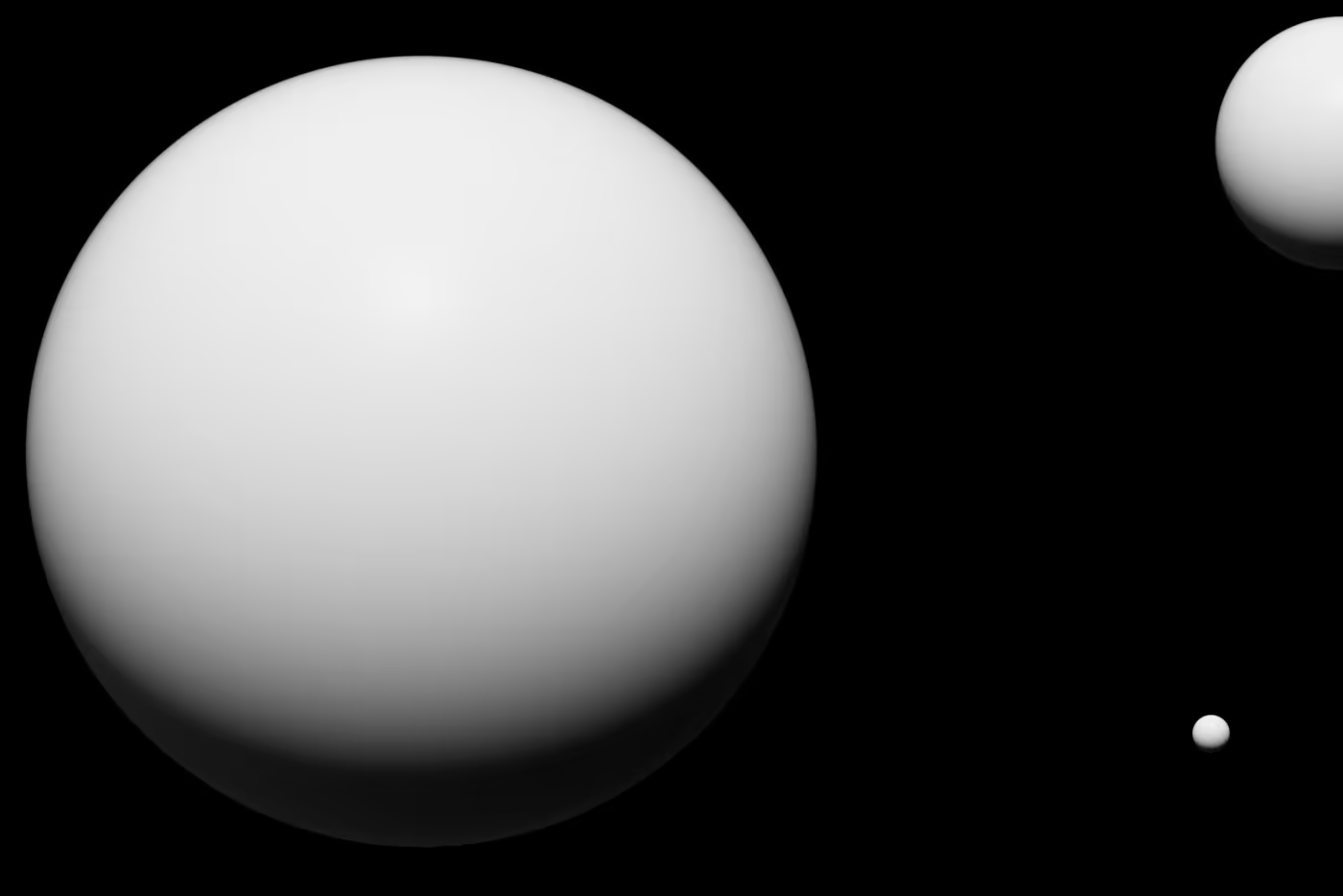
The Merge is a project by the anonymous digital artist Pak (Murat Pak), whose real identity remains a mystery. Over a 48-hour window on 2–4 December 2021, buyers could purchase units of “mass” for US$575 each on Nifty Gateway. In total, 28,983 collectors bought 312,686 units of mass, generating US$91.8 million — the largest public art sale ever by a living artist.
What makes The Merge so distinctive is its built-in scarcity mechanism. When a collector holds more than one unit of mass, the units automatically merge into a single, larger token — permanently reducing the total supply in circulation. The fewer tokens that remain, the larger (and rarer) the survivors become. That mechanic turned a mass-market drop into a living, deflationary artwork.
One important nuance: because the sale was spread across nearly 29,000 buyers, The Merge holds the record for the highest total value of a single artwork — not the most paid by one person for one piece. That distinction belongs to the next entry on the list.
2. Everydays: The First 5000 Days — US$69.3 million
Everydays: The First 5000 Days by Beeple (Mike Winkelmann) is the most expensive NFT ever sold to a single buyer. It is a collage of 5,000 individual images that Beeple created — one every single day — over roughly 13 years, documenting an extraordinary act of creative discipline.
In March 2021, Christie’s auctioned the piece — one of the first times a major, centuries-old auction house sold a purely digital, NFT-only artwork. The sale is widely credited with catapulting NFTs into mainstream consciousness.
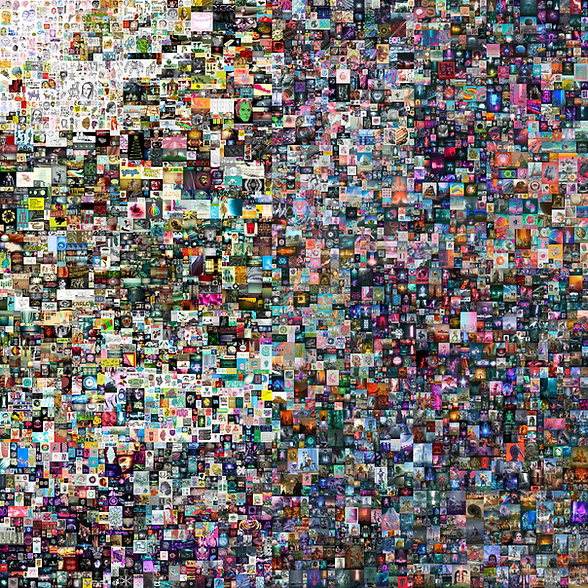
The composition mixes digital renders with hand-drawn elements and is dense with pop-culture and political references, from Jeff Bezos to controversial social commentary. It was bought for US$69.3 million by Vignesh Sundaresan (better known as “Metakovan”), cementing its place as one of the most valuable digital artworks in history.
3. Clock — US$52.7 million
Clock is an NFT that functions as a real-time counter, displaying the number of days WikiLeaks founder Julian Assange has spent detained. Created by Pak in collaboration with Assange, the piece was conceived as a statement on press freedom and human rights.
In February 2022 it sold for 16,953 ETH — about US$52.7 million at the time — to AssangeDAO, a decentralized collective formed specifically to fund Assange’s legal defense. The proceeds were directed to the Wau Holland Foundation, which supported that effort. Beyond its price, Clock stands out as one of the clearest examples of an NFT used as a coordinated act of political fundraising and protest.
4. HUMAN ONE — US$28.9 million
HUMAN ONE is another Beeple landmark, and one of the most conceptually ambitious works on this list because it bridges the digital and physical worlds. The piece is a physical kinetic sculpture — a human-height box of four seamless LED screens — depicting an astronaut walking through ever-changing landscapes, paired with a corresponding NFT.
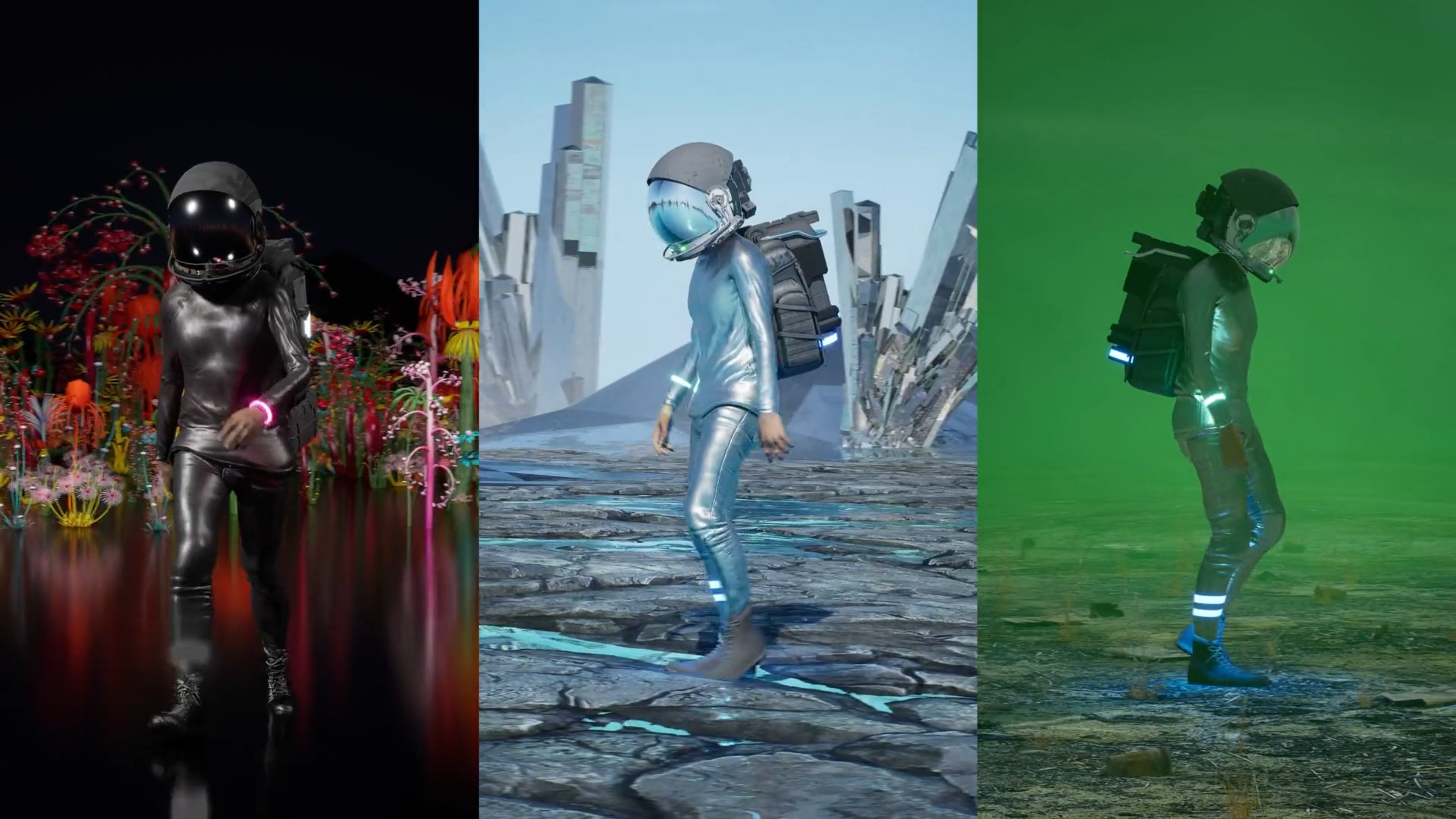
What makes it remarkable is that Beeple retained the ability to update the artwork remotely over time, so HUMAN ONE is never truly “finished” — it is designed to evolve throughout the artist’s life. It sold at Christie’s on 9 November 2021 for US$28.9 million to Ryan Zurrer, a well-known Web3 investor. That blend of a tangible object with a mutable digital soul is exactly what made it a milestone.
5. CryptoPunk #5822 — US$23.7 million
CryptoPunk #5822 is part of the pioneering CryptoPunks collection created by Larva Labs in 2017 — one of the earliest NFT projects on Ethereum and a template for the entire “profile-picture” (PFP) NFT movement that followed. This particular Punk holds the record for the most expensive CryptoPunk ever sold.

It sold for 8,000 ETH — roughly US$23.7 million — on 12 February 2022 to Deepak Thapliyal, then CEO of blockchain firm Chain. Its value stems from extreme rarity: #5822 is an “Alien,” the scarcest of all Punk types, with only nine in the entire 10,000-piece set. Remarkably, the same Punk had changed hands years earlier for a fraction of that price, illustrating just how dramatically demand for early “blue-chip” NFTs escalated.
6. CryptoPunk #7523 (“Covid Alien”) — US$11.75 million
CryptoPunk #7523, nicknamed the “Covid Alien,” sold for US$11,754,000 on 10 June 2021. Before #5822’s later sale, it held the record as the most expensive CryptoPunk. It was offered by a collector known as SillyTuna and sold through the auction house Sotheby’s to an undisclosed buyer — another example of a legacy institution embracing NFTs at the market’s peak.
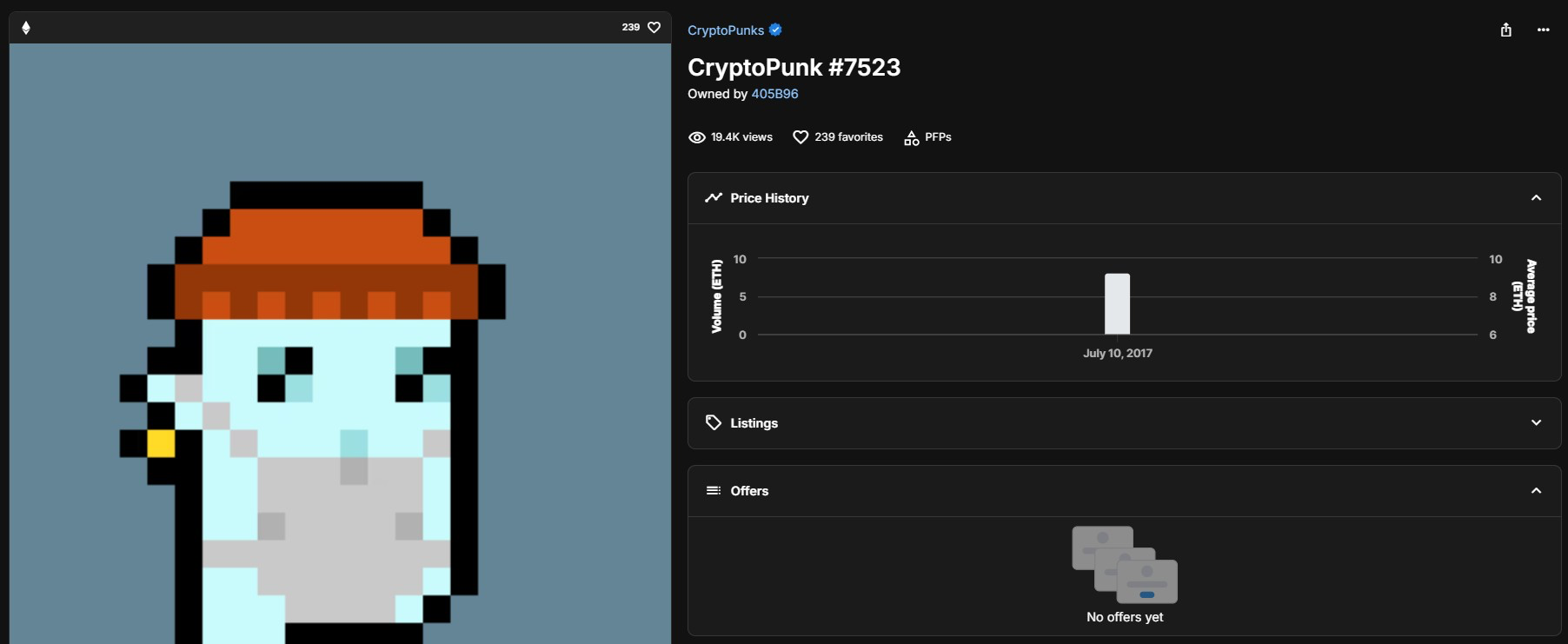
Its appeal is a double dose of rarity: it is one of the nine ultra-rare Alien Punks, and it wears a blue medical face mask — an attribute held by only a small subset of Punks. Arriving at the height of the pandemic, the masked Alien became one of the most iconic and symbolically resonant pieces in the collection.
7. TPunk #3442 — ~US$10.5 million
TPunk #3442 is often described as a “cousin” of CryptoPunks, sharing the same pixel-art aesthetic. It depicts a Joker-style character, making it one of the most striking designs in the TPunk collection — the first major PFP project on the TRON blockchain rather than Ethereum.
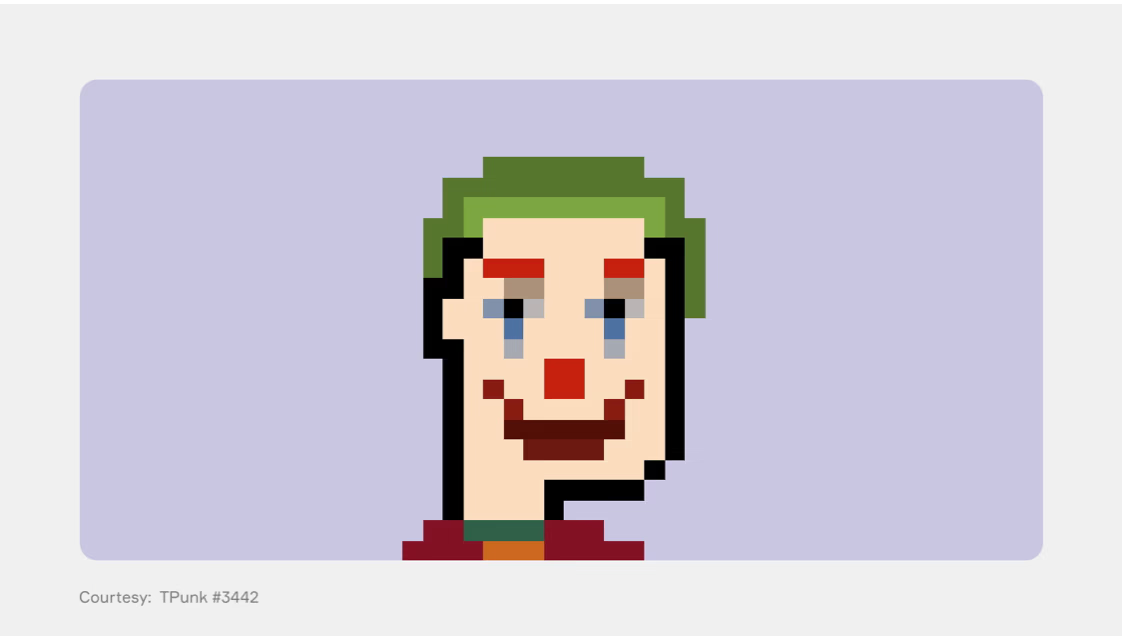
In 2021 it was purchased for 120 million TRX — around US$10.5 million at the time — by Justin Sun, the founder of TRON, who moved it into the APENFT ecosystem. The combination of a standout design and its status as a flagship for the TRON NFT scene made it the chain’s most celebrated collectible.
Where the NFT Market Stands in 2026
Here is the context every one of these headline numbers needs: they are peak-cycle records, not today’s prices. After the 2021–2022 frenzy, the NFT market contracted sharply, and it looks very different in 2026.
Trading has shown signs of a selective recovery — total NFT trading volume reached roughly US$8.2 billion in the first half of 2026, up about 156% from 2025’s lows — but the overall NFT market capitalisation sits near US$2 billion, a shadow of the peak. More importantly, the market has split in two. A small group of “blue-chip” collections has institutionalised and held or recovered value, while the vast long tail of projects has faded toward zero.
That concentration is stark: a handful of top collections now account for the bulk of profile-picture trading volume. Pudgy Penguins staged the strongest comeback of any blue-chip, with its floor climbing to roughly 14 ETH in early 2026, while Bored Ape Yacht Club and CryptoPunks recovered more modestly on the back of brand deals and IP licensing. The other defining trend is a shift from mass retail “flipping” toward higher-conviction, often institutional collecting — the number of daily trades is well below the 2021 peak, but the average value per trade has nearly doubled.
The takeaway for anyone reading a “most expensive NFTs” list today: treat these sales as cultural milestones, not as a promise of returns. Most NFTs are illiquid and highly speculative, and the majority of collections minted during the boom are now worth a tiny fraction of their launch price.
How Malaysians & Singaporeans Can Collect NFTs Safely
You don’t need a Christie’s paddle to participate. If you’re in Malaysia or Singapore, the practical path is: buy crypto legally through a regulated exchange, move it to a wallet you control, then use a reputable global marketplace — while keeping the tax and security rules in mind.
| Step | Malaysia 🇲🇾 | Singapore 🇸🇬 |
|---|---|---|
| 1. Buy crypto (on-ramp) | Use an SC-registered DAX — Luno, HATA, MX Global, SINEGY or Kinetic DAX — funded via DuitNow / bank transfer | Use a MAS-licensed provider — Coinhako, Independent Reserve, Crypto.com or Coinbase SG — funded via PayNow / FAST |
| 2. Move to your own wallet | Withdraw ETH/SOL to a self-custody wallet (e.g. MetaMask, or a Ledger hardware wallet) | Same — self-custody keeps your NFT and keys under your control |
| 3. Buy / mint the NFT | Connect your wallet to a global marketplace (OpenSea, Magic Eden, Blur) — none are SC-registered, so you carry the risk | Same — global marketplaces are not MAS-licensed for local protection |
| 4. Tax | No general capital gains tax; but LHDN can tax profits as income under the “badges of trade” if you trade actively | No capital gains tax; IRAS may treat frequent trading as taxable business income |
Malaysia’s Securities Commission publishes and regularly updates its official list of registered Digital Asset Exchanges; as of 20 July 2026 there are five (Luno, HATA, MX Global, SINEGY and Kinetic DAX). Anything not on that list is not authorised to serve Malaysians. For a fuller walkthrough, see our cryptocurrency guide for Malaysia, and read up on crypto custody before you self-store anything valuable.
Common Pitfalls & How to Stay Safe
High-value NFTs make attractive bait for scammers. If you plan to collect — at any budget — these are the mistakes that cost people the most:
Malicious approvals and wallet drainers. The single biggest way collectors lose NFTs isn’t a hack of the blockchain — it’s signing a malicious transaction that grants a scammer permission to move your assets. Review and revoke stale token approvals regularly using a tool like Revoke.cash, and never blind-sign a request you don’t understand.
Fake collections and copycat listings. Scammers clone popular collections and list counterfeit NFTs. Always verify the official contract address from the project’s verified channels before buying, and be wary of “floor price” deals that look too good.
Phishing links and fake mint pages. Bookmark official marketplace URLs and ignore “you’ve won a free mint” DMs. Our guide on how to spot crypto scam red flags covers these tactics in depth.
Custody carelessness. For anything valuable, use a hardware wallet and a dedicated “vault” wallet that you never connect to unknown sites. See our roundup of the best NFT wallets for options.
Frequently Asked Questions
Sale prices and market figures verified in August 2026 against auction-house records and current market data; NFT valuations move quickly, so confirm the latest figures before relying on them.
Disclaimer: This article is provided by KayaToday for informational and educational purposes only and does not constitute financial, investment, or tax advice. NFTs are highly speculative and volatile digital assets, and you can lose your entire investment. Always do your own research and consult a licensed professional before making any financial decision.