Fractional shares let you buy a slice of a stock for a fixed dollar (or ringgit) amount instead of paying for one whole share. If a single share of a company costs more than you want to commit, you buy a fraction of it — US$5, RM50, whatever you decide — and you own that proportion of a real share, dividends included. For beginners in Malaysia and Singapore, this is the single easiest way to start investing in expensive US stocks with pocket-money sums.
- What Are Fractional Shares?
- How Do Fractional Shares Work?
- Where to Buy Fractional Shares (Malaysia, Singapore & US)
- Malaysia
- Singapore
- United States
- Costs and Fees to Watch
- Benefits of Fractional Shares for Beginners
- Affordable entry into high-priced stocks
- Easier diversification
- Dollar-cost averaging
- Things Beginners Should Be Aware Of
- Voting rights are usually not passed through
- Limited portability and liquidity
- Keep records for tax
- Tax and Withholding for Malaysia & Singapore Investors
- How to Start Investing in Fractional Shares
- How to Choose the Right Fractional Broker
- Common Myths About Fractional Shares
- Frequently Asked Questions
- Final Thoughts
What Are Fractional Shares?
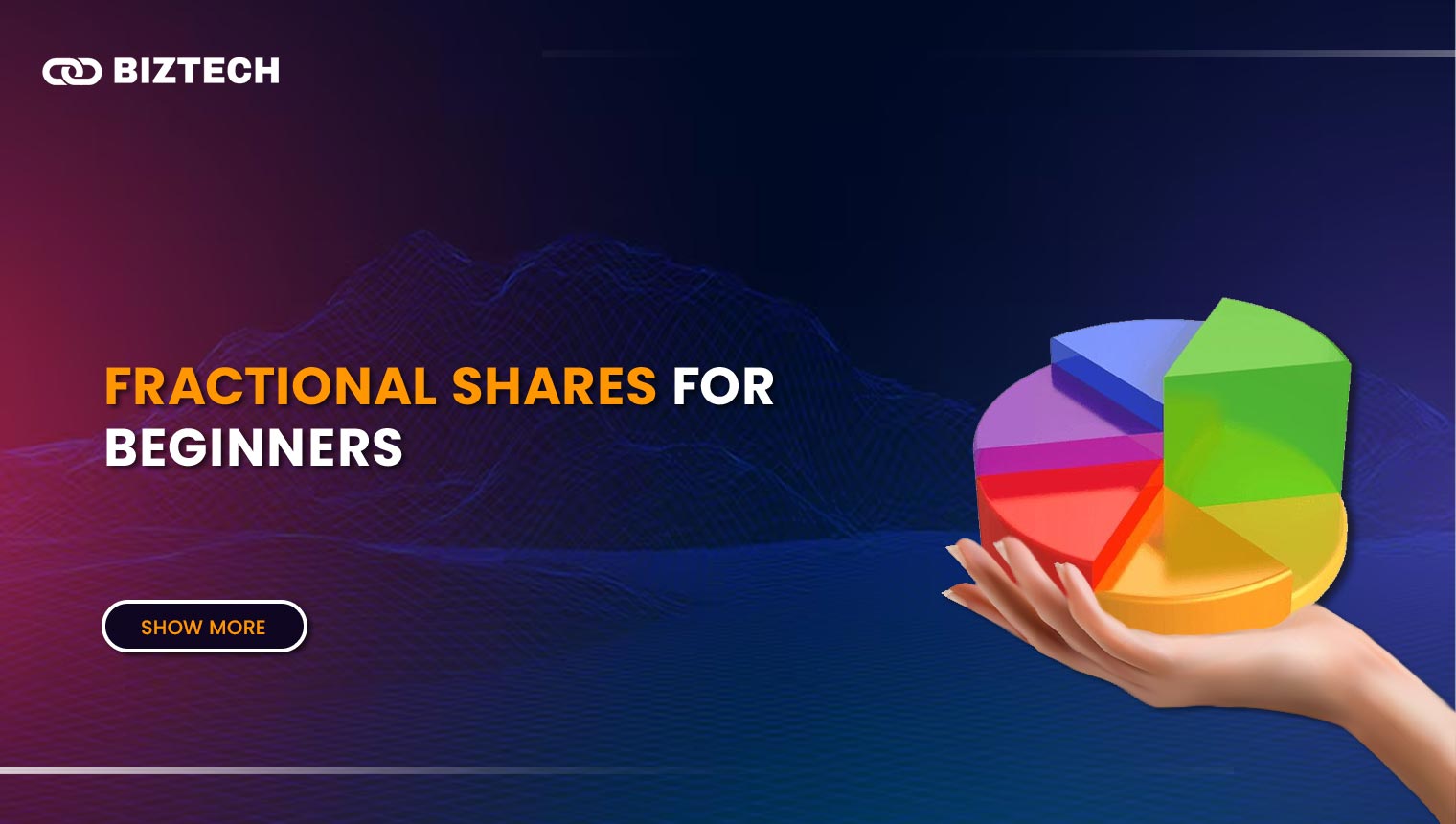
A fractional share is exactly what it sounds like: a portion of one full share. Instead of buying a whole share, you buy a piece of it. If one share of a company trades at US$200 and you invest US$20, you end up owning 0.1 of a share.
Those small units rise and fall in value with the share price, and they earn a proportional slice of any dividend the company pays — if you own 0.1 of a share and the company pays US$4 per share, you receive about US$0.40. Unlike a unit trust or ETF, where your money is pooled into a fund that holds many companies, a fractional share is direct ownership of one specific company — just a smaller amount of it.
This matters because share prices have climbed. Before Amazon’s 20-for-1 stock split in June 2022, a single share traded above US$3,000, which put it out of reach for most small investors. Today one Amazon share is around US$245 — but plenty of quality names still carry three- and four-figure price tags. Eli Lilly trades near US$1,200 a share and ASML above US$1,700. Without fractional shares, owning even one of those would swallow most of a beginner’s monthly budget.
How Do Fractional Shares Work?
Fractional investing flips the usual question. Instead of deciding how many shares to buy, you decide how much money to invest. Your broker then works out the fraction that amount buys at the current price.
The maths is simple:
Behind the scenes, the broker buys whole shares in the market and allocates the fractions across its customers. That is why fractional shares usually have a couple of quirks worth knowing — they often can’t be transferred to another broker (you sell first, then move the cash), and some brokers only match fractional orders during regular US market hours. More on those trade-offs below.
Where to Buy Fractional Shares (Malaysia, Singapore & US)
This is the part most beginner guides get wrong for local readers: they list US-only apps like Robinhood that Malaysians and Singaporeans can’t actually open. Here is who really offers fractional US shares, and to whom.
Malaysia
Only a handful of brokers let Malaysians buy US fractional shares, and the local stock exchange isn’t one of them — Bursa Malaysia shares still trade in 100-unit board lots, so there is no such thing as a fractional Maybank or Tenaga share. (For local investing, see our guide to the best share trading platforms in Malaysia.)
| Broker | Fractional min | US trading fee (2026) | Regulated by | Best for |
|---|---|---|---|---|
| Rakuten Trade | ~RM1 / US$1.88 (as small as 0.01 unit) | RM1–RM100, or US$1.88–US$25 | SC Malaysia (local) | MYR or USD funding; first local broker with US fractional |
| moomoo MY | US$5 (0.0001 share) | US$0.0049/share, min US$0.99 (promo waivers) | SC Malaysia (local) | Low per-share cost, slick app |
| Interactive Brokers | US$0.01 value | US$0.005/share, min US$1 per order | Offshore (US/global) | Widest market access; the US$1 floor hurts tiny trades |
Rakuten Trade was the first Malaysia-regulated broker to launch US fractional trading (in 2023) and lets you fund in either ringgit or US dollars — handy if you’d rather not convert currency up front. moomoo Malaysia is the cheapest per share once you’re past its US$5 minimum. Interactive Brokers gives you the deepest market access, but its US$1 minimum commission means a US$5 fractional buy effectively costs you 20% in fees, so it suits larger orders.
Singapore
Singapore investors have more choice. moomoo, Webull, Tiger Brokers, Syfe Trade and Interactive Brokers all offer fractional shares — but, as in Malaysia, only for US-listed stocks and ETFs, not SGX counters.
| Broker | Fractional min | Fractional scope | Notes |
|---|---|---|---|
| Webull SG | US$1 | Selected US stocks & ETFs | Mobile-only, US regular hours; look for the green-diamond marker |
| Syfe Trade | US$1 | US stocks | Simple interface, built for beginners |
| Tiger Brokers | ~US$1 | US stocks | 1% platform fee, capped at US$1 for a sub-1-share trade |
| moomoo SG | US$5 | US stocks & ETFs | Flat platform fee from US$0.99 per US trade |
| Interactive Brokers | US$0.01 value | 22,000+ US/CA/EU stocks & ETFs | US$1 minimum commission per order |
United States
For completeness — and because these are the platforms every global guide names — the leading US brokers are:
- Fidelity (“Stocks by the Slice”): from US$1, over 7,000 US stocks and ETFs, US$0 commission. Widely rated the best all-round fractional broker.
- Robinhood: from US$1, US$0 commission, no account minimum, very simple app.
- Charles Schwab (“Stock Slices”): US$5 minimum, but S&P 500 companies only; buy up to 30 names in one order, US$0 commission.
- M1 Finance: fractional investing built around automated “pie” portfolios rather than one-off trades.
Costs and Fees to Watch
“Zero commission” rarely means zero cost. With fractional shares, the real costs hide in a few places:
- Minimum commissions: A flat US$1 minimum (as on Interactive Brokers) is trivial on a US$1,000 trade but brutal on a US$5 one. Match your order size to the fee structure.
- Currency conversion (FX): For MY/SG investors, converting ringgit or Singapore dollars into US dollars is often the biggest cost — frequently larger than the commission. Compare the broker’s FX spread, and consider funding in USD where you can.
- Bid/ask spreads: The gap between the buy and sell price applies to fractions just as it does to whole shares, and it can be wide on thinly traded names.
- Platform or inactivity fees: Rare among the newer apps, but check before you commit.
Benefits of Fractional Shares for Beginners
Affordable entry into high-priced stocks
Names like Eli Lilly, ASML, Costco and Broadcom carry hefty share prices. Fractional shares let you own a piece of them without needing hundreds or thousands of dollars per company.
Easier diversification
With US$100 you could split your money across ten different companies at US$10 each, instead of pouring it all into one stock. Spreading your money reduces the damage any single company can do to your portfolio — the closest thing to a free lunch in investing.
Dollar-cost averaging
Because fractional investing is amount-based, it’s perfect for investing a fixed sum on a regular schedule. Put in US$50 every month and you automatically buy more shares when prices are low and fewer when they’re high — smoothing out your average cost and taking the emotion out of timing the market.
Things Beginners Should Be Aware Of
Voting rights are usually not passed through
Most brokers don’t extend shareholder voting rights to fractional holders. You may not be able to vote at company meetings. If that matters to you, check your broker’s policy before buying.
Limited portability and liquidity
Fractional shares generally can’t be transferred to another broker — if you switch platforms you’ll have to sell the fraction first and move the cash. Some brokers also batch small orders together, so execution can be slightly delayed, and fractions may not trade in pre-market or after-hours sessions.
Keep records for tax
Even tiny gains and dividends are, in principle, taxable events somewhere — so keep track of your purchases, sales and dividends. Most brokers issue annual statements you should download and save. For Malaysia and Singapore, the tax picture has its own twists, covered next.
Tax and Withholding for Malaysia & Singapore Investors
Buying US fractional shares from this region carries one cost that catches beginners out, and skips two others they worry about needlessly.
- 30% US dividend withholding: The United States has no tax treaty with either Malaysia or Singapore, so US companies withhold the full 30% statutory rate on dividends paid to residents here. Filing a W-8BEN certifies you’re a non-US person but does not reduce that 30% — a widely repeated myth. This applies to fractional dividends exactly as it does to whole-share dividends.
- No capital gains tax: Neither Malaysia nor Singapore taxes capital gains on listed shares, so your price gains on US stocks are generally not taxed locally. (Malaysia’s foreign-sourced income exemption for individuals runs to 31 December 2036, and the 2% dividend tax from YA2025 applies to Malaysian-sourced dividends above RM100,000, not to your US dividends.) For a deeper look at how cross-border investing is taxed, see our guide to taxable brokerage accounts.
- Watch the “badges of trade”: If you trade so frequently that the tax authority (LHDN in Malaysia, IRAS in Singapore) treats it as a business rather than investing, profits can become taxable as income. Ordinary buy-and-hold fractional investing is nowhere near this line — but day-trading in size is a different question.
How to Start Investing in Fractional Shares
Step 1 — Choose a broker. Pick from the platforms actually available to you (see the tables above). In Malaysia, Rakuten Trade or moomoo are the natural starting points; in Singapore, Webull, Syfe or Tiger. Interactive Brokers suits both if you want the widest access and plan to invest larger amounts.

Step 2 — Decide your budget. The whole point of fractional investing is that you don’t need a fortune. Set an amount you’re comfortable putting in each month and could afford to lose while you learn.
Step 3 — Pick your stocks. Beginners often start with companies they know and use — but knowing a brand isn’t the same as it being a good investment. Diversify across a few names or, simpler still, buy a fraction of a broad ETF (like an S&P 500 tracker) to own hundreds of companies at once. If you’re weighing single stocks against funds, our cheap stocks guide covers lower-priced picks too.
Step 4 — Make your first purchase. Enter the dollar amount you want to invest, not a number of shares. Invest US$10 in a US$500 stock and the platform allocates you 0.02 of a share.
Step 5 — Track and reinvest. Check in periodically rather than obsessively. If your broker offers a dividend reinvestment plan (DRIP), switching it on automatically ploughs dividends back into more shares — compounding your position over time.

How to Choose the Right Fractional Broker
Weigh five things before you open an account:
- Can you actually open it? Confirm the broker accepts residents of your country and is regulated (SC Malaysia, or MAS in Singapore) or a reputable global name.
- Total cost, not just commission. Add up the minimum commission plus the FX spread on the amount you’ll typically invest.
- What’s fractionable. Schwab is S&P 500 only; IBKR covers tens of thousands of names. Make sure the stocks you want are eligible.
- Funding currency. If you’d rather not convert, Rakuten Trade lets Malaysians trade US shares in ringgit.
- Beginner-friendliness. A clean app, fractional ETF support and an easy DRIP switch matter more early on than advanced charting you won’t use.
Common Myths About Fractional Shares
- “Fractional shares are fake.” False — they represent real, proportional ownership of the company, dividends included.
- “They’re riskier than full shares.” No. A fraction carries exactly the same per-dollar risk as a whole share; risk comes from the company, not the size of your slice.
- “You can’t make real money with small amounts.” A myth — consistent monthly investing plus reinvested dividends compounds meaningfully over years. The habit matters more than the starting sum.
- “A W-8BEN cuts my US dividend tax to 15%.” Not for MY/SG residents — with no US tax treaty, the rate stays 30%.
Read also: 10 Best Stocks For Beginners with Little Money
Frequently Asked Questions
Final Thoughts
Fractional shares have quietly removed the biggest obstacle to investing: the price tag. You no longer need thousands of dollars to own the world’s best-known companies — a few ringgit or a few US dollars is enough to begin. For beginners in Malaysia and Singapore, the winning move is to pick a broker you can actually open, invest a small amount consistently, keep your costs (especially FX) low, and let dividends and time do the compounding.
Start small, stay regular, and let your money get to work. Figures verified July 2026 — always confirm current fees, minimums and eligibility directly with the broker, as terms change.
Helpful resources:
Disclaimer: This article is provided by KayaToday for informational purposes only and does not constitute financial advice. Always do your own research and consider consulting a licensed professional before investing. All investments carry risk, including the possible loss of capital, and you should invest only what you can afford to lose.