Apple (NASDAQ: AAPL) is the kind of stock almost every new investor puts on their first watchlist — and eToro is one of the platforms most often recommended for buying it. But the honest version of this guide has to answer two questions, not one: how do you buy Apple shares on eToro, and should you be using eToro at all from where you live?
- Key takeaways
- Read this first: eToro’s licensing status in Malaysia vs Singapore
- Apple stock at a glance (July 2026)
- What is eToro and how does it work?
- Pros and cons of trading Apple on eToro
- What buying Apple on eToro actually costs in 2026
- Worked example: a S,000 Apple position
- How to buy shares of Apple (AAPL) on eToro
- Selling Apple shares on eToro
- Apple stock trading hours and after-hours on eToro
- How to analyse Apple’s stock performance
- 1. Read the quarterly results, not the headlines
- 2. Reading Apple’s chart on eToro
- 3. The metrics that actually matter for Apple
- What’s driving Apple stock in 2026
- The bull case
- The bear case
- How to decide whether Apple belongs in your portfolio
- Common mistakes when buying Apple on eToro
- If you’re in Malaysia: licensed ways to buy Apple stock
- Conclusion
- Frequently Asked Questions
That second question matters more than most articles admit. eToro holds a Capital Markets Services licence from the Monetary Authority of Singapore, but it is not licensed by the Securities Commission Malaysia and sits on the SC’s Investor Alert List. Same platform, two very different levels of protection depending on which side of the Causeway you’re on.
This guide covers both: a step-by-step walkthrough of buying AAPL on eToro, the real 2026 fee schedule, what Apple’s numbers actually look like today, and — if you’re in Malaysia — the licensed routes to the same shares.
Key takeaways
- eToro is MAS-licensed in Singapore but not licensed in Malaysia. Malaysian users have no recourse under Malaysian securities law if something goes wrong.
- eToro is no longer commission-free on stocks in most countries. A flat US$1 per stock trade applies in most regions (US$2 on some exchanges); only the UK and Ireland still get $0. ETFs remain commission-free.
- Apple traded around US$333 in mid-July 2026, a market cap near US$4.9 trillion — the world’s second most valuable company — on a trailing P/E of roughly 38x.
- Apple’s dividend is small. About US$0.27 per quarter, a yield near 0.32%. Buy Apple for growth, not income.
- Watch the fees that aren’t the commission: US$5 withdrawal, US$10/month inactivity after a year, and currency conversion on every deposit that isn’t already in USD.
Read this first: eToro’s licensing status in Malaysia vs Singapore
This is the part most “how to buy Apple on eToro” guides skip, and it’s the part that carries real financial consequences.
| Country | Licensed? | Regulator / entity | What it means for you |
|---|---|---|---|
| Singapore | Yes | eToro Singapore Pte Ltd — MAS Capital Markets Services licence CMS101824, live since July 2025 | You are dealing with a locally regulated entity. Complaints and disputes fall under Singapore’s regulatory framework. |
| Malaysia | No | None. eToro appears on the Securities Commission Malaysia Investor Alert List | The SC states eToro is not licensed or registered to carry on regulated activities in Malaysia. You are not protected under Malaysian securities law and may have no local legal recourse in a dispute. |
To be clear about what this does and doesn’t mean: the Investor Alert List is not an accusation of fraud. It is a register of entities carrying out regulated activity without SC authorisation. eToro is a Nasdaq-listed company (ticker ETOR, since May 2025) regulated in several major jurisdictions — FCA in the UK, CySEC in Europe, ASIC in Australia. But none of those licences give a Malaysian investor local protection, and the SC has been explicit on this point.
If you’re in Malaysia and want Apple shares, skip to the licensed alternatives section below — you can buy the exact same stock through brokers that are properly authorised here.
Read more: Best Share Trading Malaysia Platforms to Use in 2026
Apple stock at a glance (July 2026)
| Metric | Figure | What it tells you |
|---|---|---|
| Share price | ~US$333 | Near the top of its 52-week range |
| Market cap | ~US$4.9 trillion | World’s 2nd most valuable listed company |
| 52-week range | ~US$202 – US$333 | Roughly a 65% move off the low — this is not a “cheap” entry point |
| Trailing P/E | ~38x | Well above Apple’s own 10-year average; forward P/E closer to ~34x |
| Dividend | US$0.27/quarter (~US$1.08/yr) | Yield ~0.32% — negligible as an income source |
| Analyst consensus | “Buy”, avg target ~US$313–329 | Note: the average target sits at or below the current price |
That last row deserves a moment. A “Buy” consensus with an average price target below the market price is a signal that the stock has run ahead of where analysts modelled it. It doesn’t mean sell — targets get revised upward all the time — but it does mean you are not buying a bargain that the market has overlooked.
Figures verified July 2026. Prices move daily — check live quotes before you trade.
What is eToro and how does it work?
eToro is a multi-asset brokerage and social trading platform offering stocks, ETFs, currencies, commodities and crypto. Its defining feature is CopyTrader — the ability to mirror the positions of other users automatically — alongside a social feed where traders discuss positions and news.
The company itself went public on the Nasdaq in May 2025 under the ticker ETOR, pricing its IPO at US$52 per share and closing its first day around US$67. That matters for users in a small but real way: a listed broker files public financials, which is more transparency than most private trading apps offer.
One structural point that trips up beginners: eToro offers both real shares and CFDs (contracts for difference). If you buy AAPL with no leverage and hold a long position, you own the underlying share. Apply leverage or go short, and you’re trading a CFD — a leveraged derivative where losses can exceed your deposit. eToro’s own risk disclosure states that 52% of retail investor accounts lose money trading CFDs with the provider. For a long-term Apple position, stay on the real-shares side.
Pros and cons of trading Apple on eToro
| Pros | Cons |
|---|---|
| Fractional shares — you can buy a slice of Apple from about US$10 rather than a full ~US$333 share | Not licensed in Malaysia (SC Investor Alert List); MAS-licensed in Singapore only |
| Genuinely beginner-friendly interface with a free unlimited demo account | US$1 commission per stock trade in most countries — the old “zero commission” pitch no longer applies broadly |
| CopyTrader and social feed for learning from other traders | Currency conversion fees on non-USD deposits (e.g. ~0.75% on SGD via online banking) add up |
| Extended-hours trading available on major US names including Apple | US$5 withdrawal fee and US$10/month inactivity fee after 12 months dormant |
| Nasdaq-listed parent company with public financial reporting | Limited advanced order types and research depth versus a full-service broker like Interactive Brokers |
What buying Apple on eToro actually costs in 2026
The single most outdated claim circulating about eToro is that it’s commission-free on stocks. That changed. Here is the current schedule:
| Fee | Amount | Notes |
|---|---|---|
| Stock commission | US$1 per trade (most countries) | US$2 on some exchanges (e.g. Australia, Hong Kong, Dubai). US$0 in UK & Ireland only |
| ETF commission | US$0 | Commission-free worldwide, any trade size |
| Currency conversion | ~0.75% and up | Applies to non-USD deposits. SGD via online banking ~0.75%; card deposits cost more |
| Withdrawal | US$5 flat | Minimum withdrawal US$30 from a USD account |
| Inactivity | US$10/month | Starts after 12 months with no login. Simply logging in resets it |
| Minimum deposit | US$50–US$500 | Varies by country — Singapore’s minimum first deposit is US$500 |
Worked example: a S$2,000 Apple position
Say you’re in Singapore and deposit S$2,000 (roughly US$1,480) by online banking to buy Apple:
- Currency conversion at ~0.75%: ~US$11
- Stock commission on the buy: US$1
- Stock commission when you eventually sell: US$1
- Withdrawal when you cash out: US$5
Round trip: roughly US$18 on a US$1,480 position, about 1.2%. The commission is trivial; the FX conversion is the real cost. If you plan to add to the position monthly, funding in USD or consolidating deposits into fewer, larger transfers will save you more than any commission comparison.
How to buy shares of Apple (AAPL) on eToro
Step 1: Open an account
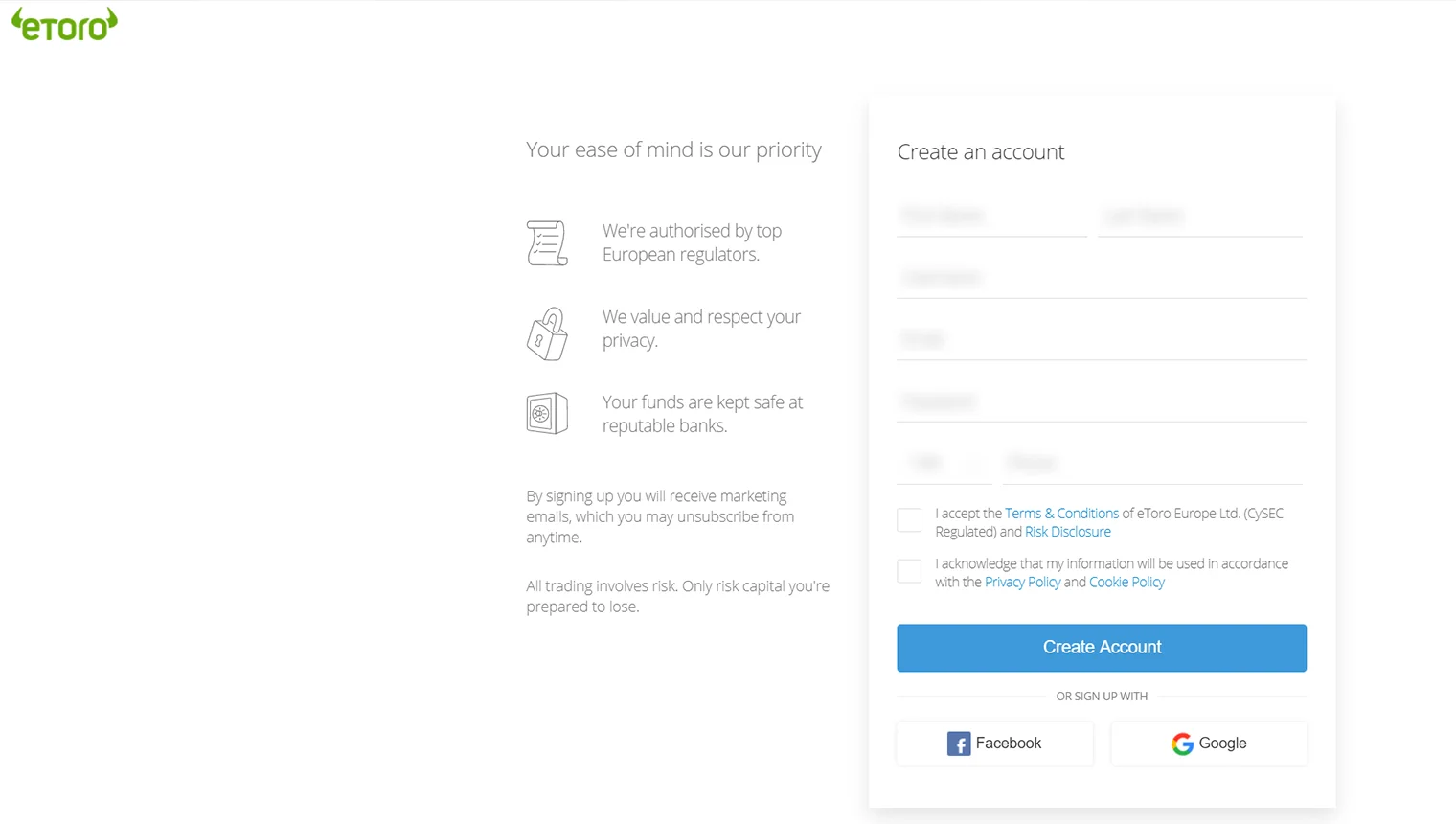
Register on eToro, complete the identity verification (KYC) step with a government ID and proof of address, and answer the suitability questionnaire. Verification is usually same-day but can take longer if your documents are unclear.
Step 2: Explore the platform on the demo account first
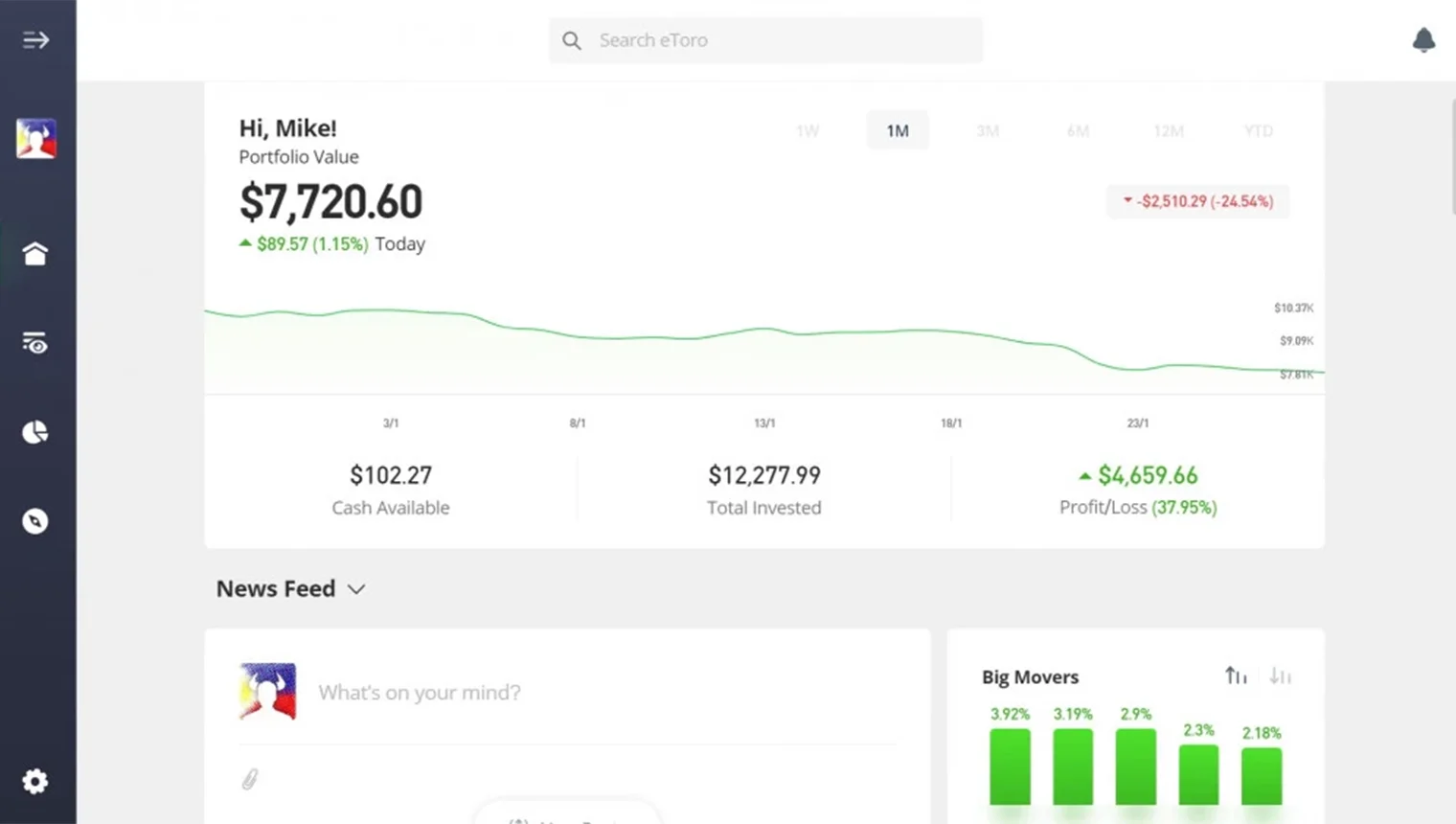
eToro gives every account a virtual portfolio with US$100,000 in practice funds. Place a few AAPL orders there before risking real money — particularly to see the difference between a real-share order and a leveraged CFD order, which is the mistake beginners most often make.
Step 3: Fund your account
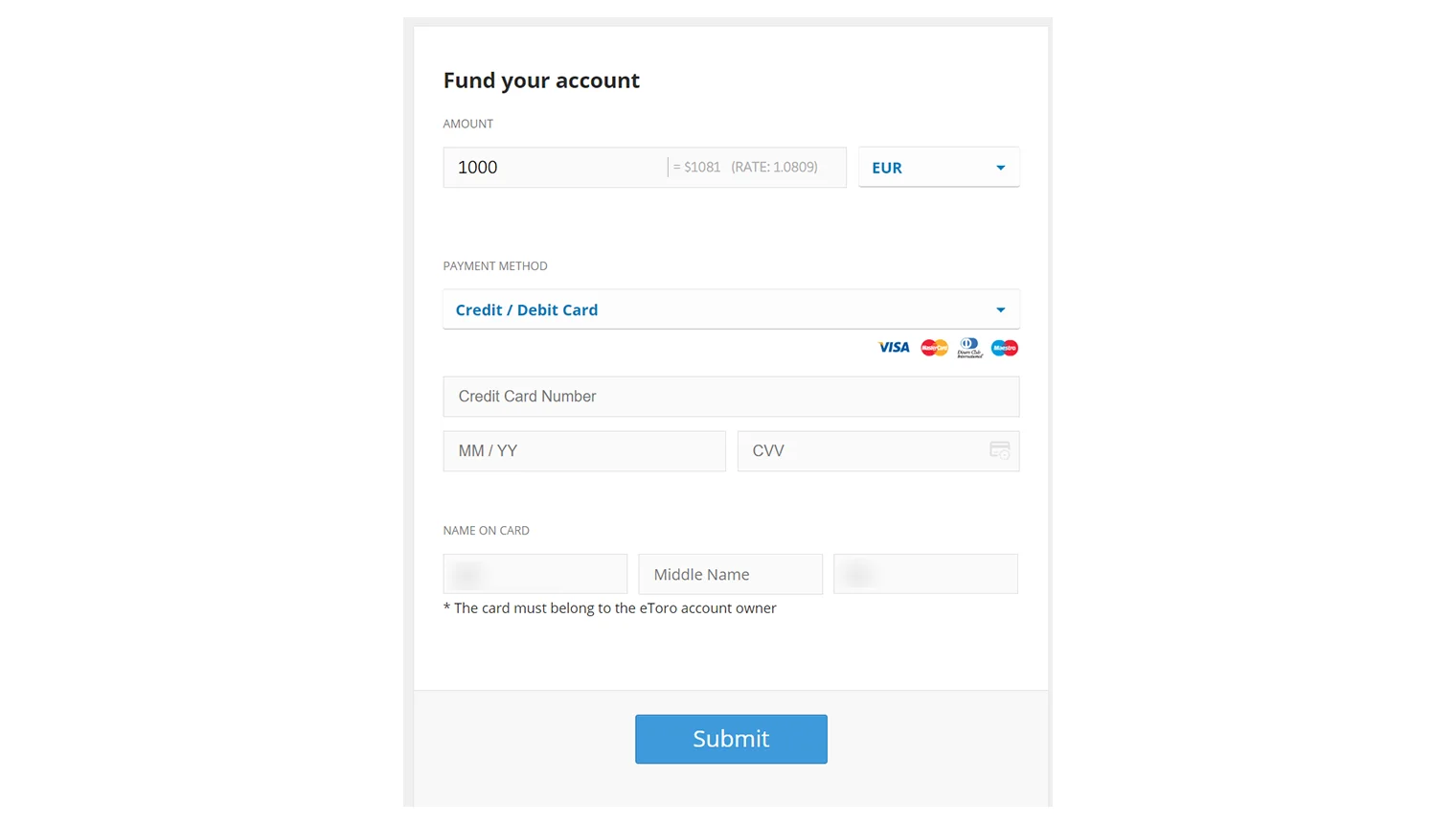
Deposit by bank transfer, card or e-wallet. Note the conversion cost if you’re funding in a currency other than USD — bank transfer is generally cheaper than card. Check your country’s minimum first deposit before you start.
Step 4: Find Apple stock
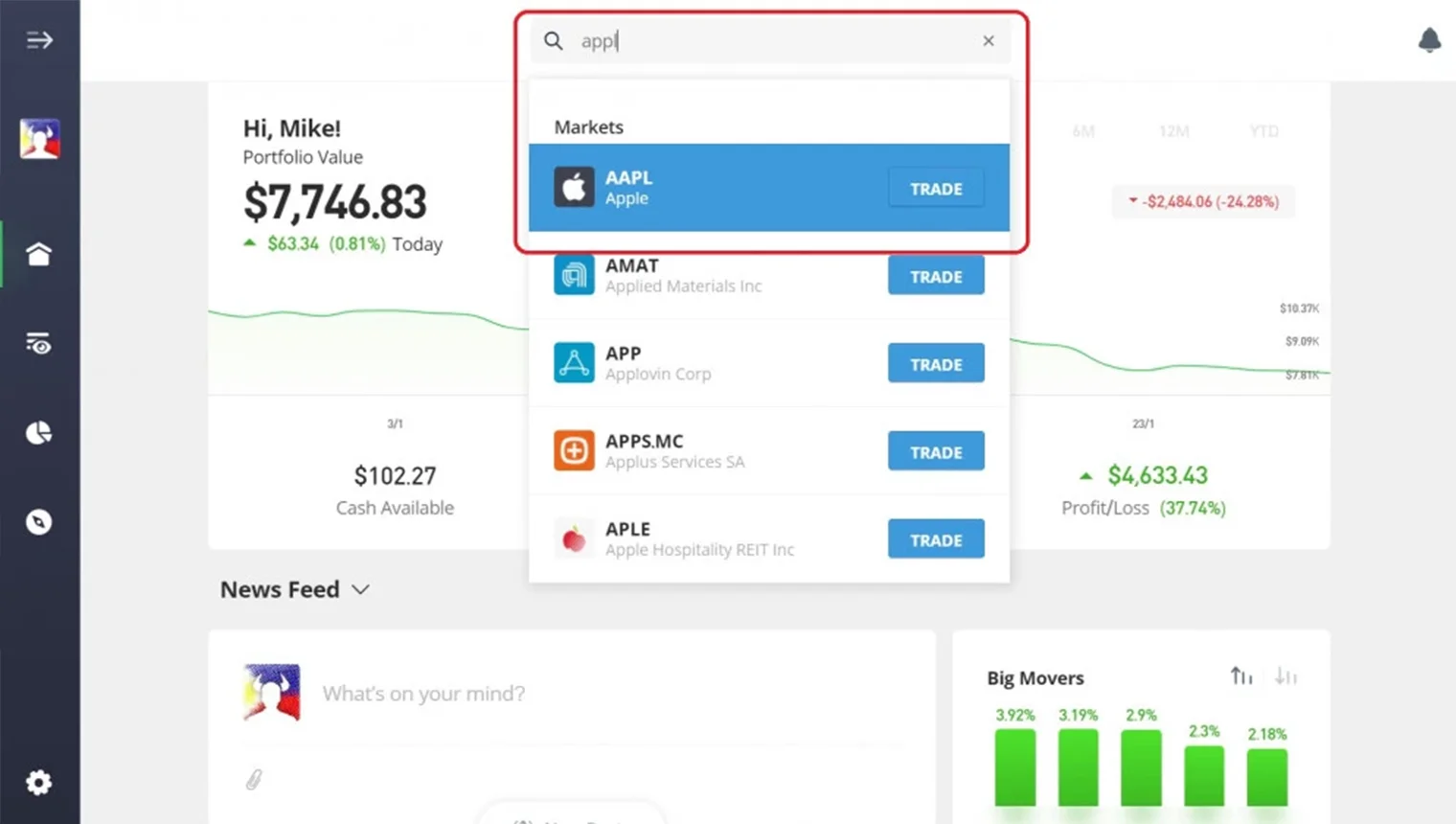
Search the ticker AAPL. The stock profile page shows the live price, chart, analyst ratings, earnings dates and the eToro community sentiment on the name.
Step 5: Size your position
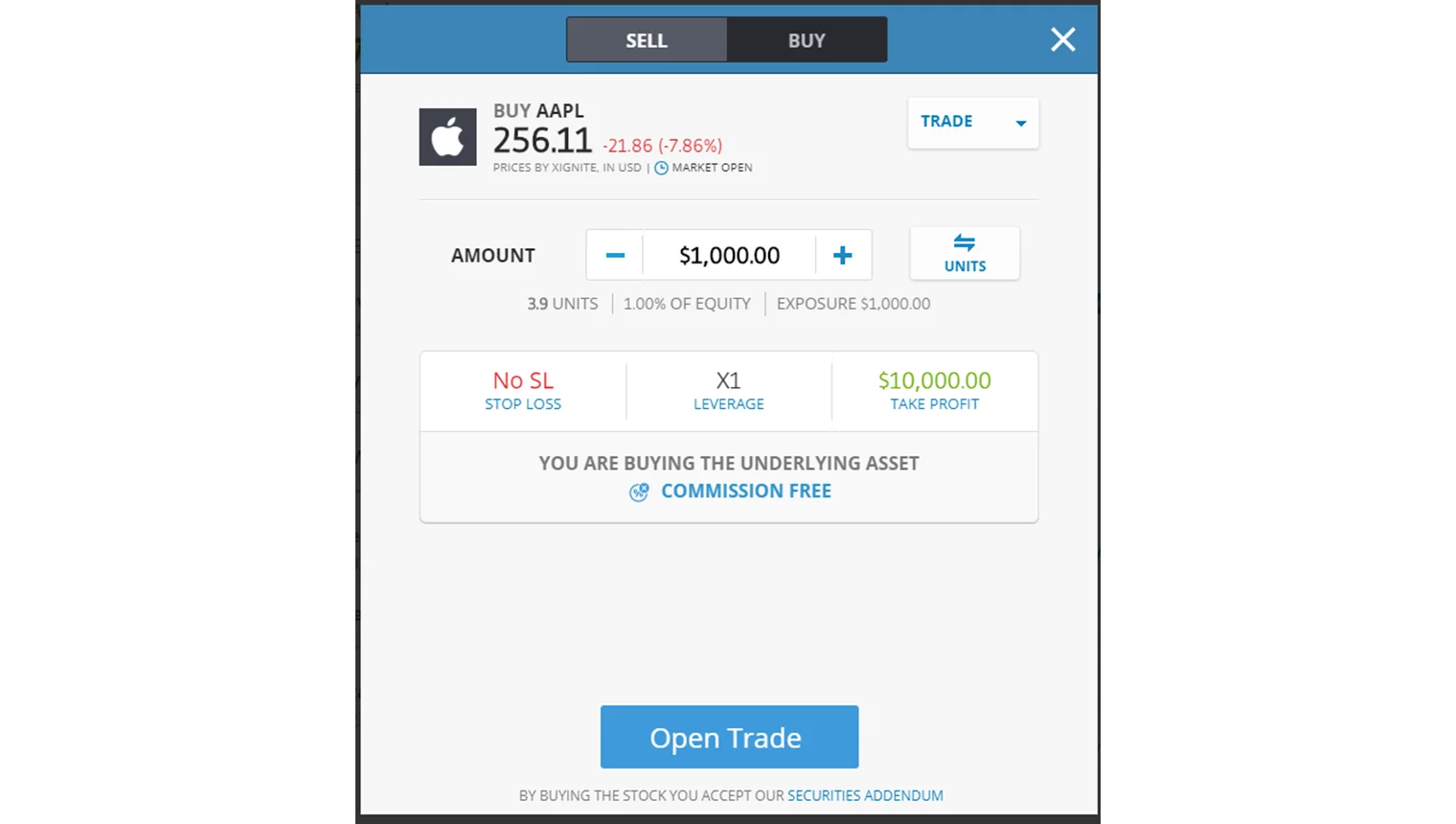
Enter an amount rather than a share count — eToro supports fractional shares, so you can invest US$50 in Apple without buying a whole ~US$333 share. Critically: leave leverage at x1. Anything above x1 converts your order into a CFD.
Step 6: Choose market or limit, then execute
A market order fills at the next available price. A limit order lets you name your maximum price and waits. For a stock as liquid as Apple during regular hours the difference is small, but limit orders are worth using in volatile sessions — especially around earnings.
Step 7: Monitor your position
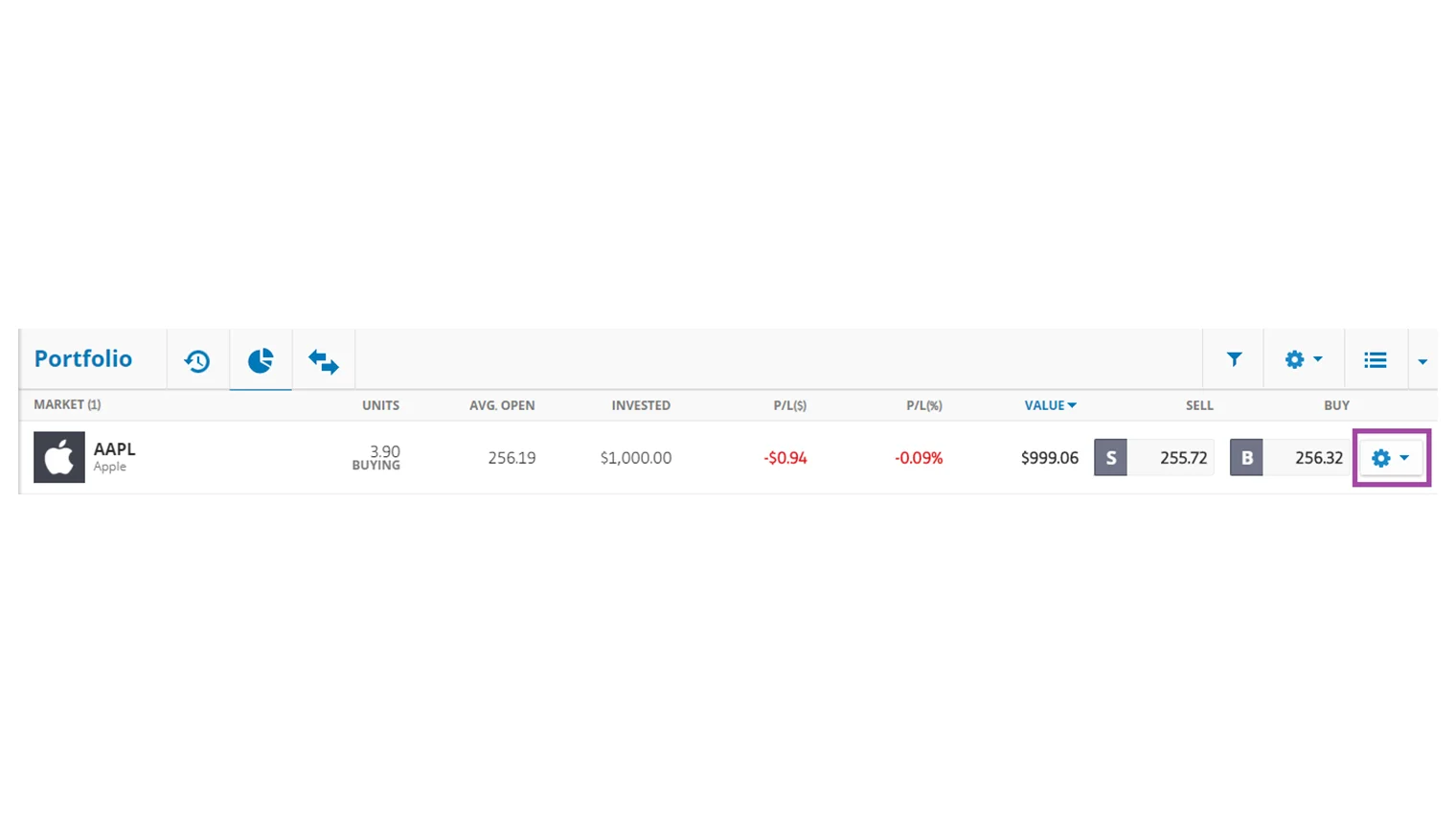
Your Portfolio tab shows unrealised profit and loss. Resist the urge to check it daily — for a long-term holding, a quarterly review around earnings is more useful and far less likely to prompt a panicked decision.
Step 8: Use risk management tools
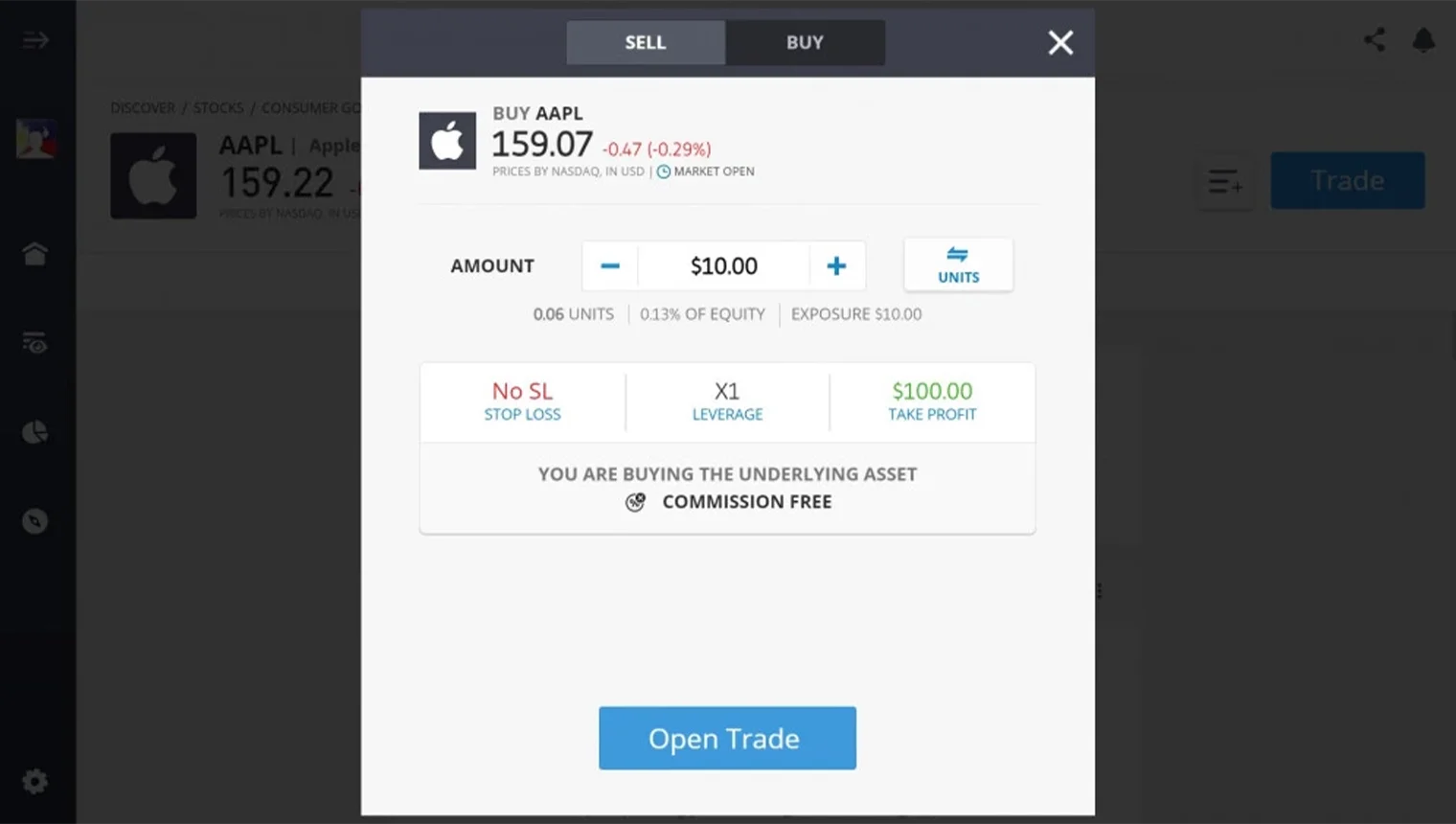
Stop-loss and take-profit orders are built into the order ticket. One caveat worth understanding: a stop-loss on a real share is not a guarantee of price — in a gap-down open it executes at the next available price, which can be well below your stop.
Step 9: Understand what happens to your dividends
Apple pays roughly US$0.27 per share each quarter. As a non-US investor, that dividend is subject to 30% US withholding tax (reduced to 15% for some treaty countries — Malaysia and Singapore residents generally face the full 30% on US dividends). On a 0.32% yield this is a rounding error, but it matters a great deal if you later move into US dividend stocks.
Step 10: Keep learning
Understand the business you own. Apple’s quarterly results, its Services growth rate and its iPhone upgrade cycle tell you far more about your investment than any chart pattern will.
Read more: Fractional Shares for Beginners: How to Start Investing with Small Amounts
Selling Apple shares on eToro
- Open the position from your Portfolio tab.
- Click Close (or use the sell option on the AAPL page) and enter the quantity — you can close part of a position, not just all of it.
- Review the estimated proceeds, which will reflect the US$1 commission.
- Confirm. Settlement follows the standard US T+1 cycle, so funds become withdrawable one business day after the trade.
Remember the US$5 withdrawal fee and US$30 minimum withdrawal when planning how much to take out at once.
Apple stock trading hours and after-hours on eToro
Apple trades on the Nasdaq during the regular session, 9:30 a.m. to 4:00 p.m. ET, Monday to Friday — that’s 9:30 p.m. to 4:00 a.m. Malaysia/Singapore time (10:30 p.m. to 5:00 a.m. during US daylight saving).
Contrary to a common misconception, the Nasdaq does not prohibit extended-hours trading — it facilitates pre-market and after-hours sessions, and brokers choose whether to offer access. eToro does, on a selected list of major US stocks that includes Apple:
| Session | US Eastern Time | Malaysia / Singapore (approx.) |
|---|---|---|
| Pre-market | 6:30 a.m. – 9:30 a.m. | 6:30 p.m. – 9:30 p.m. |
| Regular session | 9:30 a.m. – 4:00 p.m. | 9:30 p.m. – 4:00 a.m. |
| After-hours | 4:00 p.m. – 7:00 p.m. | 4:00 a.m. – 7:00 a.m. |
Extended-hours instruments on eToro carry a separate symbol suffix. Two warnings that matter more than the convenience: spreads are materially wider outside regular hours, and volume is thin, so a modest order can move the price against you. Apple reports earnings after the close — which is precisely when after-hours volatility is at its worst. Unless you have a specific reason to trade that window, wait for the regular session.
How to analyse Apple’s stock performance
1. Read the quarterly results, not the headlines
Apple’s recent reporting has been strong. In fiscal Q1 2026 (quarter ended 27 December 2025) Apple posted revenue of US$143.8 billion, up 16% year over year, with diluted EPS of US$2.84, up 19% — all-time records for both revenue and EPS, with iPhone delivering its best quarter ever.
Fiscal Q2 2026 (quarter ended 28 March 2026) followed with revenue of US$111.2 billion, up 17%, and diluted EPS of US$2.01, up 22% — March-quarter records driven by iPhone 17 demand. iPhone revenue reached US$56.99 billion against US$46.84 billion a year earlier, and Services hit US$30.98 billion versus US$26.64 billion.
Two things to track each quarter: Services revenue growth (high-margin, recurring, and the reason Apple’s multiple expanded) and gross margin. Both tell you more about the durability of earnings than the headline number.
2. Reading Apple’s chart on eToro
eToro’s charting is powered by TradingView, giving you the standard toolkit — moving averages, Bollinger Bands, RSI, MACD, On-Balance Volume, Keltner Channels — plus access to a large public library of community-built indicators.
For a long-term Apple holding, the honest answer is that you need very little of it. A 50-day and 200-day moving average will tell you whether the trend is intact. Layering a dozen indicators onto a mega-cap chart tends to manufacture signals rather than reveal them.
Read more: TradingView Review: The Trader’s Perspective
3. The metrics that actually matter for Apple
- P/E ratio (~38x trailing): Apple has historically traded closer to 25–30x. The current multiple prices in successful AI execution.
- Services as a share of revenue: higher-margin and stickier than hardware — the single best indicator of whether Apple’s premium multiple is justified.
- Free cash flow and buybacks: Apple authorised a further US$100 billion buyback alongside its Q2 2026 results. Buybacks shrink the share count and flatter EPS growth.
- Dividend yield (~0.32%): useful mainly as a signal of financial health, not as income.
- Greater China revenue: Apple’s most competitive market and its most politically exposed one.
Read more: How to Analyze a Company’s Financial Position
What’s driving Apple stock in 2026
The bull case
- The iPhone 17 supercycle is real. Two consecutive record quarters with double-digit iPhone growth suggests a genuine replacement wave, not just favourable comparisons.
- 2026’s product slate is unusually heavy. The iPhone 18 and 18 Pro are expected in September with Apple’s A20 chip, alongside Apple’s first foldable iPhone — a 7.8-to-8-inch folding display reportedly priced between US$2,000 and US$2,500. A new form factor at a premium price point is the kind of thing that resets an upgrade cycle.
- Siri finally got its overhaul. The rebuilt, LLM-based Siri shipping with iOS 26.4 understands personal context and on-screen content, powered by Google’s Gemini model running on Apple’s Private Cloud Compute infrastructure. Apple is also opening Siri to third-party assistants through an Extensions system.
- Services keeps compounding at low-to-mid teens growth with far better margins than hardware.
The bear case
- Valuation. At ~38x trailing earnings against a ~34x forward multiple, a lot of good news is already in the price. The average analyst target sitting below the market price is the clearest expression of this.
- Apple is renting its AI. Leaning on Google’s Gemini for Siri’s intelligence is pragmatic and it works — but it means Apple’s most important new capability depends on a competitor’s model.
- Regulatory pressure on App Store economics in the EU and US continues to chip at Services margins.
- China remains fiercely competitive against domestic handset makers.
- Foldable execution risk. A first-generation folding device at US$2,000+ is a genuinely new manufacturing challenge, and hinge or display problems would be very public.
How to decide whether Apple belongs in your portfolio
Work through these five questions before you place the order:
- What’s your holding period? Apple at 38x earnings is a poor short-term trade and a defensible ten-year holding. If you can’t hold through a 25% drawdown, the position size is wrong.
- How much Apple do you already own? If you hold an S&P 500 or global index fund, Apple is likely already one of your largest holdings. Buying the individual stock concentrates a bet you have already made.
- Growth or income? At 0.32%, Apple is not an income stock. If you need yield, look elsewhere.
- Can you tolerate the currency risk? A MYR or SGD investor in a USD stock is taking two positions at once. A strong ringgit can erase a decent USD gain.
- Are you buying it because you understand it, or because you own the phone? Familiarity with a product is not investment research. Apple is a good company — that is a separate question from whether US$333 is a good price.
Read more: 10 Best Long-Term Stocks to Buy and Hold Forever
Common mistakes when buying Apple on eToro
- Accidentally opening a CFD. Any leverage above x1, or any short position, is a derivative — not share ownership. This is the single most common and most costly beginner error.
- Ignoring the currency conversion. Many investors compare commissions to the cent while losing far more to FX on every deposit.
- Depositing by card for convenience. Card deposits typically carry a higher conversion mark-up than bank transfer.
- Forgetting the inactivity fee. A buy-and-hold investor who never logs in gets billed US$10/month after twelve months. A single login resets the clock.
- Trading the earnings reaction after hours. Wide spreads and thin volume in the exact session where the price swings hardest.
- Assuming a foreign licence protects you locally. An FCA or ASIC licence does not give a Malaysian investor recourse in Malaysia.
If you’re in Malaysia: licensed ways to buy Apple stock

Given eToro’s status on the SC’s Investor Alert List, Malaysian investors have better options. AAPL is the same share wherever you buy it — the difference is entirely in who you’re buying it through.
| Broker | Regulation | US stock cost | Best for |
|---|---|---|---|
| Rakuten Trade | Bursa Malaysia participating organisation, SC-licensed | From RM1 per trade; fractional shares supported | Malaysians who want a locally licensed broker and MYR funding |
| Moomoo MY | SC-licensed Malaysian entity | Promotional zero-commission periods for new accounts | Beginners wanting a modern app plus Bursa and US access |
| Interactive Brokers | Multiple tier-1 regulators; offers Bursa Malaysia access | Around US$0.005/share, ~US$1 minimum | Serious investors wanting 150+ markets and the lowest FX spread |
| Webull MY | SC-licensed Malaysian entity | Zero-commission US stock promotions | Active traders who want charting depth for free |
Whichever you choose, verify the licence yourself on the SC’s public register before depositing — the check takes under a minute and is the best-value minute in investing.
Read more: 10 Best Stocks For Beginners with Little Money | Trading vs Investing: What are The Differences?
Conclusion
Buying Apple on eToro is mechanically simple: verify, fund, search AAPL, size the position at x1 leverage, execute. The platform is beginner-friendly and the fractional-share support means you don’t need US$333 to start.
The harder questions are the ones worth sitting with. eToro’s licensing differs sharply between Singapore and Malaysia, and that difference is not cosmetic — it determines whether you have local legal recourse. And Apple at roughly 38x earnings, near the top of its 52-week range with analyst targets sitting below the market price, is a quality business at a full price rather than an obvious bargain.
Neither of those is a reason not to invest. They’re reasons to invest deliberately: right platform for your jurisdiction, right position size for your timeline.
Read more: 10 Best Stocks with Promising Performance to Buy in 2026
Frequently Asked Questions
Disclaimer: All figures in this guide were verified in July 2026 and can change without notice — always confirm current prices, fees and licensing status directly with the provider before you trade. This article is produced by KayaToday for general information and education only. It is not financial advice, and it does not take into account your personal circumstances, objectives or risk tolerance. Investing in shares carries risk, including the loss of your capital. Consider speaking with a licensed financial adviser before making an investment decision.
Sources: Securities Commission Malaysia Investor Alert List | MAS Financial Institutions Directory | Apple Q2 2026 results