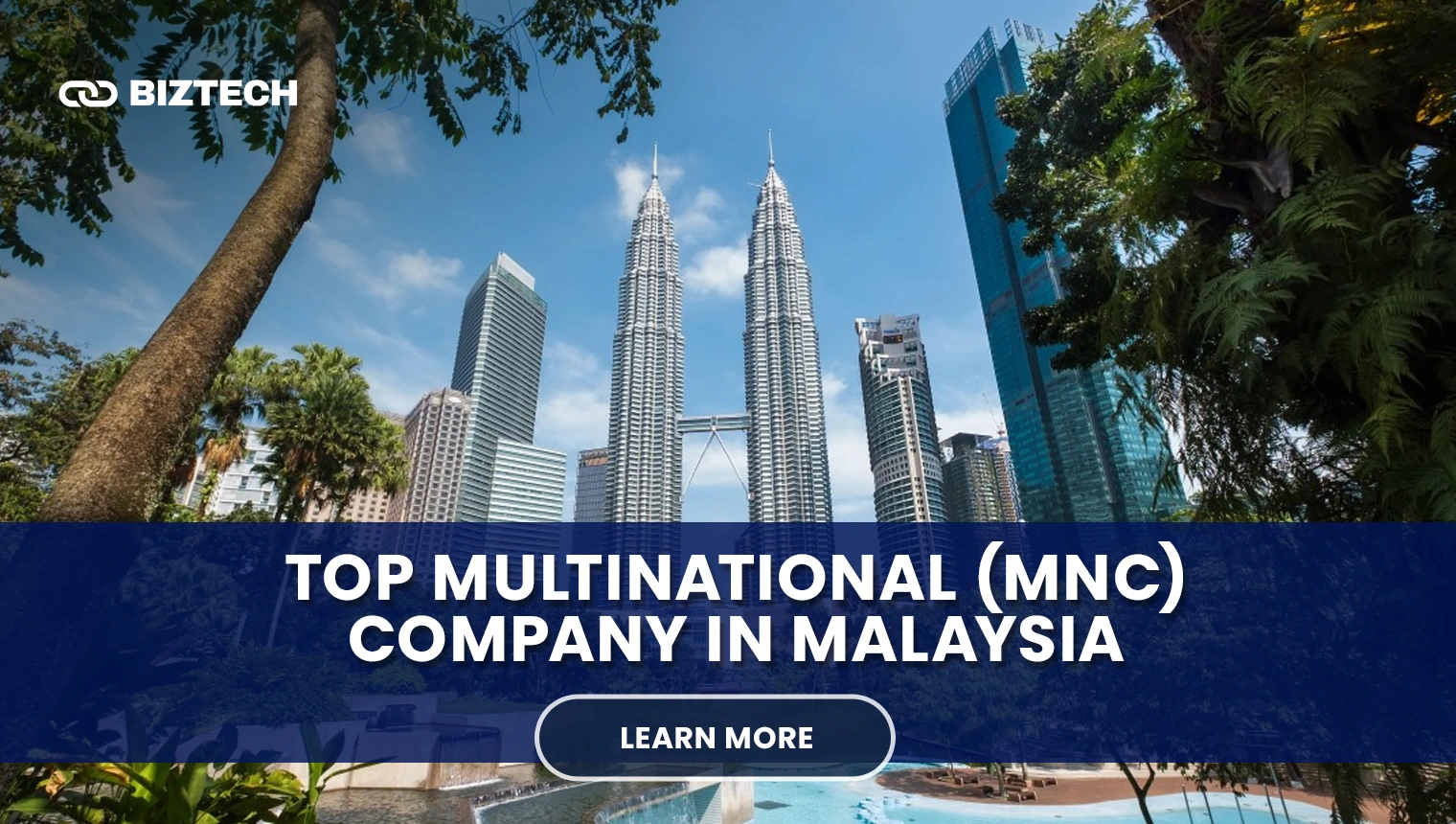
Malaysia is home to a substantial number of well-established multinational corporations (MNCs) that have operated in the country for decades — from semiconductor giants in Penang to the hyperscale data-centre operators now transforming Johor. If you are researching where to work, invest, or benchmark, this guide names the leading MNC companies in Malaysia and explains, with current data, why they keep choosing the country.
- What Is A Multinational Corporation (MNC)?
- What Drives MNC Success in Malaysia?
- List of Top MNC Companies in Malaysia (2026)
- 1. Alphabet Inc. (Google)
- 2. Axiata Group Berhad
- 3. BASF Malaysia Sdn Bhd
- 4. ExxonMobil Malaysia
- 5. Honda Malaysia
- 6. Intel Malaysia
- 7. Panasonic Malaysia
- 8. Petroliam Nasional Berhad (Petronas)
- 9. Proton Holdings Berhad
- 10. Sime Darby Berhad
- 11. Tenaga Nasional Berhad (TNB)
- 12. YTL Corporation Berhad
- 13. Nestlé Malaysia
- 14. Samsung Malaysia Electronics
- 15. Oracle Malaysia
- 16. Huawei Technologies (Malaysia) Sdn Bhd
- 17. Shell Malaysia
- 18. Microsoft Malaysia
- 19. NVIDIA Corporation
- 20. ByteDance (TikTok)
- Top MNCs in Malaysia at a Glance
- How to Choose the Right MNC Employer in Malaysia
- Pros and Cons of MNCs in Malaysia
- Advantages:
- Disadvantages:
- Upskilling for the MNC Environment
- Essential Skills for the Modern MNC Employee
- Continuous Learning and Development (L&D)
- Utilising Online Platforms for Skill Enhancement
- 1. Udemy:
- 2. Coursera:
- 3. LinkedIn Learning:
- 4. FutureLearn:
- The Working Culture in MNCs — Is It Right for You?
- 1. Abundant Resources:
- 2. Structured Environment:
- 3. Diversity:
- 4. Office Perks:
- Frequently Asked Questions
- Conclusion
Serving as a regional hub for MNCs, Malaysia offers an appealing base for companies aiming to start or expand operations across Asia-Pacific. Its cost-competitive business environment, deep manufacturing base, and improving global standing continue to draw fresh foreign investment.
Data verified August 2026. Investment figures and corporate details change frequently — always confirm the latest numbers with the company or the relevant authority before acting.
What Is A Multinational Corporation (MNC)?
As implied by its name, an MNC is a company that operates and oversees the production of goods or services in multiple countries, extending beyond its country of origin.
According to Black’s Law Dictionary, an MNC is a company or group that generates 25% or more of its revenue from operations outside its home country.
It is also referred to by various other terms, including multinational enterprise (MNE), transnational enterprise (TNE), transnational corporation (TNC), and international corporation.
What Drives MNC Success in Malaysia?
Malaysia’s attractiveness as a thriving business destination in the Asia-Pacific region can be attributed to several key factors:
- Strategic Location: Malaysia sits in the heart of Southeast Asia, with low-latency proximity to Singapore — a factor now driving much of the hyperscale data-centre boom in Johor.
- Rising Global Competitiveness: Malaysia climbed 11 places to 23rd of 69 economies in the IMD World Competitiveness Ranking 2025 — its best showing since 2020 — reflecting reforms and stronger public-private cooperation.
- Robust Infrastructure: Well-developed ports, highways, industrial parks, and now a rapidly expanding power and connectivity backbone support a wide range of industries.
- Skilled, Multilingual Workforce: A highly educated talent pool with English widely used in business lowers the barrier for foreign operations.
- Efficient Transport Network: Strong logistics connectivity by air, sea, and land enhances Malaysia’s appeal as a manufacturing and distribution base.
- Open Foreign-Participation Rules: Relatively straightforward foreign-ownership regulations mean less bureaucracy than in many neighbouring markets when establishing a presence.
The momentum shows up in the numbers. Malaysia recorded RM285.2 billion in approved investments in the first nine months of 2025, up 13.2% year-on-year and creating over 150,000 jobs, according to the Malaysian Investment Development Authority (MIDA). The country’s FDI stock position reached roughly RM1.02 trillion by the end of Q3 2025. Thousands of multinational corporations from more than 40 countries now maintain operations in Malaysia, drawn by comparatively open foreign-participation rules and a mature manufacturing ecosystem.
If you are a foreign company weighing entry, our guide on how foreigners register a company in Malaysia walks through the practical steps.
List of Top MNC Companies in Malaysia (2026)
The list below spans technology, energy, automotive, chemicals, consumer goods, and the new wave of AI and data-centre investors reshaping Malaysia’s digital economy.
1. Alphabet Inc. (Google)
Alphabet Inc., the parent company of Google, is one of the world’s most influential tech companies. Google is building its first data centre and Google Cloud region in Malaysia as part of a multi-billion-dollar commitment, and continues to run search, advertising, and cloud services locally. Through initiatives like Google for Startups and digital-skills training, it supports Malaysian entrepreneurs and the country’s digital-transformation goals.
2. Axiata Group Berhad
Axiata Group Berhad is one of Malaysia’s largest telecommunications groups, operating across Asia with mobile, fixed, and digital services for well over 150 million customers. Its subsidiaries — including CelcomDigi, formed by the 2022 Celcom-Digi merger — are household names and central players in Malaysia’s 5G rollout and digital-inclusion efforts.
3. BASF Malaysia Sdn Bhd
BASF Malaysia, a subsidiary of Germany’s BASF, is a key player in the chemical industry, providing solutions across agriculture, industrial materials, and sustainable development. It operates advanced facilities — notably at Pasir Gudang and within the Gebeng integrated site — and its focus on sustainable production aligns with Malaysia’s push for green industrial practices.
4. ExxonMobil Malaysia
ExxonMobil is one of the world’s largest publicly traded oil and gas companies, and its Malaysian operations remain important to its Asia-Pacific presence. The company has operated in Malaysia for decades across upstream and downstream activities such as exploration, production, and refining, alongside community-development and environmental initiatives.
5. Honda Malaysia
Honda Malaysia is a subsidiary of Honda Motor Company, the Japanese multinational known for its automobiles and motorcycles. Its Melaka production facilities manufacture popular models like the Honda City and CR-V, and the company continues to expand hybrid and electrified options to support Malaysia’s transition to cleaner transport.
6. Intel Malaysia
Intel Malaysia is central to Intel Corporation’s global operations. Established in Penang in 1972, it is one of Intel’s largest assembly and test sites. Intel committed roughly RM30 billion over ten years (announced 2023) to grow its Penang and Kulim footprint, including a new advanced-packaging complex — with a further RM860 million (about US$208 million) pledged in late 2025 to expand assembly and test capacity. These investments reinforce Malaysia’s standing as a semiconductor hub.
7. Panasonic Malaysia
Panasonic Malaysia is part of the Japanese multinational known for consumer electronics, home appliances, and industrial solutions. The company emphasises sustainability through energy-efficient products and eco-friendly manufacturing, and remains a trusted brand in Malaysian households and industry alike.
8. Petroliam Nasional Berhad (Petronas)
Petronas is Malaysia’s national oil and gas company and a Fortune Global 500 enterprise. Headquartered in Kuala Lumpur, it operates across upstream and downstream sectors globally and is a major contributor to national revenue, while investing in renewable energy, environmental conservation, and community programmes.
9. Proton Holdings Berhad
Proton, Malaysia’s first national car manufacturer, has grown into an international player through its partnership with China’s Geely. Its line-up — known for affordability, safety, and modern features — is exported to more than 20 countries, strengthening Malaysia’s reputation in automobile manufacturing.
10. Sime Darby Berhad
Sime Darby is a multinational conglomerate operating in industrial equipment, motors, logistics, and healthcare, with a significant regional footprint. Its emphasis on sustainability and diversified operations makes it a key contributor to several sectors critical to Malaysia’s development.
11. Tenaga Nasional Berhad (TNB)
TNB is Malaysia’s largest electricity utility and a linchpin of the data-centre boom, given the sector’s heavy power demands. It continues to invest in solar, hydro, and grid modernisation in line with the government’s goal of carbon neutrality by 2050.
12. YTL Corporation Berhad
YTL Corporation is a Malaysian conglomerate with interests spanning power generation, cement, telecommunications, and hospitality. Through YTL Power, it has moved to the centre of Malaysia’s AI story — partnering with NVIDIA to build a sovereign AI data centre in Kulai, Johor (see below).
13. Nestlé Malaysia
Nestlé Malaysia is a subsidiary of the Swiss food and beverage giant. Known for brands like Milo, Maggi, and KitKat, it is a household name that prioritises responsible sourcing, reduced packaging waste, and balanced-nutrition initiatives.
14. Samsung Malaysia Electronics
Samsung Malaysia Electronics is the local arm of the South Korean technology giant, offering everything from smartphones to home appliances. It supports Malaysia’s digital-infrastructure growth, particularly around 5G and smart-city initiatives.
15. Oracle Malaysia
Oracle Malaysia, part of the American multinational Oracle Corporation, is investing US$6.5 billion to establish its first Malaysian public cloud region — one of the country’s largest single cloud commitments. The project strengthens Malaysia’s cloud infrastructure and supports enterprise and government digitalisation.
16. Huawei Technologies (Malaysia) Sdn Bhd
Huawei Malaysia, a subsidiary of the Chinese tech group, has been a key player in Malaysia’s digital transformation since 2001. It focuses on 5G infrastructure, smart-city solutions, and technology training through the Huawei ASEAN Academy, alongside a broad consumer-electronics range.
17. Shell Malaysia
Shell Malaysia, part of Shell plc, has operated in the country for over a century across upstream exploration, downstream refining, and fuel marketing. Its sustainability agenda includes investments in cleaner energy and lower-carbon operations.
18. Microsoft Malaysia
Microsoft has significantly expanded in Malaysia, launching its “Malaysia West” cloud region in 2025 as part of a multi-billion-dollar plan spanning hyperscale data centres across Greater Kuala Lumpur and Johor. Its collaborations with local businesses and government agencies focus on cloud, AI, and digital-skilling to drive economic growth.
19. NVIDIA Corporation
NVIDIA, renowned for its GPUs and AI technologies, has partnered with YTL Power to build sovereign AI infrastructure in Malaysia. Malaysia completed its first NVIDIA-powered sovereign AI data centre in Kulai, Johor in October 2025 — a 600MW facility using NVIDIA GB200 systems — positioning the country as a regional hub for AI training and research.
20. ByteDance (TikTok)
ByteDance, the parent company of TikTok, has committed to major AI and data-centre investment in Malaysia — with initial plans around RM10 billion and subsequent expansions lifting its data-centre footprint substantially, centred on Sedenak Tech Park in Kulai, Johor. The investment supports data sovereignty, regional AI ambitions, and Malaysia’s growing digital economy.
Top MNCs in Malaysia at a Glance
A quick-reference snapshot of selected MNCs, their home country, primary sector, and a recent Malaysia highlight. Scroll horizontally on mobile to see all columns.
| Company | Home Country | Primary Sector | Recent Malaysia Highlight |
|---|---|---|---|
| Intel | United States | Semiconductors | ~RM30bn 10-year plan; advanced packaging in Penang, +RM860m (2025) |
| Microsoft | United States | Cloud & AI | “Malaysia West” cloud region launched 2025 |
| Oracle | United States | Cloud & Software | US$6.5bn first public cloud region |
| NVIDIA / YTL | USA / Malaysia | AI Infrastructure | 600MW sovereign AI data centre, Kulai (Oct 2025) |
| ByteDance (TikTok) | China | Internet & AI | RM10bn+ AI and data-centre investment, Johor |
| Petronas | Malaysia | Oil & Gas | Fortune Global 500; national energy champion |
| Nestlé | Switzerland | Food & Beverage | Milo, Maggi, KitKat; responsible sourcing focus |
| Honda | Japan | Automotive | Melaka plant; City & CR-V; hybrid expansion |
How to Choose the Right MNC Employer in Malaysia
Not all MNCs offer the same experience. Before accepting a role — or targeting one — weigh these factors rather than the brand name alone:
- Growth trajectory in Malaysia: A company actively expanding (new plants, cloud regions, or R&D hubs) usually means more internal mobility and hiring. The semiconductor and data-centre players above are clear examples of expansion mode.
- Function vs. location: Is the Malaysian site a core global function (e.g., Intel’s assembly and test) or a smaller sales office? Core-function sites tend to offer deeper career paths and skills transfer.
- Compensation and benefits: Compare base pay, bonuses, insurance subsidies, and training budgets. Cross-check ranges on Glassdoor and local salary guides before negotiating.
- Learning & development: Ask about upskilling budgets, international exposure, and mentorship. MNCs with structured L&D ecosystems help you stay competitive.
- Culture fit: Formal, process-driven environments suit some; others prefer the pace of a startup. Read reviews and ask direct questions in interviews.
- Stability vs. volatility: Sectors like energy and consumer goods are steadier; fast-scaling tech and AI roles can offer faster growth but more change.
Thinking about the other side of the table — running your own venture instead? Our overview of reasons for setting up a business in Malaysia is a useful companion read.
Pros and Cons of MNCs in Malaysia
Establishing or working within a multinational company in Malaysia offers clear benefits alongside a few trade-offs worth weighing:
Advantages:
1. Specialisation in Production:
MNCs can distribute production across countries, manufacturing components in the regions best suited for each task. This optimises efficiency and lets them tailor products to local markets.
2. Outsourcing Opportunities:
MNCs can outsource labour-intensive tasks to lower-cost regions, reducing overall expenses while focusing resources on higher-value work.
3. Economies of Scale:
By expanding into markets like Malaysia, MNCs capitalise on economies of scale, lowering long-term average costs and improving operational efficiency.
4. Tax and Incentive Advantages:
Malaysia offers targeted incentives to attract foreign investors, from pioneer status to sector-specific allowances. See our guide to the corporate tax rate in Malaysia for how these fit into the wider tax picture.
5. Access to a Wider Consumer Base:
Operating internationally grants MNCs access to a much larger, more diverse market, increasing sales potential well beyond a single domestic economy.
Disadvantages:
1. Loss of Autonomy:
MNCs must comply with each host country’s rules and regulations. However economically influential, they must adhere to local laws and policies, which can constrain their independence.
2. Intense Competition:
Unless an MNC’s offering is unique and hard to replicate, it faces competition in every market. Local players may imitate products and undercut on price, pushing MNCs to keep investing in marketing and R&D.
3. Risk of Economic Exploitation:
As profit-oriented entities, MNCs can be criticised for overusing natural resources, paying low wages, or pricing aggressively. Responsible operators mitigate this through fair-work and sustainability commitments.
In short, while operating an MNC in Malaysia offers many advantages, it carries real responsibilities. Firms should be deliberate about where and how they expand.
Upskilling for the MNC Environment
Essential Skills for the Modern MNC Employee
1. Cross-Cultural Communication Skills:
Effective cross-cultural communication is essential in international business. Working with colleagues, clients, and customers from diverse backgrounds demands sensitivity, respect, and diplomacy. An open-minded approach — researching and understanding cultural differences — prevents misunderstandings and strengthens workplace collaboration.
2. Exceptional Networking Abilities:
Building a strong international network is vital for success. While platforms like LinkedIn make global connections easy, in-person networking remains valuable. Refine your “elevator pitch,” attend industry events, and nurture relationships with diplomacy and attentive listening.
3. Collaboration:
Collaboration is about working effectively with others toward a common goal — sharing credit, tackling problems together, and giving and receiving feedback respectfully. In multicultural teams, it sharpens cross-cultural communication and exposes you to fresh perspectives.
4. Emotional Intelligence:
Emotional intelligence is a crucial asset in international business. Self-awareness and emotional control help you respond calmly under pressure and adapt to change, while empathy and interpersonal skill enable effective teamwork.
Continuous Learning and Development (L&D)
Learning and Development has become a strategic priority, with L&D leaders increasingly represented at senior levels and budgets rising as companies race to close skills gaps in AI and digital tools. Several trends help L&D professionals meet new pressures:
1. Upskill & Reskill:
Organisations should build learning ecosystems that integrate training content, analytics, and feedback. No-code platforms such as Leapsome and 360Learning make it easier to engage employees in continuous learning.
2. Emphasise Video and Interactive Content:
Video remains a highly engaging format for corporate learning. Automation tools for creation, editing, summarisation, and transcription help optimise production cycles for multinational teams.
3. Localise L&D Materials:
Standardising everything in English can cause misunderstandings across multilingual teams. Multilingual content — aided by AI voiceover and translation tools — reduces localisation time and cost while improving comprehension.
Utilising Online Platforms for Skill Enhancement
Choosing the right upskilling tool supports data-driven L&D decisions. A few of the most widely used platforms:
1. Udemy:
Udemy offers a vast library of eLearning courses for individuals and organisations across many languages, helping employees build skills and stay adaptable. Businesses can also host their own content on the platform.
2. Coursera:
Coursera provides university- and industry-backed courses. Coursera for Business adds unlimited access, skill metrics, analytics, and guided Projects for hands-on training.
3. LinkedIn Learning:
Part of the professional-networking platform, LinkedIn Learning offers eLearning for individuals and customised programmes for businesses to upskill their workforce efficiently.
4. FutureLearn:
FutureLearn offers micro-credentials, certifications, online degrees, and short courses in partnership with universities and organisations, covering a broad range of subjects for career advancement.
The Working Culture in MNCs — Is It Right for You?
MNCs typically prioritise formal processes and clear procedures. Choosing where to work is a major decision, so it helps to know what MNC culture in Malaysia generally offers:
1. Abundant Resources:
MNCs usually offer competitive compensation, bonuses, and benefits such as insurance subsidies, plus investment in employee training and international exposure.
2. Structured Environment:
Well-established processes and clear policies simplify decision-making, and comprehensive onboarding helps employees settle into their roles.
3. Diversity:
MNCs tend to have more diverse workforces, opening up professional and personal networking opportunities.
4. Office Perks:
Many MNCs provide extras like gym memberships, social events, and on-campus amenities. Before accepting an offer, check Glassdoor reviews for candid insight into culture and employee experience.
Read also: 10 Best Banks in Malaysia
Frequently Asked Questions
Conclusion
Malaysia remains an enticing hub for leading MNCs, many with global footprints spanning 30 or more countries. From decades-old semiconductor and energy operations to the new wave of cloud and AI investment concentrated in Johor, these companies enjoy strong reputations and are highly sought after by job seekers.
Despite intense competition for roles, Malaysia offers a supportive environment for both professional development and entrepreneurship. Its strategic Southeast Asian location, improving global competitiveness, and record investment inflows underscore its position as a top destination for professionals and companies alike.
Disclaimer: This article is provided by KayaToday for general information only and does not constitute financial, legal, or career advice. Investment figures and corporate details change frequently; verify the latest information with the relevant company or authority before making decisions.
Read also: Top 10 Biggest IT Companies in Malaysia