Choosing the right crypto exchange is the first real decision every investor makes — and with hundreds of platforms competing for your deposit, it is rarely an easy one. The exchange you pick decides your trading fees, which coins you can access, how your assets are held, and ultimately how safe your money is. This guide ranks ten of the best crypto exchanges in the world, refreshed for 2026 with current trading volumes, fees, and the security and regulatory developments that matter most.
- Best crypto exchanges in 2026 at a glance
- 1. Binance — the world’s largest exchange
- 2. OKX — the all-round runner-up
- 3. Bybit — derivatives powerhouse with a security scar
- 4. Coinbase — the most trusted US on-ramp
- 5. Upbit — South Korea’s dominant venue
- 6. HTX (formerly Huobi) — wide reach, heavy caveats
- 7. Kraken — the security veteran
- 8. Gate.io — the altcoin warehouse
- 9. Bitfinex — deep liquidity for pros
- 10. MEXC — lowest fees and early listings
- How to choose the right crypto exchange
- Security first: lessons from FTX and the Bybit hack
- Crypto exchanges for Malaysia and Singapore
- Frequently asked questions
Our shortlist draws on the same pillars the major data aggregators such as CoinMarketCap and CoinGecko use to rank platforms: real (wash-trading-adjusted) trading volume, liquidity and order-book depth, asset selection, and a transparency score that factors in proof-of-reserves and security history. We then add our own lens — fees, regulation in your jurisdiction, and how each platform handled recent stress events — because the “best” exchange for a beginner in Kuala Lumpur is not always the one a derivatives trader in Seoul would choose.
Figures below reflect market data verified in August 2026. Exchange rankings, volumes and fees move constantly — always confirm the latest numbers and your country’s access rules on the provider’s official site before depositing.
A quick note for Malaysian and Singaporean readers: most of the global giants below are not licensed to onboard local users. In Malaysia, only exchanges on the Securities Commission’s Registered Digital Asset Exchange (DAX) list may legally operate — see our guide to the best crypto trading platforms in Malaysia. Singapore users should confirm a platform holds a Monetary Authority of Singapore (MAS) licence. Use this global list to understand the landscape, but transact through a locally regulated venue wherever you can.
Best crypto exchanges in 2026 at a glance
| Exchange | Founded | 2026 standing | Base spot fees (maker/taker) | Best for |
|---|---|---|---|---|
| Binance | 2017 | #1 by volume (~a third of CEX volume) | 0.10% / 0.10% (less with BNB) | Overall depth & low fees |
| OKX | 2017 | #2 overall (~14% share) | ~0.08% / 0.10% | All-round spot + derivatives |
| Bybit | 2018 | #2 by spot volume | 0.10% / 0.10% | Derivatives & altcoins* |
| Coinbase | 2012 | Largest US exchange | 0–0.40% / 0.05–0.60% (Advanced) | US beginners & compliance |
| Upbit | 2017 | Largest in South Korea | ~0.05% / 0.05% | KRW markets |
| HTX (Huobi) | 2013 | Global reach, sanctions caveats | 0.20% / 0.20% (less with tokens) | Wide asset range* |
| Kraken | 2011 | Top-tier security & compliance | 0.25% / 0.40% (Pro tiers lower) | Security-first traders |
| Gate.io | 2013 | Very wide altcoin listing | 0.10% / 0.10% (less with GT) | Altcoin hunters |
| Bitfinex | 2012 | Deep liquidity, pro tools | 0.10% / 0.20% | Advanced / high-volume |
| MEXC | 2018 | Lowest spot fees | 0.00% / 0.05% | Low-fee altcoin trading |
*See the security and regulatory caveats in each section below. Fees shown are standard base-tier rates and fall with 30-day volume or native-token discounts; card and “instant buy” purchases cost more.
1. Binance — the world’s largest exchange
Binance was founded in 2017 by Changpeng Zhao (CZ) and remains the largest crypto exchange in the world by both spot and derivatives volume. In 2026 it is led by CEO Richard Teng, who took over in November 2023 after CZ stepped down; CZ pleaded guilty in the United States, served a short sentence in 2024, and Binance settled with the US Department of Justice for US$4.3 billion.
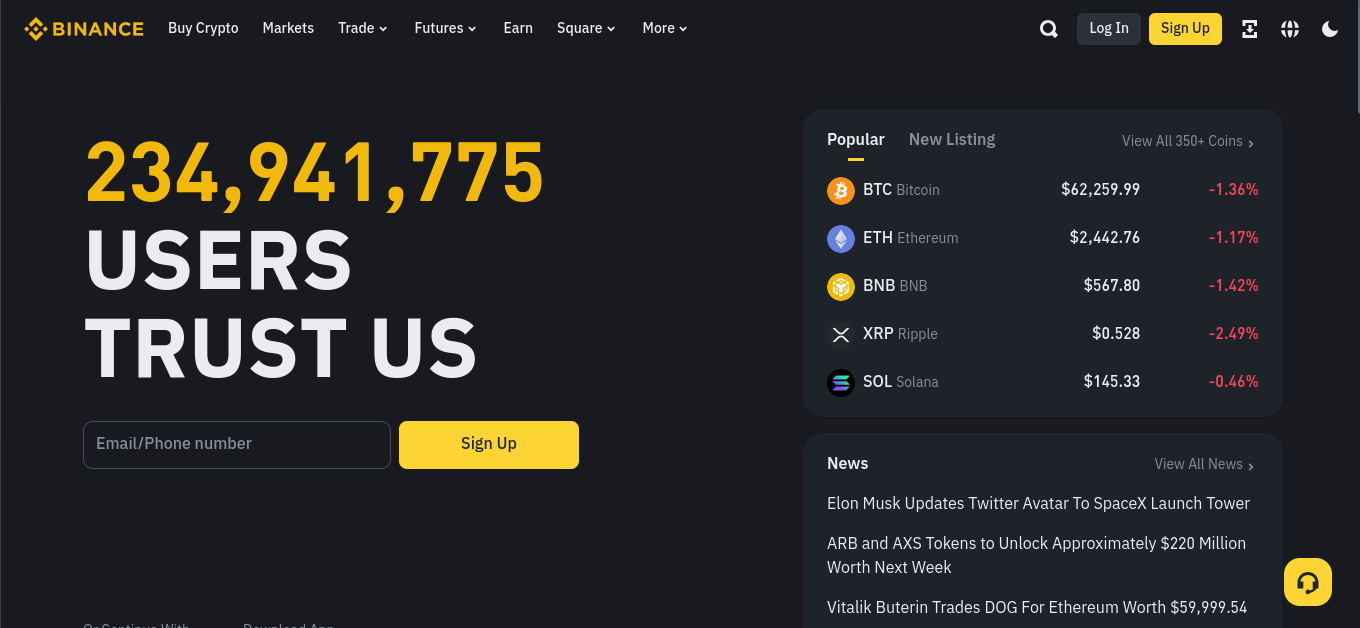
Despite that turbulence, Binance’s scale is unmatched: it clears roughly US$11 billion in daily spot volume, commands around a third of all centralized-exchange trading volume, and serves more than 300 million registered users across 400+ coins and over 1,600 trading pairs. The base spot fee is a low 0.10%, cut by about 25% when paid in BNB, and Binance now publishes quarterly proof-of-reserves attestations. It is not available to US retail users (the separate Binance.US serves that market), so always check availability in your country first.
2. OKX — the all-round runner-up
Founded in 2017 by Star Xu, OKX has grown into the clear number-two exchange overall, taking roughly 14% of total centralized-exchange volume in Q2 2026 (about US$2.3 trillion for the quarter) and rivalling Binance in derivatives, where its volume has topped Binance’s in some months.
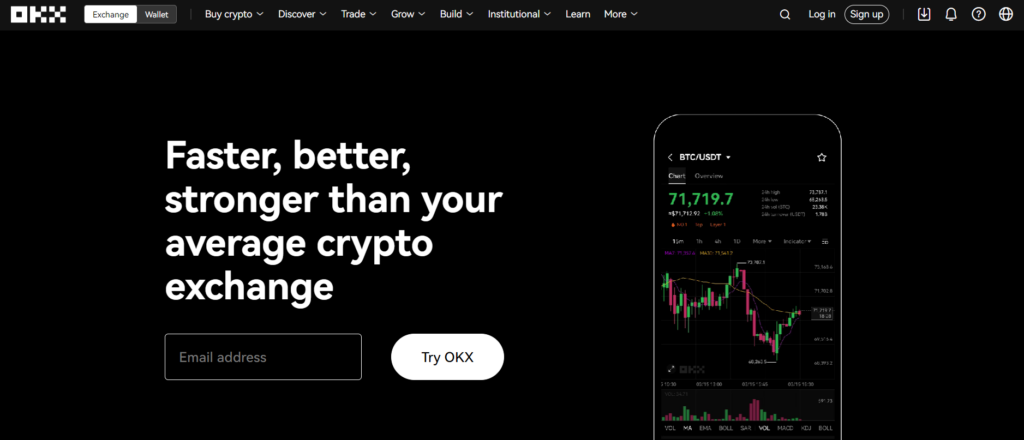
OKX pairs deep liquidity with low fees — spot trading starts around 0.08% maker / 0.10% taker and drops further with 30-day volume — and bundles in a self-custody Web3 wallet, DeFi and earn products. Staking yields vary by asset (historically around 5% APY on Bitcoin, higher on select tokens), so treat advertised rates as a moving target. It is a strong all-rounder for traders who want spot and derivatives under one roof.
3. Bybit — derivatives powerhouse with a security scar
Bybit was founded in 2018 by Ben Zhou and has become the second-largest exchange by spot volume (around US$2.55 billion a day across 694 coins and 1,211 trading pairs), while remaining a favourite for derivatives with leverage up to 100x and a fast matching engine.

There is an important caveat. On 21 February 2025, Bybit suffered the largest crypto theft in history — about US$1.5 billion in Ethereum drained after North Korea’s Lazarus Group compromised the Safe multi-signature signing interface, a breach later confirmed by the FBI. To Bybit’s credit, it replaced every missing coin of customer Ethereum within 72 hours through partners and loans, launched a recovery bounty, and no customer ultimately lost funds. Spot fees sit at 0.10% maker/taker. Treat the episode as a reminder to hold long-term coins in your own cold wallet rather than on any exchange.
4. Coinbase — the most trusted US on-ramp
Founded in 2012 by Brian Armstrong and Fred Ehrsam, Nasdaq-listed Coinbase is the most established and heavily regulated exchange in the United States. It carries CoinGecko’s top trust score of 10/10, holds more than 800,000 BTC in reserve (including custody for many spot Bitcoin ETFs), and posted a record share of top-10 exchange spot volume in early 2026.
Coinbase is ideal for beginners and institutions that prize regulation and security, but watch the fees: the simple Coinbase app applies a spread of roughly 0.5% plus fees that can reach 1.49%–3.99% on card purchases. Use Coinbase Advanced Trade instead, where maker fees run 0%–0.40% and taker fees 0.05%–0.60% depending on your 30-day volume — far cheaper for the same trade. Staking and a self-custody wallet round out the offering.
5. Upbit — South Korea’s dominant venue
Upbit, founded in 2017 by Song Chi-hyung, is by far the largest crypto exchange in South Korea and one of the world’s top venues by volume (roughly 5.5% global share). Its 2025 volume fell about 19% year-on-year amid a cooler Korean market and tighter anti-money-laundering oversight, but its local liquidity and clean interface keep it dominant at home.
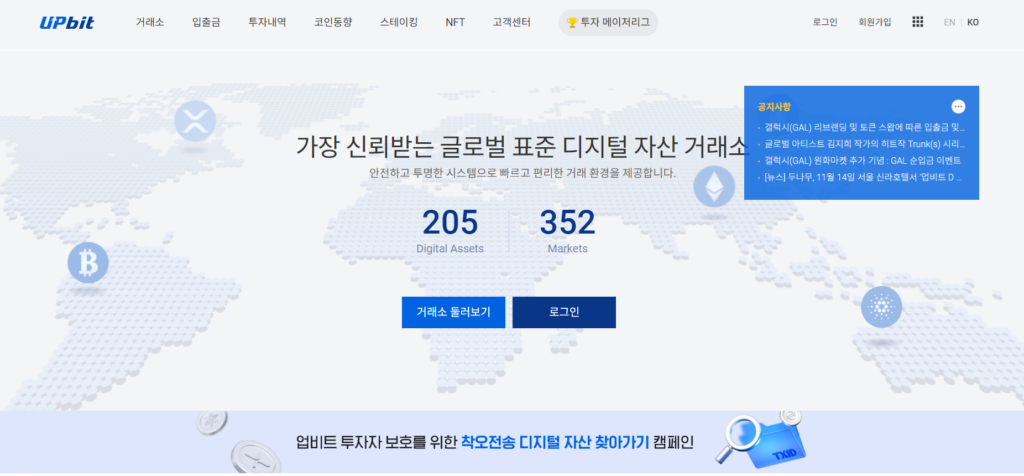
Upbit is best suited to KRW-denominated trading and Korean residents; fees sit around 0.05%, and its wide selection of assets and strong security support make it the default choice inside South Korea. Access for users outside Korea is limited.
6. HTX (formerly Huobi) — wide reach, heavy caveats
Founded in 2013 by Leon Li, Huobi rebranded to HTX in 2023 and is now closely associated with Tron founder Justin Sun. It remains a large, full-service ecosystem — 700+ assets spanning spot, futures and margin, plus earn products and 24/7 support across more than 160 countries. Its tiered fees start at 0.20% maker/taker, with discounts for paying in HTX or TRX tokens.
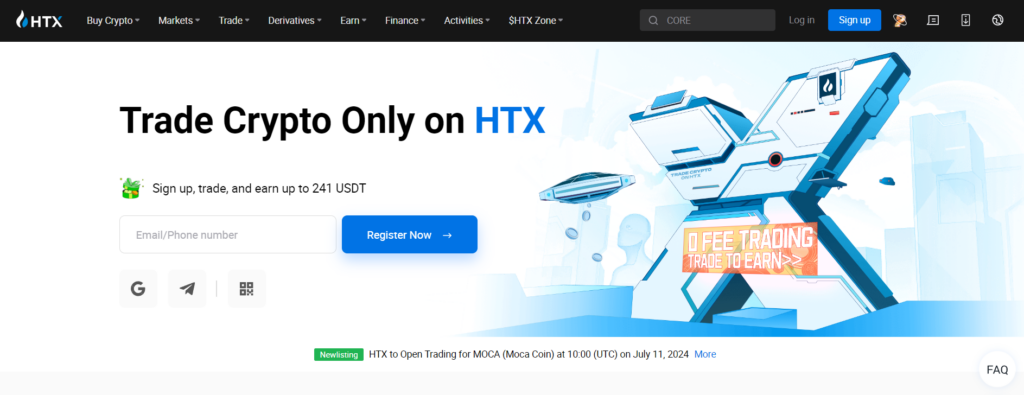
One major caveat weighs on HTX in 2026: both the United Kingdom and the European Union have imposed sanctions touching HTX and Huobi Global as part of measures against Russia, and from 23 August 2026 people in the EU are barred from transacting with the exchange. That governance and regulatory risk should factor heavily into any decision to keep meaningful funds on the platform.
7. Kraken — the security veteran
Kraken was founded in 2011 by Jesse Powell and is one of the oldest, most trusted names in crypto. It is US-regulated, has never suffered a major exchange hack, and offers spot, futures and margin trading with reliable fiat rails.
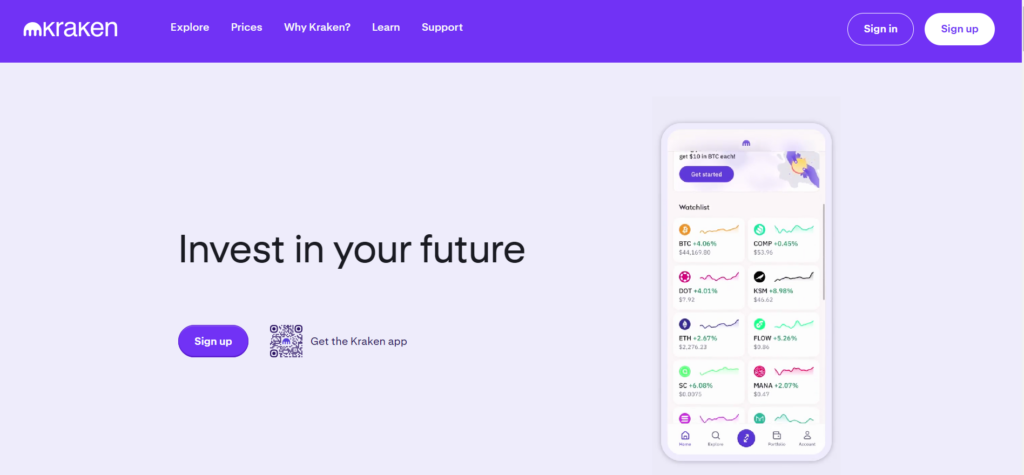
Base fees on the simple interface are 0.25% maker / 0.40% taker, dropping through Kraken Pro’s volume tiers for active traders. Kraken’s long, clean track record makes it a top pick for anyone who ranks security, compliance and dependable customer support above rock-bottom fees.
8. Gate.io — the altcoin warehouse
Launched in 2013 and rebranded Gate.io in 2017, this platform is known for one of the widest listings anywhere — well over 1,700 cryptocurrencies — alongside bot trading, copy trading and Earn products whose APRs vary widely. The base spot fee is 0.10% maker/taker, reduced by holding GateToken (GT).
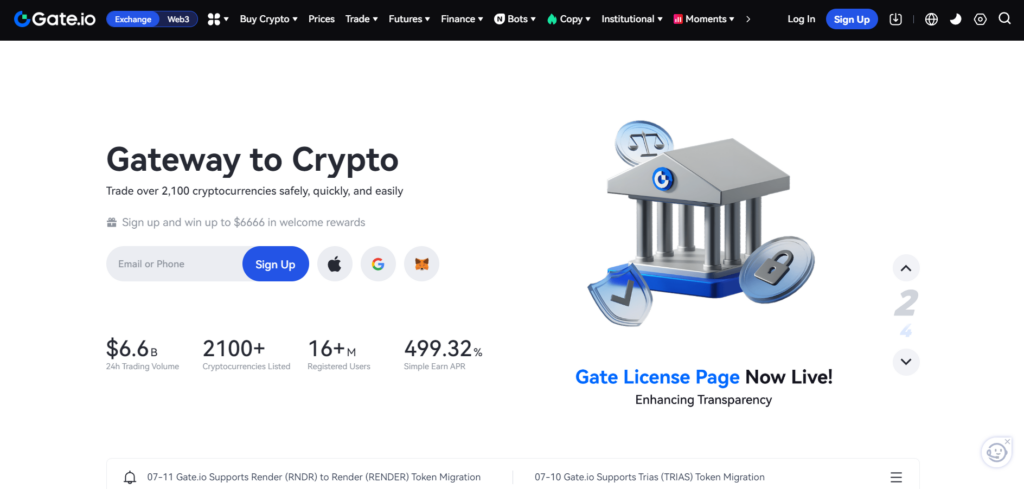
Gate.io was the victim of a major hack in 2018 but has since hardened its security and publishes proof-of-reserves. It is a strong choice for hunting newly listed and long-tail altcoins, though it does not serve US users and availability varies by country — always confirm before signing up.
9. Bitfinex — deep liquidity for pros
Founded in 2012, Bitfinex has long been favoured by professional and high-volume traders for its deep order books and advanced tooling, including margin, derivatives and peer-to-peer lending. It is affiliated with the issuer of Tether (USDT), the largest stablecoin.
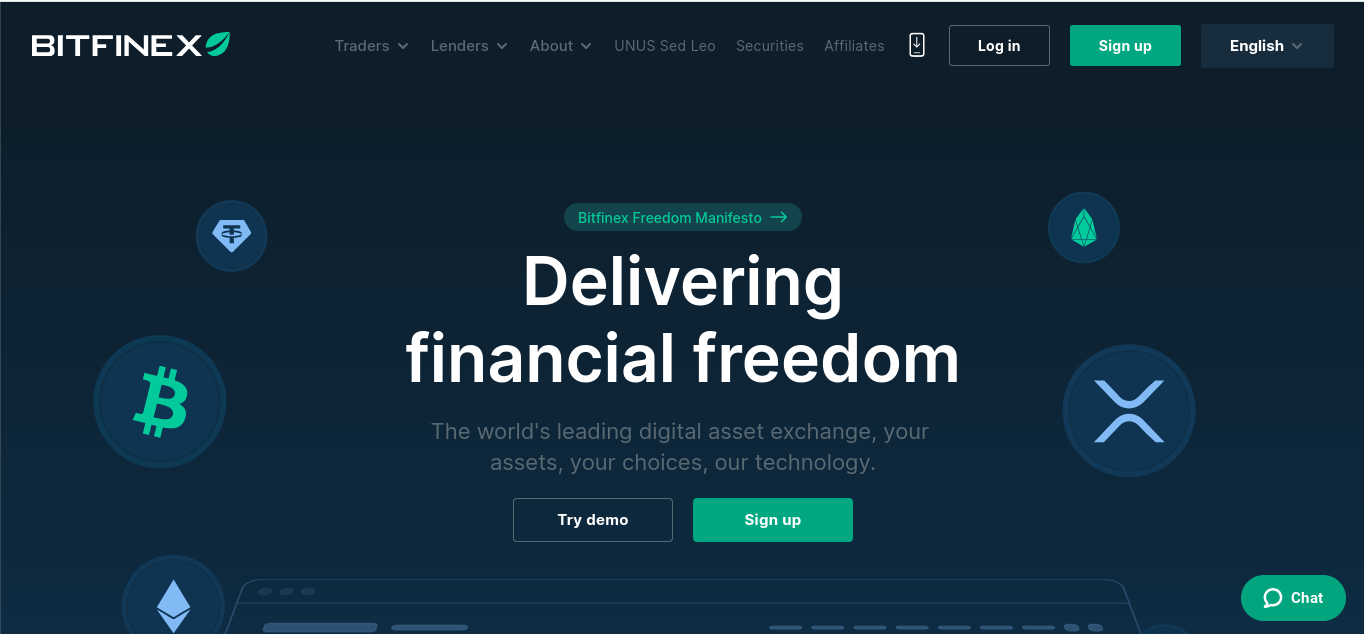
Base fees run around 0.10% maker / 0.20% taker. Bitfinex is powerful and highly liquid, but its interface and feature set are geared to experienced traders rather than first-timers — beginners will likely find Coinbase or a locally regulated exchange easier to start with.
10. MEXC — lowest fees and early listings
Founded in 2018 and serving more than 10 million users across 170+ countries, MEXC is the go-to exchange for low costs and early altcoin listings. Spot trading carries 0% maker and just 0.05% taker fees, the platform lists 2,000+ coins, and futures offer leverage up to 200x.
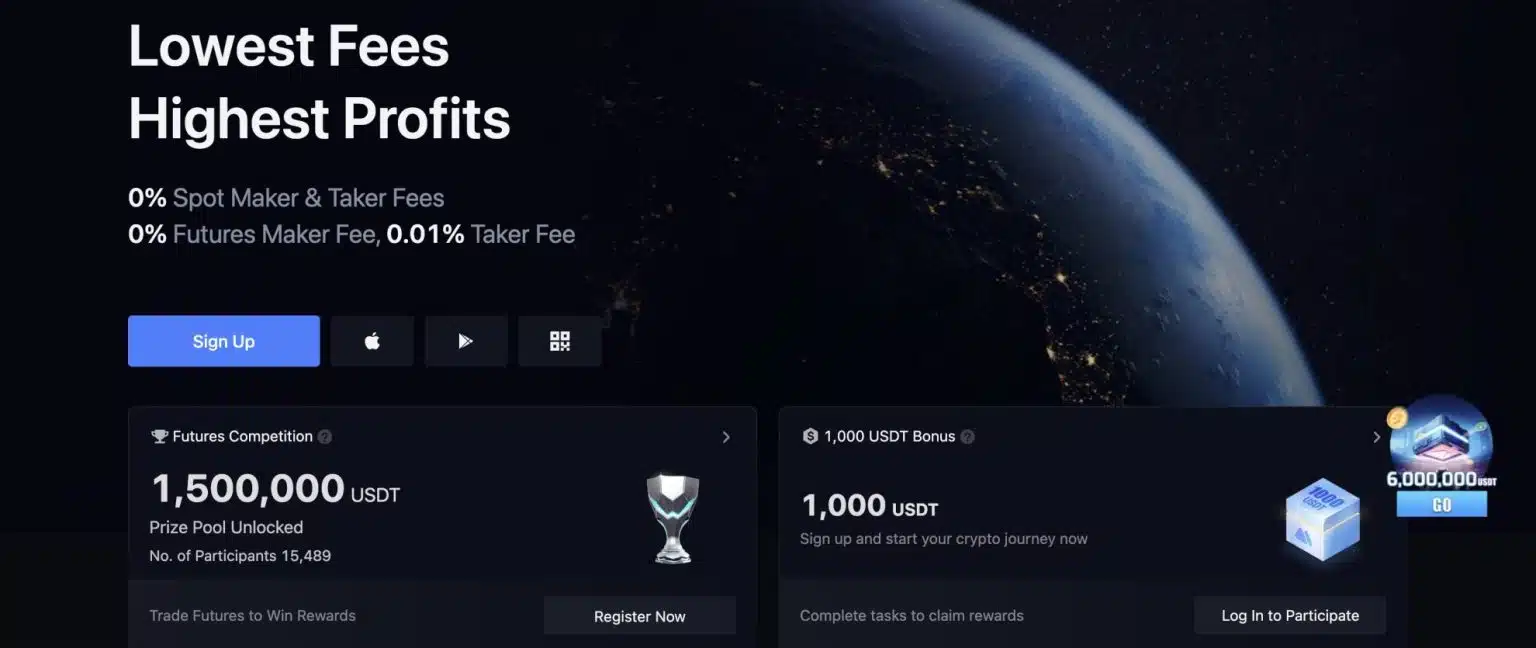
MEXC has historically been light on identity checks for basic use, though verification requirements are tightening across the whole industry in 2026, so expect to complete KYC for higher limits. It publishes proof-of-reserves and supports card, bank and P2P funding. Like several peers here, it is not available to US users. If raw cost and access to new tokens are your priority, MEXC is hard to beat.
How to choose the right crypto exchange
The headline ranking matters less than fit. Before you deposit, weigh these factors against how you actually plan to trade:
- Security and proof-of-reserves: favour exchanges that publish independently verified reserves, hold most assets in cold storage, and have a clean track record. History matters — Kraken and Coinbase score well here.
- Total fees, not just the headline rate: compare maker/taker fees and the hidden spread on “instant buy” screens, plus deposit and withdrawal costs. A 0.1% trading fee means little if a card purchase adds 3%.
- Liquidity and asset selection: deeper order books mean tighter spreads and less slippage on large orders; if you trade small-cap altcoins, listing breadth (Gate.io, MEXC) matters more.
- Regulation and licensing in your country: an exchange that is excellent globally may be unlicensed — or illegal — where you live. Malaysians should use a Securities Commission-registered DAX; Singaporeans should look for a MAS licence.
- Custody and withdrawal freedom: can you withdraw to your own wallet freely, and is there a withdrawal allowlist? Avoid platforms that make getting your coins out difficult.
- Fiat on-ramps and support: check that your local currency and payment methods are supported and that customer support is responsive before you commit real money.
Security first: lessons from FTX and the Bybit hack
The collapse of FTX in 2022 and the record US$1.5 billion Bybit hack in 2025 carry the same lesson: even the biggest, most reputable-looking exchange can fail or be breached. The single most important rule in crypto is that an exchange is a place to trade, not a place to store. Keep only what you are actively trading on any platform, and move longer-term holdings into self-custody.
Practical steps: enable two-factor authentication using an authenticator app rather than SMS, set a withdrawal allowlist, prefer exchanges with genuine proof-of-reserves and insurance, and move meaningful savings to a hardware wallet. Learn to recognise the warning signs of fraud too — our guide on how to spot crypto scam red flags covers the tactics that most often catch new investors.
Crypto exchanges for Malaysia and Singapore
The global leaders above are useful benchmarks, but access rules differ by country. In Malaysia, the Securities Commission (SC) only permits registered DAX operators such as Luno, HATA, MX Global, SINEGY and Kinetic to serve local users; trading through an unregistered platform carries legal and recovery risk. Start with our roundup of the best crypto trading platforms in Malaysia and our broader guide to cryptocurrency in Malaysia.
Once you have chosen a compliant venue, you may want a mobile-first option — see the best apps to buy crypto — or a reliable way to move into stablecoins, covered in our guide on where to buy USDT. Singapore users should confirm MAS licensing and remember that even a licensed exchange is not a substitute for self-custody of long-term holdings.
Frequently asked questions
All figures were verified in August 2026 using public exchange-ranking data. Trading volumes, fees and available features change frequently, so please confirm the current details and your country’s access rules on each exchange’s official website before trading.
DISCLAIMER: The content provided on KayaToday is intended just for informational and reference purposes and should NOT be construed as investment or trading advice. The material presented in this article does not serve as an encouragement, recommendation, offer, or endorsement to buy or sell any crypto assets. Trading in financial markets, including cryptocurrencies, carries inherent risks and may result in financial losses. All investment and trading decisions are the investor’s responsibility, who should be fully aware of the associated risks and rewards.