Crypto debit cards let you spend Bitcoin, Ethereum and stablecoins as easily as cash — often with cashback thrown in. But the market has changed a lot since these cards first appeared: more than 600 million people worldwide now hold crypto (up from roughly 420 million a few years ago), and card issuers have repeatedly reshuffled their fees, rewards tiers and country coverage. Some once-popular cards have even wound down in certain regions.
- What is a Crypto Debit Card?
- Key Features to Look for in a Crypto Debit Card
- Overview Table of Best Crypto Debit Cards (2026)
- Top 5 Crypto Debit Cards
- 1. Crypto.com Visa Card
- 2. Coinbase Card
- 3. Wirex Card
- 4. Nexo Card
- 5. BitPay Card
- Crypto Debit Cards in Malaysia & Singapore
- How to Choose the Best Crypto Debit Card: A Decision Framework
- Worked Example: Why Fees Beat Headline Cashback
- Benefits and Drawbacks of Using a Crypto Debit Card
- Benefits
- Drawbacks
- Future Trends in Crypto Debit Cards
- Conclusion
- Frequently Asked Questions (FAQs)
This guide cuts through the marketing. Below you’ll find the best crypto debit cards for 2026, the real fees and cashback rates (not just the headline numbers), a practical framework for choosing, and — for our Malaysian and Singaporean readers — a dedicated section on what actually works in this region. Figures were verified in August 2026; always confirm current terms with the provider, since card programmes change often.
What is a Crypto Debit Card?
A crypto debit card lets you spend cryptocurrency at any merchant that accepts Visa or Mastercard. It looks and works like an ordinary debit card, but behind the scenes it converts your crypto to local fiat currency at the moment of purchase (or draws from a fiat balance you pre-loaded). You link a crypto wallet or exchange account, and the card handles the conversion.
The key distinction: a debit card spends money you already hold, whereas a crypto credit card (a newer category, such as the Coinbase One Card) lets you borrow and pay later while earning crypto rewards. Most cards below are prepaid or debit-style products. Whichever you pick, remember that spending crypto is a disposal and may be taxable — more on that in the Malaysia/Singapore section.
Key Features to Look for in a Crypto Debit Card
When comparing crypto debit cards, weigh these factors — they matter far more than a flashy cashback headline:
- Real (not headline) cashback: The advertised top rate almost always requires a paid subscription or a large token stake. Check the rate you’d actually earn on the free or entry tier.
- Total fees: Look beyond the annual fee — conversion/FX fees, ATM fees, top-up fees and card-issuance costs add up quickly and quietly erode your crypto’s value.
- Regional availability: A card is useless if it isn’t issued where you live. Coverage varies widely and changes often.
- Supported cryptocurrencies: More supported coins means fewer manual conversions before you spend.
- Token-stake risk: Cards that require locking a native token (CRO, WXT, BGB) tie your rewards to a volatile asset. If the token falls, so does the real value you staked.
- Security: Two-factor authentication, instant in-app card freezing, virtual card numbers and fraud monitoring are baseline expectations.
- Custody model: Some cards draw from an exchange balance (custodial); newer non-custodial cards spend directly from a self-custody wallet.
Overview Table of Best Crypto Debit Cards (2026)
| Card | Network | Headline Cashback | Realistic Entry-Tier Cashback | Key Fees | Availability (2026) | Best For |
| Crypto.com Visa | Visa | Up to 5% | 0% free tier; 2% on paid “Plus” | No annual fee; FX & ATM fees vary by tier | US, EU/EEA, UK, Singapore, Australia, 30+ more | Widest coin support & perks |
| Coinbase Card | Visa | Varies (rewards US-only) | Low / rotating | 2.49% FX fee; no annual fee | US, 31 EEA countries, UK | Existing Coinbase users |
| Wirex | Visa | Up to 8% (WXT) | 0.5% free “Standard” | No monthly fee; ~2% ATM after free allowance | Global (crypto app closed in EEA & Australia, 30 Jun 2026) | Multi-currency spenders (check region) |
| Nexo Card | Mastercard | Up to 2% | 0.5–2% | No monthly/annual fee | UK & EU only | Borrow-and-spend without selling |
| BitPay Card | Mastercard | None | — | 2% + US$0.25/txn; 1% load; $10/$25 issuance | US only | Simple US crypto-to-USD spending |
Rates and coverage verified August 2026. “Realistic” cashback reflects the free or entry tier most users actually get, not the marketing headline.
Top 5 Crypto Debit Cards
1. Crypto.com Visa Card
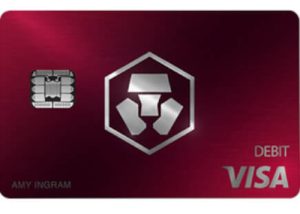
The Crypto.com Visa Card is the most widely available option on this list and supports the broadest range of cryptocurrencies. In 2026, Crypto.com reorganised its cards under a “Level Up” programme, where you unlock higher tiers either by staking CRO or paying a monthly subscription — a meaningful change from the old stake-only model.
Key Features
- Card tiers & cashback: Midnight Blue (free) earns 0%; Ruby Steel / “Plus” earns 2% (about US$500 CRO staked or ~US$4.99/mo); Royal Indigo & Jade Green / “Pro” earns ~3–3.5% (~US$5,000 CRO); Icy White / Rose Gold earns 5% (~US$50,000 CRO); Obsidian sits at the top (~US$500,000 CRO).
- Supported crypto: Bitcoin, Ethereum and 90+ other assets.
- Perks: Higher tiers add Spotify and Netflix rebates plus airport-lounge access.
- Fees: No annual fee; FX and ATM fees vary by tier. Singapore’s prepaid card fees are changing from 1 September 2026 (e.g., some tiers moving to 2% on purchases/ATM), so check current terms.
- Security: In-app freezing, 2FA and virtual card support.
Why Choose It
Best for users who want maximum coin support and lifestyle perks — and who understand the token-stake trade-off. Realistically, the Jade Green / Royal Indigo tier (~3% plus lounge access) is the practical value ceiling for most people.
Pros: widest availability including Singapore; huge coin support; strong perks at mid tiers. Cons: best rewards require staking volatile CRO; if CRO’s price drops or you unstake, your real return falls too.
2. Coinbase Card
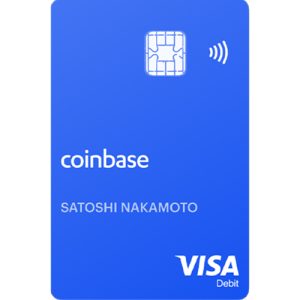
The Coinbase Card is a Visa debit card that spends directly from your Coinbase balance. It’s the most natural fit if you already trade on Coinbase. Note an important 2026 nuance: crypto cashback rewards on the debit card are effectively US-only — EEA and UK cardholders get spending functionality without the rewards programme.
Key Features
- Supported crypto: Bitcoin, Ethereum, Litecoin and other Coinbase-listed assets.
- Fees: No annual fee; 2.49% fee on international/crypto-conversion transactions.
- Availability: US (all states except Hawaii), 31 EEA countries and the UK.
- Security: 2FA, instant card freezing and Coinbase’s account protections.
Why Choose It
Ideal for existing Coinbase users in supported regions who value a seamless, well-secured spending option. In late 2025 Coinbase also launched a separate Coinbase One Card — an American Express credit card offering up to 4% Bitcoin back — for those who prefer a rewards-focused credit product.
Pros: tight integration with Coinbase; trusted, publicly-listed issuer; new credit-card option. Cons: 2.49% FX fee; debit-card rewards are US-only.
3. Wirex Card
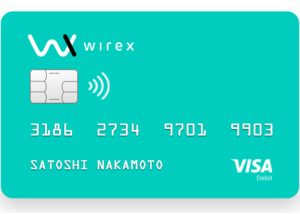
Wirex pioneered the multi-currency crypto card and still offers Cryptoback rewards in WXT. Be aware of a major 2026 development: Wirex shut down the crypto side of its Classic Wirex App in the EEA and Australia on 30 June 2026, moving users toward its newer Wirex One product. If you’re outside those regions the card still functions, but always confirm it’s live where you are before applying.
Key Features
- Cashback: 0.5% on the free Standard plan; up to 8% in WXT only on the Elite plan (~€29.99/month plus a large WXT lock-up for 180 days).
- Supported crypto & currencies: Dozens of crypto and fiat currencies in one account.
- Fees: No monthly account fee; free ATM withdrawals up to a monthly cap, then ~2%.
- Security: Multi-signature technology, in-app freezing and encryption.
Why Choose It
Good for multi-currency spenders in supported regions who want everything in one app. Just be realistic: the eye-catching 8% requires a paid plan and a hefty token lock-up — most users earn the 0.5% base rate.
Pros: multi-currency convenience; no monthly fee; contactless. Cons: top cashback is hard to reach; crypto features withdrawn in EEA & Australia in 2026.
4. Nexo Card
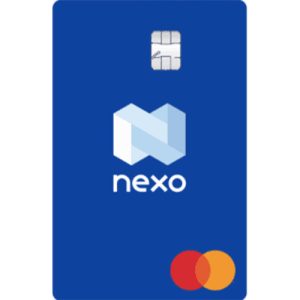
The Nexo Card is a Europe-only Mastercard with an unusual twist: it runs in two modes. In credit mode it lets you borrow against your crypto (a crypto-backed credit line) so you can spend without selling — useful for avoiding a taxable disposal — while in debit mode it spends your balance directly.
Key Features
- Cashback: 0.5–2% — 2% if paid in NEXO tokens, or 0.5–2% in another supported asset.
- Credit line: Instant crypto-backed borrowing without selling your holdings.
- Fees: No monthly or annual card fee.
- Availability: UK and EU only.
- Security: Biometric verification and 24/7 support.
Why Choose It
Best for European users who want to keep their crypto invested while still spending — the credit-line mode lets you access liquidity without triggering a sale. Pros: borrow-and-spend flexibility; no card fees. Cons: Europe-only; top cashback favours holding NEXO; borrowing carries liquidation risk if collateral falls.
5. BitPay Card
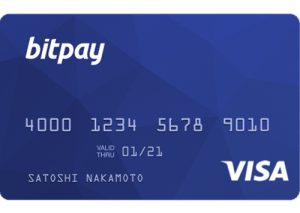
BitPay is a long-running, US-focused prepaid Mastercard that converts crypto to USD for spending. It’s straightforward, but its fees have crept up and it no longer stands out on cost the way it once did — so set expectations accordingly.
Key Features
- Supported crypto: Bitcoin, Ethereum, Bitcoin Cash, stablecoins and more.
- Fees: Roughly 2% + US$0.25 per transaction, a 1% conversion fee on crypto loads, and issuance fees of about US$10 (virtual) / US$25 (physical).
- Reloads: Load easily with crypto via the BitPay app.
- Availability: US residents only.
- Security: PIN protection, instant card lock and EMV chip.
Why Choose It
A simple choice for US users who just want to convert crypto to USD and spend it, and who don’t care about rewards. Pros: simple; broad Mastercard acceptance; supports stablecoins. Cons: no cashback; per-transaction and issuance fees; US-only.
Crypto Debit Cards in Malaysia & Singapore
This is where our region needs its own guidance, because most crypto debit cards are not issued locally. Malaysia’s Securities Commission (SC)-registered Digital Asset Exchanges — as of the SC list dated 20 July 2026, these are Luno, HATA, MX Global, SINEGY and Kinetic DAX — let you legally buy and sell crypto in ringgit, but they do not currently issue their own spending cards. So Malaysian and Singaporean users rely on international cards. Here’s what actually works:
| Option | Malaysia | Singapore | Notes |
| Crypto.com Visa | Metal tiers available (KLIA lounge perks) | Prepaid Visa available (SG residents) | Most established regional option; SG fees change 1 Sep 2026 |
| Bitget Wallet Card (Visa) | Available (APAC rollout) | Available (APAC rollout) | Non-custodial; ~2% base / 3% booster in BGB (from 1 Aug 2026) |
| Wirex | Check current regional status | Check current regional status | Crypto features withdrawn in EEA/Australia in 2026 |
| Coinbase / Nexo / BitPay | Not available | Not available | US and/or Europe-only cards |
The most practical route for many in the region is a two-step setup: buy and hold crypto on an SC-registered DAX (Malaysia) or a MAS-licensed provider (Singapore, regulated by the Monetary Authority of Singapore), then fund an internationally-available card such as Crypto.com or the newer Bitget Wallet Card for day-to-day spending. If you’re still choosing where to buy, our guides to the best crypto trading platforms in Malaysia and crypto-friendly banks are good starting points.
A tax note for the region: spending crypto counts as a disposal. Malaysia has no general capital-gains tax, but LHDN can treat frequent or business-like crypto trading as taxable income under the “badges of trade”; in Singapore, IRAS applies similar principles and there’s no capital-gains tax, but trading as a business is taxable. Keep records of what you spend and when. This is general information, not tax advice — consult a qualified professional for your situation.
How to Choose the Best Crypto Debit Card: A Decision Framework
Rather than chasing the highest advertised cashback, work through these questions in order. The first one usually eliminates most of the list:
| Step | Ask Yourself | Why It Matters |
| 1. Availability | Is the card actually issued in my country? | Eliminates most options immediately — coverage varies widely and changes. |
| 2. Real cost | What are the FX, ATM, top-up and issuance fees? | Fees quietly erode value more than a small cashback difference adds. |
| 3. Realistic reward | What rate do I get without paying a subscription or staking? | Headline rates rarely reflect what an ordinary user earns. |
| 4. Token risk | Must I lock a volatile token (CRO/WXT/BGB) to unlock rewards? | A falling token can wipe out the value of your stake. |
| 5. Custody & security | Custodial or self-custody? What protections exist? | Determines who controls your funds and how you’re protected. |
Worked Example: Why Fees Beat Headline Cashback
Say you spend US$1,000/month abroad. Card A advertises “up to 5% cashback” but you’re on its free tier earning 1%, with a 2.5% FX fee. Card B offers a flat 2% cashback and a 0% FX fee. On Card A you earn US$10 but lose US$25 to FX — a net −US$15. On Card B you earn US$20 and pay no FX — a net +US$20. The “5% card” costs you more. Always net cashback against fees for your spending pattern.
Benefits and Drawbacks of Using a Crypto Debit Card
Benefits
- Convenient spending: Use crypto anywhere Visa or Mastercard is accepted, with no need to manually cash out first.
- Rewards and cashback: Many cards pay cashback in crypto, letting you grow holdings as you spend (subject to the tier/fee caveats above).
- Global reach: Handy for travel, though foreign-transaction fees still apply on many cards.
Drawbacks
- Fees add up: Conversion, ATM, top-up and issuance fees can outweigh modest cashback.
- Availability gaps: Many leading cards aren’t issued in Southeast Asia; regional coverage shifts frequently.
- Price volatility & tax: Your balance’s value moves with the market, and every purchase is a disposal that may have tax implications.
- Programme changes: Issuers regularly cut rewards or exit regions (as Wirex did in the EEA and Australia in 2026), so terms you sign up for may not last.
Future Trends in Crypto Debit Cards
Two shifts define where crypto cards are heading. First, stablecoin-funded and non-custodial cards are growing fast — cards like the Bitget Wallet Card spend directly from a self-custody wallet, and stablecoin funding sidesteps some price-volatility headaches. Second, Asia-Pacific has become a major battleground, with Visa- and Mastercard-backed products launching across the region and clearer licensing frameworks in markets like Singapore.
Expect continued experimentation with tier and reward structures (several issuers cut headline rates in 2025–2026), deeper DeFi integration so cards can tap on-chain yield, and faster settlement rails. The practical takeaway for spenders: treat any card’s current terms as a snapshot, and re-check fees and cashback periodically rather than assuming they’re fixed.
Conclusion
Crypto debit cards remain a genuinely useful way to spend digital assets — but the “best” card depends entirely on where you live, your tolerance for token-stake mechanics, and how sensitive you are to fees. For most users, the winning move is to net cashback against total fees for your own spending, favour a card that’s actually issued in your country, and avoid over-committing to a volatile token just to chase a headline rate. In Malaysia and Singapore, that usually means buying on a regulated local platform and funding an internationally-available card like Crypto.com or Bitget for everyday use.
Frequently Asked Questions (FAQs)
Card fees, cashback rates and regional availability were verified by KayaToday in August 2026 and can change at any time — always confirm current terms directly with the provider before applying.
Disclaimer: This article is provided by KayaToday for informational purposes only and does not constitute financial, investment or tax advice. Cryptocurrency is volatile and carries risk. Always do your own research and consult a licensed financial or tax advisor before making decisions. Product terms may change as new updates become available.