
Malaysia is one of the most beginner-friendly places in Southeast Asia to start a business. You get an expanding entrepreneurial scene, generous government initiatives, a diverse talent pool, and — compared with our neighbours — competitive tax rates and a fairly simple set of rules to follow.
- Understanding Malaysia’s Business Structures
- Types of Business Entities in Malaysia
- At-a-Glance: Which Entity, Which Path?
- Choosing the Right Business Entity for Your Needs
- What to Do Before Company Registration
- 1. Choose & Reserve a Unique Company Name
- 2. Determine the Nature of Your Business (MSIC Code)
- 3. Appoint Directors, Shareholders & a Company Secretary
- 4. Establish a Registered Office Address
- Documents Required for Company Registration in Malaysia
- Step-by-Step Guide on How to Register a Company in Malaysia
- Path A — Sole Proprietorship or Partnership (via ezBiz)
- Path B — Private Limited Company / Sdn Bhd (via MyCoID)
- How Long Does It Take & How Much Does It Cost?
- What to Do After Company Registration
- 1. Open a Corporate Bank Account
- 2. Apply for Business Licences & Permits (if needed)
- 3. Register for Tax, SST & Employee Contributions
- 4. Comply with Malaysian Accounting Standards
- Ongoing Legal & Regulatory Compliance
- 1. Annual Return Filing
- 2. Annual General Meetings (AGM) — Know the Rules
- 3. Maintain Company Records & Accounts
- 4. Auditing & Financial Reporting
- Common Mistakes to Avoid
- Conclusion
- Frequently Asked Questions (FAQs)
Legally, every locally incorporated company is governed by the Companies Act 2016, which sets out the framework for incorporating and running a company in Malaysia. Sole proprietorships and partnerships, on the other hand, are registered under the Registration of Businesses Act 1956. Knowing which law (and which SSM portal) applies to you is the first thing that trips people up — so we’ll clear that up early.
If you’re an aspiring entrepreneur ready to start a business but can’t quite make sense of what’s needed to register, you’ve come to the right place. This comprehensive guide walks you through the step-by-step process to register your company in Malaysia in 2026, including what to do before and after registration, the real (official) costs, and the compliance obligations that catch new founders off guard.
Verified August 2026 against SSM, LHDN and MITI sources. Fees and thresholds change — always confirm the latest figures on the official SSM and LHDN portals before you pay.
Understanding Malaysia’s Business Structures
Types of Business Entities in Malaysia
Before you register anything, you need to decide on your business structure. Every business must be registered with the Companies Commission of Malaysia (SSM / Suruhanjaya Syarikat Malaysia), but the entity you pick decides which portal you use, how much you pay, how you’re taxed, and how much personal risk you carry.
There are four common structures. They differ significantly — take a look below to see how each one works and which suits your needs.
| Sole Proprietorship | Partnership | Private Limited Company (Sdn Bhd) | Public Limited Company (Bhd) | |
| Governing law & portal | Registration of Businesses Act 1956 — ezBiz | Registration of Businesses Act 1956 — ezBiz | Companies Act 2016 — MyCoID 2016 | Companies Act 2016 — MyCoID 2016 |
| Ownership | Single individual (Malaysian citizen or PR) | 2–20 partners (Malaysian citizens or PRs) | 1–50 shareholders; 100% foreign ownership allowed in most sectors | Unlimited shareholders; can offer shares to the public |
| Legal status | Not a separate legal entity — you are the business | Not a separate legal entity — partners are the business | Separate legal entity — can own property, sue and be sued | Separate legal entity — listed or listable on Bursa Malaysia |
| Liability | Unlimited — personal assets at risk | Unlimited — each partner jointly liable | Limited to capital invested | Limited to shares held |
| Directors / secretary | None required | None required | ≥1 director ordinarily resident in Malaysia; company secretary within 30 days | ≥2 directors ordinarily resident in Malaysia; company secretary required |
| Tax treatment | Personal income tax (0–30%) | Each partner taxed personally (0–30%) | Corporate tax; SME tiered 15% / 17% / 24% if eligible | Corporate tax, typically flat 24% |
| Annual audit | Not required | Not required | Required (unless audit-exempt) | Always required |
| Official SSM fee | RM30/yr (personal name) or RM60/yr (trade name) | RM60/yr (trade name) | RM1,000 incorporation + RM50 name search | RM1,000 incorporation + RM50 name search (plus far higher listing/compliance costs) |
Note: The RM1,000 + RM50 above are the official SSM fees for a company limited by shares. If you engage a company secretary or incorporation service to file for you, expect a package of roughly RM1,500–RM3,000 that bundles the secretary’s first-year fee — that package price is what older guides mistakenly quote as the “registration fee.”
For a deeper look at each structure, see our dedicated guides on choosing the right business entity, the private limited company (Sdn Bhd), and the public limited company (Bhd).
At-a-Glance: Which Entity, Which Path?
Here’s the fastest way to see where you’ll register, roughly how long it takes, and what it costs.
| Entity | Register via | Official cost | Typical timeline | Best for |
| Sole Proprietorship | ezBiz (ezbiz.ssm.com.my) | RM30–RM60/year | Same day – 1 day | Freelancers, side hustles, small local traders |
| Partnership | ezBiz (ezbiz.ssm.com.my) | RM60/year | Same day – 1 day | 2–20 co-owners sharing a simple business |
| Sdn Bhd | MyCoID 2016 (or via a company secretary) | RM1,050 official (RM1,500–RM3,000 with secretary) | 1–5 working days after name approval | Startups, scaling SMEs, foreign-owned ventures |
| Bhd | MyCoID 2016 (professional advisers) | RM1,050 official + substantial listing/advisory costs | Weeks to months | Large companies raising public capital |
Choosing the Right Business Entity for Your Needs
Choosing the right entity is arguably the most important decision you’ll make, because switching later (say, converting a sole proprietorship into a Sdn Bhd) means re-registering, migrating contracts and re-doing your tax setup. Work through these four questions before you commit.
| Ask yourself… | If yes / high… | Lean towards… |
| 1. How much personal risk can I absorb? | You want to protect your house, savings and personal assets | Sdn Bhd (limited liability) |
| 2. Do I need outside investors or to raise capital? | You’ll bring in shareholders, VCs or apply for grants/loans | Sdn Bhd (or Bhd for public markets) |
| 3. What’s my expected profit? | Profit above ~RM100k–RM150k a year | Sdn Bhd (SME corporate rates often beat personal tax) |
| 4. How simple do I want compliance to be? | You want minimal admin, no audit, lowest cost | Sole proprietorship or partnership |
As a rule of thumb: a small craft or freelance venture can happily start as a sole proprietorship, while anything you intend to scale, protect with limited liability, or open to investors should be a Sdn Bhd. If you’re a foreigner, note that sole proprietorships and partnerships are reserved for Malaysian citizens and PRs — foreigners incorporate a Sdn Bhd instead (see our guide on company registration for foreigners).
Now that you understand the structures, let’s look at what to do before you register, the documents you’ll need, and the step-by-step process.
What to Do Before Company Registration
1. Choose & Reserve a Unique Company Name
You can pick almost any name you like, but SSM has naming guidelines you must follow:
- Use correct spelling and language; provide translations for any non-Malay/English words.
- No offensive, obscene or blasphemous words.
- No religious elements or names of royalty/government bodies without approval.
- Not too vague or general (e.g. simply “Intelligent Sdn Bhd”).
- May use an individual’s name or those of immediate family members of the director.
- Must not imitate a well-known company or acronym (IBM, KPMG, etc.).
Once you’re happy with a name, run a name search and reservation. For a Sdn Bhd, this is done on MyCoID 2016 at a fee of RM50 per name; an approved name is reserved for 30 days (extendable). For a sole proprietorship or partnership, you check and register the trade name directly on ezBiz. Checking availability early saves you from redoing paperwork later.
2. Determine the Nature of Your Business (MSIC Code)
SSM requires you to classify your activity using an MSIC code (Malaysia Standard Industrial Classification). Think about what you actually do — sell food and beverage, manufacture semiconductors, provide consulting — and pick the code(s) that match. You can list more than one activity, but keep them genuinely relevant to avoid questions later from banks or regulators. Your business nature also determines whether you’ll need extra business licences and permits.
3. Appoint Directors, Shareholders & a Company Secretary
Under the Companies Act 2016, a Sdn Bhd must have the following in place:
- At least one director who is a natural person, aged 18+, of sound mind, not bankrupt or disqualified, and who ordinarily resides in Malaysia (a “resident director”). You cannot incorporate without one.
- At least one shareholder (the director can also be the sole shareholder). A single foreigner may own 100% of the shares in most sectors.
- A company secretary appointed within 30 days of incorporation — this must be a licensed/qualified secretary, not just any staff member.
Shareholders own the company; directors run it. Both roles carry real power, so choose carefully — a majority shareholder who isn’t you could ultimately control the business. If you’re registering a sole proprietorship or partnership, none of the above applies; you and your partners simply register as the owners.
4. Establish a Registered Office Address
Every company needs a registered office address in Malaysia — the official location where legal notices are served and statutory records are kept. In practice, many Sdn Bhds use their company secretary’s office as the registered address. A sole proprietor may use a business premises or even a home address. Make sure it’s somewhere you reliably receive official correspondence.
Documents Required for Company Registration in Malaysia
Here’s an important update: the old Form 13A, Form 48A, Form 6 and the Memorandum & Articles of Association (M&A) belonged to the repealed Companies Act 1965. Under the Companies Act 2016, incorporation is done through a single online “Superform” (Section 14) on MyCoID, and a formal constitution is now optional (the Act’s default provisions apply if you don’t adopt one). If a guide still tells you to fill in Form 48A, it’s out of date.
What you actually need to prepare depends on your entity:
| Sole Proprietorship / Partnership (ezBiz) | Sdn Bhd (MyCoID Superform) |
|
|
Step-by-Step Guide on How to Register a Company in Malaysia
Because the portal differs by entity, we’ve split this into two clear paths. Pick the one that matches your structure.
Path A — Sole Proprietorship or Partnership (via ezBiz)
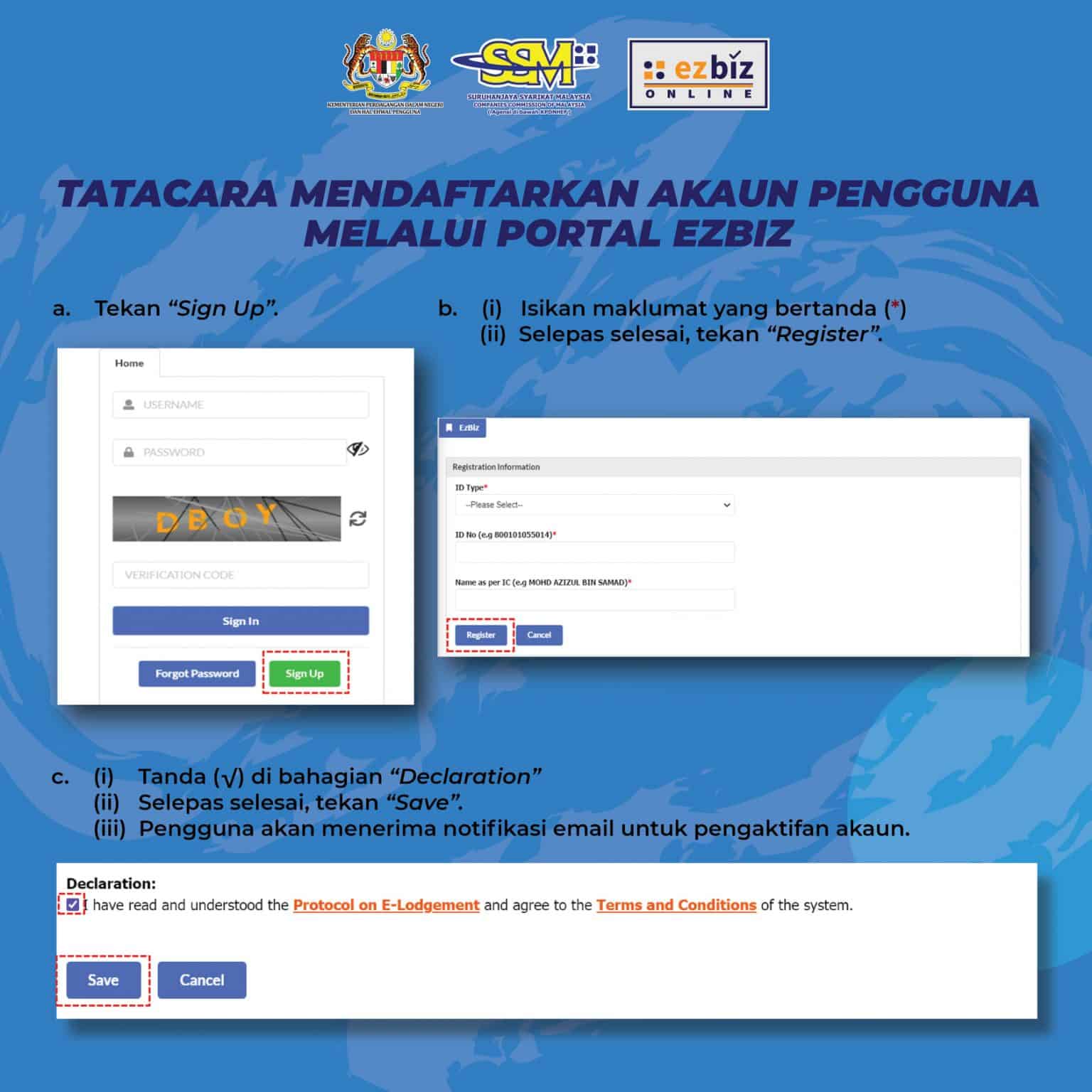
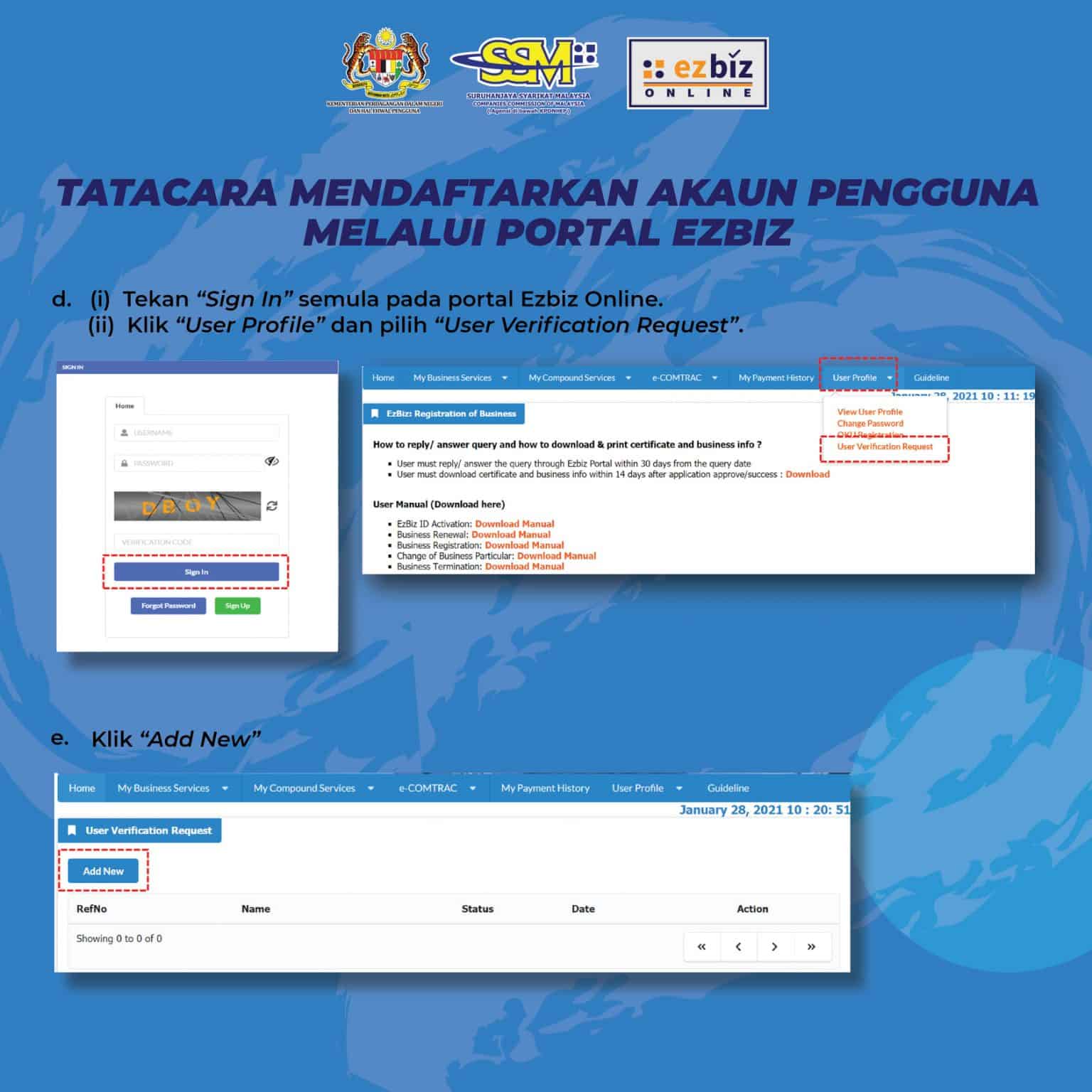
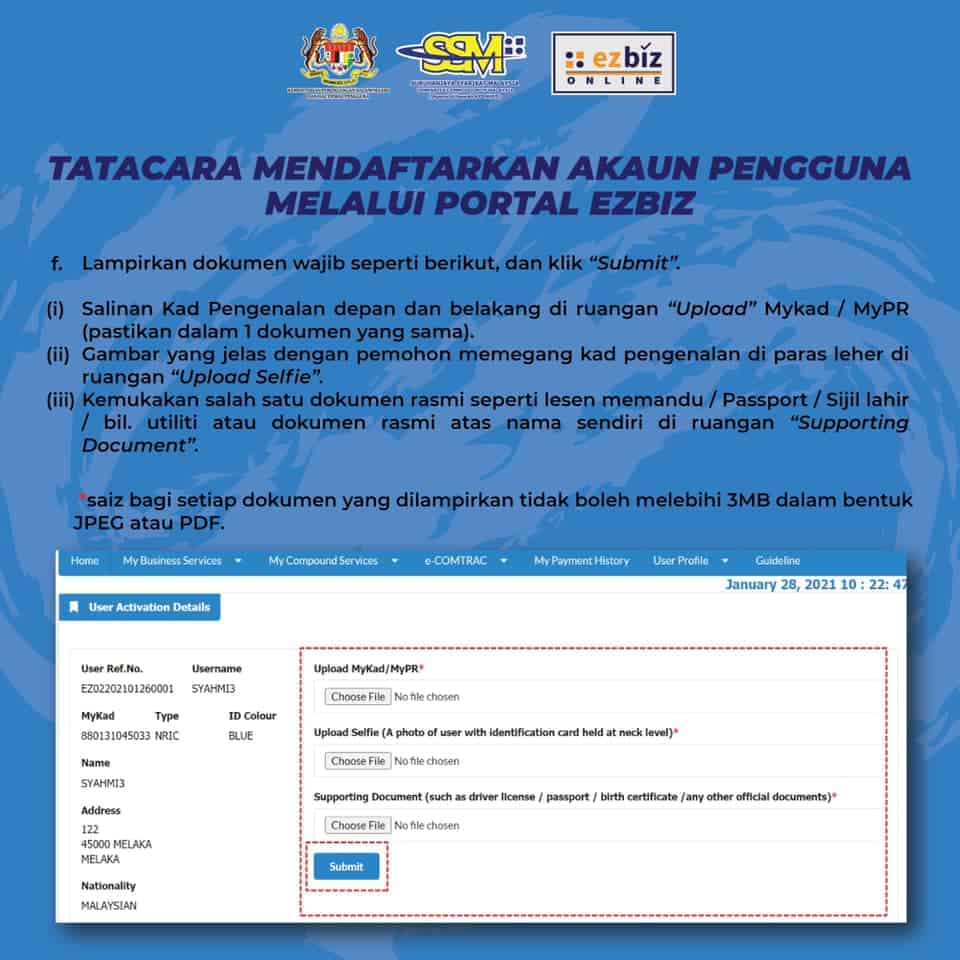
- Create an ezBiz account at ezbiz.ssm.com.my and activate it via the email SSM sends you.
- Register your name/business: log in, choose “New Business Registration,” and enter your personal or trade name, address and MSIC business code.
- Pay the fee (RM30/year for a personal name, RM60/year for a trade name) online and save the receipt.
- Download your Business Registration Certificate and business info printout once approved — often the same day.
Path B — Private Limited Company / Sdn Bhd (via MyCoID)
- Register a MyCoID 2016 account and verify your identity (foreigners verify via video call or at an SSM counter). Alternatively, appoint a licensed company secretary to file on your behalf — the most common route.
- Reserve your company name through the name-search module (RM50; reserved 30 days).
- Complete the Section 14 Superform with your directors, shareholders, shareholding, registered office and business nature. Adopt a constitution only if you want bespoke rules.
- Pay the RM1,000 incorporation fee online.
- Receive your Notice of Registration by email — this is your proof of incorporation (a Certificate of Incorporation can be requested separately for a small fee). Approval typically takes 1–5 working days.
The number issued to you is your permanent company registration number — learn how to read and use it in our guide to the business registration number in Malaysia.
How Long Does It Take & How Much Does It Cost?
For most founders, a Sdn Bhd is incorporated within a week of the name being approved. Here’s a realistic first-year cost picture for a simple, locally-owned Sdn Bhd:
| Item | Typical cost | Notes |
| Name search & reservation | RM50 | Per name; reserved 30 days |
| Incorporation fee | RM1,000 | Flat SSM fee for a company limited by shares |
| Company secretary (year 1) | RM600–RM1,800 | Mandatory within 30 days; often bundled with incorporation |
| Registered office (if rented) | RM0–RM600/yr | Often provided by your secretary |
| Paid-up capital | From RM1 | No legal minimum; banks may expect ~RM1,000–RM2,500 to open an account |
Worked example: A two-founder tech startup reserving one name (RM50), paying the RM1,000 incorporation fee, and engaging a secretary at RM1,200 for year one would spend roughly RM2,250 to be fully incorporated and compliant — a far cry from the “RM2,500–RM3,000 registration fee” myth, because most of that figure is the secretary’s service, not an SSM charge.
What to Do After Company Registration
1. Open a Corporate Bank Account
Once registered, open a corporate bank account with an established Malaysian bank. You’ll typically need your Notice of Registration, directors’ IDs, a board resolution and your company constitution (if adopted). Tip: keep business and personal finances strictly separate from day one — it makes accounting, tax and audits far cleaner.
2. Apply for Business Licences & Permits (if needed)
Depending on your industry, products and location, you may need specific licences — general premises/signboard licences from your local council, plus sector permits (food, education, finance, etc.). Sort these out before you start trading. Our guide to the types of business licences in Malaysia breaks down what applies to whom.
3. Register for Tax, SST & Employee Contributions
This is where a lot of outdated guides go wrong, so read carefully:
- Income tax (LHDN): register your company for a Tax Identification Number (TIN) via the MyTax portal. Eligible SMEs enjoy a tiered corporate rate of 15% on the first RM150,000, 17% on the next RM450,000, and 24% above RM600,000; other companies pay a flat 24%. See our corporate tax rate guide for the qualifying conditions.
- SST, not GST: Malaysia abolished GST in 2018 and reintroduced the Sales & Service Tax (SST). Service tax is now a standard 8% (6% for selected services such as F&B, telco, parking and logistics), and sales tax is 5% or 10%. You must register for service tax once your taxable turnover exceeds the threshold (generally RM500,000 for most services). The SST base was also expanded on 1 July 2025. Read our full SST in Malaysia guide.
- e-Invoicing (MyInvois): businesses with annual turnover of RM1 million to RM5 million must issue e-invoices from 1 January 2026 (Phase 4). On 6 December 2025 the exemption threshold was raised to RM1 million, so smaller companies are currently exempt — but plan ahead.
- Employee contributions: if you hire staff, register with the EPF (KWSP), SOCSO (PERKESO) and EIS. Remember the national minimum wage is RM1,700/month for all employers from 1 August 2025.
4. Comply with Malaysian Accounting Standards
Keep proper records of every transaction, with invoices and receipts to back them up. Companies must maintain accounts in line with approved Malaysian accounting standards. Cloud accounting software makes this manageable, but as you grow, a qualified accountant will save you time and penalties.
Ongoing Legal & Regulatory Compliance
1. Annual Return Filing
Under Section 68 of the Companies Act 2016, every company must lodge its Annual Return with SSM within 30 days of its incorporation anniversary each year (this is separate from filing financial statements). Miss it and you risk penalties, so diary the date. Your company secretary usually handles this.
2. Annual General Meetings (AGM) — Know the Rules
Here’s a common misconception: under the Companies Act 2016, private companies (Sdn Bhd) are no longer required to hold AGMs. Decisions are instead passed via written resolutions. Only public companies (Bhd) must hold an AGM, generally within six months of their financial year-end. A private company must still circulate its financial statements to members (within six months of the financial year-end) and lodge them with SSM.
3. Maintain Company Records & Accounts
Keep statutory records — financial statements, registers of members and directors, minutes and resolutions — accurate and up to date at your registered office. These are essential for audits, tax filing and staying compliant.
4. Auditing & Financial Reporting
Sdn Bhds generally must have their accounts audited annually by an independent, licensed auditor. However, SSM’s audit exemption can apply to qualifying dormant, zero-revenue or small companies (based on revenue, assets and employee thresholds) — check whether your company qualifies before assuming you must audit. Public companies are always audited.
Read also: Top Challenges to Starting a Business in Malaysia and How to Set Up an Offshore Company in Malaysia.
Common Mistakes to Avoid
- Confusing ezBiz with MyCoID. ezBiz registers sole proprietorships and partnerships; a Sdn Bhd is incorporated on MyCoID. Using the wrong portal wastes time.
- Believing the “RM2,500–RM3,000 SSM fee.” The official incorporation fee is RM1,000 + RM50 name search; the rest is your secretary’s service fee.
- Forgetting the 30-day secretary deadline. A licensed company secretary must be appointed within 30 days of incorporation.
- Still thinking about GST. GST is gone — plan for SST and e-invoicing instead.
- Assuming you must hold an AGM. Private companies don’t; only Bhds do.
Conclusion
Registering a company in Malaysia in 2026 is genuinely straightforward once you know the path. Start by choosing the right structure — a sole proprietorship or partnership on ezBiz for simple ventures, or a Sdn Bhd on MyCoID for anything you want to scale, protect with limited liability, or open to investors. Prepare your name, business nature, directors, shareholders and registered office, file through the correct portal, and pay the real (and modest) official fees.
Then don’t stop at incorporation: open a corporate bank account, sort out licences, register for income tax and SST where relevant, set up EPF/SOCSO/EIS for staff, and diary your annual return. Get those foundations right and you’ll spend your energy on growing the business rather than firefighting compliance.
Here’s to a smooth-sailing entrepreneurial journey — you’re now a lot closer to launching. For more ideas on what to build, browse our roundup of lucrative small business ideas in Malaysia.
Frequently Asked Questions (FAQs)
Disclaimer: This guide is provided by KayaToday for general information only and is not legal, tax or financial advice. Fees, thresholds and rules were verified in August 2026 but can change — always confirm the latest requirements directly with SSM, LHDN and the relevant authorities, or consult a licensed company secretary or professional adviser before acting.