Stay connected with KayaToday—follow us on Instagram and Facebook for the latest news and reviews delivered straight to you.
- Countries With the Most Bitcoin at a Glance (2026)
- 1. United States: ~328,000 BTC (~US Billion)
- 2. China: ~190,000 BTC (~US Billion)
- 3. United Kingdom: ~61,000 BTC (~US.8 Billion)
- 4. Ukraine: ~46,351 BTC (~US.7 Billion)
- 5. El Salvador: ~7,747 BTC (~US0 Million)
- 6. Bhutan: ~3,524 BTC (~US0 Million)
- 7. Venezuela: A Contested Case
- The Country That Sold Too Early: Germany
- Government Holdings vs. Citizen Ownership
- What About Malaysia and Singapore?
- What This Means If You Invest
- Frequently Asked Questions
Bitcoin (BTC) has grown from a 2008 whitepaper by the pseudonymous Satoshi Nakamoto into an asset that national governments now hold on their balance sheets. As of late August 2026, BTC trades around US$79,000 (it briefly cleared US$80,000 again in late August, still well below the October 2025 record high near US$126,000), and governments collectively control roughly 620,000 BTC — about 3% of all Bitcoin that will ever exist.
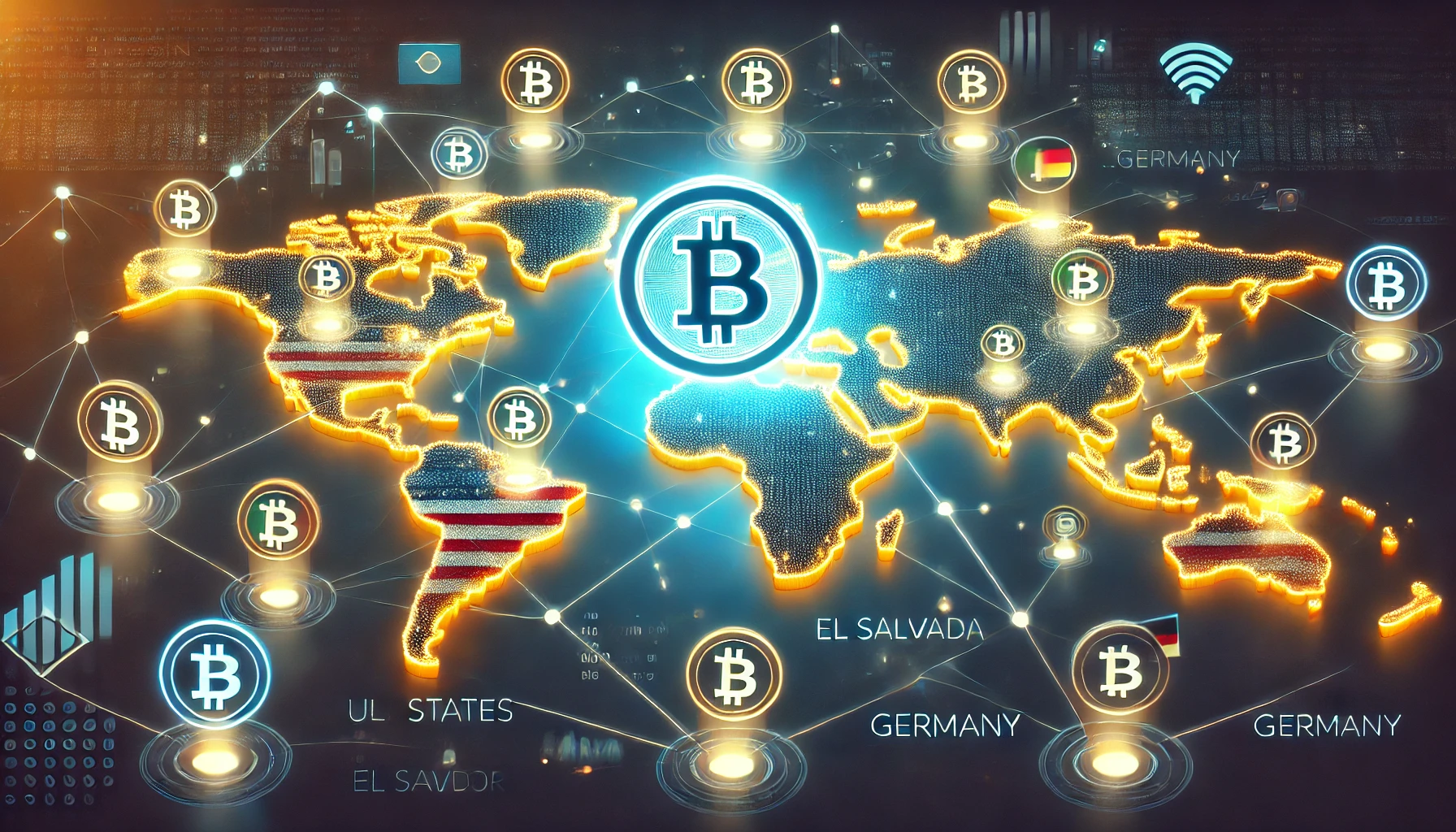
One thing to get straight first: when people ask which countries “own the most Bitcoin,” they usually mean government holdings, and most of those coins were not bought — they were seized in criminal cases. A newer trend is deliberate accumulation: the United States formalised a Strategic Bitcoin Reserve in March 2025, El Salvador keeps buying, and Bhutan mines its own. Below are the seven countries most associated with large Bitcoin holdings, refreshed with August 2026 data, followed by the notable former holders, the rumours, and what it all means if you invest from Malaysia or Singapore.
Countries With the Most Bitcoin at a Glance (2026)
| Rank | Country | Est. BTC held | Approx. value | Main source |
|---|---|---|---|---|
| 1 | United States | ~328,000 | ~US$26 billion | Seizures (Silk Road, Bitfinex) |
| 2 | China | ~190,000 | ~US$15 billion | PlusToken Ponzi seizure |
| 3 | United Kingdom | ~61,000 | ~US$4.8 billion | Money-laundering seizure |
| 4 | Ukraine* | ~46,351 | ~US$3.7 billion | Officials’ declarations + war donations |
| 5 | El Salvador | ~7,747 | ~US$610 million | Daily purchases + mining |
| 6 | Bhutan | ~3,524 | ~US$280 million | Hydro-powered mining |
| 7 | Venezuela | Unverified | — | Contested / rumoured |
*Ukraine’s figure is the total Bitcoin declared by public officials in asset declarations, not a single central-bank reserve. All numbers verified in August 2026 at BTC ≈ US$79,000; on-chain trackers such as BitcoinTreasuries differ and lag real events, so treat every figure as an estimate.
1. United States: ~328,000 BTC (~US$26 Billion)
The United States is comfortably the largest government holder of Bitcoin — on-chain trackers put the total near 328,000 BTC, more than the next several governments combined. Almost all of it came from criminal forfeitures rather than open-market buying.
The single biggest tranche — about 69,370 BTC — was seized in November 2020 from a hacker who had siphoned it from the dark-web marketplace Silk Road years earlier. (Silk Road founder Ross Ulbricht was pardoned in January 2025, though that did not affect the seized coins.) A further ~94,000 BTC was recovered in 2022 in connection with the 2016 Bitfinex hack; some of that is earmarked for return to the exchange, which is one reason different trackers quote anything from ~198,000 to ~328,000 BTC for the U.S.
The bigger shift is policy. In March 2025 an executive order created a Strategic Bitcoin Reserve, declaring seized BTC a long-term reserve asset that should not be sold and directing the Treasury to explore budget-neutral ways to acquire more. In practice, the U.S. has moved from routinely auctioning off confiscated coins to holding them — a meaningful change in how the world’s largest economy treats Bitcoin.
2. China: ~190,000 BTC (~US$15 Billion)
Despite banning crypto trading and mining since 2021, China is believed to sit on roughly 190,000 BTC, almost all of it seized from the PlusToken Ponzi scheme that defrauded investors in 2018–2019. These are the most opaque holdings of any major government: Beijing has never officially confirmed the amount, disclosed a wallet, or clarified whether the coins were sold, are held in reserve, or were absorbed into the state treasury.
That opacity matters for markets. Because no one can verify China’s balance or intentions, the figure should be treated as a well-sourced estimate rather than a confirmed reserve — and any future movement of those coins could ripple through prices.
3. United Kingdom: ~61,000 BTC (~US$4.8 Billion)
The UK holds about 61,000 BTC, again from law enforcement rather than investment. The bulk traces to a single money-laundering case involving Jian Wen and Zhimin Qian, tied to a large fraud in China; the seized Bitcoin sits in wallets controlled by UK authorities.
Unlike the U.S., Britain has no policy of holding the coins as a strategic reserve, and there have been recurring reports of the Treasury and Home Office weighing a sale to help plug budget gaps. If that happens, tens of thousands of BTC could eventually reach the market — the opposite of the U.S. approach.
4. Ukraine: ~46,351 BTC (~US$3.7 Billion)
Ukraine is often listed with around 46,351 BTC, but this is the most misunderstood entry on the list. The number is the aggregate Bitcoin declared by Ukrainian public officials in their mandatory asset declarations — not a single government reserve wallet. It reflects personal holdings across many individuals, so it is not directly comparable to the U.S. or UK seizure stashes.
Separately, Ukraine genuinely embraced crypto after Russia’s 2022 invasion, publishing wallet addresses on social media and raising tens of millions of dollars in Bitcoin and other crypto donations for defence and humanitarian needs. Both facts are true; they are just not the same pool of coins, and conflating them is where a lot of “top holder” lists go wrong.
5. El Salvador: ~7,747 BTC (~US$610 Million)
El Salvador made history in 2021 as the first country to adopt Bitcoin as legal tender, and it remains the only nation actively buying on the open market. Under President Nayib Bukele it has added roughly one BTC per day since November 2022, supplemented by state Bitcoin mining, lifting the treasury to about 7,747 BTC as of mid-August 2026.
Notably, El Salvador kept accumulating even after securing a US$1.4 billion IMF Extended Fund Facility in December 2024, a deal that required it to scale back public-sector Bitcoin activity and make merchant acceptance voluntary. The National Bitcoin Office continued posting daily buys regardless. Thanks to that steady stacking — and Bhutan’s heavy selling — El Salvador has now overtaken Bhutan in the rankings, a reversal from a year ago.
6. Bhutan: ~3,524 BTC (~US$280 Million)
Bhutan built its stash the hard way — mining Bitcoin with surplus hydroelectric power through state fund Druk Holding & Investments — and once held around 13,000 BTC. In 2026 that picture changed dramatically: on-chain trackers show holdings falling roughly 70% to about 3,524 BTC, with more than US$230 million in coins moved to exchanges over the year.
It is a genuinely contested story. Druk Holding has disputed the reported sell-down and declined to confirm current balances, while blockchain analysts insist the outflows are real. The likeliest explanation is a planned treasury drawdown — the 2024 halving roughly doubled mining costs, and King Jigme Khesar Namgyel Wangchuck pledged up to 10,000 BTC toward the flagship Gelephu Mindfulness City project in December 2025. Either way, Bhutan is no longer a pure “hold-forever” miner.
7. Venezuela: A Contested Case
Older lists credit Venezuela with a few hundred BTC, but that figure is now impossible to verify. The state crypto agency SUNACRIP has been paralysed since a 2023 corruption scandal, and the government-issued Petro token was shut down in 2024, with remaining balances converted to local currency. There is no documented, trackable Venezuelan state Bitcoin reserve today.
What you will see instead are rumours — including a widely circulated claim that Venezuela quietly converted gold into as much as several hundred thousand BTC to dodge U.S. sanctions. None of that is confirmed by on-chain data or officials, so we flag it as speculation, not fact. On the ground, ordinary Venezuelans lean heavily on stablecoins like USDT to escape inflation, which is a very different phenomenon from a sovereign reserve.
The Country That Sold Too Early: Germany
No list of national Bitcoin holdings is complete without Germany — the cautionary tale. Between June and July 2024, the German government sold its entire ~49,858 BTC (seized from the Movie2K.to piracy operation) at an average of about US$57,900, raising roughly US$2.89 billion. German law mandated the emergency liquidation.
Had Berlin simply held, those coins would be worth about US$3.9 billion today — a paper difference of over a billion dollars. It is the clearest real-world illustration of why the U.S. “do not sell” policy is such a departure, and a reminder that timing is brutal even for governments.
Government Holdings vs. Citizen Ownership
“Most Bitcoin ownership” can mean two completely different things, and it is worth separating them:
| What “ownership” means | Who leads (2026) | Roughly |
|---|---|---|
| Government / state holdings | United States | ~328,000 BTC |
| Most individual owners (total) | India, then USA | ~156M / ~52M people |
| Highest ownership per capita | UAE, Vietnam, Turkey, Nigeria | ~20–30% of population |
By headcount, India dwarfs everyone with an estimated 150 million-plus crypto owners, followed by the United States. By penetration, smaller and high-inflation economies lead: the UAE, Vietnam, Turkey and Nigeria all see roughly a fifth to nearly a third of adults holding crypto. Globally, adoption sits near 10% of internet-age adults. So the “richest in Bitcoin” nation depends entirely on whether you count state vaults or citizens’ wallets — and the two rankings barely overlap.
What About Malaysia and Singapore?
Neither Malaysia nor Singapore holds a state Bitcoin reserve, and neither treats crypto as legal tender — Bank Negara Malaysia (BNM) has been explicit that Bitcoin is not a recognised payment instrument. That does not stop residents from owning it; it just means you buy through regulated private platforms, not a government programme.
| Malaysia | Singapore | |
|---|---|---|
| State BTC reserve? | No | No |
| Legal tender? | No (BNM stance) | No (MAS stance) |
| Where to buy legally | SC-registered DAX: Luno, HATA, MX Global, SINEGY, Kinetic DAX | MAS-licensed: Coinhako, Independent Reserve, Crypto.com, Coinbase |
| Local payment rail | DuitNow / FPX | PayNow / FAST |
| Tax on gains | No general capital-gains tax; LHDN “badges of trade” may apply to active traders | No capital-gains tax; IRAS taxes frequent trading as income |
In Malaysia, only exchanges registered with the Securities Commission (SC) may legally facilitate ringgit crypto trades, and five currently do so: Luno, HATA, MX Global, SINEGY and Kinetic DAX. The SC’s revised digital-asset framework took effect on 20 May 2026, tightening investor-protection and capital rules while letting registered platforms list certain tokens independently. Global names like Binance and OKX are not SC-registered for Malaysian users. In Singapore, stick to MAS-licensed providers. For a full walkthrough, see our guide to the best crypto trading platforms in Malaysia.
What This Means If You Invest
Sovereign Bitcoin holdings are a fascinating signal, but they are a poor trading trigger. A few takeaways worth keeping in mind:
Seized coins are a supply overhang. Governments like the UK that intend to sell can add sell-pressure; a U.S.-style “hold” policy removes it. Watch policy, not just balances.
Deliberate accumulation is the real story. El Salvador’s daily buys and any future Strategic-Reserve purchases represent steady, price-insensitive demand — structurally different from a one-off seizure.
Do not copy a country’s conviction with your rent money. Nations can stomach an 80% drawdown; most households cannot. If you buy, sensible practice is a small allocation (often cited as 1–5% of a portfolio), dollar-cost averaging, and moving long-term coins to secure self-custody. It is also worth deciding early whether Bitcoin or another asset suits your goals — our Gold vs. Bitcoin and is cryptocurrency a good investment guides dig into the trade-offs.
Frequently Asked Questions
Figures in this guide were verified in August 2026 using public on-chain trackers and reputable reporting. Government Bitcoin balances change frequently and are often estimates — always confirm the latest numbers with a primary source before acting.
Disclaimer: This article is published by KayaToday for general information and education only and is not financial, investment, tax, or legal advice. Cryptocurrency is highly volatile and holdings data drawn from third-party trackers may be incomplete or delayed. Do your own research and consult a licensed professional before making any investment decision.