In the first half of 2025 alone, hackers stole about US$2.17 billion in crypto — already more than the whole of 2024, according to Chainalysis. And here’s the part that should make every holder sit up: the share of those losses coming from ordinary personal wallets (not big exchanges) has climbed from roughly 10% in 2022 to nearly 25% in 2025. In other words, attackers are increasingly coming after regular users — and a poorly chosen wallet setup is exactly what they count on.
- What Is a Crypto Wallet?
- Public and Private Keys Explained
- The Role of Wallets in Holding Crypto and NFTs
- What Is a Hot Wallet?
- Definition and How It Works
- Examples: MetaMask, Trust Wallet, Coinbase Wallet, Phantom
- Pros and Cons of Hot Wallets
- What Is a Cold Wallet?
- Definition and Offline Storage
- Hardware Wallet Examples: Ledger, Trezor, SafePal (2026 lineup)
- Pros and Cons of Cold Wallets
- Hot Wallet vs. Cold Wallet: Key Differences
- Security and Risk
- Accessibility and Usage Style
- Transaction Speed and Use Case Fit
- New in 2025–2026: Wallet Drainers & Approval Phishing
- Which Wallet Type Is Right for You?
- For NFT Traders, HODLers, and DeFi Users
- How Much You’re Holding and Your Risk Tolerance
- Blended Approach: Using Both for Different Purposes
- Buying & Storing Safely in Malaysia and Singapore
- Best Practices for Wallet Safety
- Avoiding Phishing and Fake Wallet Apps
- Back Up Your Seed Phrase Properly
- Enable Additional Security Layers
- Frequently Asked Questions
- Final Thoughts: Stay Secure While Exploring Web3
Our experienced team has tested both hot wallets and cold wallets across multiple blockchains and platforms, from NFTs to DeFi protocols. We’ve seen firsthand how the right wallet — used the right way — can be the difference between sleeping soundly and waking up to an empty balance.
In this guide, we break down the hot wallet vs. cold wallet debate in plain language, add the newer 2025–2026 threats most articles skip (wallet drainers and approval phishing), and give you a simple framework for Malaysia and Singapore. Whether you’re minting NFTs, yield farming, or holding Bitcoin long-term, you’ll know exactly what to use and when.
What Is a Crypto Wallet?
A crypto wallet is the tool you use to hold and move digital assets like Ethereum, Bitcoin, and NFTs on the blockchain. Think of it as a digital vault key rather than a physical billfold — your coins never actually leave the blockchain. The wallet simply stores the keys that prove those assets are yours and let you authorise transactions.
Public and Private Keys Explained
Every wallet manages two things:
- Public key: Works like your bank account number. It’s safe to share and is used to receive crypto.
- Private key: Works like your password or ATM PIN. It should never be shared — anyone who has it controls all your assets.
This is where custody matters. With a self-custody (non-custodial) wallet, you alone hold the private keys and have complete control. With a custodial service — for example, leaving coins on an exchange — a third party holds the keys for you. That’s convenient, but as the industry saying goes, “not your keys, not your coins.” If you want the full picture, see our explainer on what crypto custody is.
The Role of Wallets in Holding Crypto and NFTs
Wallets are essential for buying and selling crypto, minting or trading NFTs, and connecting to DeFi platforms for staking, lending, or yield farming.
What Is a Hot Wallet?
Definition and How It Works
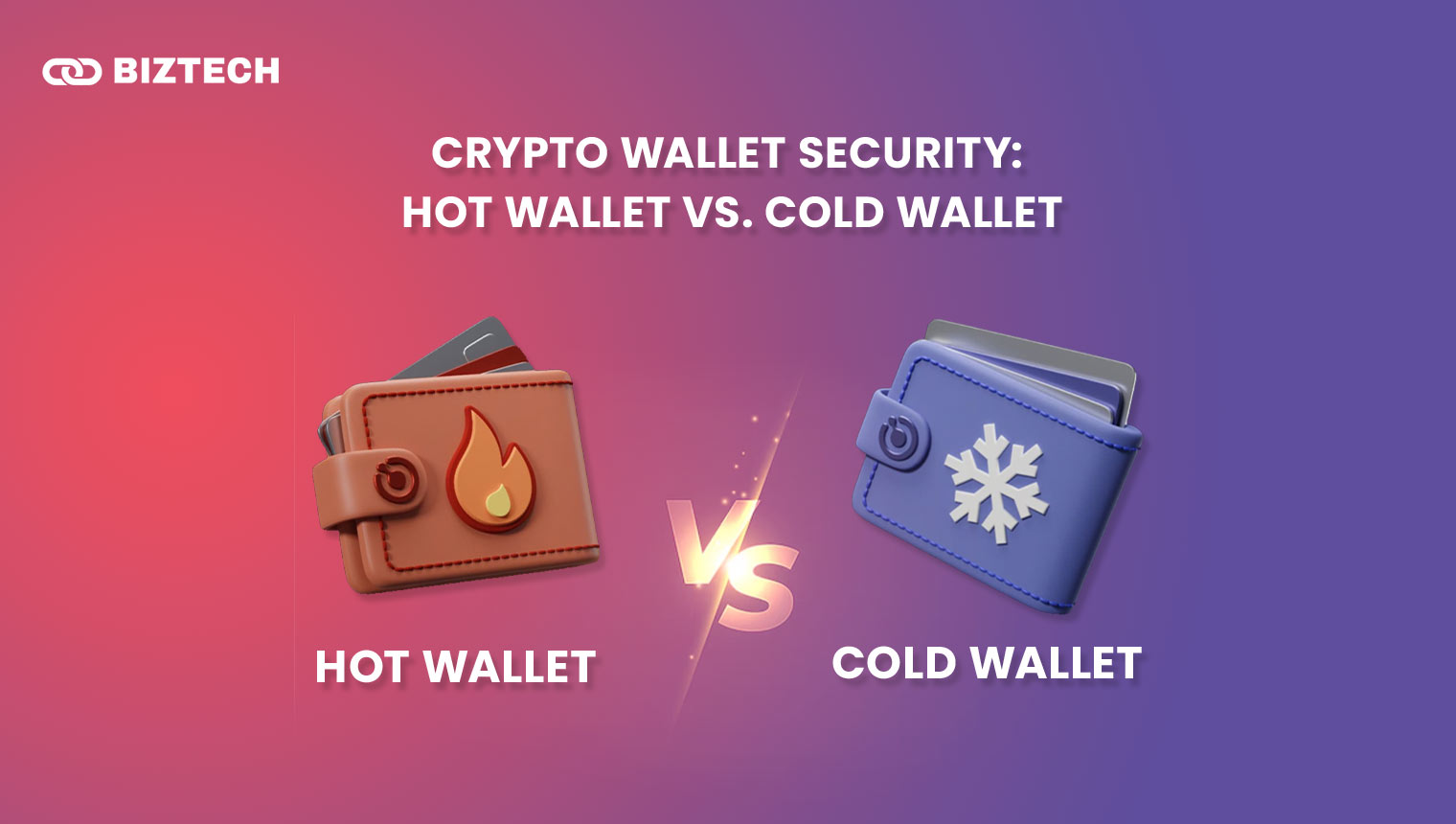
A hot wallet is connected to the internet — usually a browser extension, mobile app, or desktop program. Because your private keys sit on an online device, you can send and receive crypto within seconds, which makes hot wallets ideal for active trading, DeFi, and NFT minting.
Examples: MetaMask, Trust Wallet, Coinbase Wallet, Phantom
- MetaMask (by Consensys): The most popular browser and mobile wallet for Ethereum and EVM chains, and a favourite among NFT and DeFi users. Its built-in Portfolio tool now lets you review and revoke token approvals — more on that below.
- Trust Wallet: A Binance-affiliated mobile wallet supporting a huge range of blockchains and tokens.
- Coinbase Wallet: A self-custody wallet that is separate from the Coinbase exchange account, supporting both crypto and NFTs.
- Phantom: Originally the go-to Solana wallet, now multi-chain (Solana, Ethereum, Bitcoin and more) with strong phishing warnings built in.
Each offers fast access and a friendly interface — but that same “always online” nature is exactly what creates risk. For a deeper look at options for collectors, see our guide to the best NFT wallets.
Pros and Cons of Hot Wallets
Pros
- Instant access to your assets
- Easy to connect with exchanges, DeFi apps, and NFT marketplaces
- Free and great for everyday use and small amounts
Cons
- Exposed to hacking, phishing, malware, and malicious dApp approvals
- Security depends on your device and browsing habits
- Private keys are stored on an internet-connected device
What Is a Cold Wallet?
Definition and Offline Storage
A cold wallet keeps your private keys offline, so they’re never exposed to the internet. Most cold wallets are small hardware devices: you confirm and sign each transaction physically on the device, which means remote attackers can’t move your funds even if your computer is infected. That makes cold storage the standard for long-term holding and larger balances.
Hardware Wallet Examples: Ledger, Trezor, SafePal (2026 lineup)
- Ledger: The current range runs from the entry-level Nano S Plus (~US$79) and Bluetooth-enabled Nano X (~US$149) to the E-Ink touchscreen Flex (~US$249) and premium Stax (~US$399). All use a certified secure-element chip and the Ledger Live app, and support thousands of coins and tokens.
- Trezor: The lineup is now the Safe 3 (best value), Safe 5 (touchscreen), and flagship Safe 7. The older Model One and Model T were retired from Trezor’s store in January 2026 — they remain safe to use, but new buyers should choose a current “Safe” model with a certified secure element.
- SafePal: Offers both hardware (such as the S1/X1) and a software app. It’s affordable and supports many chains, including BNB Chain and Solana — a popular budget entry point.
Every cold wallet gives you a recovery seed phrase (12 or 24 words) when you set it up. If the device is lost or damaged, that phrase is the only way to restore your funds — so protecting it matters as much as protecting the device. Comparing devices? Our roundups of the best crypto cold wallets in Malaysia and the best cold storage wallets go into detail, and there’s a dedicated Ledger Nano X review too.
Pros and Cons of Cold Wallets
Pros
- Private keys stay offline, out of reach of remote hackers
- Ideal for long-term storage and significant holdings
- Strong protection against malware and most phishing
Cons
- Slower and less convenient for frequent trading
- Upfront cost and a bit of setup/maintenance
- Losing both the device and the seed phrase means losing access permanently
Hot Wallet vs. Cold Wallet: Key Differences
| Feature | Hot Wallet | Cold Wallet |
| Internet access | Always connected | Offline |
| Security level | Moderate (exposed to online attacks) | High (isolated from online threats) |
| Convenience | Very convenient | Less convenient |
| Cost | Usually free | ~US$79–US$399 (RM330–RM1,680) |
| Best use case | Daily use, small amounts, DeFi/NFTs | Long-term storage, larger funds |
| Setup required | Minimal | Physical device + seed backup |
Approx. RM figures at ~RM4.20 to US$1 (Aug 2026); confirm live prices on the official store.
Security and Risk
Hot wallets are always exposed to the internet, which raises the odds of phishing, malware, or a malicious smart-contract approval draining your funds. Cold wallets remove the remote-attack surface — but they shift the responsibility onto you to protect the physical device and seed phrase. If you want a broader security primer, our guide to the safest ways to store Bitcoin pairs well with this section.
Accessibility and Usage Style
If you trade daily or actively use DeFi, a hot wallet’s speed is hard to beat. If you’re holding for months or years and rarely move funds, a cold wallet’s friction is a feature, not a bug — it slows you down at exactly the moments a scammer wants you to rush.
Transaction Speed and Use Case Fit
Hot wallets let you log in, confirm, and go. Cold wallets require you to connect the device, review the details on its own screen, and physically approve — slower, but that on-device check is your last line of defence against a spoofed transaction.
New in 2025–2026: Wallet Drainers & Approval Phishing
The biggest shift in wallet security isn’t hackers guessing your private key — it’s tricking you into signing a malicious approval yourself. These “wallet drainer” kits have caused well over US$200 million in losses across 2024–2025, and they target hot wallets specifically because those are the ones connected to dApps.
Here’s how it works: you get an email, X (Twitter), or Discord message about an airdrop, a “governance vote,” or a token claim. You connect your wallet to a site that mimics a real dApp and sign what looks like a routine approval. That single signature can grant a smart contract permission to move an entire token balance — and the permission stays active until you revoke it. In January 2025, a fake Arbitrum governance proposal circulating on X tricked voters into signing a drainer approval, siphoning over US$8 million.
How to protect yourself:
- Read every signature request. If a “claim” or “connect” asks for approval to spend your tokens, stop and verify the site’s exact URL.
- Review and revoke old approvals regularly using Revoke.cash or the built-in allowances tool in MetaMask Portfolio. Dormant approvals you forgot about are a common attack path.
- Use a separate “burner” hot wallet for minting and airdrops, keeping your main funds in cold storage.
- Never sign a transaction you don’t understand — the Bybit case above shows even professionals get caught by disguised approvals.
If you think you’ve already been targeted, our guide on how to spot crypto scams and what to do if you’ve been scammed walks through the immediate steps.
Which Wallet Type Is Right for You?
For NFT Traders, HODLers, and DeFi Users
- NFT traders: A hot wallet like MetaMask or Phantom is ideal for minting and marketplace activity — but consider a dedicated one separate from your savings.
- Long-term holders: A cold wallet like a Ledger or Trezor gives you peace of mind for coins you won’t touch for months.
- DeFi users: A hot wallet is required for staking, lending, and liquidity pools — pair it with disciplined approval hygiene.
How Much You’re Holding and Your Risk Tolerance
A simple rule of thumb:
- Under ~US$500–US$1,000 (roughly RM2,000–RM4,200)? A well-secured hot wallet is usually fine.
- More than that? Keep the bulk in a cold wallet and only a small “spending” amount in a hot wallet for transactions.
Blended Approach: Using Both for Different Purposes
Most experienced holders run a two-tier setup:
| Layer | Wallet type | Rough allocation | Purpose |
| Savings (“vault”) | Cold / hardware | ~90% | Long-term holdings you rarely move |
| Spending (“checking”) | Hot / software | ~10% | Daily trades, DeFi, NFT minting |
It’s the crypto version of a savings account (cold) and a checking account (hot) — most of your money stays locked away, and only what you need for the week is exposed.
Buying & Storing Safely in Malaysia and Singapore
Buy the device from an official source. Only order hardware wallets directly from the manufacturer (Ledger.com, Trezor.io) or an authorised reseller. Never buy a used or “pre-configured” device, and never use a seed phrase that came pre-printed in the box — both are classic scams.
Malaysia: To buy or sell the crypto itself legally, use a Securities Commission (SC)-registered Digital Asset Exchange. As of mid-2026 the registered DAX are Luno, HATA, MX Global, SINEGY DAX and Kinetic DAX — always confirm the current list on the SC’s official register, as it changes. Buy on a registered exchange, then withdraw to your own wallet for storage rather than leaving large balances on the platform. New to this? Start with our best crypto trading platforms in Malaysia guide.
Singapore: Use a Monetary Authority of Singapore (MAS)-licensed provider for buying and selling, and apply the same principle — self-custody the bulk of your holdings and keep only spending money on an exchange.
Best Practices for Wallet Safety
Avoiding Phishing and Fake Wallet Apps
- Download wallet apps and extensions only from official websites and verified app-store listings.
- Bookmark the real sites (MetaMask, Ledger, Trezor) and use your bookmark every time — never a search-ad link.
- Be sceptical of unsolicited “airdrop,” “support,” or “wallet update” messages.
Back Up Your Seed Phrase Properly
- Write your seed phrase on paper (or stamp it into metal) and store it somewhere safe and private.
- Never store it in your phone, computer, screenshots, email, or cloud services.
- Consider a fire- and water-resistant metal seed backup for larger holdings.
Enable Additional Security Layers
- Use a strong, unique password and turn on two-factor authentication (an authenticator app, not SMS, where possible).
- Enable biometric access (fingerprint or face) on mobile wallets.
- For teams, businesses, or very large holdings, consider a multi-signature wallet such as Safe (formerly Gnosis Safe), which requires several approvals per transaction.
Frequently Asked Questions
Final Thoughts: Stay Secure While Exploring Web3
Crypto is full of opportunity, but security is the price of admission. Choosing the right wallet — and using it well — is your first and most important line of defence.
To recap:
- Hot wallets offer speed and access for daily use, DeFi, and NFTs.
- Cold wallets offer strong protection for long-term storage and larger balances.
- A blended approach — most funds cold, a little hot — gives you the best of both.
- Your habits matter most: verify every signature, revoke stale approvals, and guard your seed phrase.
Start small, stay curious, and always keep your keys safe.
Wallet models and prices verified as of August 2026; figures like device prices and the SC-registered exchange list change often, so confirm details with the official provider before buying.
Disclaimer: This article is provided by KayaToday for informational purposes only and does not constitute financial advice. Always do your own research and consult a qualified professional before making any investment decisions. Crypto assets are volatile and involve risk, and you should only invest what you can afford to lose.