
The Bitcoin market has matured dramatically, and in 2026 it trades as a genuinely institutional asset shaped by ETF flows, sovereign reserves, and global macro policy rather than retail hype alone.
- 1. Bitcoin Is No Longer a Simple Retail Market
- 2. ETF Inflow Analysis for Market Sentiment
- 3. Monitor Funding Rate and Basis Rate
- 4. Leverage Options Strategies Amid High Volatility
- 5. Don’t Rely on Short-Term Speculation
- 6. Beware of Weak Market Structure and Fiat Volume
- 7. Do Not Rely Solely on Technical Analysis
- 8. Focus on Risk Management
- 9. Use the Funding Rate Arbitrage Strategy
- 10. Adaptation and Diversification of Strategies
- Conclusion
- Frequently Asked Questions
When this guide first mapped the strategies for the “next potential uptrend,” that uptrend arrived — and then some. Bitcoin printed a record high of US$126,198 on 6 October 2025, decisively clearing the US$104,000 resistance level traders had been watching a year earlier.
What followed has been a two-sided market. After a 2026 high near US$94,820 in mid-January, Bitcoin corrected through spring and summer before a sharp 22% weekly rebound in August 2026 lifted it back toward the US$79,000 area — its highest level since May. If you want the longer view on where price may head next, see our running Bitcoin price predictions.
The core lesson has not changed: a “buy and hold” (HODL) approach alone struggles against high volatility, swinging ETF inflows, and geopolitical and economic uncertainty. Traders need to be smarter and more flexible. This article refreshes 10 key facts about Bitcoin trading strategies for 2026 — from the role of institutions and ETF analysis to options-based, funding-rate, and arbitrage approaches — so you can navigate the next move with a real edge.
| Bitcoin snapshot | Latest reading (verified August 2026) |
|---|---|
| All-time high | US$126,198 (6 October 2025) |
| 2026 high | ~US$94,820 (mid-January 2026) |
| Recent price | ~US$79,000, after a +22% week |
| 90-day realized volatility | ~42% (down from ~80% in 2021) |
| Spot BTC ETF cumulative inflows | Over US$58 billion since January 2024 |
| BlackRock IBIT holdings | Over 800,000 BTC (~US$62 billion) |
| US Strategic Bitcoin Reserve | ~328,372 BTC (~US$25 billion); sales prohibited |
1. Bitcoin Is No Longer a Simple Retail Market
In the past, Bitcoin was dominated by retail traders speculating on hype or social-media sentiment. That era is over. Large institutions — family offices, asset managers, corporate treasuries, and now even governments — are the primary drivers of price. Spot Bitcoin ETFs have pulled in over US$58 billion cumulatively since their January 2024 launch, and BlackRock’s iShares Bitcoin Trust (IBIT) alone holds more than 800,000 BTC, worth roughly US$62 billion.
This changes how you should read the tape. Institutions accumulate patiently at support and distribute into strength, so “smart money” footprints — large on-chain transfers, ETF creation/redemption data, and CME futures positioning — matter more than a viral post. The market is also far more sensitive to macro news, such as Federal Reserve rate decisions and US crypto regulation, than it was in the retail-driven cycles.
For retail traders, opportunities still exist, but they must be balanced against in-depth analysis of institutional flow. The psychological US$80,000 zone has acted as a 2026 battleground, with the record US$126,198 high standing as the overhead reference the next sustained rally would need to reclaim. Trade with the institutional current, not against it.
2. ETF Inflow Analysis for Market Sentiment
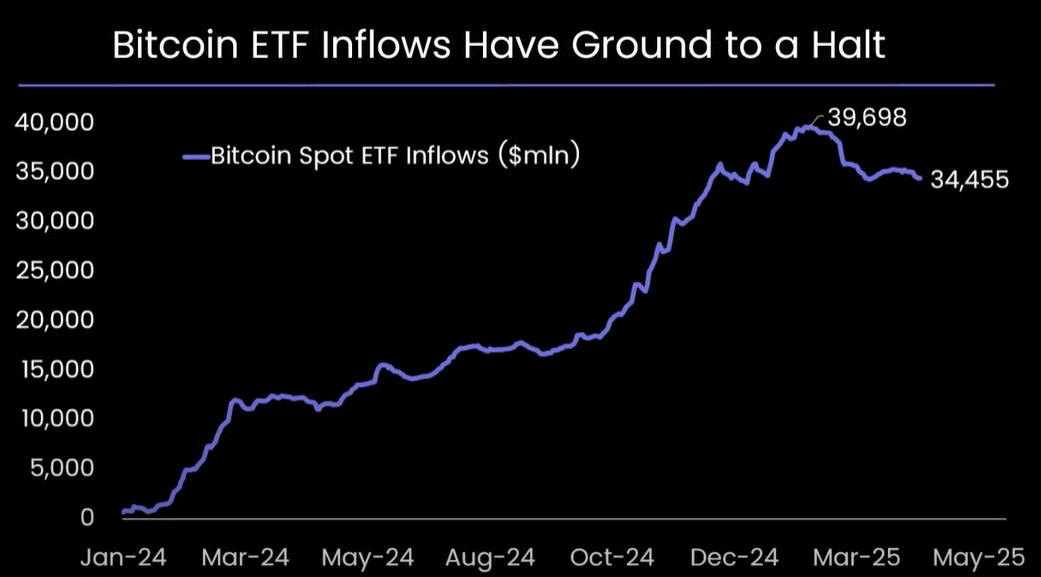
Flows into spot Bitcoin ETFs are the single clearest gauge of institutional sentiment. In 2026 those flows have been volatile but very much alive: after January–February redemptions, demand returned strongly, with roughly US$1.97 billion of net inflows in April, an US$853 million week in early August (BlackRock’s IBIT taking US$693 million of it), and US$517 million on 20 August — the largest single-day haul in about three and a half months.
Use ETF data as a leading component of your Bitcoin trading strategy. Sustained positive inflows signal institutional buying pressure that tends to support spot prices, while a run of outflows is an early warning to trim exposure or brace for a correction. It also helps to know what you are watching: spot funds such as IBIT track Bitcoin’s price directly, whereas futures-based products carry roll costs that can distort the signal. For context on how one high-profile launch played out, see our breakdown of the Trump and Truth Social Bitcoin ETF.
3. Monitor Funding Rate and Basis Rate
The funding rate — the periodic fee exchanged between long and short holders of perpetual futures — is one of the most useful sentiment tools available. Crucially, it applies only to perpetual futures; if you buy Bitcoin on the spot market you never pay or receive funding. When funding turns persistently negative, shorts are crowded, and that excess often sets up a short squeeze that propels prices higher. 10X Research’s historical analysis put the odds of a Bitcoin rally within 3–6 months of deeply negative funding at around 77% — a striking figure we cite as their finding rather than an independently guaranteed outcome.
Funding can swing violently: during the March 2020 crash it lurched from about +0.01% to −0.375% within days, while euphoric rallies can push it above +0.3% per 8-hour period. The basis rate — the gap between futures and spot prices — is the companion signal: a wide positive basis reflects bullish leverage (and crowded longs), while a negative basis hints at short-term fear. Combine funding and basis with on-chain accumulation data for stronger confirmation before you commit.
4. Leverage Options Strategies Amid High Volatility
Bitcoin’s implied volatility spiked to a multi-year high during 2026’s swings, according to CME Group’s cryptocurrency options desk — and rich volatility is the raw material for premium-selling strategies. Selling puts and calls through structures like straddles or strangles lets a trader collect premium without needing to nail the exact direction, which works well when price grinds sideways within a defined range.
For example, a trader expecting Bitcoin to hold a band might sell a put near the lower edge and a call near the upper edge; if price stays inside the range, both expire worthless and the premium is kept. The catch is that these are undefined-risk trades — a violent move can produce outsized losses — so they demand a solid grasp of implied volatility and disciplined position sizing. Beginners should paper-trade the mechanics on a demo account before risking real capital.
5. Don’t Rely on Short-Term Speculation
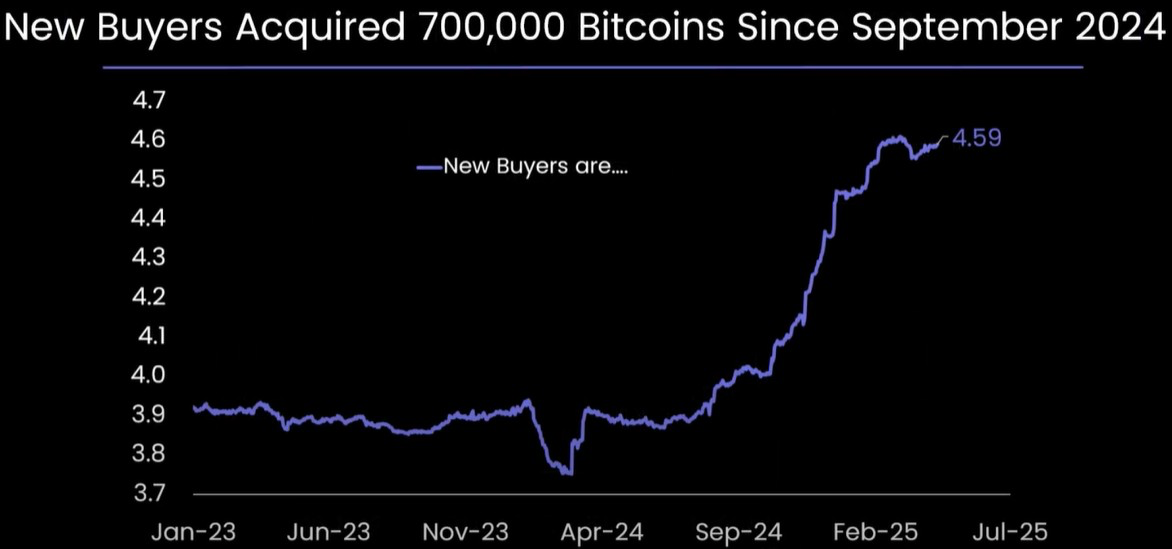
The structural bid under Bitcoin now comes from long-term allocators diversifying portfolios, not the “crypto bro” retail mania of 2020–2021. New-address growth and retail transaction volumes remain subdued, which means strategies built purely on social-media hype or FOMO are increasingly irrelevant.
Instead, anchor decisions to fundamentals: institutional adoption, pro-crypto US policy, and Bitcoin’s role as a potential hedge against macro uncertainty. The clearest example is the US Strategic Bitcoin Reserve, established by executive order on 6 March 2025. Washington now holds roughly 328,372 BTC (about US$25 billion), and the order prohibits selling any Bitcoin deposited into the reserve. If the accompanying BITCOIN Act passes, analysts expect the Treasury’s first official purchase as early as Q4 2026 — though inter-agency friction over custody has slowed full operationalization. These are multi-year catalysts, and strategies that ignore them risk trading noise instead of trend.
6. Beware of Weak Market Structure and Fiat Volume
Even when Bitcoin looks poised to rally, market structure can be fragile. Thin new-stablecoin issuance and soft fiat on-ramp volumes signal that retail liquidity has not fully returned, and without that fuel, rallies can stall or reverse. That is exactly the backdrop behind 2026’s sharp two-way moves.
Build liquidity checks into your process: watch spot volume on major venues like Binance and Coinbase, and track the growth (or contraction) of stablecoin supply such as USDT and USDC. Be especially wary of “fakeouts” at overhead resistance, where price briefly pokes above a level before failing for lack of volume. A patient approach — waiting for a breakout to confirm on strong volume rather than front-running it — is usually the safer play.
7. Do Not Rely Solely on Technical Analysis
Technical analysis is valuable but incomplete on its own. Short-term oscillators like RSI or MACD may flash improvement even as higher-timeframe cycle indicators warn that a move is stretched. Reading those signals in isolation is how traders get caught on the wrong side of a reversal.
An effective Bitcoin trading strategy layers technical, fundamental, and on-chain analysis together. A breakout is far more trustworthy when it lines up with whale accumulation or fresh ETF inflows than when it rests on a candlestick pattern alone, and macro events — rate decisions, geopolitical shocks, regulatory headlines — can override any chart in minutes. If you lean on chart signals, sharpen them: our guide on how to spot bearish and bullish divergence pairs well with the confirmation-first mindset.
8. Focus on Risk Management
With trade-policy threats and geopolitical tension never far away, risk management is the backbone of any durable strategy — not an afterthought. A common discipline is to cap a single Bitcoin position at 5–10% of the portfolio and to attach stop-loss orders that define the loss before the trade is placed. Bitcoin’s 90-day realized volatility has cooled to around 42% in 2026 from roughly 80% in 2021, but that is still multiples of most traditional assets.
Diversification softens the blow. Pairing Bitcoin with lower-correlation assets such as gold or blue-chip equities can steady a portfolio through crypto drawdowns — our comparison of crypto vs stocks is a useful starting point. In extreme scenarios, a contingency plan — hedging with options or rotating into stablecoins — protects capital when correlations spike. For a deeper framework, see our guide on ways to manage risk in crypto trading.
9. Use the Funding Rate Arbitrage Strategy
Funding-rate (cash-and-carry) arbitrage shines in sideways markets because it is market-neutral. When funding is strongly positive, a trader can short the perpetual future while buying an equal amount of spot Bitcoin, pocketing the funding payments regardless of which way price moves; when funding is deeply negative, the trade can be reversed. Because the long and short offset, price volatility is largely hedged away.
The economics depend on fees and consistency. A positive funding rate of, say, 0.01% every 8 hours annualizes to roughly 15% before costs — attractive, but only if trading fees and slippage stay low and margin is isolated per strategy so one leg can’t drain another. This is a strategy for experienced traders with access to deep-liquidity venues; our roundup of the best crypto exchanges for day trading can help you compare execution and funding conditions.
10. Adaptation and Diversification of Strategies
No single approach wins in every regime. The traders who have thrived through 2026’s whipsaws are the ones who switch fluidly — selling options for income when volatility is rich, running arbitrage for low-risk yield when funding is skewed, and taking directional positions only when fundamentals and flows align. Diversifying strategy is as important as diversifying assets.
The table below maps common market conditions to the strategies that tend to suit them — a decision framework rather than a guarantee.
| Market condition | Signal to watch | Strategy that tends to fit | Main risk |
|---|---|---|---|
| Strong uptrend | Positive ETF inflows, whale accumulation, breakout on volume | Directional long (spot or measured leverage) | Chasing late; fakeouts near resistance |
| Sideways / range-bound | Flat price with elevated implied volatility | Option premium selling (straddle / strangle) | A sudden breakout causing large option losses |
| Overheated / euphoric | Very high positive funding (>+0.3% per 8h) | Funding-rate (cash-and-carry) arbitrage | Fees eroding the spread; exchange risk |
| Fearful / oversold | Negative funding, capitulation volume | Scaled accumulation / short-squeeze long | Catching a falling knife before trend confirms |
| Macro shock | Fed decisions, geopolitics, regulation headlines | Hedge with options or rotate to stablecoins | Correlation spikes; liquidity gaps |
Test any new tactic on a demo account first, understand its failure modes, then enter live with strict discipline. Combining several strategies keeps you solvent — and ready — even when the market moves in ways nobody predicted.
Conclusion
Bitcoin in 2026 is no longer a simple speculative token but a complex instrument shaped by institutions, sovereign reserves, and global macro dynamics. The uptrend this guide once anticipated not only arrived but set a fresh record at US$126,198 in October 2025 — and the volatility since is a reminder that direction is never one-way.
To navigate the next move, equip yourself with advanced tools: ETF-flow analysis, options in high-volatility regimes, funding-rate arbitrage, and, above all, strict risk management. An approach that blends technical, fundamental, and on-chain analysis will keep you a step ahead of the crowd.
Figures verified August 2026. Crypto markets move fast — always confirm live prices, funding rates, and ETF flows with your exchange or the official provider before you trade.
Frequently Asked Questions
Disclaimer: This article is provided by KayaToday for educational and informational purposes only and does not constitute financial, investment, or trading advice. Cryptocurrency trading carries substantial risk, including the loss of your entire capital. Prices, funding rates, ETF flows, and policy details change constantly — always do your own research and consult a licensed financial professional before making any trading decision.