Stay connected with KayaToday—follow us on Instagram and Facebook for the latest news and reviews delivered straight to you.
History rarely announces itself in advance. But when the leaders of the world’s two largest economies — together accounting for approximately 43 per cent of global GDP — spend two days together in Beijing and emerge with a framework they describe simultaneously as a breakthrough and a beginning, the world is entitled to pay close attention. The Trump–Xi summit of May 14 and 15 was that kind of event: genuinely significant in its outcomes, genuinely uncertain in its durability, and genuinely important to read carefully, because the gap between what Washington said happened and what Beijing said happened is a document in its own right.
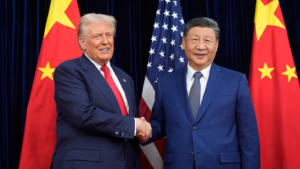
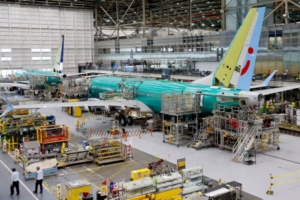
The headline outcomes are real enough. The agreement lowered tariffs and rolled back rare earth restrictions after an escalation in tensions between the two countries earlier in 2025. China committed to purchasing at least $17 billion of American agricultural goods annually through 2028, with soybean access formally restored. Trump told Fox News that China will order 200 Boeing jets, which he said was more than the 150 units the company had expected. On the strategic framing, Xi said the US and China agreed to constructive “strategic stability” as a framework for the next three years.
The Asymmetry in the Readouts
Scrutinise the official statements issued separately by Washington and Beijing, and a revealing pattern emerges. The White House touted Chinese plans to buy 200 Boeing airplanes and cited China’s agreement to address American access to rare earths — particularly of yttrium, scandium, neodymium and indium. The Chinese statement did not mention rare earths. On agriculture, the US cited specific tonnage commitments; Beijing characterised the arrangement in broader terms. On tariff levels, both sides claimed credit for reductions without specifying matching figures.
Analysts described the differences as “minor inconsistencies” that are not significant in themselves, and that assessment is probably right for the short term. But minor inconsistencies in the readouts of superpower summits have a habit of becoming major disputes when implementation is required. The history of US-China trade agreements since 2018 is substantially a history of commitments that were made, contested, and renegotiated — a cycle that has consumed enormous diplomatic and economic bandwidth without resolving the underlying structural tensions that drive it.
What Rare Earths Reveal About the Balance of Power
The rare earths dimension of the summit deserves particular attention because it illuminates the real distribution of leverage in the current relationship. Xi successfully beat back Trump’s unprecedented trade escalation in 2025 — which pushed tariffs past 140 per cent — by wielding China’s “break glass” tool of rare earth minerals and magnets. When Xi threatened to restrict those flows in April and October 2025, Trump folded rather than credibly threaten escalation.
Beijing controls the supply chain for the obscure minerals — from neodymium used in electric vehicle motors to indium used in display screens — that are critical components of smartphones, weapons systems, and clean energy infrastructure. That control is not a negotiating chip in the conventional sense. It is a structural veto over the technology ambitions of every advanced economy, exercised through a resource geography that took decades to construct and cannot be replicated in years.
This truce does not fundamentally change the situation: US dependence on Chinese imports remains high, and geopolitical tensions — Taiwan, the technology war — continue to weigh on business planning. The suspension of new restrictions provides some breathing space for China’s pursuit of technological self-reliance, according to Coface’s North Asia economist. That asymmetry — China buying time for domestic substitution while the US buys time for supply chain diversification — is the hidden logic of every truce in this relationship.
The Economic Stakes for the Rest of the World
For the global economy, the summit matters as much for what it prevents as for what it produces. The crisis in the Middle East has already delivered a shock to the global economy, slowing growth, reigniting inflationary pressures and heightening uncertainty, with global GDP growth now forecast at 2.5 per cent in 2026, well below pre-pandemic norms. A simultaneous re-escalation of US-China trade tensions — with tariffs returning to the 140 per cent levels that briefly prevailed in early 2025 — would have compounded that slowdown with consequences that no major economy was positioned to absorb comfortably.
Strategically, Beijing appears to be trying to turn Trump’s transactional willingness to stabilise ties into a longer-term operating framework for US-China relations, according to Jack Lee, analyst at China Macro Group — one that could become a baseline for the next American administration. That is a sophisticated play, and it reflects a confidence in Beijing about the trajectory of the relationship that Washington’s public posture does not fully reciprocate.
For emerging economies caught between the two powers — particularly across Southeast Asia, where the connector economy opportunity depends on a stable enough US-China relationship to keep supply chains moving — the summit provides a reprieve. The truce extends to November 2026. What comes after remains, as it has for years, the most consequential unanswered question in global economic policy.
The two leaders are scheduled to meet again in Washington in September. The agenda for that meeting has not been disclosed. The markets, the supply chains, and the governments watching from the middle will be paying close attention.
Read Also: Revived US-China Trade Tensions Rattle Global Markets Amid Tariff Escalations