Stay connected with KayaToday—follow us on Instagram and Facebook for the latest news and reviews delivered straight to you.
Four days from now, Tim Cook will take the stage at Apple Park for the last time as chief executive. His successor, John Ternus, is already designated. The succession itself is notable. What Cook chooses to say on Monday morning — and what he chooses to show — will define how his fourteen-year tenure is remembered by the technology industry.
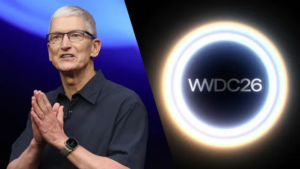
The signs are not subtle. The tagline for WWDC 2026 is “All systems glow.” The most pressing thing Apple needs to make glow is Siri. And if the reporting of the past six months is accurate, Apple’s plan for doing so involves paying Google approximately $1 billion annually for access to a custom 1.2 trillion-parameter version of Gemini — the same model family that Google has been embedding into its own products, its cloud infrastructure, and, as of this week, the backbone of its own agentic AI ambitions. On January 12, 2026, Apple and Google announced a multi-year AI partnership. Monday is when the industry learns what that partnership actually means in practice.
The Weight of Two Years of Promises
Siri improvements announced at WWDC 2024 were delayed, but a January 2026 partnership with Google, bringing Gemini models into the mix, is what is expected to finally enable the more advanced capabilities Apple has been promising. That sentence contains a history of strategic mismanagement that deserves to be read carefully.
Apple had the distribution, the hardware, the privacy infrastructure, and the brand trust to lead the consumer AI transition. It had Siri, imperfect but installed on more than a billion active devices. It had the silicon advantage of its own Neural Engine, the M-series chips, and a Private Cloud Compute architecture that addressed the data sovereignty concerns that made enterprise customers reluctant to embrace rival offerings. What it lacked was the model quality that would make the whole system work — and it spent two years discovering, expensively, that building a frontier-grade large language model is not a problem that excellent hardware engineers can solve on a reasonable timeline.
Tim Cook is unlikely to want his long reign associated with the botched introduction of Apple Intelligence in 2024 and the perennially misfiring Siri. The decision to partner with Google is, in this context, less a strategic choice than a corrective admission. Apple’s own models were not good enough.
What Monday Is Expected to Deliver
WWDC 2026 is set to take place from June 8 to 12, with the redesigned Siri set to become a central element of the software for iPhone, iPad, and Mac. The specific capabilities that are expected to debut include personal context awareness — Siri understanding the content of your calendar, emails, and documents without the user needing to explain them — on-screen understanding, and the ability to complete multi-step tasks across applications reliably. Reports suggest Apple will use Gemini-based models hosted through Private Cloud Compute to power many of these upgrades.
There is also chatter that users may get to choose which model powers Apple Intelligence, with Gemini, Claude, and ChatGPT all in the frame. That detail — if confirmed on Monday — would represent a genuinely significant structural shift. Apple positioning its AI layer as a marketplace of models rather than a single integrated intelligence would be a tacit acknowledgement that no single model is definitively best for all tasks, and a strategic move to avoid dependency on any single provider, including Google. It would also be a direct challenge to every other platform attempting to establish model lock-in at the consumer layer.
Cook is set to officially step down on September 1, though he will remain with Apple as executive chairman. His successor inherits an installed base of 2.2 billion active devices, a services business generating over $100 billion annually, and an AI capability that is, at best, two years behind the frontier. Whether Monday’s announcements close that gap materially or merely make it less visible is the central question the industry will be asking by the time the keynote ends.
The Competitive Geometry This Creates
The Apple-Google AI partnership redraws competitive lines that have been stable for more than a decade. Google is simultaneously building its own consumer AI products — Gemini Spark, announced at I/O last month, is a direct competitor to the kind of personal assistant Apple is now trying to build — while supplying the model infrastructure that Apple’s version will run on. That arrangement is not without precedent: Google has paid Apple tens of billions of dollars annually for default search placement in Safari even as the two companies compete in mobile operating systems, hardware, and services. But the intimacy of the new arrangement is greater, and the strategic tension more acute.
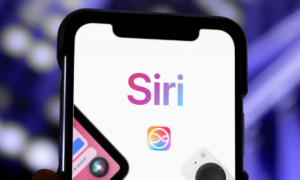
iOS 27 will let users set third-party AI services as the default for Apple Intelligence features like Writing Tools and Image Playground, according to Bloomberg — meaning Apple has signed a deal with Google and plans to use a Gemini-based model for Apple Intelligence and Siri features, but users will also be able to choose their favourite AI service as an alternative. For Anthropic and OpenAI, whose models are expected to be among the alternatives available, Monday’s announcement represents an extraordinary distribution opportunity. Reaching the iPhone’s installed base through a first-party integration has a value that no independent app launch can replicate.
The AI race in 2026 is being decided not by which company builds the best model, but by which platforms those models reach at scale. Apple’s WWDC is, in that sense, less a product launch than a distribution event — one that will reshape the commercial geometry of the AI industry far more than any benchmark result published this year.
Read Also: The Emerging Technologies That Will Outlast the AI Moment