Stay connected with KayaToday—follow us on Instagram and Facebook for the latest news and reviews delivered straight to you.
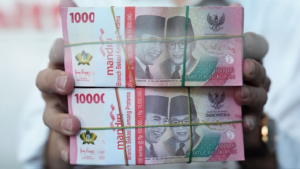
In the taxonomy of financial distress, the emergency central bank meeting occupies a particular category. It is not the intervention of a confident institution calibrating policy at its leisure. It is the intervention of one who has concluded that the situation cannot wait for the scheduled calendar. Bank Indonesia convened an unscheduled board meeting and raised its benchmark 7-day reverse repo rate by 25 basis points to 5.5 per cent — the second surprise hike in as many months, following an unscheduled 50-basis-point increase in May. The rupiah, which has now breached 18,000 to the dollar for the first time in the country’s post-independence history, strengthened modestly to 18,050 on the announcement before the market’s attention returned to the underlying drivers that no interest rate decision can readily address.
Indonesia’s stock market has lost a third of its value in 2026. That figure, set beside the headline rate hike, is the more important data point. Rate increases defend currencies; they do not, by themselves, restore investor confidence in an economy whose structural pressures have been accumulating for months. Understanding why Indonesia has arrived at this juncture requires looking past the immediate trigger — and the trigger, for what it is worth, is not hard to identify.
The External Shock and Its Amplification
Bank Indonesia’s statement cited “high global volatility due to the war in the Middle East” as the primary justification for the emergency action. That framing is accurate as far as it goes. The sustained disruption to the Strait of Hormuz has pushed Brent crude to around $93 per barrel — elevated by any pre-2025 standard, and acutely damaging to oil-importing emerging economies that lack the fiscal buffers to absorb the shock. Indonesia imports a substantial share of its refined fuel needs. Rising energy costs feed directly into transport, manufacturing, and food prices — and Indonesia’s May inflation reading of 3.08 per cent, above the central bank’s target range, confirms that the transmission is already underway.
The capital flight dimension compounds this. Bank Indonesia recorded a capital and financial transaction deficit of $4.9 billion in the first quarter of 2026, a reversal from the previous quarter’s surplus of $9.0 billion. Foreign investors, whose rupiah-denominated assets have been eroded by the currency’s depreciation, have been reducing exposure. By May 2026, foreign investors’ ownership of Government Bonds remained at around 12.75 per cent — a figure that has been declining as confidence in the currency weakens. The dynamic is self-reinforcing: capital outflows weaken the rupiah, which reduces the real value of remaining foreign holdings, which encourages further outflows. Bank Indonesia’s rate hikes are attempts to interrupt that cycle by improving the carry return on rupiah assets. Whether the market regards them as credible depends on factors beyond the central bank’s direct control.
The Independence Problem
The factor that most concerns institutional investors — and that deserves considerably more attention than it has received in the international press — is not the oil price or the current account deficit. It is the action taken by Indonesia’s parliament last week.
Indonesia’s parliament passed a bill expanding the central bank’s mandate to include responsibility for economic growth and increasing lawmakers’ oversight of the institution — raising fears for its independence. The timing of this legislation, passed in the same week that the rupiah hit record lows and the stock market was registering among the worst performances in Asia, is not incidental. It reflects a political impulse — present to varying degrees across emerging-market democracies — to subordinate the technocratic autonomy of the central bank to the growth priorities of elected governments. That impulse is understandable in political terms. In financial market terms, it is a red flag of the first order.
Central bank independence is not a bureaucratic nicety. It is the institutional foundation on which monetary policy credibility rests. A central bank that can be directed, or is perceived to be susceptible to direction, by politicians whose primary incentive is short-term growth is one whose inflation-fighting commitments are discounted by markets. One Indonesian economist said bluntly: “BI can’t do anything; it can only respond.” That assessment may overstate the constraint, but it captures the market’s current disposition: a central bank operating under political pressure, with a mandate that has just been broadened in ways that create institutional ambiguity, is a less credible price-stability anchor than it was a month ago.
What This Means for the Region
Indonesia is the largest economy in Southeast Asia and — under conditions of sustained US-China trade fragmentation — one of the most frequently cited beneficiaries of the connector economy opportunity. Its manufacturing base, its young demographic profile, and its resource endowments make it a plausible destination for supply chain investment seeking alternatives to Chinese and Taiwanese production.
That story has not become false. But it has become harder to tell. The counter-current running through the global growth map sees the Eurozone contracting and Germany’s factory orders collapsing 3.8% in April, while China posted a record trade surplus and India grew 7.8% — inverting the old playbook that emerging markets follow developed ones. Capital is reallocating, and not all of Southeast Asia will benefit equally. The connector economy opportunity accrues to countries that can offer currency stability, institutional credibility, and regulatory predictability alongside their geographic advantages. A rupiah at record lows and a central bank whose independence has just been complicated by parliamentary legislation is a harder sell to the infrastructure investors whose long-horizon capital commitments determine which economies actually capture the supply chain transition.
This morning’s emergency rate hike was a necessary response to an acute situation. What it cannot do is substitute for the institutional repair — of central bank independence, of investor confidence, of fiscal credibility — that Indonesia’s longer-term position in the regional economic order will ultimately require.
Read Also: Revived US-China Trade Tensions Rattle Global Markets Amid Tariff Escalations