Artificial Intelligence (AI) is the ability of computers to carry out tasks that ordinarily require human intelligence. Within AI, two subfields dominate today’s business conversations: generative AI and predictive AI. They sound alike, but they solve very different problems.
- What is Generative AI
- How Does Generative AI Work
- Generative AI Applications and Examples in various industries
- Benefits of Generative AI
- Limitations of Generative AI
- What is Predictive AI
- How Does Predictive AI Work
- Predictive AI Applications and Examples in various industries
- Benefits of Predictive AI
- Limitations of Predictive AI
- Generative AI vs Predictive AI: Comparative Analysis
- Functionality
- Data Requirements
- Output
- When to Use Which?
- Using Both Together
- How to Choose: A Simple Decision Framework
- Worked Example: A Malaysian E-commerce SME
- Common Pitfalls to Avoid
- Generative AI vs Predictive AI in Malaysia & Singapore
- Ethical Considerations and Future Outlook
- Future Trends and Potential Impacts
- Conclusion
- Frequently Asked Questions (FAQs)
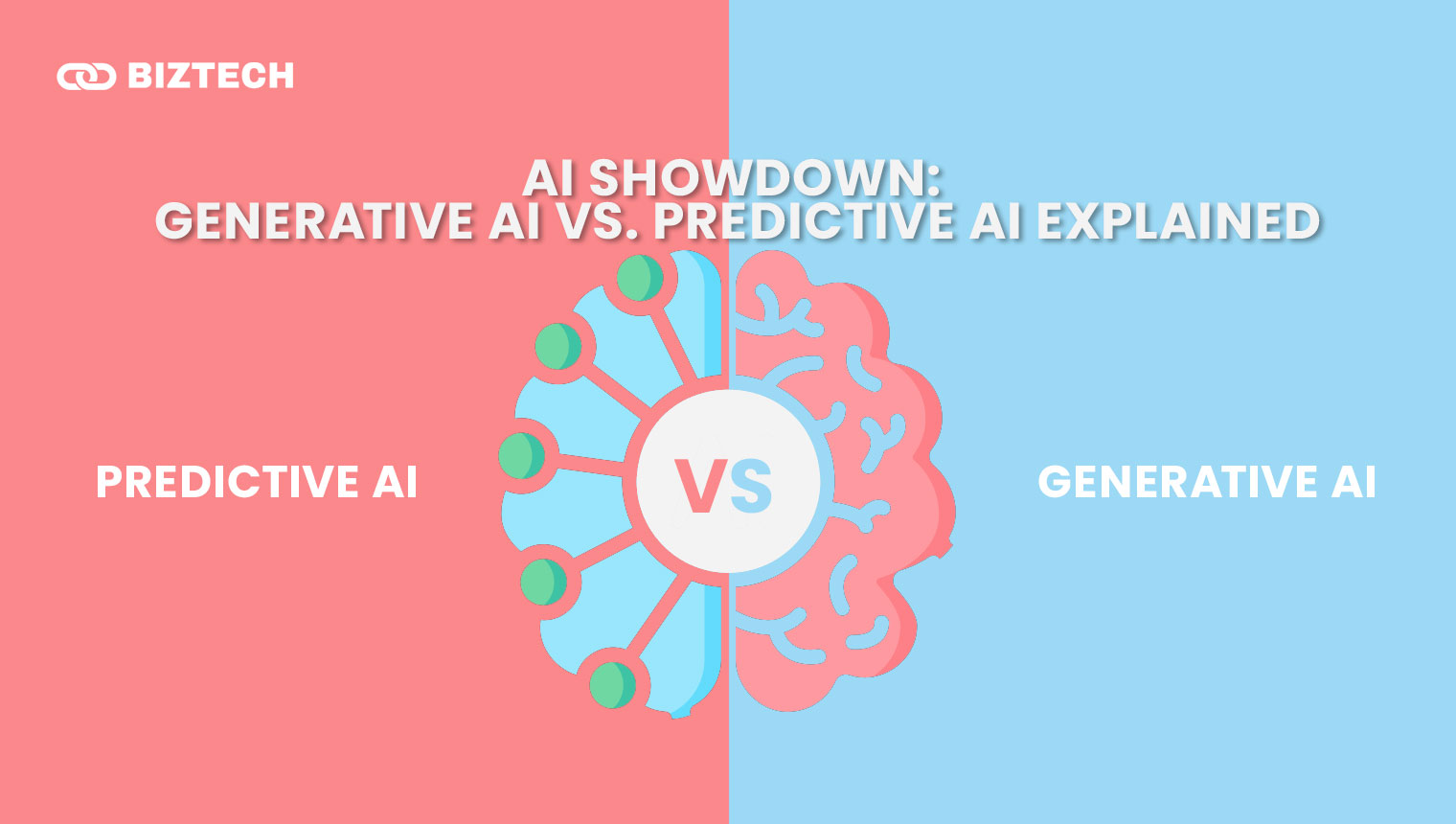
Generative AI uses deep learning to create new content — text, images, audio, video, and code. Predictive AI uses machine learning to analyse historical data and forecast what is most likely to happen next. In short: generative AI answers “make me something new,” while predictive AI answers “what is likely to happen?”
AI is no longer niche. In McKinsey’s 2025 Global Survey on AI, 88% of organisations said they regularly use AI in at least one business function, and roughly 71–72% now use generative AI specifically — up from just 33% a year earlier. Both fields are growing fast: the generative AI market is valued at around US$29.6 billion in 2026 and forecast to top US$324 billion by 2033 (Grand View Research), while the predictive analytics market is projected at roughly US$21–25 billion in 2026, heading past US$80 billion by the early 2030s.
This guide breaks down how each type works, where it shines, its limits, and — most importantly — how to decide which one (or both) you actually need, with a Malaysia/Singapore lens.
| Aspect | Generative AI | Predictive AI |
|---|---|---|
| Primary function | Create new content and augment human work. | Forecast outcomes and support decisions from patterns in data. |
| Core question | “Make me something new.” | “What is likely to happen next?” |
| Key technologies | Neural networks — transformer models (GPT-4o, Claude, Gemini), GANs, diffusion models. | Regression, classification, decision trees, gradient boosting, time-series models. |
| Data requirements | Very large, broad datasets to learn how content is structured. | Clean, relevant historical data with labelled outcomes. |
| Typical output | Text, images, audio, video or code (may be subjective or inaccurate). | A number, probability or category (e.g., “churn risk 82%”). |
| Everyday examples | Chatbots, image generators, copywriting, coding assistants. | Fraud detection, demand forecasting, credit scoring, recommendations. |
| Main risks | Bias, hallucinations, copyright, high compute cost. | Poor data quality, model drift, opacity, privacy. |
What is Generative AI
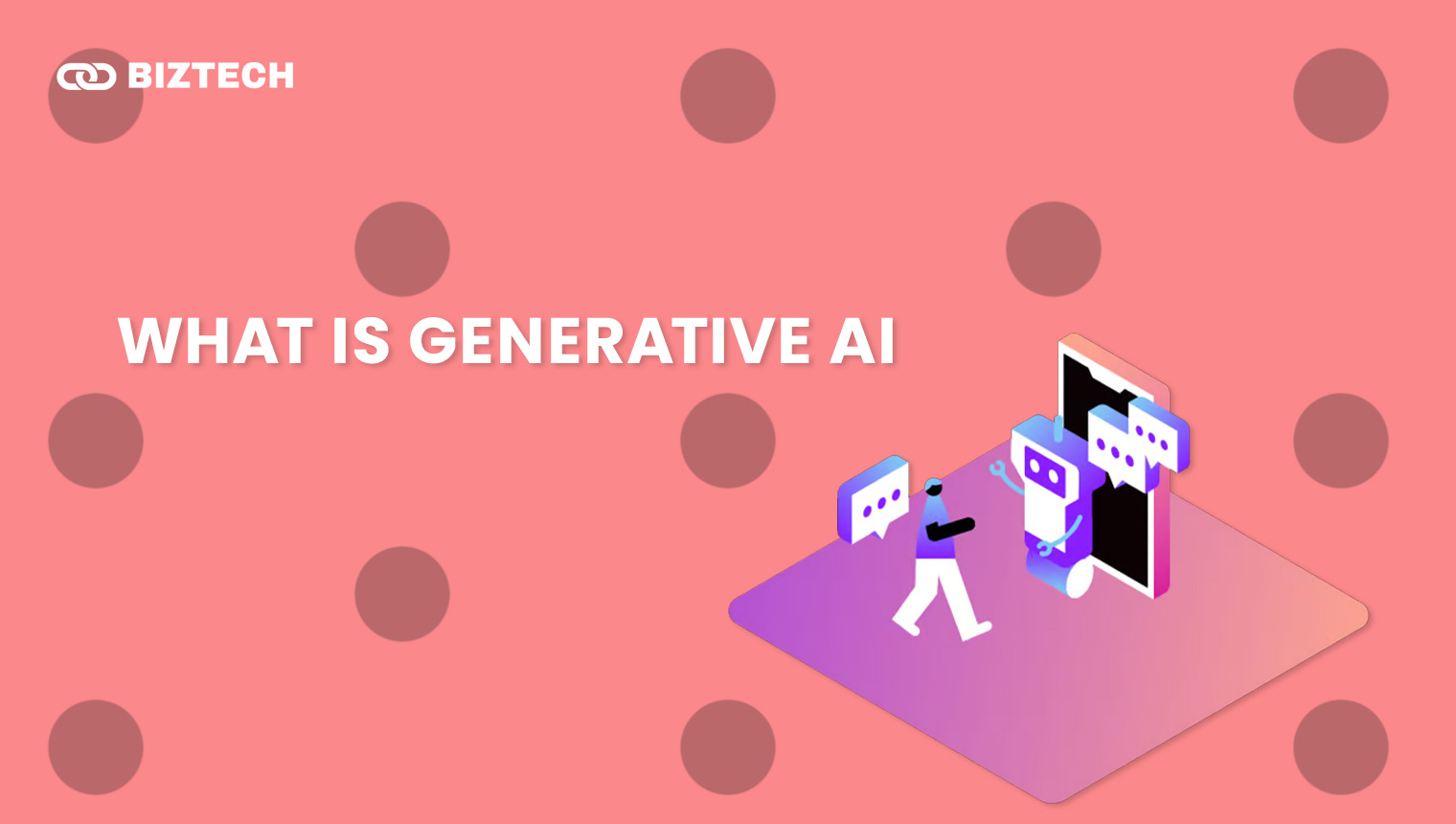
Generative AI refers to AI systems that generate new content — such as text, images, audio, or video — by learning from training data and then producing fresh outputs that resemble it.
How Does Generative AI Work
Generative AI uses machine-learning algorithms to learn patterns from existing data, then generates unique content that follows those patterns. The main model families are Generative Adversarial Networks (GANs), Variational Autoencoders (VAEs), diffusion models, and Transformer models such as GPT-4o and Claude.
GANs work like an art forger and an art expert competing against each other. The forger creates fake artwork and the expert tries to spot the fakes; as they go back and forth, the forger gets better at producing realistic results.
VAEs compress the most important aspects of the data into a compact representation, which they then use to build credible new data.
Diffusion models — the technology behind most modern image tools such as Stable Diffusion, Midjourney, and Google Imagen — start with random noise and gradually “denoise” it into a coherent image that matches your prompt.
Transformer models such as ChatGPT (GPT-4o/GPT-5-class), Claude, and Google Gemini are highly effective at understanding language. By using patterns learned from massive datasets, they interpret prompts and respond with relevant text, code, or analysis. If you want to see these in action, our guides to the best AI text generators and the best AI image generators compare the leading options.
Generative AI Applications and Examples in various industries
Creative Industries:
- Image and art generation (e.g., DALL-E/GPT Image, Midjourney, Stable Diffusion, Adobe Firefly)
- Music and audio generation (e.g., Suno, Aiva, Soundraw)
- Creative writing and storytelling (e.g., ChatGPT, Claude, Google Gemini)
Marketing and Advertising:
- Personalised product descriptions and ad copy (e.g., Copy.ai, Jasper)
- Synthetic images and videos for digital campaigns (e.g., Descript, Adobe Photoshop’s Generative Fill)
- Realistic AI voices for audio ads and virtual assistants (e.g., ElevenLabs, Synthesia)
See our roundup of the best AI marketing tools for a deeper look at this category.
Healthcare:
- Creating synthetic medical imaging data to train AI models
- Generating synthetic patient data for research and experimentation
- Building realistic simulations for medical training scenarios
Gaming and Entertainment:
- Generating game environments, characters, and items (e.g., Scenario, Inworld AI)
- Producing synthetic voices and animations for virtual characters (e.g., Synthesia, ElevenLabs)
- Creating personalised, interactive stories and narratives (e.g., Charisma)
Scientific Research:
- Creating synthetic data for experimentation and simulation
- Generating new molecular structures for drug discovery
- Producing synthetic data to train AI models in fields with limited real data
Finance and Business:
- Generating synthetic financial data for testing and risk modelling
- Automatic report and document generation
- Creating synthetic customer data to train recommender systems
Education:
- Creating tailored lessons and learning materials
- Developing synthetic data to train educational AI models
- Building realistic simulations for training and teaching
Software Development:
- Generating code snippets, documentation, and software components (e.g., GitHub Copilot, Amazon Q Developer — formerly CodeWhisperer, Cursor)
- Producing synthetic test data for software testing and debugging
- Generating natural-language explanations of code (e.g., Mintlify)
For a full comparison of AI-assisted development, see our guide to the best AI coding tools.
Benefits of Generative AI
- Creation power: Generative AI can produce huge volumes of new content — images, text, audio — far faster than a human could.
- Data boost: It can produce synthetic data that looks real. When genuine data is hard to obtain, this can be used to train other AI systems.
- Personalisation: It can tailor content to each individual’s preferences at scale.
- Productivity: Used as a drafting and brainstorming partner, it removes blank-page friction and speeds up first drafts, code, and summaries.
Limitations of Generative AI
- Hallucinations: Generative models can state false information with total confidence. Outputs must be fact-checked before you rely on them — especially for money, health, or legal topics.
- Bias concerns: A model can learn and amplify unfair biases from its training data, leading to discrimination.
- Ownership issues: Generating content that mimics existing works raises unresolved questions about copyright and ownership.
- Control and cost: Results can be hard to steer consistently, and running large models requires significant computing power (and money).
What is Predictive AI
Predictive AI is the branch of artificial intelligence that makes predictions about future events or outcomes based on past data and patterns. It powers many everyday systems you already use — from the fraud alert on your bank card to the recommendations in your favourite app and the forecasts inside a robo-advisor investing app.
How Does Predictive AI Work
Predictive AI works by:
- collecting relevant data;
- extracting meaningful features from that data;
- choosing appropriate machine-learning algorithms (e.g., linear regression, logistic regression, decision trees, gradient boosting, or support vector machines);
- training the model on historical data and validating its performance; and
- deploying the trained model, then continuously monitoring its accuracy and retraining as conditions change.
Predictive AI Applications and Examples in various industries
Healthcare:
- Using patient data to predict disease risk and progression
- Forecasting hospital resource usage and patient flow
- Detecting possible adverse drug effects
Finance:
- Predicting stock-market movements and trends
- Identifying and stopping fraudulent transactions
- Forecasting credit risk and customer churn
Retail:
- Estimating customer preferences and purchasing behaviour
- Optimising supply chain and inventory management
- Predicting product demand and sales patterns
Manufacturing:
- Predictive maintenance of machinery and equipment
- Streamlining production and quality assurance
- Forecasting material and resource needs
Transportation:
- Forecasting traffic flow and congestion
- Improving logistics and route planning
- Estimating demand for transport services
Energy:
- Forecasting energy demand and consumption patterns
- Predicting renewable-energy output and efficiency
- Optimising grid management and energy distribution
Marketing:
- Forecasting campaign performance and customer engagement
- Predicting user behaviour to power customised recommendations
- Optimising budget allocation and marketing tactics
Benefits of Predictive AI
- Improved forecasting: By analysing historical data and patterns, predictive AI anticipates future events, trends, and outcomes — directly supporting better decisions.
- Early warning: It flags potential problems in advance, so you can take preventive action before small issues become expensive ones.
- Personalised experiences: By understanding individual behaviour, it enables tailored services, products, and recommendations for each user.
- Efficiency: It optimises resources — inventory, staffing, maintenance schedules — reducing waste and cost.
Limitations of Predictive AI
- Data quality: Predictions are only as good as the data behind them. Biased, incomplete, or inaccurate data produces unreliable forecasts (“garbage in, garbage out”).
- Complexity and lack of clarity: Some models are so complex that it is hard to explain how they reach a prediction, which can undermine trust.
- Changing environments (model drift): Models trained on historical data can become outdated when the real world shifts — a lesson many forecasting models learned during sudden market shocks.
Generative AI vs Predictive AI: Comparative Analysis
Functionality
| Generative AI | Predictive AI |
|---|---|
| Produces fresh, unique content (text, images, audio, video, code). | Forecasts or predicts outcomes based on available data. |
| Uses techniques such as transformers, GANs, diffusion models, and reinforcement learning. | Uses machine-learning techniques such as clustering, classification, and regression. |
| Examples: image generation (DALL-E, Stable Diffusion), language models (ChatGPT, Claude, Gemini), voice generation (Synthesia, ElevenLabs). | Examples: fraud detection, predictive maintenance, and recommendation systems. |
Data Requirements
| Generative AI | Predictive AI |
|---|---|
| Needs very large, broad datasets to learn how content is structured. | Can work with smaller, more targeted datasets, but they must be clean and well-labelled. |
| For both, data quality and relevance are decisive — poor data undermines any model. | |
Output
| Generative AI | Predictive AI |
|---|---|
| Outputs new content. | Outputs forecasts based on patterns in the available data. |
| Results may not always be factual or accurate and can be subjective. | Output is usually a categorical label, a probability, or a numerical value. |
When to Use Which?
| Reach for Generative AI when… | Reach for Predictive AI when… |
|---|---|
| You are creating content (writing, art, music, code). | You are forecasting or predicting a future value. |
| You need idea generation and creative exploration. | You face an optimisation or decision-making problem. |
| You want to create synthetic data. | You need pattern recognition and classification. |
Using Both Together
The two are not rivals — increasingly they are teammates. Generative models can create synthetic data to improve the training set for a predictive model, while predictive models can guide or constrain what a generative model produces. In 2026, this convergence is showing up as agentic AI: systems that predict what needs to happen, then generate the emails, code, or reports to make it happen — with a human approving the important steps.
How to Choose: A Simple Decision Framework
Don’t start from the technology — start from the job to be done. Ask these four questions:
- What is the output you need? If the answer is “a new thing” (a draft, an image, a summary), that is generative AI. If it is “a number or a yes/no” (a demand forecast, a fraud flag, a risk score), that is predictive AI.
- What data do you have? Predictive AI needs clean, labelled historical data specific to your problem. If you don’t have that yet, a generative tool you can use out of the box may deliver value sooner.
- How costly is a wrong answer? For high-stakes, money-related decisions (credit, insurance, trading), lean on predictive models with clear accuracy metrics — and keep a human in the loop. For low-stakes drafting, generative AI’s occasional mistakes are cheap to catch.
- Do you need to explain the result? Regulators and customers may demand to know why a decision was made. Predictive models can be built for explainability; generative outputs are harder to justify line-by-line.
Worked Example: A Malaysian E-commerce SME
Imagine a Shopee/TikTok Shop seller in Kuala Lumpur planning for the year-end sales rush. Predictive AI analyses two years of sales data to forecast which SKUs will spike during 11.11 and Raya, so the seller stocks the right inventory and isn’t caught short. Generative AI then writes 200 localised product descriptions and ad captions in English and Bahasa Malaysia, and drafts festive promo images — turning the forecast into ready-to-publish content in an afternoon. Neither tool replaces the seller’s judgement; together they cut guesswork and grunt work.
Common Pitfalls to Avoid
- Treating generative output as fact. Always verify names, numbers, prices, and citations before publishing — hallucinations are common.
- Feeding predictive models dirty data. A forecast built on messy or biased data is confidently wrong. Clean and audit your data first.
- Ignoring privacy and consent. Both technologies often touch personal data — mind Malaysia’s PDPA 2010 (and its 2024–2025 amendments) and Singapore’s PDPA before feeding customer data into any model.
- Underestimating cost and lock-in. Per-token generative APIs and cloud compute add up. Estimate usage before committing, and watch foreign-exchange charges on USD-billed tools.
- Skipping the human review. For anything involving money, health, or legal matters, keep a person accountable for the final decision.
Generative AI vs Predictive AI in Malaysia & Singapore
Adoption across Southeast Asia is accelerating. Locally, you will most often see:
- Predictive AI inside banks and e-wallets (fraud detection on Maybank, CIMB, and GXBank cards; credit scoring), in ride-hailing and delivery (Grab’s demand and ETA forecasting), and in robo-advisors such as StashAway, Wahed, and Syfe that forecast portfolio risk.
- Generative AI among SMEs and creators for marketing copy, customer-service chatbots (including Bahasa Malaysia and Singlish handling), and social content for TikTok and Instagram.
Two practical notes for the region: most leading tools bill in US dollars, so budget for FX and any local tax (Malaysia’s 8% SST on digital services; Singapore’s 9% GST). And keep data-protection law in mind — the Malaysian and Singaporean PDPAs both restrict how you can process customer data, so avoid pasting sensitive personal information into public AI tools.
Ethical Considerations and Future Outlook
Generative AI raises ethical concerns around bias, disinformation, deepfakes, copyright, and accountability. The response is maturing: content-provenance standards (such as C2PA “content credentials”), AI-content detection, and regulation like the EU AI Act — whose obligations phase in through 2026 — are pushing developers toward more responsible deployment. Malaysia has published its own AI governance guidance to steer ethical use.
Predictive AI must contend with fairness, privacy, accountability, and transparency. Ongoing work focuses on privacy-preserving methods, explainability, bias reduction, and embedding ethical-AI principles into how models are built and monitored.
Both fields need strong governance frameworks that address societal risks so their transformative potential can be realised responsibly. For a broader industry view, McKinsey’s State of AI research and market analyses such as Grand View Research’s generative AI report track how quickly this landscape is shifting.
Future Trends and Potential Impacts
Generative AI will enable ever more sophisticated content creation, reshaping entertainment, education, and the creative sector, while human-AI collaboration tools become standard — provided we manage deepfakes, disinformation, and intellectual-property risks.
Predictive AI will increasingly integrate with edge computing and the Internet of Things to deliver real-time forecasts and decisions across industries, with explainable-AI techniques improving transparency and trust.
The biggest shift is the convergence of the two into agentic systems that both predict and generate. That promises automation, personalisation, and optimisation — but only responsible-AI practices and solid governance will earn the public trust needed for widespread adoption.
Read also: 10 Best AI Apps for iPhone: Powerful AI at The Tips of Your Fingers
Conclusion
There is no single winner in the generative AI vs predictive AI debate — they are built for different jobs. Predictive AI’s analytical power delivers priceless insight for decision-making, while generative AI’s ability to produce original content opens new creative and productivity possibilities.
The greatest gains come from combining them: using prediction to decide what to do and generation to help do it. Whoever matches the right tool to the right task — and keeps a human accountable for the outcome — is the real winner.
Verified July 2026. AI tools, pricing, and capabilities change quickly — confirm current features and terms directly with each provider before making decisions.
Disclaimer: This guide is provided by KayaToday for general educational purposes only and does not constitute professional, financial, or legal advice. Always do your own research and consult a qualified professional where appropriate.