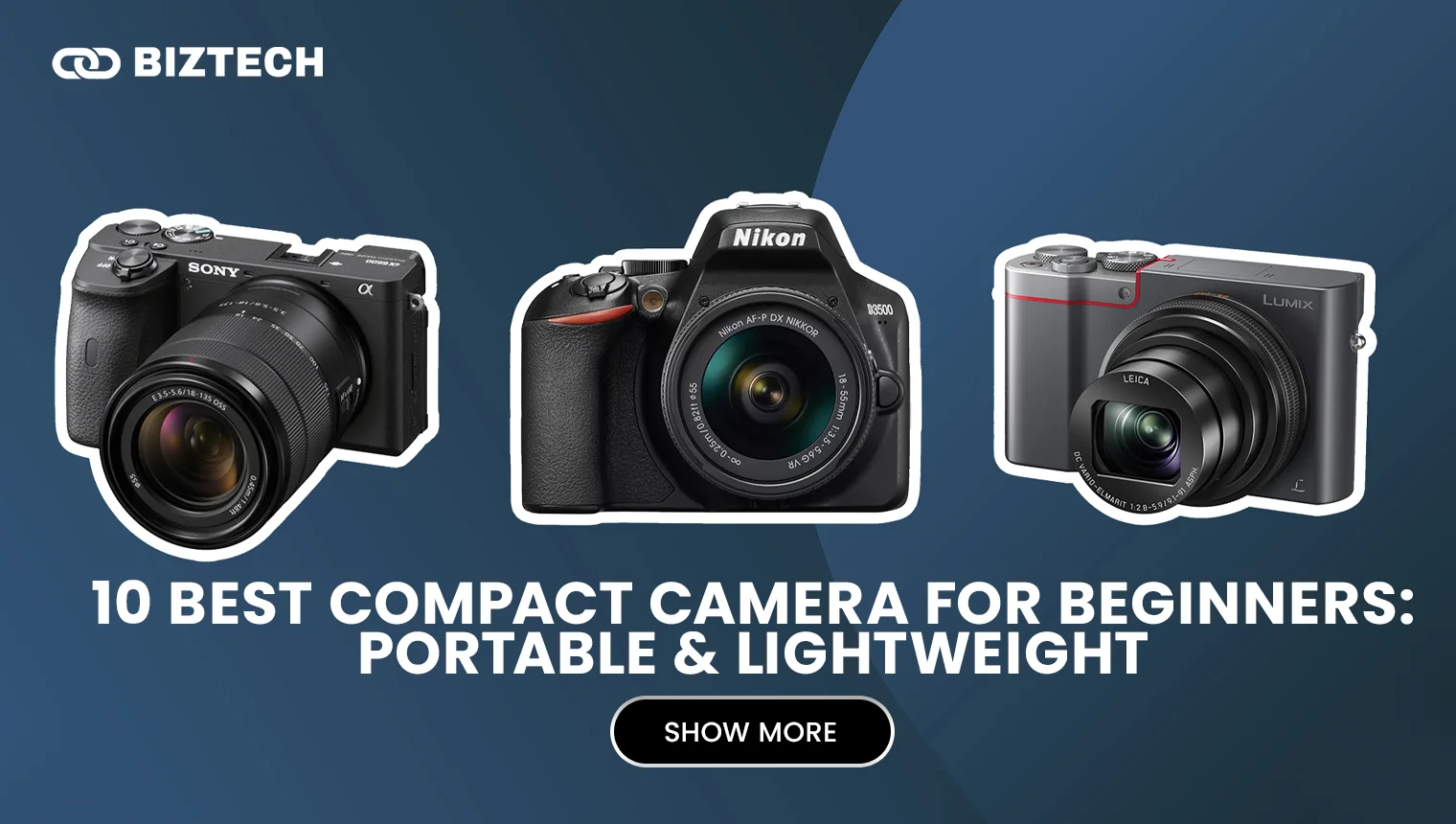
If you’re just beginning your photography journey, why not consider a lightweight, compact camera?
- What’s Changed for Compact Cameras in 2026
- Why Compact Cameras are Ideal for Beginners
- Ease of Use: The Jumpstart for Newbies
- Portability: Photography on the Go
- Cost-Effective: Quality Within Reach
- The Learning Curve: From Novice to Pro
- Quick Look at The 10 Best Beginner-Friendly Compact Cameras
- 10 Best Compact Cameras for Beginners
- 1. Sony RX100 VII
- 2. Fujifilm X100V
- 3. Sony ZV-1 (now ZV-1 II)
- 4. Panasonic Lumix TZ200
- 5. Sony ZV-E10 (now ZV-E10 II)
- 6. Canon G5 X Mark II
- 7. Ricoh GR III
- 8. OM System TG-7 (Olympus Tough TG-6 successor)
- 9. Canon PowerShot G7 X Mark III
- 10. Panasonic LUMIX ZS80 (ZS80D)
- How to Choose the Right Compact Camera for You (2026 Framework)
- 1. What will you shoot most?
- 2. How much will you carry it?
- 3. What’s your true budget — including the extras?
- 4. New or used — and from where?
- Worked example: a first camera for RM2,500–3,000
- Common Beginner Mistakes to Avoid
- How We Select the Best Compact Camera for Beginners
- Automatic Modes: Simplifying the Art of Photography
- Manual Settings: When You’re Ready to Take Control
- Image Quality: Understanding Megapixels and Sensor Size
- Zoom Capabilities: Getting Closer to the Subject
- Video Functionality: More Than Just Stills
- Availability and Value in 2026
- Battery Life: Ensuring You Never Miss a Shot
- Bring Your Entry-Level Compact Camera with You Everywhere You Go
- Frequently Asked Questions (FAQs)
Some of the best compact cameras for beginners already have many features that will be suitable for your use.
Before purchasing a compact camera, there are a few factors that you must take into account. Some of them include its key features, pricing, automatic modes and many more.
Based on extensive research, we have gathered the 10 best compact cameras for beginners in this article, refreshed for 2026 with current prices, discontinued-model warnings, and a simple framework to help you choose.
There are a variety of cameras on this list that are budget-friendly, lightweight or premium models that might be the perfect choice for a beginner such as yourself.
Prices and availability verified July 2026 (USD, before local tax/import). The compact-camera market moves fast, so always confirm the current price and stock with the retailer before you buy.
[su_box title=”Key Takeaways” box_color=”#000877″ title_color=”#ffffff” radius=”6″]
1. Beginners can take advantage of compact cameras due to its ease of use, portability, cost-effectiveness, and ability to improve learning curve.
2. In 2026, the safest all-rounder pick for most beginners is the Sony ZV-1 II (great autofocus, wide 18-50mm lens, easy interface). For rugged/outdoor use, the OM System TG-7 (successor to the beloved Olympus Tough TG-6) is the go-to.
3. Several 2023-era favourites are now discontinued or hard to find (Olympus TG-6, Sony ZV-1, Sony ZV-E10, Canon G5 X Mark II, Fujifilm X100V). We flag each one and point you to the current successor so you don’t overpay on a grey-market or inflated used listing.
4. The best compact camera for beginners often has automatic modes, manual control, high image quality, good video function, decent zooming, and a relatively long battery life.
[/su_box]
What’s Changed for Compact Cameras in 2026
The compact camera market looks very different from a couple of years ago. A viral resurgence in “point-and-shoot” culture on TikTok and Instagram has pushed demand (and prices) for premium compacts sky-high, while several popular models have quietly been discontinued and replaced by newer versions. Here’s what a beginner shopping in 2026 needs to know:
- Prices are up, not down. Unlike most electronics, sought-after compacts like the Ricoh GR III, Fujifilm X100 series and Canon G7 X Mark III now often sell above their original launch price because of demand and limited supply. Buying used no longer guarantees a bargain.
- Successor models have arrived. The Sony ZV-1 was replaced by the ZV-1 II, the Sony ZV-E10 by the ZV-E10 II, and the Olympus Tough TG-6 by the OM System TG-7. Where a model on this list is discontinued, we tell you the current alternative.
- Watch the “as-new” grey market. Because of shortages, some listings for discontinued models are inflated or grey-import. Buy from an authorised dealer for warranty coverage, especially in Malaysia and Singapore.
Why Compact Cameras are Ideal for Beginners
Compact cameras are ideal for beginners due to a few factors. Let’s take a look at them:
Ease of Use: The Jumpstart for Newbies
To serve newbies like yourself, compact cameras are designed to be easy to use. With almost no prior photography experience, you can use automatic modes which are built-in to capture high-quality images.
Portability: Photography on the Go
Most best compact cameras for beginners out there are also built to make sure that they are highly portable.
Properties like weight and dimension can become a deal-breaker if you are constantly on the go and need something easy to carry wherever you are. Thus, compact cameras are genuinely ideal!
Cost-Effective: Quality Within Reach
Another reason why beginners should consider compact cameras is because of their affordable price ranges.
Of course, while there are some premium compact cameras, you can always find something generally less expensive than a DSLR or a mirrorless camera, making it an excellent option for those just starting and are budget-conscious. (That said, note the 2026 caveat above: a few premium compacts now cost as much as an entry-level mirrorless kit.)
The Learning Curve: From Novice to Pro
Most compact cameras are ideal for beginners as they accommodate your learning curve.
They usually feature both manual controls as well as automatic shooting modes. This is a great way to learn the basics before starting to experiment with manual settings. If you’re still weighing camera types, our overview of the best camera for beginners across five categories is a helpful starting point.
Quick Look at The 10 Best Beginner-Friendly Compact Cameras
The table below shows current (July 2026) approximate US prices and each model’s 2026 availability status. Prices for discontinued models reflect typical new-old-stock or used listings and can swing widely.
| Camera | Approx. Price 2026 (USD) | 2026 Status | Weight (g) | Megapixels | Sensor Type |
| Sony RX100 VII | ~$1,500 | Current | 302 | 20.1 MP | 1-inch CMOS |
| Fujifilm X100V | $1,900+ (used) | Discontinued → X100VI | 478 | 26.1 MP | APS-C |
| Sony ZV-1 | ~$950 (ZV-1 II) | Replaced by ZV-1 II | 294 | 20.1 MP | 1-inch CMOS |
| Panasonic Lumix TZ200 | ~$800 | Current (TZ200D) | 340 | 20.1 MP | 1-inch MOS |
| Sony ZV-E10 | ~$1,000 (ZV-E10 II) | Replaced by ZV-E10 II | 364 | 24 MP | APS-C |
| Canon G5 X Mark II | $900+ (used) | Discontinued | 340 | 20.1 MP | 1-inch CMOS |
| Ricoh GR III | ~$1,000+ | Current (high demand) | 257 | 24 MP | APS-C |
| OM System TG-7 (was Olympus TG-6) | ~$550 | Current (TG-6 discontinued) | 249 | 12 MP | 1/2.3-inch CMOS |
| Canon PowerShot G7 X Mark III | ~$880 | Current (viral demand) | 304 | 20.1 MP | 1-inch CMOS |
| Panasonic LUMIX ZS80 | ~$500 (ZS80D) | Current (ZS80D) | 327 | 20.3 MP | 1/2.3-inch CMOS |
10 Best Compact Cameras for Beginners
1. Sony RX100 VII
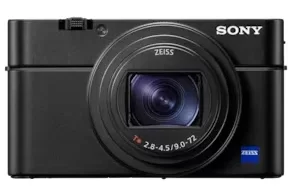
If you’re looking for something beginner photographers and experienced ones can use, then the Sony RX100 VII is a wonderful choice. It remains on sale in 2026 (around $1,500, with occasional deals near $1,498), making it the flagship of the pocketable 1-inch class.
This camera is truly compact as it is small enough to fit in the palm of your hand! It also offers a ton of features and capabilities despite its size. Some of the key features of the Sony RX100 VII are:
- 1-inch Exmor RS BSI CMOS sensor with 20.1MP: Wonderful even in low light conditions, this sensor will produce high image quality.
- 24-200mm f/2.8-4.5 zoom lens: An unusually versatile range for a pocket camera, from wide scenes to distant subjects.
- Real-time Tracking and Real-time Eye Autofocus: This will allow you to keep your subjects in focus while they are moving.
Why I love it for beginner photographers:
It’s very easy to use but can grow with your needs. This compact camera has plenty of automatic shooting modes, which are easy for any beginners to start with. It also has a lot of manual controls for you to use as you improve.
Just note the trade-off: at this price, Sony’s own smaller mirrorless bodies can cost far less, so buy the RX100 VII specifically for its all-in-one zoom and pocketability.
2. Fujifilm X100V
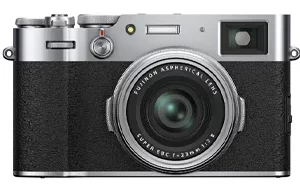
Styled like a classic rangefinder camera, the Fujifilm X100V helped kick off the whole premium-compact craze. Important 2026 note: the X100V is discontinued and has been replaced by the Fujifilm X100VI (MSRP around $1,599, though demand often pushes street prices past $1,900). Both are famously hard to find in stock, and used X100V bodies frequently sell for more than they cost new — a rare situation you should walk into with eyes open.
The X100 series is fitted with a sharp fixed lens and many wonderful features like:
- Tilting touchscreen LCD: Eases use when taking shots from many angles and helps control the camera’s settings.
- 26.1MP APS-C X-Trans CMOS IV sensor (40.2MP with IBIS on the newer X100VI): Provides excellent image quality output.
- Film simulation modes: Create images that look like they were shot on film, adding a creative touch straight out of camera.
Why I love it for beginner photographers:
With this compact camera you can learn as you go. Its dial-based manual controls encourage beginners to understand aperture, shutter speed and ISO. The fixed 35mm-equivalent lens also trains your composition. Just be realistic: this is a want, not a starter necessity, and the price/availability make it a poor first camera for most true beginners in 2026.
3. Sony ZV-1 (now ZV-1 II)
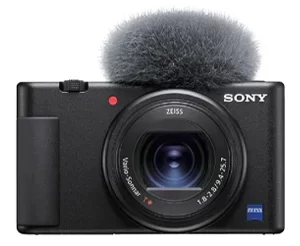
Probably the best compact camera for beginner YouTubers or content creators, the ZV-1 line is easy to use and portable. 2026 update: the original ZV-1 is largely replaced by the Sony ZV-1 II (roughly $947–$999), which swaps in a wider, more selfie-friendly 18-50mm zoom — a genuine upgrade for vloggers. Many reviewers now call the ZV-1 II the safest single recommendation for a first content-creation compact.
Some of its key features are:
- 3-capsule directional microphone: Records clear audio on the go without an add-on mic.
- Product Showcase feature: Automatically shifts focus to a product you hold up — ideal for reviews and how-tos.
- Background Defocus button: One-touch blurred background to make your subject pop.
Why I love it for beginner photographers:
It offers premium features at an approachable price, and its simple interface lets you create great-looking content without deep technical knowledge. If you’re buying new in 2026, go for the ZV-1 II rather than hunting down the older ZV-1.
4. Panasonic Lumix TZ200
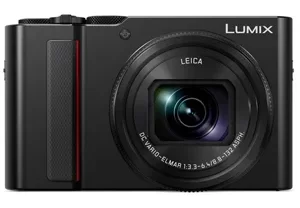
This travel-zoom compact (sold as the TZ200 or ZS200, and lightly refreshed as the TZ200D) is a godsend for those who travel a lot. It pairs a 1-inch sensor with a huge 15x optical zoom — a combination almost no phone can match. Expect around $800 in 2026.
Some of the notable features of this camera include:
- 15x optical zoom Leica DC Vario-Elmar lens: A focal length range of 24-360mm in your pocket.
- 5-axis hybrid optical image stabilization: Produces steady, blur-free images.
- Post Focus and Focus Stacking: Change the focus point after the shot, or combine frames for greater depth of field.
Why I love it for beginner photographers:
It’s incredibly easy to use, with a 3.0-inch touchscreen for easy framing, plus built-in Wi-Fi and Bluetooth to transfer images and control the camera remotely. If reach matters more than ultimate low-light quality, this is the smart travel pick.
5. Sony ZV-E10 (now ZV-E10 II)
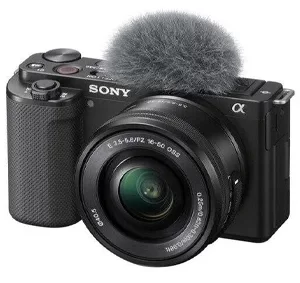
Can it get better than a compact-ish camera where you can change the lens? That’s exactly what the Sony ZV-E10 offers. 2026 update: it has been succeeded by the Sony ZV-E10 II (about $999 body-only, roughly $1,099 with the 16-50mm kit), which adds a bigger battery, 4K/60 and the newer 26MP sensor. Technically it’s an interchangeable-lens camera rather than a true pocket compact, but it remains a favourite creator “step-up” pick.
Some of its key features include:
- 24.2MP APS-C sensor (26MP on the Mark II): Captures excellent quality images even in low light.
- Flip-out touchscreen LCD: Easy to control settings, and you can mount an external mic for more professional audio.
- Background Defocus: Highlights your subject by blurring the background of your video.
Why I love it for beginner photographers:
The interchangeable-lens system gives a beginner real room to grow — start with the kit lens, then explore primes and wide-angles as you learn. Just know it’s bulkier than the pocket compacts on this list.
6. Canon G5 X Mark II
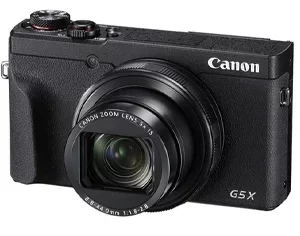
For a mid-range budget, the Canon G5 X Mark II covers your basic needs and more, with a comfortable grip and a clever pop-up viewfinder. 2026 note: this model is discontinued, so you’ll be shopping the used market (typically $900 or more given renewed compact-camera demand). If you can’t find one at a fair price, the G7 X Mark III below is the easier-to-buy Canon alternative.
Some of its key features include:
- 20.1MP 1-inch CMOS sensor: Better-than-average image quality, including in lower light.
- Pop-up electronic viewfinder: Helps you compose in bright sunlight when the LCD is hard to see.
- Eye sensor above the LCD: Automatically switches between the viewfinder and screen.
Why I love it for beginner photographers:
It’s pocketable yet capable, with strong image stabilization that helps beginners who shoot handheld. Just weigh the used-only availability before committing.
7. Ricoh GR III
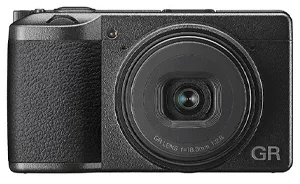
For top-notch image quality in a truly tiny body, the Ricoh GR III is a cult favourite among street photographers. At just 257g it hides a large APS-C sensor. 2026 reality check: demand has made it expensive and stock-limited — expect around $1,000 or more new when available (official refurbished units run about $970, and used prices have climbed well beyond that). A variant, the GR III HDF, adds a built-in diffusion filter.
Its superior key features include:
- 24.2MP APS-C sensor: Excellent image quality and low-light performance.
- Fixed 28mm-equivalent f/2.8 lens: Perfect for street and travel photography.
- Snap Focus: Pre-set a focus distance to grab sharp shots of unpredictable subjects instantly.
Why I love it for beginner photographers:
The controls are approachable without overwhelming you, and it’s so light you’ll actually carry it every day — the single biggest factor in improving as a photographer. Skip it if you need a zoom or a viewfinder, since it has neither.
8. OM System TG-7 (Olympus Tough TG-6 successor)
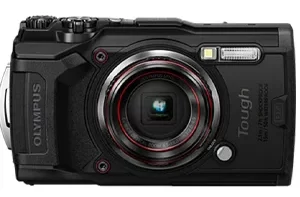
If you’re an adventurer or outdoorsy photographer, the Tough series is built for you. 2026 update: the classic Olympus Tough TG-6 is discontinued and replaced by the near-identical OM System TG-7 (about $550), which adds USB-C, vertical video and a couple of refinements. It stays waterproof, shockproof, freezeproof and crushproof — genuinely ready for any adventure.
Other notable features include:
- Serious durability: Waterproof to 15m, shockproof to 2.1m, crushproof to 100kg, freezeproof to -10°C. Great for underwater and outdoor shooting.
- 12MP 1/2.3-inch sensor with f/2.0 lens: The sensor is small, but the bright lens and superb macro modes deliver excellent close-ups.
- 4K video recording: Doesn’t compromise video quality despite the rugged build.
Why I love it for beginner photographers:
Its durability alone earns a spot here — ideal for the outdoorsy or simply clumsy. Beginners can jump straight in thanks to its easy scene and underwater modes. For 2026 buyers, get the TG-7; it’s the current, warrantied version.
9. Canon PowerShot G7 X Mark III
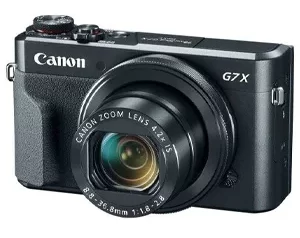
The Canon PowerShot G7 X Mark III became the poster child of the 2020s point-and-shoot revival. It suits both beginners and pros, and Canon has kept it in production — restocking it at around $880 in 2026 (a 30th-anniversary limited edition also appeared). Demand is intense, so buy when you see it in stock at an authorised dealer.
Some key features include:
- 20.1MP 1-inch CMOS sensor: Excellent image quality for a compact, including in low light.
- 4K video recording plus a genuinely useful live-streaming mode.
- Flip-up touchscreen: Compose from any angle and control settings easily.
Why I love it for beginner photographers:
It’s the classic creator compact — pocketable, with a flip screen and vlog-ready video, so you can share your adventures from anywhere. Just don’t overpay on grey-market listings when a restock is only a matter of time.
10. Panasonic LUMIX ZS80 (ZS80D)
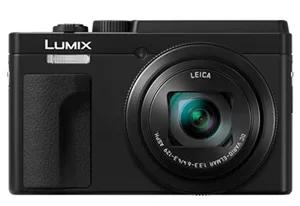
The Panasonic Lumix ZS80 (sold as the TZ95 in some regions, now lightly updated as the ZS80D) is one of the best budget travel compacts for beginners, typically around $500 in 2026. It doesn’t disappoint for the price.
It packs in multiple features like:
- 24-720mm equivalent zoom range: Shoot wide landscapes and distant subjects with one camera.
- 20.3MP 1/2.3-inch sensor: Solid image quality for its class.
- Built-in image stabilization and electronic viewfinder: Sharper shots and easier composition in bright light.
Why I love it for beginner photographers:
Its huge zoom range lets beginners explore everything from landscapes to close-ups right away, and it handles both photos and video well — a lot of versatility for the money. It’s the value pick of this list.
How to Choose the Right Compact Camera for You (2026 Framework)
With prices swinging so much in 2026, matching the camera to how you’ll actually use it matters more than chasing the “best” model overall. Work through these four questions:
1. What will you shoot most?
Vlogging and content? Prioritise a flip screen, good mic and reliable autofocus — the Sony ZV-1 II or ZV-E10 II. Street and everyday? A large sensor and pocketability win — the Ricoh GR III. Travel with lots of zoom? The Panasonic TZ200 or budget ZS80. Rugged outdoors/underwater? The OM System TG-7.
2. How much will you carry it?
The best camera is the one that’s with you. If a camera is too big for your pocket or bag, you’ll leave it at home. Weigh sensor size against real-world portability — a lighter camera you carry daily beats a heavier one that stays on the shelf.
3. What’s your true budget — including the extras?
Budget for a spare battery, a memory card (UHS-I/UHS-II for 4K) and a case. On premium compacts these add up. And remember the 2026 twist: some used models cost more than their launch price, so “buying second-hand to save money” doesn’t always work anymore.
4. New or used — and from where?
For discontinued models (TG-6, ZV-1, ZV-E10, G5 X Mark II, X100V), buy from a reputable used dealer with a warranty, or pick the current successor instead. In Malaysia and Singapore, favour authorised retailers to avoid grey-import units with no local warranty.
Worked example: a first camera for RM2,500–3,000
Say you’re a Malaysian beginner with roughly RM2,500–3,000 (about US$530–640) who wants one camera for travel and casual vlogging. The Panasonic ZS80/ZS80D (~$500) fits the budget with money left for a spare battery and card, and its viewfinder plus long zoom make it forgiving on bright beach days. If vlogging is your main goal and you can stretch closer to RM4,000, save a little longer for the Sony ZV-1 II instead — its autofocus and wide lens are a noticeable step up for talking-to-camera video.
Common Beginner Mistakes to Avoid
- Chasing megapixels. Sensor size and lens quality matter far more than a big MP number for real-world image quality, especially in low light.
- Overpaying in a hype cycle. If a model is sold out everywhere and listed far above MSRP, wait for a restock or choose the successor — don’t panic-buy a grey-market unit.
- Ignoring warranty and region. A cheaper overseas listing can mean no local service in MY/SG. Factor that in.
- Forgetting the accessories. Running out of battery or card space on day one of a trip is the classic beginner regret. Buy a spare of each up front.
- Buying more camera than you’ll use. A $1,900 X100VI is wasted if what you needed was a simple, pocketable point-and-shoot. Match the tool to your actual habit.
How We Select the Best Compact Camera for Beginners
In selecting the compact cameras that made our list, we considered several key factors:
Automatic Modes: Simplifying the Art of Photography
Many compact cameras come with automatic or preset modes that make it easier for beginners to get a good result without adjusting settings. We looked for cameras with useful modes such as product showcase, scene presets and more.
Manual Settings: When You’re Ready to Take Control
We also ensured these cameras offer some manual control — shutter speed, aperture and ISO — so you can fine-tune your images as your skills grow.
Image Quality: Understanding Megapixels and Sensor Size
We weighed sensor size, not just megapixels. Larger sensors (like the APS-C in the Ricoh GR III or the 1-inch sensors in the Sony and Canon models) produce noticeably better image quality, especially in low light.
Zoom Capabilities: Getting Closer to the Subject
Zoom lenses let you shoot distant subjects without moving. Travel zooms like the TZ200 and ZS80 shine here, while fixed-lens models like the Ricoh trade zoom for image quality.
Video Functionality: More Than Just Stills
Most modern compacts shoot at least 4K video, removing the need for a separate device. (If you’re mainly into video, see our guide to the 10 best video cameras for beginners, or the best beginner-friendly YouTube cameras.)
Availability and Value in 2026
New for this update: we factored in whether a model is still sold, whether a successor exists, and how realistic its current price is. A camera you can actually buy at a fair price beats a “better” one that’s perpetually out of stock. For independent, up-to-date reviews we cross-check reputable sources such as DPReview and Amateur Photographer.
Battery Life: Ensuring You Never Miss a Shot
With many people buying compacts for travel, battery life is a key consideration. Choose a camera that lasts a day of casual shooting, and always pack a spare.
Bring Your Entry-Level Compact Camera with You Everywhere You Go
Selecting the best compact camera for beginners can feel overwhelming, especially with 2026’s shifting prices and stock. In this article we’ve covered what to consider — key features, pricing, sensor size and current availability — plus a simple framework and worked example to guide your choice.
Ultimately, your needs and habits determine the best pick. For most beginners in 2026, the Sony ZV-1 II is the easiest all-round recommendation, while outdoor lovers should look at the OM System TG-7 and budget-conscious travellers at the Panasonic ZS80. Whatever you choose, buy from an authorised dealer, add a spare battery and card, and start shooting — the habit of carrying your camera matters more than the badge on it.
Prices, models and availability were verified in July 2026 and can change quickly; always confirm current pricing, stock and warranty with the retailer before purchasing. This guide is for general information only and is not a substitute for hands-on testing. — KayaToday