Mirrorless cameras have fully overtaken DSLRs as the default choice for anyone learning photography. Choosing your first best mirrorless camera can still feel overwhelming for beginners, given the many options available — and in 2026 the landscape has shifted a lot, with newer, smarter models replacing the entry-level bodies that dominated a few years ago.
- What’s Changed for Beginners in 2026
- What is a Mirrorless Camera?
- Comparison of 10 Popular Mirrorless Cameras for Beginners
- 10 Best Entry-level Mirrorless Cameras for Beginners
- 1. Sony a6100
- 2. Canon EOS M50
- 3. Fujifilm X-T200
- 4. Olympus E-PL10
- 5. Panasonic Lumix G100
- 6. Nikon Z50
- 7. Panasonic Lumix GX85
- 8. Fujifilm X-T30
- 9. Canon EOS RP
- 10. Nikon Z5
- How to Choose the Best Mirrorless Camera for Beginners
- Budget
- Main Use: Stills vs Video
- System and Lenses
- Sensor Size
- Autofocus, Stabilisation and Ergonomics
- Worked Example: An RM3,000 First-Camera Budget
- Common Beginner Pitfalls to Avoid
- Capture High-Quality Images with the Best Mirrorless Camera for Beginners
- Frequently Asked Questions (FAQs)
Through extensive hands-on testing plus a fresh 2026 review of the current market, we’ve identified the best mirrorless cameras for beginners based on the factors that actually matter: price, image quality, autofocus, video, and beginner-friendly handling. This guide keeps our original ten benchmark models (still great value used) and adds a 2026 shortlist of the newest bodies worth buying today.
Key Takeaways:
- A mirrorless camera feels light in hand and has no reflex mirror or optical viewfinder, giving DSLR-level image quality in a smaller body.
- Our top 2026 beginner pick is the Nikon Z50 II (~US$909–1,010 body): it borrows the flagship Expeed 7 autofocus, shoots up to 30fps and oversampled 4K. The Canon EOS R50 (~US$680–800) and Sony ZV-E10 II (~US$999) are the other standouts.
- On a tight budget, the Canon EOS R100 (kit from ~US$479–579) and the still-excellent Sony a6100 (~US$548) deliver real autofocus for the lowest outlay.
- Several beloved older models (Canon EOS M50, Fujifilm X-T200, Olympus E-PL10, Nikon Z50, Nikon Z5) are now discontinued but have direct successors — we flag each one so you don’t overpay for outdated stock.
What’s Changed for Beginners in 2026
If you last looked at cameras a couple of years ago, three things have changed the entry-level market:
- Flagship autofocus has trickled down. The Nikon Z50 II uses the same Expeed 7 subject-detection AF as Nikon’s US$4,000+ bodies, and Canon’s Dual Pixel AF and Sony’s real-time tracking now appear on sub-US$800 cameras. Beginners no longer pay a penalty for reliable focus.
- Prices have crept up. Tariffs, memory-chip shortages, and logistics costs pushed several 2026 price rises — Nikon raised Z50 II pricing by roughly 10% from June 1, 2026. Budget accordingly and buy kits (body + lens) for the best value.
- Some classics are discontinued. Canon has wound down its EF-M mount (EOS M50), and the Olympus E-PL and older Fujifilm/Nikon bodies have been replaced. Used prices can be tempting, but a current successor often costs little more and lasts longer.
Here is our verified 2026 shortlist of the newest beginner-friendly bodies worth buying today:
| 2026 Pick | Best For | Sensor | Price (US$, approx.) | Why It Stands Out |
|---|---|---|---|---|
| Nikon Z50 II | Overall beginner | APS-C 20.9MP | ~909–1,010 body | Flagship Expeed 7 AF, 30fps, oversampled 4K/30 |
| Canon EOS R50 | Easiest to learn | APS-C 24.2MP | ~680–800 body | Guided Creative Assist, reliable Dual Pixel AF, tiny |
| Sony ZV-E10 II | Vlogging / video | APS-C 26MP | ~999 body | 4K/60, fully articulating screen, class-leading video AF |
| Canon EOS R100 | Lowest budget | APS-C 24.1MP | ~479–579 kit | Cheapest RF-mount entry with usable Dual Pixel AF |
| Fujifilm X-M5 | Style + film looks | APS-C 26MP | ~799 body | Film-simulation dial, strong 4K/6.2K, very compact |
| Nikon Z5 II | Full-frame upgrade | Full frame 24.5MP | ~1,597–1,700 body | Affordable full frame, IBIS, Expeed 7 AF |
Prices verified July 2026 via major US retailers (B&H, Amazon) and manufacturer listings; expect regional variation and confirm the latest price with the retailer before buying. Malaysian/Singapore pricing typically runs higher after tax and import.
What is a Mirrorless Camera?
A mirrorless camera, also known as a compact system camera (CSC), is a lightweight camera that uses interchangeable lenses but does not require a reflex mirror or optical viewfinder like a DSLR.
The best mirrorless camera for beginners produces high-quality images on par with DSLRs in a more compact and portable body.
Key features of a mirrorless camera include:
- Lightweight and compact body without bulky mirror mechanism
- Interchangeable lenses to suit different photography situations
- Electronic viewfinder (EVF) that provides a real-time preview of what the lens sees
- Large image sensors, usually APS-C or full frame, for excellent image quality
- Intuitive physical controls and touchscreens for easy adjustments
- Fast and accurate autofocus and continuous shooting capabilities
- Ability to shoot high-resolution 4K and Full HD video
This winning combination makes the best mirrorless camera for beginners an excellent choice for those looking to learn photography and videography. The portability, image quality, intuitive handling, and easy-to-use features allow beginners to capture stunning shots and videos as they enhance their skills. If you’re still weighing formats, our guide to the best DSLR cameras for beginners covers the alternative.
Comparison of 10 Popular Mirrorless Cameras for Beginners
The ten cameras below have been our benchmark beginner models. Many are now superseded, so we’ve added a 2026 Status column: some remain on sale, while others are best bought used or skipped in favour of their successor. Launch/original prices are shown for reference — check current pricing before you buy.
| Camera | Price ($) | Sensor | MP | ISO Range | Burst | Video | 2026 Status |
|---|---|---|---|---|---|---|---|
| Sony a6100 | ~548 | APS-C | 24MP | 100-32000 | 11 fps | 4K | Still on sale — great budget buy |
| Canon EOS M50 (II) | ~599 used | APS-C | 24MP | 100-25600 | 10 fps | 4K | EF-M discontinued → EOS R50 / R100 |
| Fujifilm X-T200 | ~450 used | APS-C | 24MP | 200-12800 | 8 fps | 4K | Discontinued → X-M5 / X-S20 |
| Olympus E-PL10 | ~500 used | Four Thirds | 16MP | 200-25600 | 8.6 fps | 4K | Discontinued → OM System E-M10 IV |
| Panasonic Lumix G100 | ~597 | Four Thirds | 20MP | 200-25600 | 10 fps | 4K | Updated to G100D (2024) |
| Nikon Z50 | ~860 used | APS-C | 20MP | 100-51200 | 11 fps | 4K | Replaced by Nikon Z50 II |
| Panasonic Lumix GX85 | ~450 used | Four Thirds | 16MP | 200-25600 | 8 fps | 4K | Discontinued — buy used only |
| Fujifilm X-T30 | ~999 | APS-C | 26MP | 160-12800 | 8 fps | 4K | Superseded by X-T30 II / X-T50 |
| Canon EOS RP | ~999 | Full Frame | 26MP | 100-40000 | 5 fps | 4K | Ageing — consider EOS R8 |
| Nikon Z5 | ~999 used | Full Frame | 24MP | 100-51200 | 4.5 fps | 4K | Replaced by Nikon Z5 II |
10 Best Entry-level Mirrorless Cameras for Beginners
As an avid photography enthusiast, I’ve had the opportunity to extensively test and research many of the top contending mirrorless cameras suitable for beginners.
After shooting with these cameras in real-world conditions, I wanted to share my first-hand experiences to help other beginners pick the best option to match their needs and budget. Where a model has been discontinued, I note the 2026 successor to buy instead.
1. Sony a6100
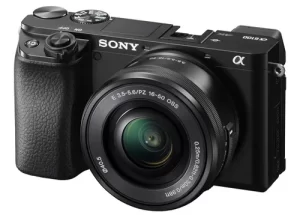
As a beginner looking to get into serious photography, the Sony a6100 quickly stood out for its well-rounded performance and compact form factor. This APS-C mirrorless camera packs great imaging capabilities and features a lightweight body weighing just 0.87 pounds. Remarkably, it’s still on sale in 2026 at around US$548, making it one of the best-value entry points into interchangeable-lens cameras.
Standout Features:
- 24.2MP APS-C sensor captures detailed images across a wide native ISO range of up to 32000, performing well in low light
- Advanced 425-point phase/contrast hybrid autofocus system with real-time Eye AF locks onto subjects quickly for sharp imagery
- Continuous shooting up to 11 fps enables capturing fast action and fleeting moments
- 4K 30fps video and S-Log profiles provide sharp, professional-level footage
- Intuitive controls and a user-friendly interface are ideal for first-time camera users
Reasons to Buy
- The lightweight body and reliable autofocus reduce the learning curve for beginners and provide an enjoyable shooting experience.
- Image quality stands up well when paired with a high-quality lens.
- Excellent value that’s still current in 2026.
Reasons to Avoid
- With its APS-C sensor, this camera does not provide the advanced image quality or resolution of full-frame models.
- Videographers may want more ports, higher bitrates, and log profiles — the newer ZV-E10 II is the vlogging upgrade.
The well-rounded features and beginner-friendly ergonomics of the a6100 make it a standout first mirrorless camera. It provides room to progress for years to come at an affordable starting point.
2. Canon EOS M50
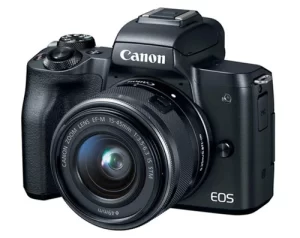
The Canon EOS M50 long stood out as a top affordable option for beginners with its compact footprint and excellent performance for both photography and videography. Weighing just 0.86 pounds, the portable body houses capable specs like 4K video recording and advanced Dual Pixel autofocus. 2026 note: Canon has wound down the EF-M mount, so the M50 is now a used-only buy — for a new camera, the RF-mount Canon EOS R50 or budget EOS R100 are the direct successors with better autofocus and lens futures.
Standout Features:
- Digic 8 processor delivers fast overall performance and excellent image processing
- 24.1MP APS-C sensor captures detailed images with a great dynamic range
- Dual Pixel CMOS autofocus locks focus in as little as 0.05 seconds
- 4K 24fps and Full HD 120fps video with mic input for vlogging
- Fully articulating rear touchscreen for creative shooting angles
- Easy-to-use interface ideal for first-time camera users
Reasons to Buy
- Excellent autofocus performance for the price (especially used)
- User-friendly interface with guided tutorials
- Vari-angle touch screen for creative angles
- A compact, lightweight, and affordable option
Reasons to Avoid
- Discontinued EF-M mount with a limited, no-longer-growing lens range
- 4K video is cropped and drops Dual Pixel AF
- No weather sealing on the body
Overall, the M50 remains a capable used bargain, but new buyers should step up to the EOS R50 for a longer-lived system.
3. Fujifilm X-T200
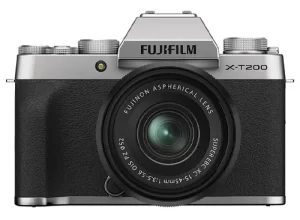
Sporting a retro design brimming with analog dials and controls, the Fujifilm X-T200 makes shooting a mirrorless camera a joy. The form-meets-function design philosophy integrates traditional manual dials with beginner-friendly ergonomics and interfaces. 2026 note: the X-T200 is discontinued; Fujifilm’s current beginner options are the X-M5 (~US$799, with the film-simulation dial and stronger video) and the pricier X-S20.
Standout Features:
- Classic design with physical exposure compensation, shutter speed, and ISO dials
- 24.2MP APS-C sensor and reliable image processing produce vibrant colors
- Intuitive menus and controls speed up navigation for beginners
- Electronic viewfinder provides crisp and clear live view of shots
- 3.5″ vari-angle touch screen simplifies shooting from creative angles
- 4K 30fps video recording and mic input jack capture high-quality videos
Reasons to Buy
- Well-designed body with direct physical controls
- Articulating touchscreen for flexible shooting
- Excellent image quality from a 24MP sensor
- Film simulation modes add creative flair
- Compact, lightweight, and affordable used
Reasons to Avoid
- Discontinued — support and stock are limited
- Focus tracking trails the latest Fujifilm bodies
- Single UHS-I SD card slot
If you love the Fujifilm look, buy the X-M5 new rather than hunting down an ageing X-T200.
4. Olympus E-PL10
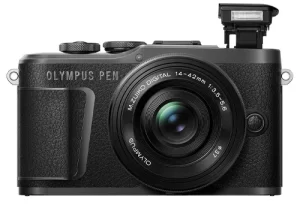
Despite its ultra-compact body, the Olympus E-PL10 is a surprisingly capable mirrorless camera, with controls and an interface designed specifically with beginners in mind. The range of automatic modes, filters, and creative shooting features makes photography accessible. 2026 note: the Olympus camera business is now OM System; the E-PL line is discontinued, and the closest current beginner body is the OM System OM-D E-M10 Mark IV, which adds a built-in viewfinder.
Standout Features:
- The stylish and slimline body weighs just 0.47 pounds for unmatched portability
- 16MP Four Thirds sensor aided by TruePic VIII processor delivers colorful images and low noise
- Intuitive physical controls provide direct access to exposure settings
- Scene modes and Art Filters apply quick, creative effects in-camera
- Flip-down 180-degree touchscreen enables flexible selfie shooting
- In-body 3-axis image stabilization provides up to 4 stops of shake reduction
Reasons to Buy
- Extremely compact and lightweight design
- In-body stabilization is rare at this size and price
- Built-in creative filters and effects
- Selfie-friendly flip-down touchscreen
Reasons to Avoid
- No viewfinder included
- Discontinued — buy used, or step to the E-M10 IV
- Mediocre low-light performance from the smaller sensor
For those seeking an easy-to-use and pocketable camera on a budget, the E-PL10 still packs value used, but the E-M10 IV is the safer new purchase.
5. Panasonic Lumix G100
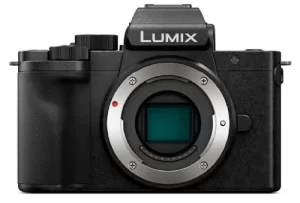
If you want to explore photography and vlogging with an affordable mirrorless camera, the Panasonic Lumix G100 is a great option, with features tailored to improve audio and video quality. 2026 note: Panasonic refreshed it as the G100D (adding a USB-C port and updated viewfinder), which is the version to look for new at around US$597.
Standout Features:
- Compact body design with excellent physical control layout
- 5-axis hybrid image stabilization provides shake compensation for handheld video
- OZO Audio system with a 3-mic array captures clear and natural sound
- Vari-angle free-angle LCD touchscreen enables creative angles and vlogging
- 4K 30fps video ensures detailed footage
- Face, eye, and body detection autofocus
Reasons to Buy
- Beginner-friendly control layout
- Flip-out vari-angle touchscreen
- Strong built-in audio for vlogging
- Compact, lightweight and budget-friendly
Reasons to Avoid
- Cropped 4K video field of view
- Contrast-based AF trails Canon/Sony/Nikon rivals
- Smaller Four Thirds sensor for low light
For those seeking an affordable vlogging-friendly mirrorless camera, the G100D delivers tremendous value and usability.
6. Nikon Z50
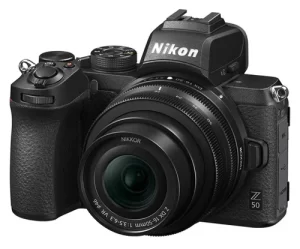
The original Nikon Z50 made an easy transition into mirrorless, keeping Nikon’s renowned ergonomics while the larger APS-C sensor delivered a clear boost over smartphones and point-and-shoots. 2026 note: the Nikon Z50 II (from ~US$909 body) has replaced it and is our top overall beginner pick, adding the flagship Expeed 7 processor, deep subject-detection AF, up to 30fps and oversampled 4K/30 — a genuinely big leap.
Standout Features (Z50 II):
- Expeed 7 processor with 209-point hybrid AF and nine-category subject detection
- Up to 30fps burst shooting for action and wildlife
- 20.9MP APS-C sensor with excellent JPEG colors straight out of camera
- Oversampled 4K UHD 30fps video and external mic jack
- Fully articulating rear touchscreen and a dedicated Picture Control button
Reasons to Buy
- Flagship-level autofocus at a beginner price
- Intuitive Nikon control layout
- Excellent 20MP APS-C image quality
- Strong video for the class
Reasons to Avoid
- No in-body image stabilization
- Single SD card slot
- Growing but still smaller APS-C lens range
Between the two, buy the Z50 II new; the original Z50 only makes sense as a used bargain.
7. Panasonic Lumix GX85
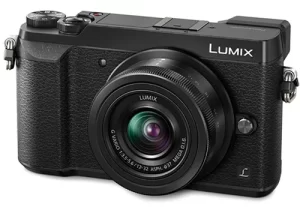
The compact and lightweight Panasonic GX85 packs tremendous value into its small form factor, with features tailored for beginners. 2026 note: it’s discontinued and now a used-only buy; if you want current Micro Four Thirds, look at the G100D or OM System E-M10 IV.
Standout Features:
- The 16MP Four Thirds sensor captures colorful, detailed images even in low light.
- Fast DFD focusing locks onto subjects quickly for sharp shots.
- The flip-up touchscreen provides flexibility for creative angles.
- 4K photo mode shoots 8MP stills at 30 fps to capture fleeting moments.
- In-body stabilization provides up to 4 stops of shake reduction with any lens.
Reasons to Buy
- Highly compact and portable camera body
- User-friendly controls and interface
- In-body stabilization at a low used price
- 4K video and photo capabilities
Reasons to Avoid
- No mic input for better audio
- Discontinued — support and accessories are limited
- Lower resolution EVF and LCD screen
A fine used starter, but don’t pay new-camera money for it in 2026.
8. Fujifilm X-T30
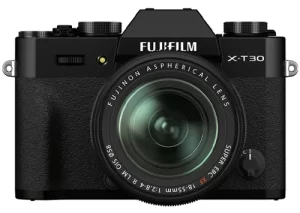
Enthused by Fujifilm’s famous film simulations and JPEG colors, the mid-range Fujifilm X-T30 impresses with standout image quality and retro charm, its analog dials giving an immersive shooting experience. 2026 note: it’s been superseded by the X-T30 II, with the pricier X-T50 sitting above it for those who want IBIS and a 40MP sensor.
Standout Features:
- 26.1MP X-Trans APS-C sensor captures colorful images and pleasing skin tones
- Fast hybrid contrast and phase detection autofocus locks focus in as little as 0.02 seconds
- Physical shutter speed and exposure compensation dials for intuitive manual shooting
- The electronic shutter enables silent shooting up to 1/32,000 sec
- Film simulation modes recreate the look of Fujifilm’s iconic film stocks
- Compact and lightweight body at just 0.88 pounds
Reasons to Buy
- Excellent 26MP APS-C sensor and image processing
- Intuitive physical dials and controls
- Compact, lightweight, and stylish design
- Great selection of film simulation modes
Reasons to Avoid
- Single SD card slot
- No in-body image stabilization
- The kit lens has mediocre optics
The X-T30 (or newer X-T30 II) remains an accessible entry point into Fujifilm’s renowned colours and handling.
9. Canon EOS RP
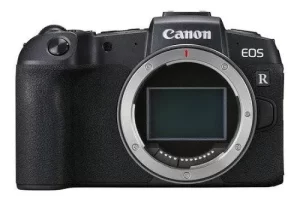
Ready to experience the benefits of a full-frame sensor for the first time, the affordable Canon EOS RP provides an easy gateway. The smooth Dual Pixel autofocus, interactive touchscreen, and intuitive Canon menu simplify the transition from crop-sensor cameras. 2026 note: the RP is now ageing; for a small step up in money you get much better autofocus and 4K from the Canon EOS R8.
Standout Features:
- Lightweight body design with comfortable deep grip
- 26.2MP full-frame sensor captures images with gorgeous color rendition
- Fast focus acquisition in up to -5 EV light with Dual Pixel CMOS AF
- Fully articulating touchscreen LCD ideal for movie shooting
- Digic 8 processor enables creative multi-exposure and HDR modes
- Mic and headphone ports provide audio monitoring and control
Reasons to Buy
- One of the cheapest routes into full frame
- Intuitive physical controls and touchscreen
- Excellent 26MP sensor image quality
- Articulating LCD screen for creative angles
Reasons to Avoid
- 4K video has a heavy 1.6x crop and no Dual Pixel AF
- Mediocre battery life
- Slow 5fps burst shooting
The EOS RP is still a budget full-frame gateway, but the newer R8 is the smarter long-term buy if it fits your budget.
10. Nikon Z5
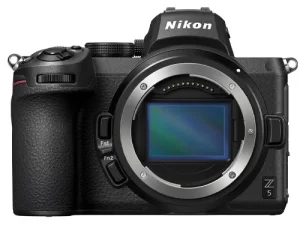
Eager to experience the benefits of a full-frame mirrorless camera, the budget-friendly Nikon Z5 appeals to Nikon shooters. The larger sensor elevates dynamic range and color depth, and the familiar control layout speeds up the transition from a crop-sensor DSLR. 2026 note: the Nikon Z5 II (announced April 2025, ~US$1,597–1,700) has replaced it, adding the Expeed 7 processor, dramatically better autofocus, and faster burst — the one to buy new.
Standout Features:
- Lightweight but durable magnesium alloy exterior
- 24.3MP FX-format BSI CMOS sensor captures beautiful images
- 3.69 million dot OLED electronic viewfinder provides a crisp live preview
- 5-axis in-body image stabilization provides up to 5 stops of shake reduction
- Dual SD memory card slots for overflow, backup, and sorting options
- 4K UHD video and external mic input jack
Reasons to Buy
- Excellent handling and control layout
- High-resolution EVF and tilting LCD
- 24MP full-frame sensor with good dynamic range
- Effective in-body image stabilization
Reasons to Avoid
- Original model’s 4K video has a 1.7x crop
- Slower burst than the newer Z5 II
- Kit lens is only average
For beginners ready to upgrade to full frame, the Z5 II now delivers professional-level image quality and handling at an entry-level price.
How to Choose the Best Mirrorless Camera for Beginners
When choosing your first mirrorless camera in 2026, work through these decisions in order. A quick way to narrow the field: pick your budget, then your main use (stills, vlogging, or a mix), then your system (the lens family you’ll grow into) — the body almost chooses itself after that.
Budget
Entry-level bodies land in the US$479–1,000 (roughly RM2,200–4,700) range; full-frame beginners like the Z5 II run US$1,600+ (RM7,500+). Always price the kit (body + lens), not just the body — and remember Malaysian/Singapore retail runs higher than US figures after tax and import.
Main Use: Stills vs Video
If you mostly shoot photos, prioritise sensor, autofocus, and a viewfinder (Nikon Z50 II, Canon R50). If you vlog or film, prioritise a fully articulating screen, uncropped 4K, and video AF (Sony ZV-E10 II, Panasonic G100D). Many beginners want both — the Z50 II and R50 are the best all-rounders.
System and Lenses
You’re buying into a lens family, not just a body. Canon RF, Sony E, Nikon Z, and Fujifilm X all have growing beginner-friendly lens ranges; avoid discontinued mounts like Canon EF-M. Check that the lenses you’ll want (a fast prime, a telephoto) exist and are affordable in your mount.
Sensor Size
APS-C hits the sweet spot for beginners: better low-light and background blur than Four Thirds, far cheaper and smaller than full frame. Go full frame only if you specifically want maximum image quality and are ready for pricier lenses.
Autofocus, Stabilisation and Ergonomics
Modern subject-detection AF (eyes, animals, vehicles) is the single biggest quality-of-life upgrade — it’s why the Z50 II tops our list. In-body stabilisation (IBIS) helps for handheld video and low light. Finally, hold the camera if you can: button placement and menus differ by brand, and the one that feels right is the one you’ll actually carry.
Worked Example: An RM3,000 First-Camera Budget
Say you have about RM3,000 (~US$640) and want one camera for travel photos and the occasional vlog. Spend it like this: a Canon EOS R50 or R100 kit with the 18–45mm lens covers everyday shooting; set aside ~RM400–600 for a fast 50mm-equivalent prime later for portraits and low light; and keep ~RM200 for a spare battery and a fast SD card (a genuinely important, often-forgotten cost). If video is your priority instead and you can stretch to ~RM4,700, the Sony ZV-E10 II is the better fit.
Common Beginner Pitfalls to Avoid
- Overspending on the body, underspending on glass. A cheaper body with one good lens beats an expensive body with only the kit lens.
- Buying a discontinued mount. A used EF-M Canon or old Olympus can be a dead end — check the mount still has a future.
- Chasing megapixels. 20–26MP is plenty; autofocus and lenses matter far more for beginners.
- Forgetting the extras. Budget for a spare battery, a fast SD card, and a bag from day one.
- Ignoring weight. The best camera is the one small enough that you actually bring it.
Capture High-Quality Images with the Best Mirrorless Camera for Beginners
After weighing the current 2026 market, my top overall recommendation for the best mirrorless camera for beginners is the Nikon Z50 II. It brings genuinely flagship autofocus, up to 30fps burst, and oversampled 4K to a body that stays light enough to carry all day — a combination nothing else near its price matches. The Canon EOS R50 is the easiest to learn thanks to its guided Creative Assist mode, and the Sony ZV-E10 II is the pick if video and vlogging come first.
On a tighter budget, the Canon EOS R100 and the still-available Sony a6100 deliver real interchangeable-lens quality for the least money. Whichever you choose, intuitive controls, a friendly interface, and strong autofocus will let you focus on learning rather than fighting your gear — capturing gorgeous photos and videos as your skills grow.
Read more: 10 Best Compact Cameras for Beginners: Portable & Lightweight | Best Beginner-Friendly YouTube Cameras | The Best Camera for Beginners (by category)
For deeper technical reviews, independent sources like DPReview and Amateur Photographer publish detailed lab and field testing worth reading before you buy.
Prices and model availability verified July 2026 and can change quickly — always confirm the current price, kit contents, and warranty with the retailer before purchasing. This article is general buying guidance from KayaToday, not professional purchasing advice; choose the camera that best fits your own needs and budget.