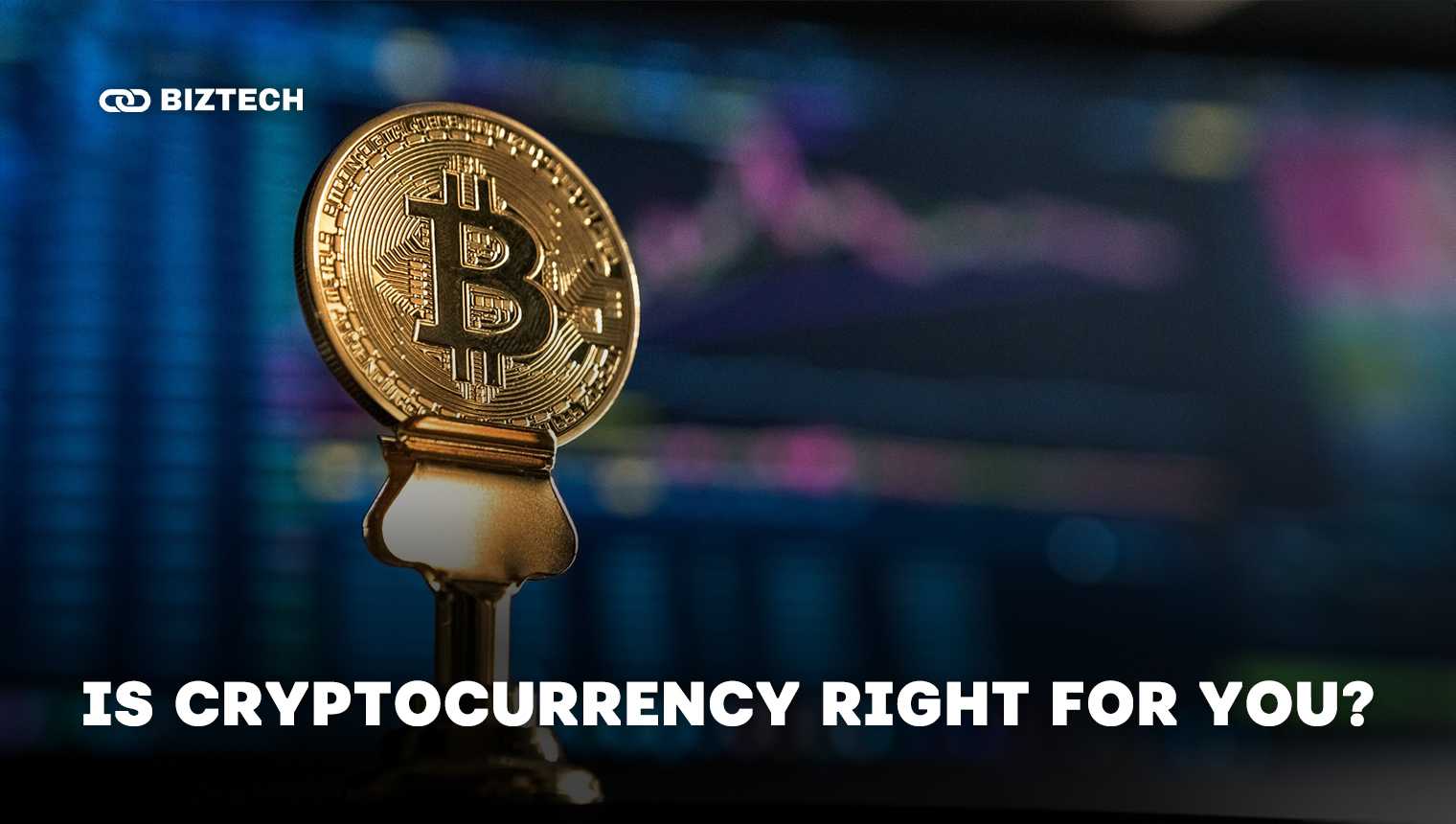
What is cryptocurrency? Is it safe? Is it legal? And, most importantly, is it right for you? These are the questions most people wrestle with before putting real money into digital assets — and they deserve honest answers rather than hype.
- Advantages vs Disadvantages at a Glance
- What is Cryptocurrency?
- Is Cryptocurrency Legal? (And Is It Regulated?)
- Is Cryptocurrency Safe?
- Advantages of Cryptocurrency
- Decentralisation
- Potential for High Returns
- Faster and Cheaper Cross-Border Transactions
- Security and Self-Custody
- Disadvantages of Cryptocurrency
- Volatility
- Regulatory Uncertainty
- Security Risks and Scams
- Environmental Impact
- Is Cryptocurrency Right for You? A Quick Decision Framework
- Malaysia & Singapore: How to Buy Crypto Legally
- Malaysia
- Singapore
- How to Invest in Cryptocurrency
- Conclusion
- Frequently Asked Questions (FAQs)
Cryptocurrency is a digital asset built on blockchain technology. Unlike money that moves through banks, its core purpose is peer-to-peer transactions without a middleman. More than 700 million people worldwide now own some form of crypto, and the market is worth trillions of dollars — but it remains one of the most volatile asset classes you can buy.
This guide breaks down the real advantages and disadvantages of cryptocurrency, explains where it stands legally in Malaysia and Singapore, and gives you a simple framework to decide whether it fits your financial goals. Whether you are a curious first-timer or weighing your next move, the aim is to help you make an informed choice — not a rushed one.
Key Takeaways
- Cryptocurrency is a digital, blockchain-based asset that runs without a central authority like a bank or government.
- Its main advantages are decentralisation, fast and low-cost cross-border transfers, self-custody, and the potential (not the guarantee) of high returns.
- Its main disadvantages are extreme volatility, an evolving regulatory patchwork, security and scam risks, and the environmental cost of proof-of-work mining.
- Crypto is legal and regulated in Malaysia (Securities Commission) and Singapore (MAS) — the old idea that it is “completely unregulated” is out of date.
- In Malaysia, buy only through the five SC-registered exchanges; in Singapore, use MAS-licensed providers.
- A common-sense rule: only invest money you can afford to lose, and keep crypto to a small slice of a diversified portfolio.
Related Post: Advantages and Disadvantages of Accepting Cryptocurrency as Payment
Advantages vs Disadvantages at a Glance
Before we go deep, here is the honest balance sheet. Every advantage of cryptocurrency has a matching trade-off — the trick is knowing which side matters more for your situation.
| Advantage | The trade-off / catch |
|---|---|
| Decentralised – no bank or government in control | No safety net either: no chargebacks, no deposit insurance, no one to call |
| Potential for high returns | Equally high potential for deep losses — volatility cuts both ways |
| Fast, low-cost cross-border transfers | Network fees can spike during congestion; a wrong address means funds are gone |
| Self-custody & strong cryptography | You are your own bank — lose your keys and no one can recover them |
| Open 24/7, accessible to anyone | Scammers operate 24/7 too; the space is a magnet for fraud |
| Increasingly regulated & legitimised | Rules still differ sharply by country and keep changing |
What is Cryptocurrency?
Cryptocurrency is a type of digital currency that runs without the help of a central authority such as a bank or government. It relies on advanced encryption techniques — cryptography — to secure transactions and control the creation of new units.
The foundation of cryptocurrency is blockchain technology: a distributed, decentralised public ledger that records every transaction across thousands of computers at once. Because the record is shared and tamper-resistant, money can move directly between two parties, transparently, without a middleman.
Bitcoin was the first cryptocurrency, launched in 2009. Since then, tens of thousands of coins and tokens have appeared, each with its own features and underlying network — including Ethereum, Solana, XRP and Cardano. If you are completely new, start with our cryptocurrency guide for beginners before going further.
Is Cryptocurrency Legal? (And Is It Regulated?)
Yes — in most major economies cryptocurrency is legal, and the bigger story of the last two years is how quickly it has become regulated. The outdated claim that crypto operates in a lawless vacuum no longer holds. Rules do, however, vary sharply by country:
- Malaysia: Legal and regulated by the Securities Commission Malaysia (SC). Trading crypto is allowed through SC-registered Digital Asset Exchanges (DAX). A revised DAX framework took effect on 20 May 2026, tightening operator standards and cracking down on unregistered platforms.
- Singapore: Legal and regulated by the Monetary Authority of Singapore (MAS), whose Digital Token Service Provider (DTSP) licensing regime came fully into force on 30 June 2025.
- United States: Legal. A federal stablecoin law (the GENIUS Act) has been in force since July 2025, and in March 2026 the SEC and CFTC jointly classified Bitcoin, Ethereum and 14 other major assets as “digital commodities.” The IRS treats crypto as taxable property.
- European Union: The EU’s landmark MiCA rules (in force since December 2024) require crypto service providers to be licensed across all member states.
- China: Among the strictest — a broad ban on crypto transactions and related banking services remains in place.
- Japan & India: Both legal and taxable; Japan regulates exchanges under its Payment Services Act, while India taxes crypto gains and applies a transaction levy.
The takeaway: crypto is no longer “unregulated” — but where and how you buy matters. Always use a licensed, registered platform for your jurisdiction.
Is Cryptocurrency Safe?
The underlying technology is robust. Cryptocurrencies use techniques such as digital signatures and cryptographic hashing to secure transactions and ensure that only the rightful owner can move funds. The blockchains behind major coins like Bitcoin have never been “hacked” at the protocol level.
The risks sit around the edges — in how coins are stored and traded:
- Exchange and platform hacks: From the historic Mt. Gox collapse to the February 2025 Bybit breach — the largest crypto theft on record at roughly US$1.5 billion, attributed to North Korea’s Lazarus Group (Bybit reimbursed affected users) — centralised platforms remain targets.
- Wallet-drainer scams: The fastest-growing threat is approval phishing, where a victim is tricked into signing a malicious transaction that empties their wallet. Reviewing and revoking token approvals (for example via Revoke.cash) is now basic hygiene.
- User error: Because you control your own funds, losing or forgetting your private keys — the passwords to your holdings — can mean permanent loss with no recovery.
For a deeper walkthrough of protecting yourself, see our guide on hot wallets vs cold wallets and how to spot crypto scams before they cost you.
Advantages of Cryptocurrency
Interest in cryptocurrency keeps growing because it genuinely solves problems that traditional finance struggles with. Here is where crypto shines.
Decentralisation
Cryptocurrencies run on decentralised networks, independent of any single government or central bank. That gives you a degree of financial independence and censorship resistance — useful in economies with capital controls or unstable currencies. The flip side, covered below, is that there is no central body to reverse a mistake or bail you out.
Potential for High Returns
Early adopters of major cryptocurrencies have seen extraordinary gains. Bitcoin recovered from around US$16,000 in November 2022 to an all-time high near US$126,000 in October 2025 — a roughly eightfold rise in under three years. But this potential comes hand-in-hand with severe risk; the same asset can fall just as sharply.
Fact: By late August 2026, Bitcoin traded around US$78,000 — up roughly 20% in a single month from about US$65,000 in late July, yet still around 38% below its October 2025 peak. That is crypto volatility in a nutshell: big moves in both directions, often within weeks.
Faster and Cheaper Cross-Border Transactions
Because middlemen are removed, crypto transfers can settle in minutes rather than days, often at lower cost than traditional international wires. For remittances and cross-border payments — a big deal in a region like Southeast Asia — this is one of crypto’s most practical, real-world benefits.
Security and Self-Custody
Strong public-private key cryptography means only the intended owner can authorise a transaction, lowering the risk of fraud or tampering at the protocol level. Self-custody — holding your own keys in a wallet — means no bank can freeze or seize your funds. That freedom, of course, comes with full responsibility for keeping those keys safe.
Disadvantages of Cryptocurrency
Crypto can be rewarding, but the drawbacks are real and every investor should weigh them honestly before committing capital.
Volatility
The same volatility that creates the potential for big gains can wipe out savings quickly. Prices can swing double digits in a day, driven by speculation, regulatory news, macro conditions and overall adoption. Crypto should be treated as a high-risk allocation, not a savings account.
Fact: Bitcoin crashed from a November 2021 peak near US$67,000 to about US$16,000 a year later — a 76% drop. Even in the recent cycle, it fell roughly 48% from its October 2025 high before recovering. Deep drawdowns are a feature of this market, not a bug.
Regulatory Uncertainty
Crypto is increasingly regulated — but unevenly, and the rules keep changing. What is permitted in Singapore may be restricted in China; a token treated as a commodity in the US might be handled differently elsewhere. This patchwork creates genuine uncertainty: a regulatory announcement can move prices sharply, and a platform that is legal today may face new restrictions tomorrow. The practical defence is to stick to licensed, registered operators and keep records for tax time.
Security Risks and Scams
Even with strong cryptography, exchanges and digital wallets are targets for hackers, and the industry is plagued by scams — fake exchanges, phishing, “pig-butchering” investment fraud and wallet drainers. Lose your private keys, or approve a malicious transaction, and your funds can vanish with no recourse. Security is on you in a way it never is with a bank.
Environmental Impact
Proof-of-work coins like Bitcoin consume large amounts of electricity to mine, raising legitimate concerns about carbon footprint. The picture is improving, though: Ethereum’s 2022 move to proof-of-stake cut its energy use by an estimated 99.9%, and a growing share of Bitcoin mining now taps renewable or otherwise stranded energy. Still, energy use remains a real disadvantage for the largest network.
Is Cryptocurrency Right for You? A Quick Decision Framework
There is no universal answer — only what fits your goals, timeline and temperament. Use this framework as a gut-check before you buy.
| Ask yourself… | Crypto may suit you if… | Think twice if… |
|---|---|---|
| Can I afford to lose this money? | You are using genuinely spare cash | It is your emergency fund or rent money |
| What is my time horizon? | You can hold for years and ignore the noise | You need the money within 12 months |
| How do I handle a 50% drop? | You can stay calm and not panic-sell | A big drop would keep you up at night |
| Have I done the research? | You understand what you are buying and why | You are buying purely on hype or a tip |
| Is my portfolio diversified? | Crypto is a small slice (often 1–5%) | You are going “all in” on one coin |
If most of your honest answers land in the middle column, crypto could have a place in your plan. If they land on the right, it may be worth waiting, learning more, or starting very small. For a fuller look at the numbers, read whether cryptocurrency is a good investment and how it stacks up in crypto vs stocks.
Malaysia & Singapore: How to Buy Crypto Legally
If you are in Malaysia or Singapore, the single most important safety rule is to use a licensed, locally registered platform. Global exchanges that are not registered here may be operating illegally in your jurisdiction, and you would have little protection if something went wrong.
Malaysia
As of the SC’s latest list (updated 20 July 2026), only five Digital Asset Exchanges are registered to operate legally in Malaysia:
| SC-registered DAX | Notes |
|---|---|
| Luno Malaysia | The first fully approved DAX; beginner-friendly app and MYR deposits |
| HATA Digital | Known for some of the lowest fees among SC-licensed exchanges |
| MX Global | Homegrown exchange with MYR on-ramps |
| SINEGY DAX | Penang-based, one of Malaysia’s original DAX operators |
| Kinetic DAX (KDX) | Formerly Tokenize; majority-owned by Kenanga Investment Bank since March 2026 |
You can fund these accounts in ringgit via bank transfer or DuitNow. On tax: Malaysia has no general capital gains tax, so occasional long-term investing is typically not taxed — but if you trade frequently and actively, LHDN may treat your profits as taxable income under the “badges of trade.” For a hands-on comparison, see our roundup of the best crypto trading platforms in Malaysia.
Singapore
Use MAS-licensed providers such as Coinhako, Independent Reserve, Crypto.com or Coinbase Singapore, funded via PayNow or bank transfer. Singapore has no capital gains tax, so long-term investment gains are generally not taxable; however, frequent trading can be treated as taxable business income, and IRAS refreshed its Income Tax Treatment of Digital Tokens guide in January 2026. When you are ready to convert back to cash, our guide on how to cash out Bitcoin walks through the options.
How to Invest in Cryptocurrency
There are two main ways to get exposure. You can buy coins directly through a registered exchange and hold them yourself, or you can get indirect exposure through regulated products — notably the spot Bitcoin and Ethereum ETFs launched in the US in 2024, which now hold well over US$100 billion in assets.
Whichever route you choose, do your homework first: understand each coin’s fundamentals, know your local rules, be aware of security risks, and understand what drives price. A few sensible habits go a long way:
- Size your position: many advisers suggest keeping crypto to roughly 1–5% of a diversified portfolio.
- Dollar-cost average: buying a fixed amount on a schedule smooths out volatility versus trying to time the market.
- Secure your holdings: move long-term savings to a cold wallet rather than leaving everything on an exchange.
- Only risk what you can lose: the oldest rule in crypto, and still the best one.
If you want to go further once you own some, options like staking for rewards can earn yield — but they add their own risks.
Conclusion
Cryptocurrency offers a genuinely new set of advantages — decentralisation, fast global transfers, self-custody and the potential for outsized returns — balanced against equally real disadvantages: extreme volatility, an evolving regulatory patchwork, security and scam risks, and environmental costs. Neither side of the ledger cancels the other; they simply describe an asset that is high-risk and high-potential in equal measure.
So, is cryptocurrency right for you? If you have spare capital, a long time horizon, the stomach for big swings, and you buy through a licensed platform in your country, a small allocation may fit your plan. If not, there is no shame in waiting and learning more. As always, consider speaking with a licensed financial adviser who can weigh your goals, risk tolerance and overall portfolio before you invest.
Figures, prices and regulations were verified in August 2026 but change quickly — always confirm current details with the exchange or the relevant regulator before acting.
Frequently Asked Questions (FAQs)
Disclaimer: This article is provided by KayaToday for general information only and is not financial advice. Investing in cryptocurrency carries a high risk of loss due to its volatility, and digital assets are not covered by deposit insurance. Regulations and prices change frequently. Before investing, do your own research and speak with a licensed financial adviser.