Introduction
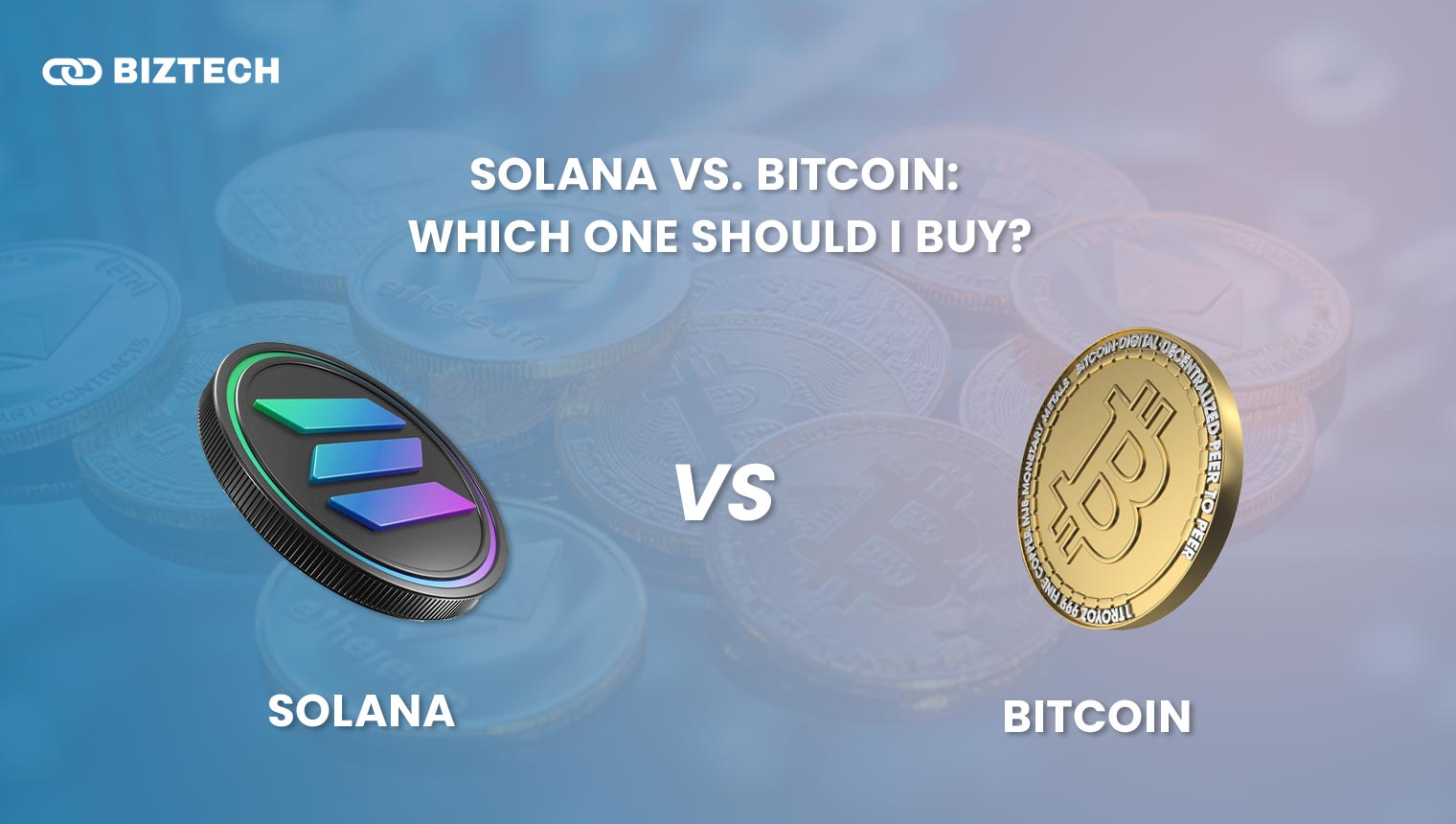
Are you trying to understand the difference between Solana and Bitcoin? You’re not alone. It’s one of the most common questions new investors ask in 2026, especially after a volatile year: Bitcoin set a record high near US$126,000 in October 2025 before pulling back to around US$69,000 by August 2026, while Solana climbed close to US$290 in early 2025 and now trades near US$78.
- Introduction
- Solana vs Bitcoin: At-a-Glance Comparison
- Speed: Who Is Actually Faster?
- Transaction Fees: Which Is Cheaper to Use?
- Energy Use: Which Is More Eco-Friendly?
- Security & Reliability: Which Is Safer?
- Supply & Tokenomics: A Difference That Matters
- Use Cases: What Can You Actually Do With Each?
- Price History & Performance
- The Key Difference in One Line
- Pros and Cons
- Solana (SOL)
- Bitcoin (BTC)
- How to Choose: A Simple Decision Framework
- Buying Solana or Bitcoin in Malaysia & Singapore
- Solana vs Bitcoin: Which Should You Choose in 2026?
- Best Pick for Beginners
- Best Pick for Developers & Active Users
- Best Pick for Long-Term Investors
- Conclusion
- FAQs (Frequently Asked Questions)
Bitcoin is the original cryptocurrency. It launched in 2009 and is now owned by an estimated 700 million+ people worldwide. Solana came much later, in 2020, and made its name on high speed and near-zero fees.
But here’s the thing most comparison articles get wrong: this isn’t really a “which one wins” contest. Bitcoin and Solana are built to do different jobs. This guide breaks down how they actually compare on speed, fees, security, energy use and real-world use, so you can decide which fits your goals, or whether you should hold both.
Prices and figures verified August 2026; crypto moves fast, so always confirm live data before you buy.
Solana vs Bitcoin: At-a-Glance Comparison
| Feature | Solana (SOL) | Bitcoin (BTC) |
|---|---|---|
| Launched | 2020 | 2009 |
| Approx. price (Aug 2026) | ~US$78 | ~US$69,000 |
| Theoretical speed | Up to ~65,000 TPS (real-world usually ~1,000–4,000 non-vote TPS) | ~7 TPS on base layer; instant via the Lightning Network |
| Typical fee | A fraction of a cent (often <US$0.001) | ~US$1–US$30 on-chain; a few cents on Lightning |
| Consensus | Proof of Stake + Proof of History (low energy) | Proof of Work (high energy) |
| Supply | Inflationary (~4–5%/yr, declining); no hard cap | Hard-capped at 21 million coins |
| Main role | High-throughput apps: DeFi, NFTs, payments, memecoins | Store of value / “digital gold”, settlement |
| Track record | Fast-growing but has had outages (latest a 33-min partial stall, 12 Aug 2026) | 15+ years with zero downtime at the base layer |
Sources: CoinMarketCap and CoinGecko live data, verified August 2026. Figures are approximate and change constantly.
Speed: Who Is Actually Faster?
On paper, Solana is far faster. Its architecture can theoretically handle up to about 65,000 transactions per second (TPS). Bitcoin’s base layer settles roughly 7 TPS, with a new block roughly every 10 minutes.
But be careful with that 65,000 headline. In real-world conditions, Solana’s useful (non-vote) throughput usually sits closer to 1,000–4,000 TPS, still very fast, just not the marketing number. The good news for 2026 is the rollout of Firedancer, a second independent validator client from Jump Crypto that has benchmarked in the hundreds of thousands of TPS and is designed to push real capacity much higher while improving reliability.
Bitcoin, meanwhile, isn’t limited to 7 TPS for everyday payments. The Lightning Network, a “layer 2” built on top of Bitcoin, settles payments instantly for a few cents. So for small payments, the practical speed gap is smaller than it first appears.
Bottom line: Solana wins on raw on-chain throughput for apps and trading. For simple payments, Bitcoin + Lightning is closer than the base-layer numbers suggest.
Transaction Fees: Which Is Cheaper to Use?
Solana is one of the cheapest major chains to transact on. Fees are often a small fraction of a cent, even when the network is busy, which is a big part of why it’s popular for high-frequency trading, NFTs and memecoins.
Bitcoin’s on-chain fees vary with demand, typically US$1–US$30 to move a transaction, and can spike higher when the network is congested. Using the Lightning Network drops that to a few cents for everyday spending.
If you send crypto often or in small amounts, Solana keeps costs lowest. For large-value transfers where you want maximum settlement security, Bitcoin’s fee is usually trivial relative to the amount moved.
Energy Use: Which Is More Eco-Friendly?
Bitcoin runs on Proof of Work mining, which uses large amounts of electricity, comparable to the annual consumption of a small country. That energy is what secures the network.
Solana uses Proof of Stake combined with Proof of History and is far lighter, with a single transaction using a tiny amount of energy. If a low carbon footprint matters to you, Solana is the greener choice.
Note the trade-off: Bitcoin’s high energy use is also the source of its security. Solana’s efficiency comes from a different (and newer) security model.
Security & Reliability: Which Is Safer?
Bitcoin has run for more than 15 years with no downtime at the base layer. Its Proof of Work model is the most battle-tested in crypto, which is exactly why it’s trusted as long-term “digital gold.”
Solana is newer and has a bumpier record. It suffered several full outages in 2021–2022, then ran from February 2024 into early 2025 without a major incident, its longest stable stretch. Its most recent hiccup was a partial outage on 12 August 2026, when about 28.8% of staked SOL briefly went delinquent and roughly 90 validators were affected for around 33 minutes before recovery. The arrival of Firedancer and genuine client diversity (Agave + Firedancer) is expected to make such incidents rarer and less severe.
Neither network has ever been “hacked” in the sense of its core ledger being broken. Most losses in crypto come from user mistakes, exchange failures and wallet-drainer scams, not the blockchains themselves. Whichever you choose, store larger holdings in a cold wallet and revoke unused token approvals.
For long-term storage of value, Bitcoin’s uptime and maturity make it the safer pick. Solana is improving fast but still carries more reliability risk.
Supply & Tokenomics: A Difference That Matters
This is the factor most beginners overlook. Bitcoin has a fixed maximum supply of 21 million coins, and issuance halves roughly every four years (the most recent halving was April 2024). That scarcity is central to the “digital gold” thesis.
Solana has no hard cap. New SOL is issued as staking rewards, with inflation starting around 8% and tapering toward a long-term ~1.5%. A portion of transaction fees is burned, which offsets some issuance. This isn’t good or bad on its own, but it means SOL and BTC have very different scarcity profiles, and that shapes how each behaves as an investment.
Use Cases: What Can You Actually Do With Each?
Bitcoin is used mainly to store and transfer value, a savings asset and, increasingly, a reserve held by companies and funds via spot Bitcoin ETFs (launched 2024).
Solana is a platform for building: decentralized apps, NFTs, DeFi, payments and staking. Its speed and low fees make it attractive to developers and active traders. If you want to earn staking rewards on SOL, that’s a native feature; Bitcoin does not offer staking.
Want to hold value long term? Lean Bitcoin. Want to use apps, trade actively, or earn staking yield? Solana has more to offer.
Price History & Performance
Bitcoin launched in 2009 worth a few cents. It reached about US$20,000 in 2017, nearly US$69,000 in 2021, fell to around US$16,000 in late 2022, then set a fresh all-time high near US$126,000 in October 2025. By August 2026 it had cooled to around US$69,000, roughly 45% below that peak.
Solana launched in 2020 under US$1, surged above US$260 in November 2021, crashed with the wider market in 2022 (briefly under US$10), then recovered strongly and hit a record near US$290 in early 2025. It trades around US$78 in August 2026.
The pattern is clear: Solana has delivered higher highs and deeper drawdowns, it’s more volatile. Bitcoin’s history is longer and comparatively steadier. Past performance never guarantees future results, so review multi-year charts for both before investing.
The Key Difference in One Line
Bitcoin is a scarce, secure store of value. Solana is a fast, low-cost platform for apps and activity. They compete less than headlines suggest, and many investors hold both.
Pros and Cons
Solana (SOL)
Pros:
- Very fast on-chain throughput and near-zero fees
- Rich ecosystem: DeFi, NFTs, payments, staking rewards
- Energy-efficient (Proof of Stake + Proof of History)
- Firedancer client improving speed and resilience in 2026
Cons:
- History of outages (latest a partial stall in Aug 2026)
- More volatile; deeper drawdowns than Bitcoin
- Inflationary supply with no hard cap
- Newer and less battle-tested than Bitcoin
Bitcoin (BTC)
Pros:
- Most secure and trusted network; 15+ years of uptime
- Fixed 21 million supply (scarcity / “digital gold”)
- Widest global adoption and deepest liquidity; spot ETFs available
- Lightning Network enables cheap, instant payments
Cons:
- Slow, pricey base-layer transactions during congestion
- High energy use from Proof of Work mining
- Not designed for smart contracts or dApps
- No native staking yield
How to Choose: A Simple Decision Framework
| Your goal | Better fit | Why |
|---|---|---|
| Long-term store of value | Bitcoin | Fixed supply, top security, proven track record |
| Lowest fees / frequent transfers | Solana | Sub-cent fees even under load |
| Using dApps, DeFi or NFTs | Solana | Built for high-throughput smart contracts |
| Earning staking yield | Solana | Native staking; Bitcoin has none |
| Maximum reliability / uptime | Bitcoin | No base-layer downtime in 15+ years |
| Lower volatility | Bitcoin | Historically shallower drawdowns than SOL |
| Balanced exposure | Both | They play complementary roles in a portfolio |
Worked example: Say you have RM1,000 to allocate. A cautious beginner might put the larger share into Bitcoin as a core holding and a smaller slice into Solana for growth and ecosystem exposure, e.g. RM700 BTC / RM300 SOL, then add gradually using dollar-cost averaging rather than a single lump sum. Only invest what you can afford to lose.
Buying Solana or Bitcoin in Malaysia & Singapore
In Malaysia, you can only legally buy and sell crypto through a platform registered as a Recognised Market Operator (Digital Asset Exchange) with the Securities Commission (SC). As of 26 June 2026 there are five SC-registered DAX: Luno, HATA, MX Global, SINEGY and Kinetic DAX. Both BTC and SOL are widely available on these platforms, and most support MYR deposits via DuitNow / online banking. Global exchanges such as Binance and OKX are not SC-registered for Malaysian users, so stick to the licensed list. (See the current SC list linked below, it changes over time.)
In Singapore, crypto services must be licensed by the Monetary Authority of Singapore (MAS). MAS-licensed providers include Coinhako, Independent Reserve, Crypto.com and Coinbase Singapore, most supporting SGD via PayNow/FAST.
On tax: neither Malaysia nor Singapore charges a general capital gains tax on personal crypto investing. However, if your activity looks like trading (frequent, business-like buying and selling), profits can be treated as income under Malaysia’s LHDN “badges of trade” or Singapore’s IRAS guidance. When in doubt, check with a local tax professional. For a broader view, see our guide on the best crypto trading platforms in Malaysia.
Solana vs Bitcoin: Which Should You Choose in 2026?
Best Pick for Beginners
Bitcoin is the easier starting point. It’s simple to understand, the most liquid and trusted asset in crypto, and available on every licensed exchange. Its long history and relative stability make it easier to hold with confidence while you learn.
Best Pick for Developers & Active Users
Solana’s speed and ultra-low fees make it the natural home for building and using dApps, minting NFTs, and trading actively. With Firedancer improving throughput and reliability in 2026, its case for high-activity use is stronger than ever, just factor in the outage history.
Best Pick for Long-Term Investors
Bitcoin remains the go-to for long-term security thanks to its fixed supply, deep liquidity and 15-year track record. Solana can complement it as a higher-risk, higher-potential-reward growth position, sized smaller and matched to your risk tolerance. Curious about other coins to watch? See our roundup of the next big cryptocurrencies.
Conclusion
Bitcoin and Solana aren’t really rivals, they’re built for different jobs. Bitcoin is the scarce, ultra-secure store of value; Solana is the fast, cheap platform for apps and activity. If you’re new or investing for the long haul, Bitcoin is the safer core. If you want to build, trade or earn staking yield, Solana has the edge. Many investors simply hold both in proportions that match their goals.
Whatever you choose, buy only through an SC-registered (Malaysia) or MAS-licensed (Singapore) platform, secure your coins properly, and do your own research before investing.
FAQs (Frequently Asked Questions)
Figures verified August 2026 from live market data (CoinMarketCap, CoinGecko) and official sources. Crypto prices and network details change quickly, always confirm current data before acting. Useful references: the SC’s list of registered Digital Asset Exchanges, CoinMarketCap and the official Solana site.
Disclaimer: This article is provided by KayaToday for informational purposes only and does not constitute financial advice. Cryptocurrency investments are volatile and carry risk. Always do your own research and consult a licensed professional before making any investment decisions. Only invest what you can afford to lose.