In the ever-evolving world of cryptocurrency, Pi Network has emerged as one of the most talked-about — and most divisive — projects of the decade. Launched on March 14, 2019, by a group of Stanford University graduates including Dr. Nicolas Kokkalis and Dr. Chengdiao Fan, Pi Network set out to make crypto mining inclusive and accessible to everyday people through their phones.
- What Is Pi Network in Simple Terms?
- Pi Network at a Glance (August 2026)
- The Beginning and Vision of Pi Network
- The Journey to the Open Network
- Where Pi Network Stands in 2026
- Price History and Market Sentiment (Set Expectations Carefully)
- How to Think About Pi Network: A Beginner’s Decision Framework
- Pi Network in Malaysia & Singapore: What You Need to Know
- Challenges and Criticism
- Frequently Asked Questions
- Conclusion
Years later, the picture is far more complicated. Pi opened its Mainnet to the world in February 2025, but the token that once traded near US$3 now sits around US$0.09. This guide walks you through what Pi Network actually is, how it works, where the project stands in 2026, and — critically for readers in Malaysia and Singapore — the regulatory and financial risks you should understand before touching it. All figures are verified as of August 2026; always confirm live prices and rules before acting.
What Is Pi Network in Simple Terms?
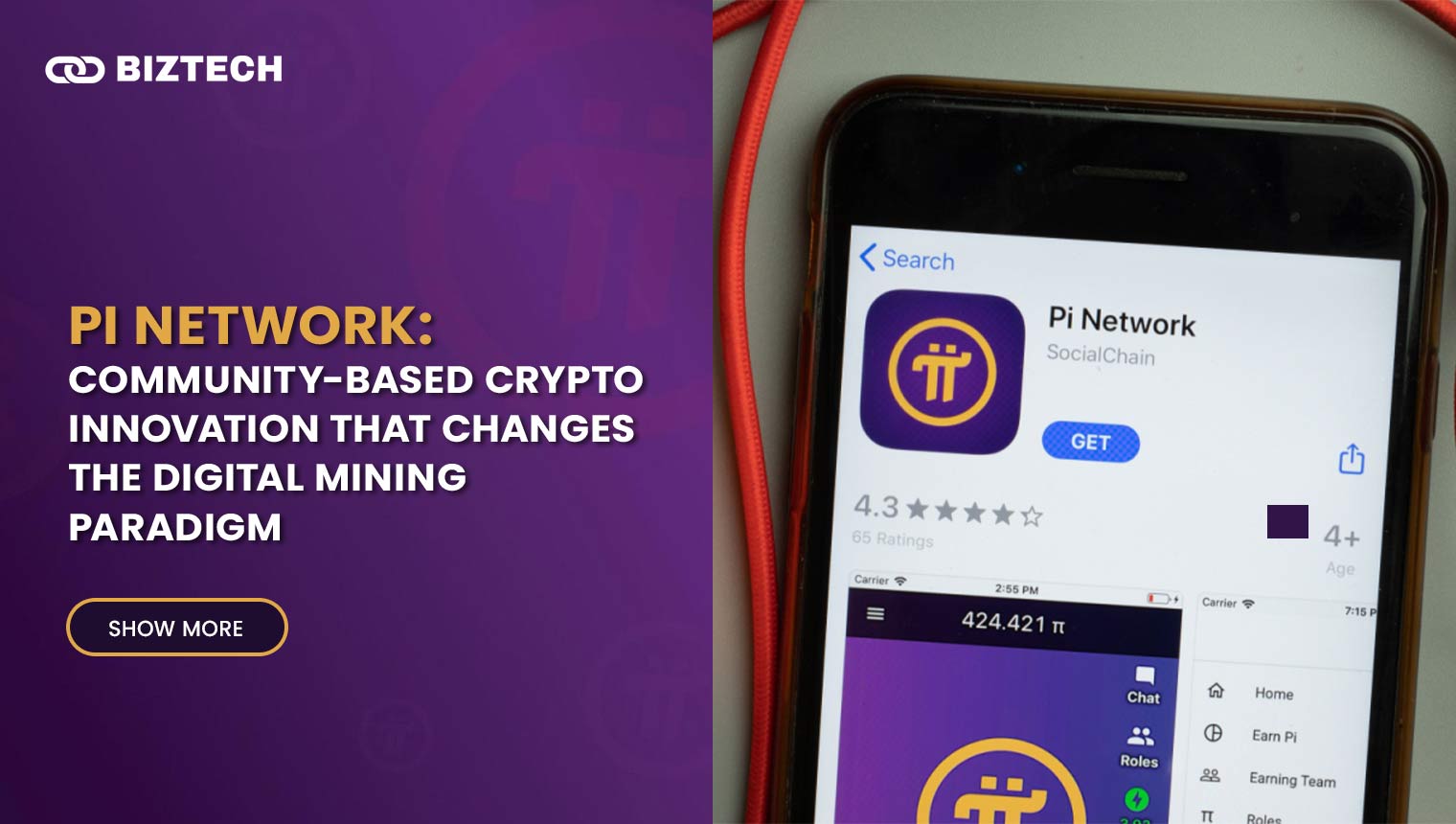
Pi Network is a cryptocurrency project built around a smartphone app. Instead of buying expensive rigs or burning huge amounts of electricity like traditional proof-of-work mining, users — called “Pioneers” — simply tap a button in the app once every 24 hours to accumulate Pi tokens.
The idea is deliberately low-barrier: no hardware, no meaningful battery drain, no upfront cost. Under the hood, Pi uses an adaptation of the Stellar Consensus Protocol (SCP), an energy-efficient consensus mechanism, rather than the power-hungry mining that secures Bitcoin. In May 2026, Pi’s Mainnet upgraded to Stellar Protocol 23, which introduced Soroban smart contracts — a significant step toward letting developers build decentralised apps, token tools and a planned Pi DEX on the network.
The founders’ stated vision was to “bring crypto to the hands of millions of people around the world through accessibility,” building an inclusive, peer-to-peer ecosystem focused on real utility. Whether Pi has delivered on that promise is exactly the debate we unpack below.
Pi Network at a Glance (August 2026)
| Attribute | Details (verified Aug 2026) |
|---|---|
| Launched | March 14, 2019 (Stanford graduates Dr. Nicolas Kokkalis & Dr. Chengdiao Fan) |
| Mining method | Mobile app tap-to-mine; Stellar Consensus Protocol (SCP), energy-efficient |
| Open Mainnet | Live since February 20, 2025 (firewall removed) |
| Approx. price | ~US$0.09 (down roughly 97% from the ~US$3 all-time high of Feb 2025) |
| Market cap / rank | ~US$1 billion; ranked around #69 |
| Supply | ~11 billion PI circulating; 100 billion PI maximum |
| KYC / migration | 19M+ KYC-verified; 16M+ migrated to Mainnet |
| Where it trades | OKX, Bitget, MEXC, Gate.io, Bybit, Pionex, Kraken (2026). Not on Binance or Coinbase. |
| Malaysia status | Not an SC-registered Digital Asset Exchange; SC issued a public warning in Feb 2025 |
Prices and rankings move constantly — verify on CoinGecko or another live tracker before making any decision.
The Beginning and Vision of Pi Network
Pi Network was founded with an ambitious vision: to create a cryptocurrency that ordinary people could use, not just experienced technicians or investors. Unlike Bitcoin, which requires expensive hardware and heavy energy consumption, Pi introduced the concept of phone-based mining that anyone could join for free.
Users download the Pi Network app and press the “mine” button every 24 hours to earn Pi tokens. Because it relies on SCP rather than proof-of-work, the app doesn’t meaningfully tax the user’s device or the power grid. Dr. Kokkalis framed the goal as bringing crypto “to the hands of millions of people around the world through accessibility,” while Dr. Fan described Pi as an inclusive global peer-to-peer ecosystem focused on real utility.
That accessibility is genuinely what drove Pi’s viral growth. But it also created the project’s central tension: a mining model built on referrals and daily engagement can attract enormous numbers of users without those users ever paying for anything — which makes it hard to know how much real economic demand sits behind the token.
The Journey to the Open Network
Pi Network’s rollout was deliberately slow, spanning several phases:
- Beta Phase (2019)
The app launched as an experiment in community building, testing public appetite for phone-based mining. Millions joined quickly, largely through a referral system that rewarded inviting others.
- Testnet Phase (2020)
Pi entered blockchain testing, letting developers and early adopters probe network stability and prepare for scalability.
- Enclosed Mainnet Phase (December 2021)
Pi launched its Mainnet in “enclosed” mode — the blockchain was live but walled off from external connectivity. This gave users time to complete Know Your Customer (KYC) checks and migrate their balances, and gave developers time to build apps accessible through the Pi Browser.
- Open Network (February 20, 2025)
After roughly six years, Pi finally removed the firewall on February 20, 2025, enabling external connectivity with other blockchains and systems. Pi tokens could now, in principle, be moved to external wallets and used in real transactions, and the token began trading on exchanges such as OKX.
Where Pi Network Stands in 2026
More than a year after Open Mainnet, the ecosystem has grown in some ways and disappointed in others. On the infrastructure side, over 19 million users have completed KYC and more than 16 million have migrated tokens to Mainnet, giving Pi a large verified base. The May 2026 Stellar Protocol 23 upgrade added Soroban smart contracts, opening the door to DeFi apps, a Pi Launchpad and a planned Pi DEX — moving Pi from a payments-only chain toward a programmable one.
On the market side, the story has been painful. Pi peaked near US$3 shortly after Open Mainnet in February 2025, then declined for most of the following 18 months, hitting new lows through 2026 and trading around US$0.09 by August 2026 — roughly 97% below its high. The core reasons are familiar: years of accumulated tokens created heavy selling pressure once trading opened, real-world usage grew more slowly than the community hoped, and Pi still lacks listings on the two largest Western exchanges, Binance and Coinbase, which many holders had counted on.
In short, the technology has advanced, but the token’s value and real-economy adoption remain unproven. That gap is the single most important thing for a beginner to internalise.
Price History and Market Sentiment (Set Expectations Carefully)
Before Open Mainnet, Pi traded only as speculative “IOUs” on a handful of exchanges — placeholder contracts, not the real token — and those quotes bore little relation to Pi’s eventual market price. Once real trading began, the token peaked around US$3 in late February 2025 and has trended down ever since.
A realistic look at the numbers:
| Milestone | Approx. Pi price | Context |
|---|---|---|
| All-time high (Feb 26, 2025) | ~US$3.00 | Shortly after Open Mainnet launch hype |
| Late 2025 | ~US$0.16 | Prolonged decline as selling pressure built |
| Mid-2026 low | ~US$0.10 | New all-time lows amid weak sentiment |
| August 2026 | ~US$0.09 | Down roughly 97% from the ATH |
You’ll still find eye-catching predictions online — from US$10–US$20 targets to the symbolic “US$314,159” figure some community members cite because it echoes the mathematical constant π. Treat these as sentiment, not analysis: none is supported by Pi’s actual trading history, market cap or on-chain demand. As a rule of thumb, a token whose market cap already sits near US$1 billion would need an enormous, sustained jump in real usage to justify multiples of its current price — and there is no reliable evidence of that today. For a broader framework on evaluating any coin, see our guide on whether cryptocurrency is a good investment.
How to Think About Pi Network: A Beginner’s Decision Framework
Rather than asking “will Pi make me rich?”, ask what Pi actually is to you and size your involvement accordingly:
| Your situation | Sensible approach |
|---|---|
| Curious, want to learn crypto basics for free | Mining the app costs nothing but time — fine as an educational entry point, with zero expectation of profit. |
| Tempted to buy Pi as an investment | Treat it as high-risk speculation. Only ever use money you can afford to lose entirely, and never more than a tiny slice of a diversified portfolio. |
| Asked to pay a fee to “unlock,” “boost” or “sell” your Pi | Stop. Legitimate Pi mining and migration are free. Fee demands are a classic crypto scam signal. |
| In Malaysia or Singapore | Read the regulatory section below first — Pi is not registered with the SC in Malaysia and was publicly flagged. |
The healthiest mindset for a beginner: mining Pi is essentially free, so there’s little harm in trying it to learn — but assign it no assumed monetary value, guard your account credentials, and never send money to acquire or “release” Pi.
Pi Network in Malaysia & Singapore: What You Need to Know
This is where local readers should pay close attention. On February 18, 2025, the Securities Commission Malaysia (SC) publicly warned Pi Network for operating a digital asset business without a licence and called for local promotions to be suspended. Pi Network is not among the SC’s registered Digital Asset Exchange (DAX) operators — the licensed venues Malaysians can legally use are names such as Luno, HATA, MX Global, SINEGY and Kinetic DAX, all of which appear on the SC’s official register. The SC’s revised DAX framework took effect on May 20, 2026, and the regulator has stepped up enforcement against unregistered platforms, including working with tech firms to block their ads to Malaysian users.
Practically, that means: converting Pi to ringgit through an SC-registered DAX generally isn’t an option, because those exchanges don’t list Pi. Any platform promising easy Pi-to-MYR cash-outs should be treated with strong suspicion. If you want to hold mainstream crypto legally in Malaysia, do it through a registered DAX and fund it via DuitNow — see our guide to the best crypto platforms in Malaysia.
In Singapore, digital-token service providers must be licensed by the Monetary Authority of Singapore (MAS). Pi is not offered through MAS-licensed mainstream providers such as Coinhako, Independent Reserve, Crypto.com or Coinbase SG, so Singaporeans face the same practical limitation. On tax, neither country levies a general capital-gains tax, but Malaysia’s LHDN and Singapore’s IRAS can treat frequent, business-like crypto trading as taxable income under “badges of trade” principles. When in doubt, consult a qualified tax professional — KayaToday is not a licensed financial or tax adviser.
Challenges and Criticism
Pi Network has faced persistent criticism throughout its journey, and a beginner should weigh these honestly:
Repeated delays. Open Mainnet slipped from an expected 2024 window to February 2025 after several postponements, fuelling doubts about the project’s timelines.
Legitimacy questions. The unusually long enclosed phase and the absence of listings on the largest exchanges kept scepticism high, with some critics comparing Pi’s hype cycle to past crypto failures. The Pi team counters that its caution reflects a genuine effort to comply with global regulation.
Selling pressure and price collapse. With millions of users having mined Pi for years, the opening of trading unleashed heavy supply that overwhelmed demand — a major driver of the ~97% drop from the high.
Utility gap. Real-world spending of Pi remains limited relative to the size of the user base, so the token’s practical value is still unproven despite the 2026 smart-contract upgrade.
Scam magnet. Pi’s popularity has spawned copycat apps, fake “Pi” tokens, phishing sites and fee-based “cash-out” schemes. Never pay to withdraw Pi, never share your passphrase or account recovery details, and only use the official app and Pi Browser. If you’re new to spotting these, our crypto scams guide is worth a read, and it’s wise to understand how crypto custody works before holding any asset.
Frequently Asked Questions
Conclusion
Pi Network has come a long way since 2019: a live Open Mainnet, tens of millions of verified users, and, in 2026, smart-contract capability that could eventually support real applications. Its accessibility-first approach genuinely lowered the barrier to entry for millions who had never touched crypto before.
But the 2026 reality is sobering. The token has lost the vast majority of its value, real-world adoption still trails the hype, major exchange listings remain absent, and in Malaysia the project was formally flagged by the regulator. For a beginner, the sensible takeaway is this: Pi can be an interesting, free way to learn about crypto — but treat any monetary value as unproven, never pay to “unlock” your coins, guard your account, and stick to SC-registered or MAS-licensed platforms for any serious crypto activity.
Information verified as of August 2026. Cryptocurrency prices, listings and regulations change quickly — always confirm current details with official sources such as the Pi Network team and the Securities Commission Malaysia before acting.
Disclaimer: This article is provided by KayaToday for general informational and educational purposes only and does not constitute financial, investment, legal or tax advice. Cryptocurrency is highly volatile and carries significant risk, including the potential loss of your entire investment. KayaToday is not a licensed financial adviser. Always do your own research and consult a qualified professional before making any financial decision.