If you want to start trading stocks straight from your phone, Cash App is one of the simplest on-ramps around. This guide walks through the 10 best Cash App stocks to consider in 2026, how Cash App Investing actually works, its fees and limits, and — importantly for our Malaysian and Singaporean readers — whether you can even use it where you live. Let’s dive in.
- Brief Introduction to Cash App
- Can You Use Cash App to Invest in Malaysia or Singapore?
- 10 Best Stocks to Invest in on Cash App (2026)
- 1. Nvidia Corp. (NVDA)
- 2. Apple Inc. (AAPL)
- 3. Alphabet Inc. (GOOGL)
- 4. Microsoft Corp. (MSFT)
- 5. Amazon.com Inc. (AMZN)
- 6. Meta Platforms (META)
- 7. Shopify Inc. (SHOP)
- 8. Adobe Inc. (ADBE)
- 9. Block, Inc. (XYZ)
- 10. Fiserv, Inc. (FISV)
- How to Choose Cash App Stocks: A Simple Framework
- Common Pitfalls to Avoid
- Cash App Investing Features
- Is It Good to Buy Stocks Through Cash App?
- ✅ Pros
- ❌ Cons
- Cash App Fees and Expenses
- How to Trade Stocks on Cash App
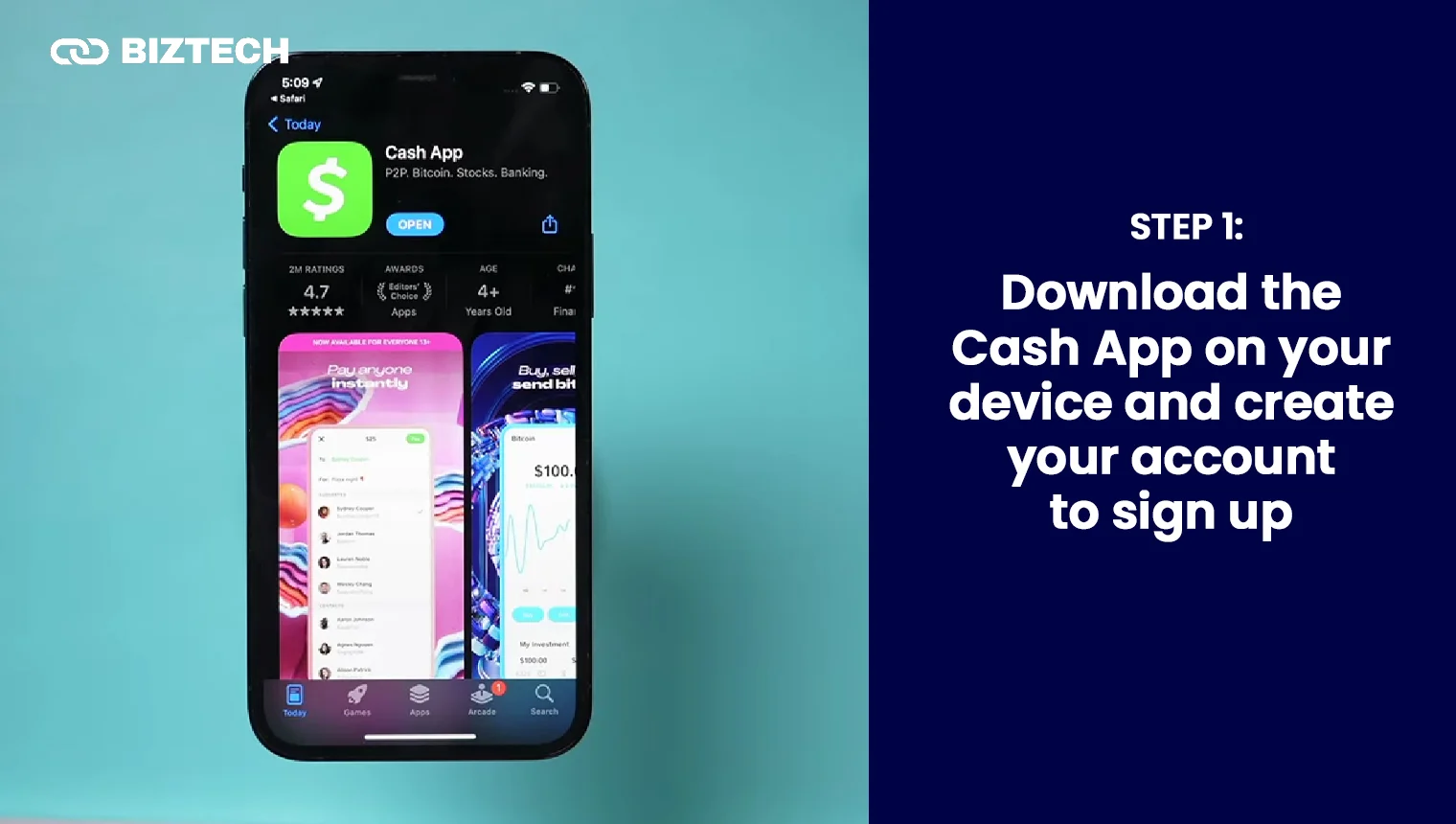
- Step 1: Download Cash App and create your account
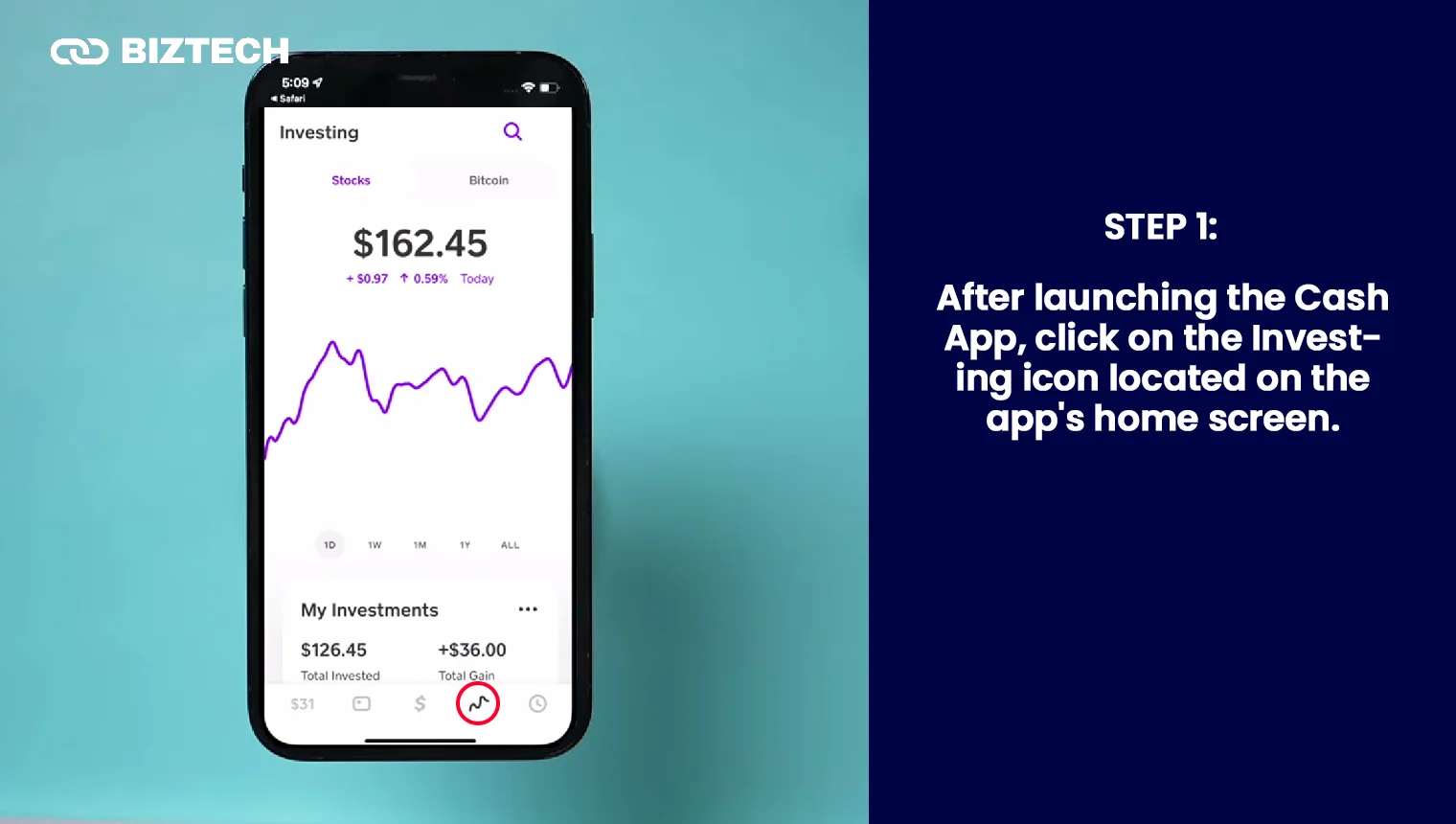
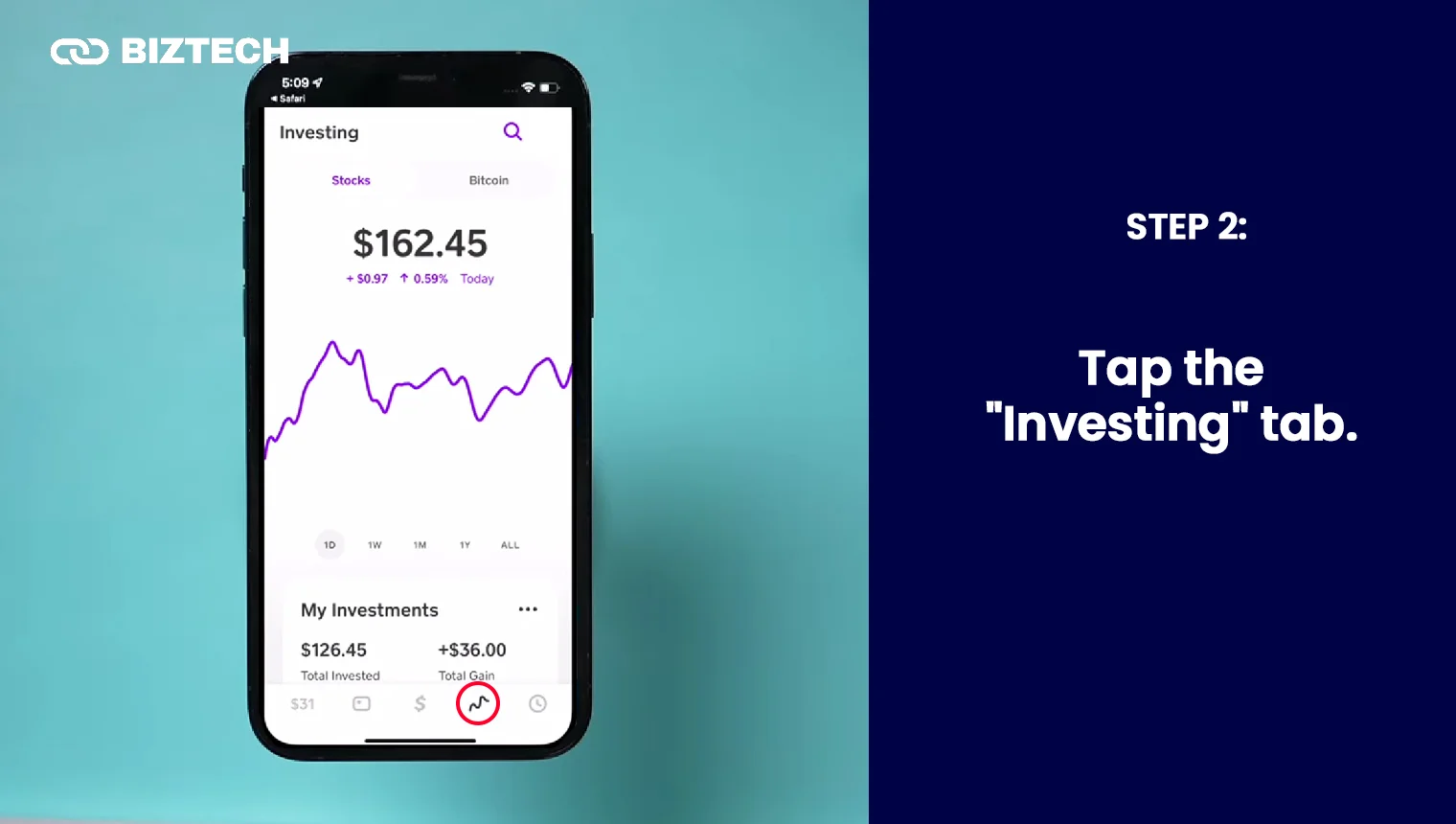
- Step 2: Tap the “Investing” tab
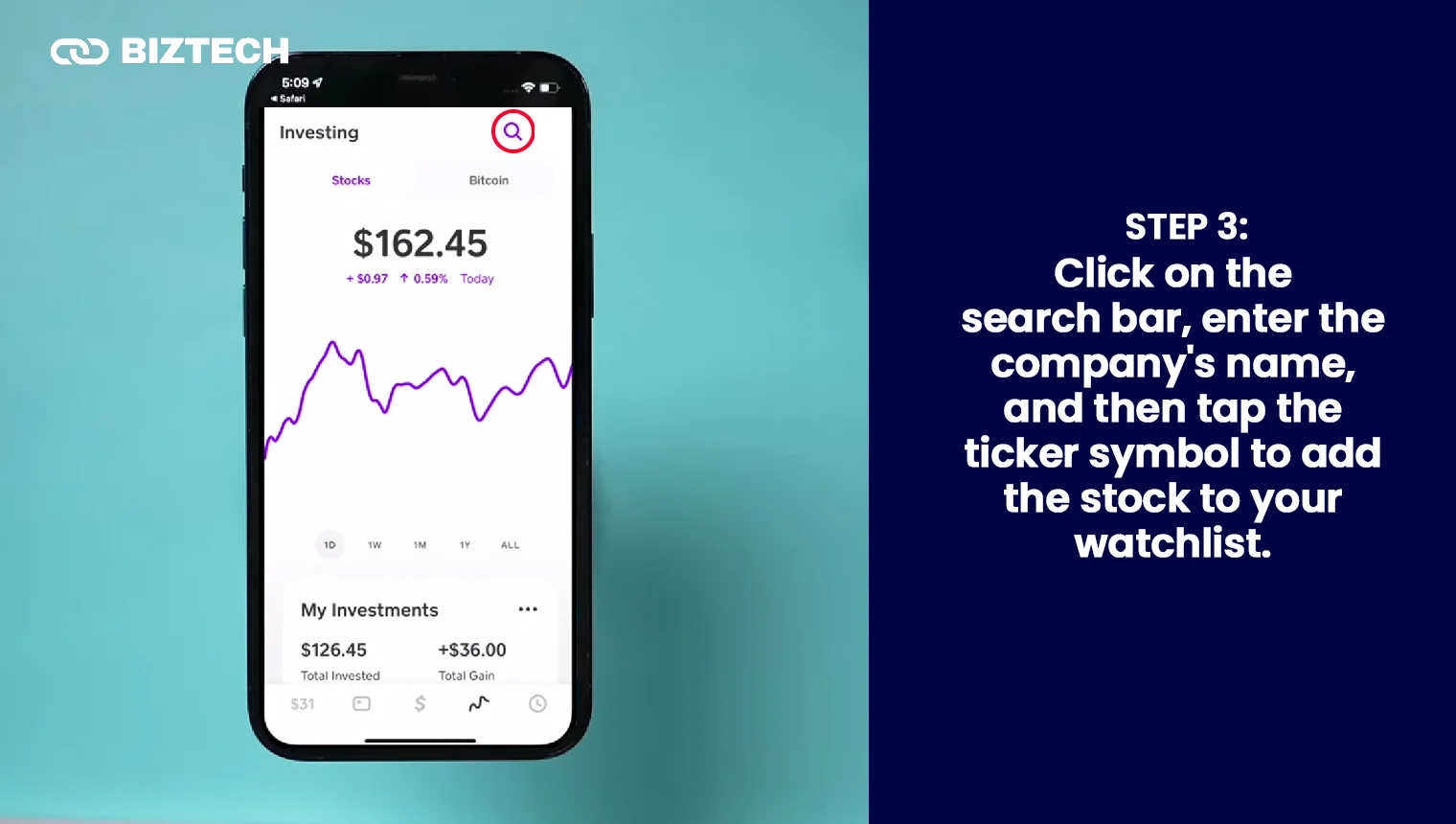
- Step 3: Search for a company and select its ticker
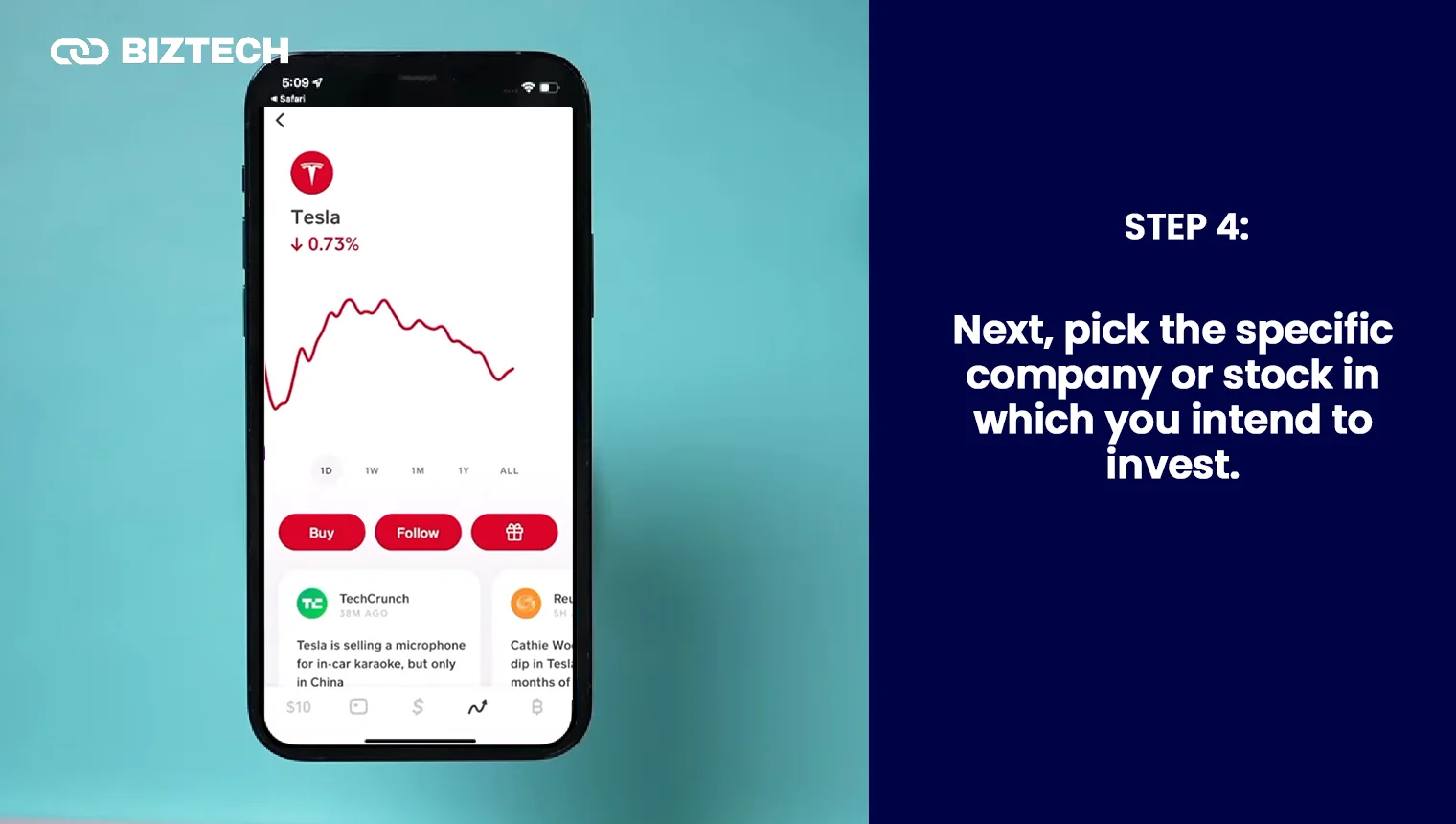
- Step 4: Choose the stock you want to invest in
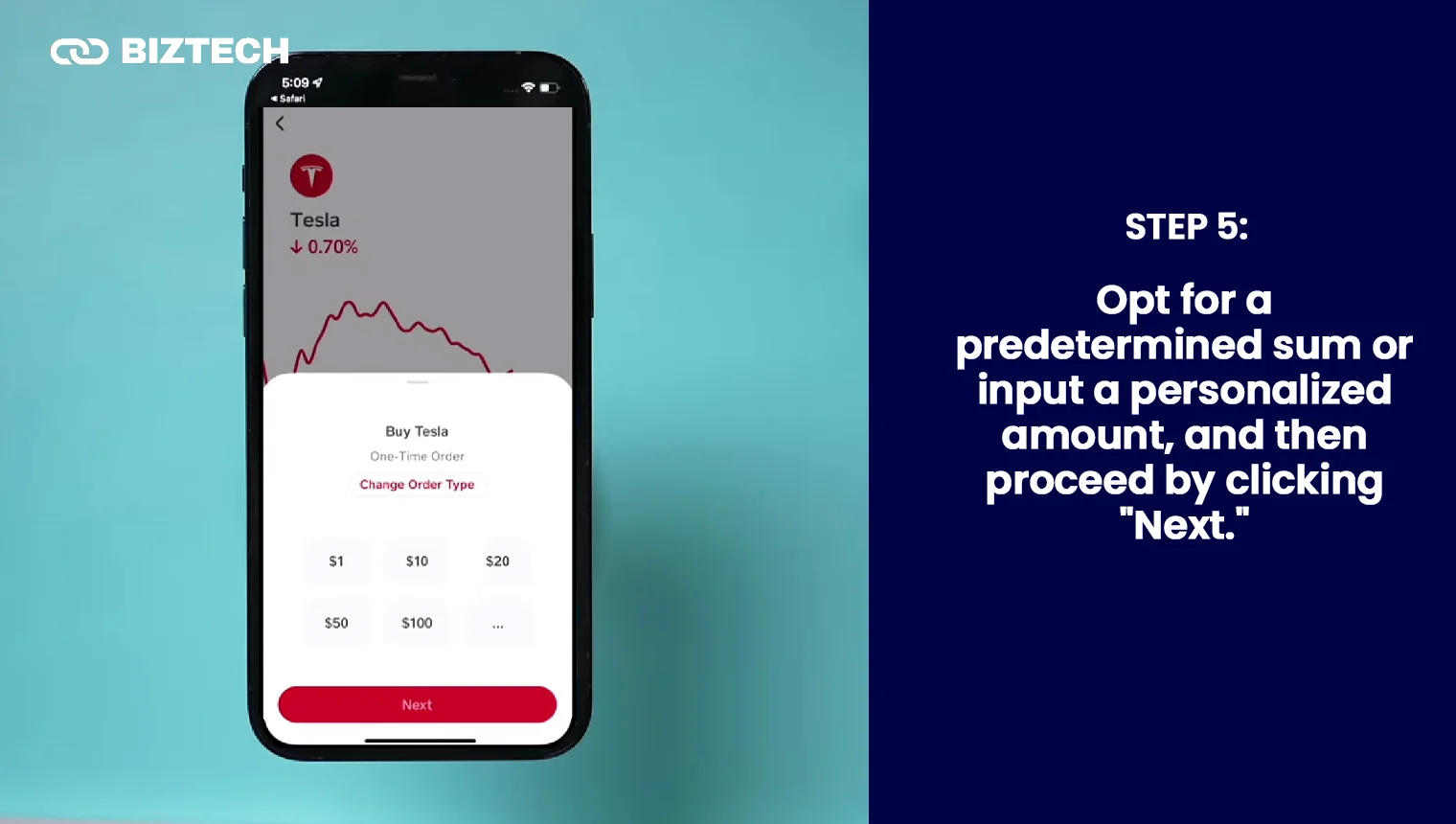
- Step 5: Enter a preset or custom amount, then tap “Next”
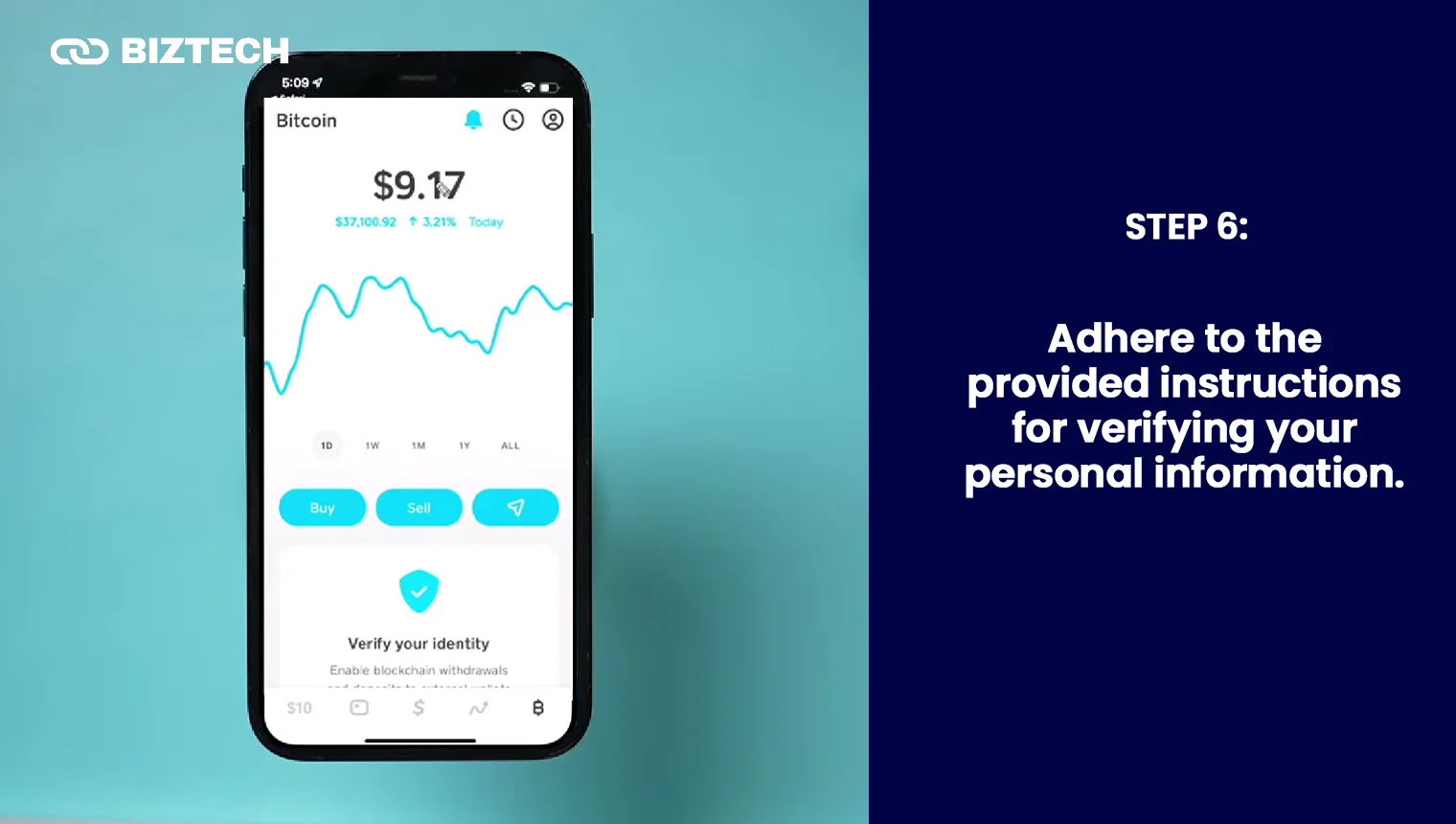
- Step 6: Verify your personal information if prompted
- Step 7: Confirm with your PIN, OTP, or Touch ID
- How to Sell Stocks on Cash App
- Step 1: Open Cash App and tap the Investing icon
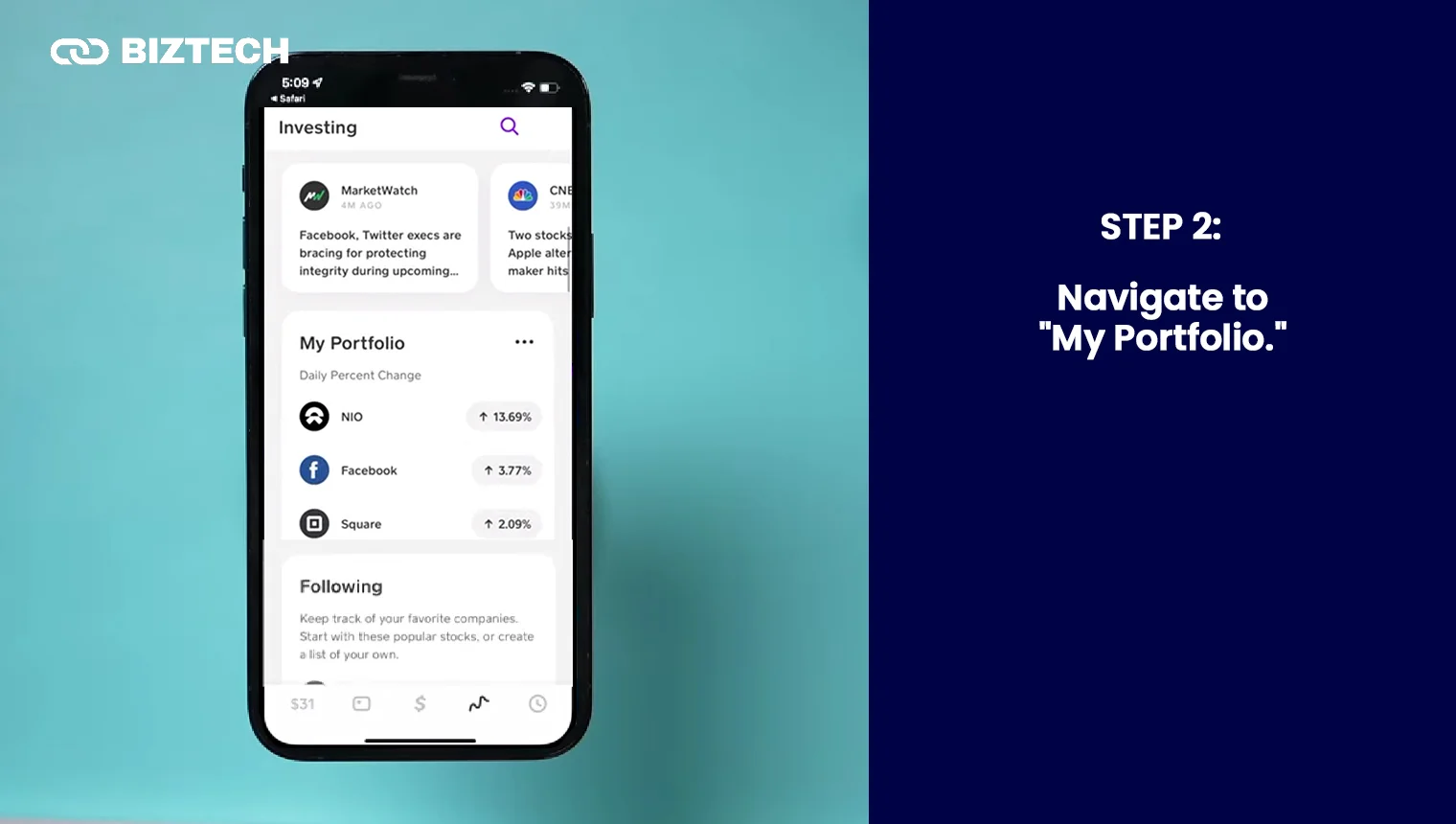
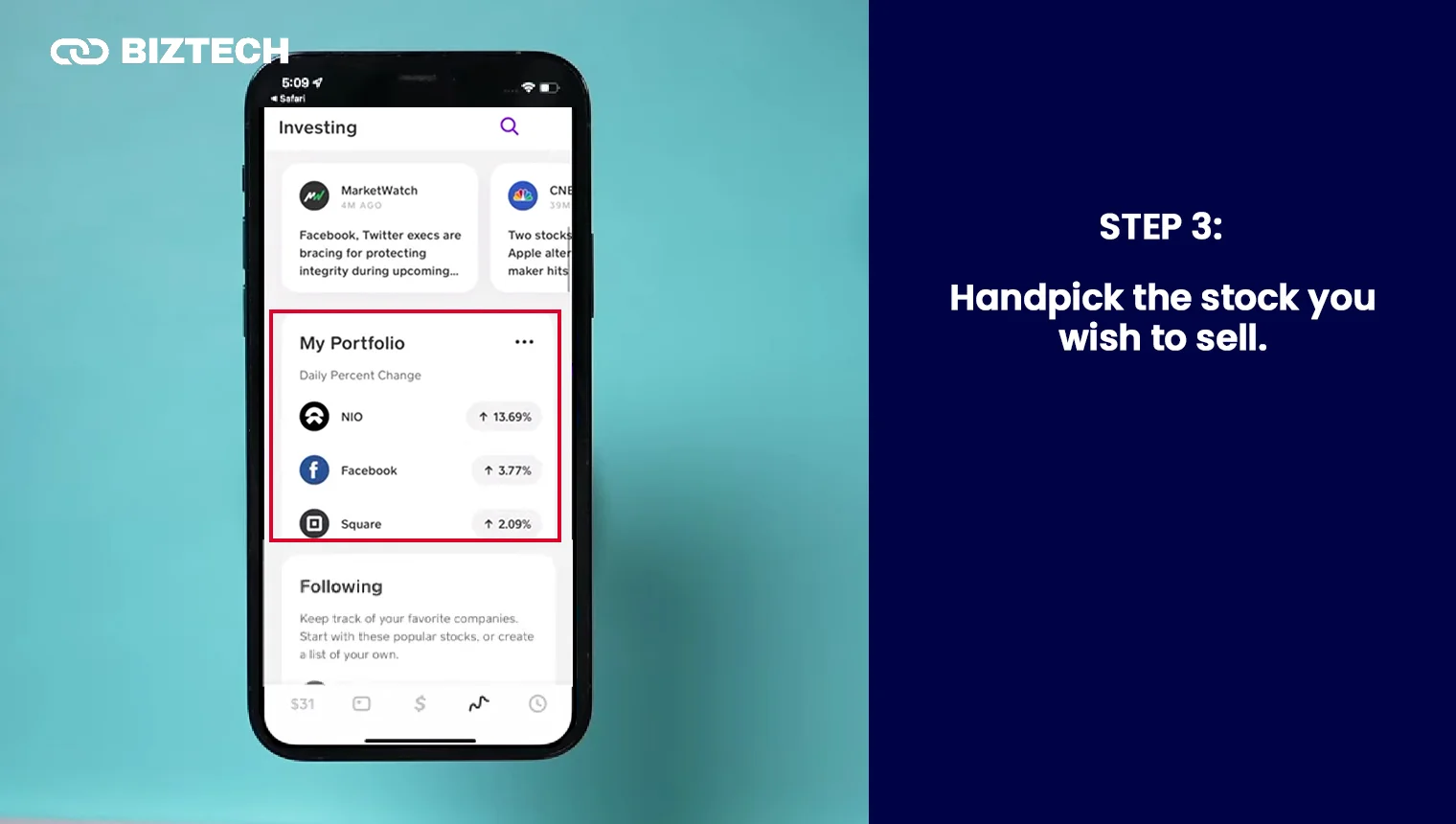
- Step 2: Go to “My Portfolio”
- Step 3: Select the stock you want to sell
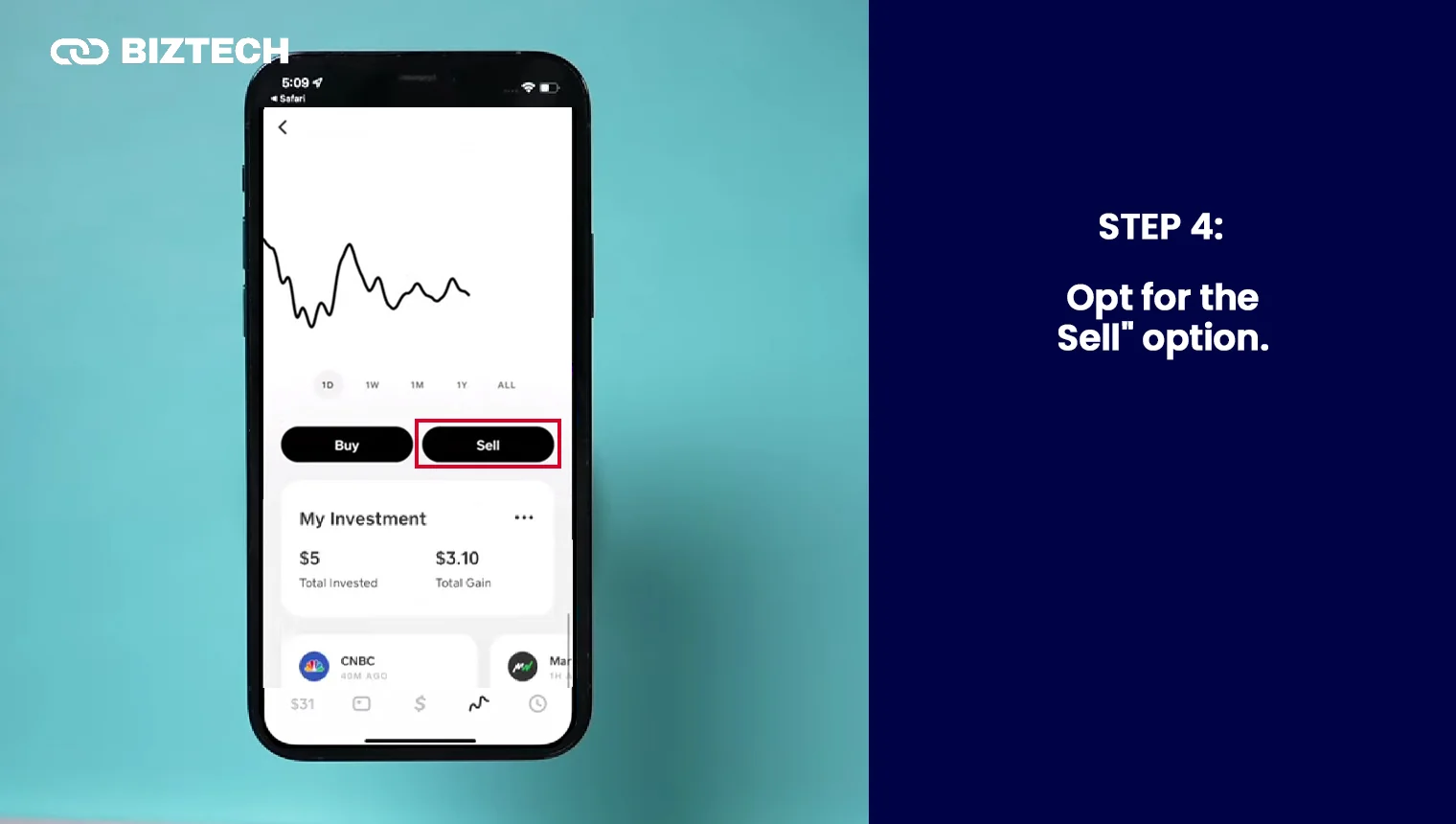
- Step 4: Tap the “Sell” option
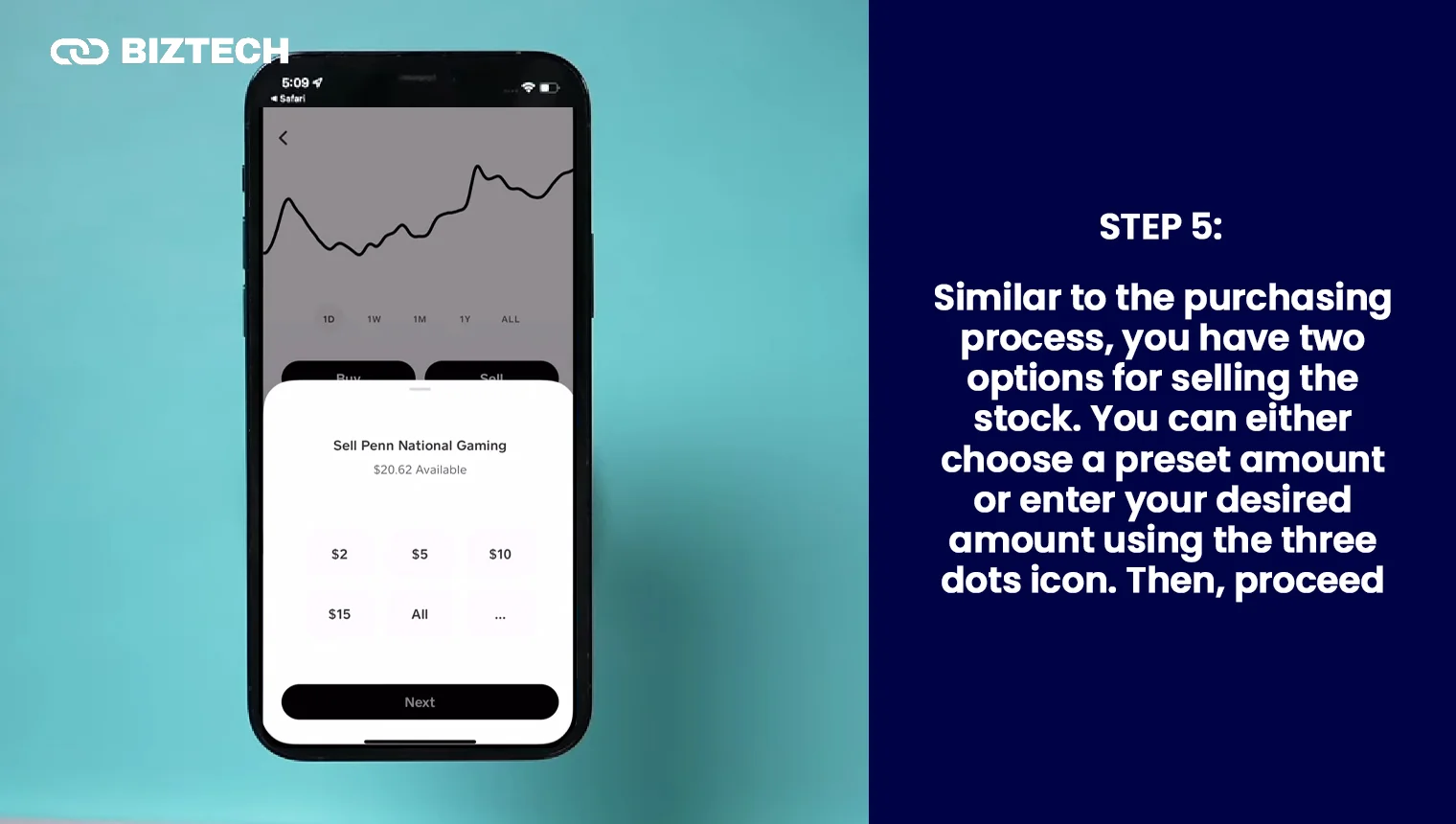
- Step 5: Choose a preset or custom amount, then tap “Next”
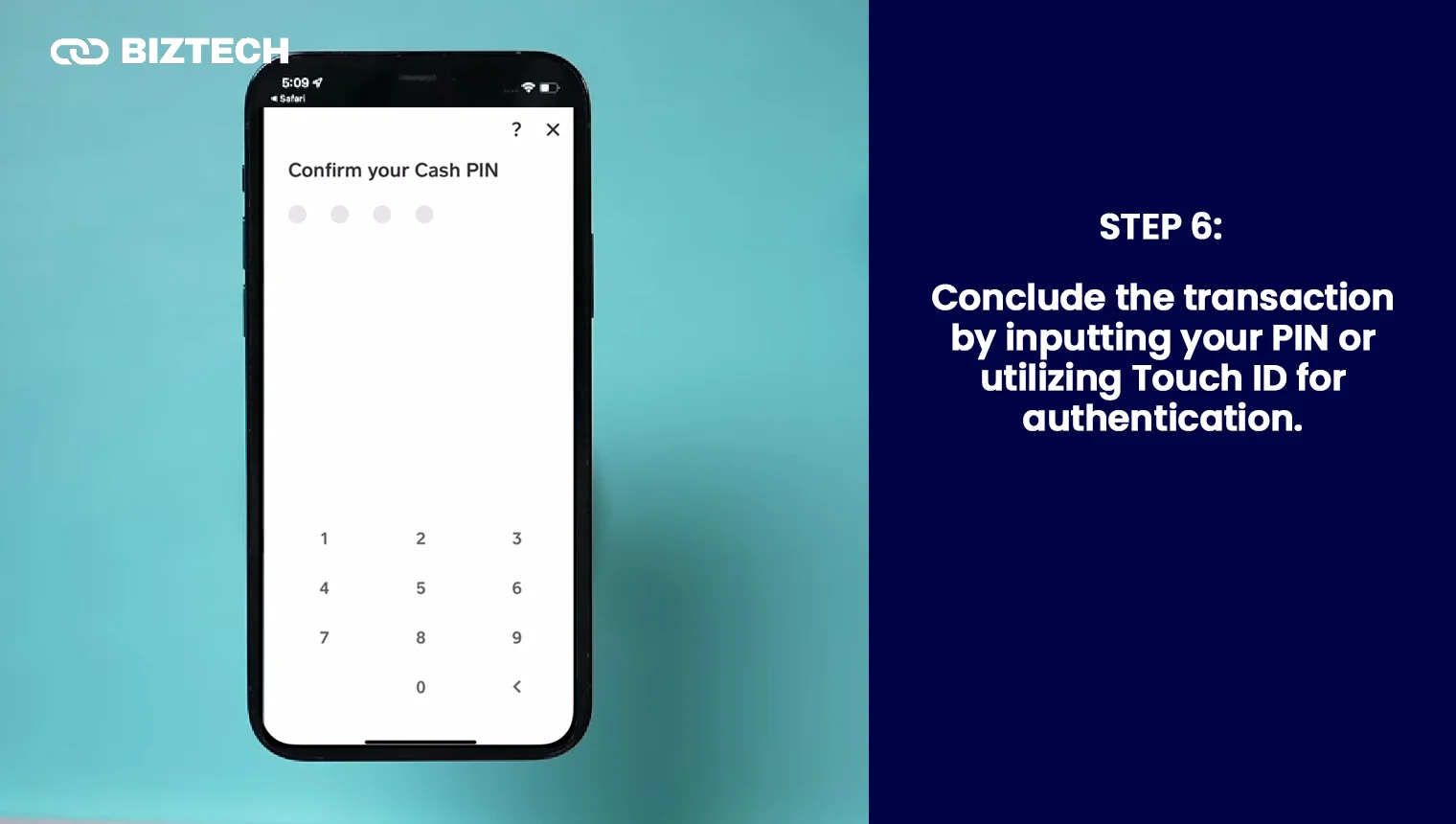
- Step 6: Confirm with your PIN or Touch ID
- Conclusion
- Frequently Asked Questions
Prices and market caps below were verified in July 2026. Markets move fast, so always confirm live quotes in Cash App or your broker before you buy.
Brief Introduction to Cash App
Cash App launched in 2013 as a peer-to-peer money-transfer service built by Square, Inc. — the company now known as Block, Inc. Over the years it grew from a simple “send money to friends” tool into a pocket-sized financial hub where you can hold cash, spend with the Cash Card, buy Bitcoin, and invest in stocks.
Stock trading arrived in 2019, and the pitch is simple: commission-free trades, fractional shares from as little as $1, and an interface friendly enough for a complete beginner. That accessibility is exactly why so many first-time investors start here rather than with a traditional brokerage.
Can You Use Cash App to Invest in Malaysia or Singapore?
Short answer: no. This is the single most important thing to know before you get excited about any stock list. Cash App Investing is only available to US residents — you need a valid US Social Security number (or ITIN), a US address, and a US phone number to open an investing account. It is not available in Malaysia, Singapore, or most of the world.
If you’re based in Malaysia or Singapore and want to buy the same US stocks featured below, you’ll need a broker that actually serves your region. Popular options include Moomoo, Webull, Interactive Brokers, Tiger Brokers, and eToro, alongside local platforms. See our guide to the best share trading platforms in Malaysia for regulated, MY-friendly choices, and note that as a foreign investor you’ll typically face a 30% US withholding tax on dividends. The good news: most of these brokers also offer fractional shares, so the “invest with small amounts” appeal of Cash App is available to you too.
The rest of this article still matters wherever you live — the stocks, the pros and cons, and the how-to-choose framework all translate. Just swap “Cash App” for a broker you can legally use.
10 Best Stocks to Invest in on Cash App (2026)

These are large, liquid, widely-held companies you can buy on Cash App (or any major broker). They are a starting watchlist for research — not personalised recommendations. Here’s a snapshot as of mid-July 2026:
| Stock | Ticker | Price (USD)* | Sector | Market Cap (USD)* |
| Nvidia Corp. | NVDA | ~$205 | Semiconductors / AI | ~$5.1 trillion |
| Apple Inc. | AAPL | ~$315 | Consumer Electronics | ~$4.66 trillion |
| Alphabet Inc. | GOOGL | ~$360 | Digital Advertising / AI | ~$4.33 trillion |
| Microsoft Corp. | MSFT | ~$391 | Cloud & Enterprise Tech | ~$2.9 trillion |
| Amazon.com Inc. | AMZN | ~$246 | E-commerce & Cloud | ~$2.6 trillion |
| Meta Platforms | META | ~$668 | Social Media & AI | ~$1.7 trillion |
| Shopify Inc. | SHOP | ~$120 | E-commerce Platforms | ~$161 billion |
| Adobe Inc. | ADBE | ~$230 | Creative Software & AI | ~$92 billion |
| Block, Inc. | XYZ | ~$79 | Financial Technology | ~$47 billion |
| Fiserv, Inc. | FISV | ~$48 | Payments & FinTech | ~$27 billion |
*Approximate figures as of mid-July 2026, rounded. Share prices change every second the market is open.
1. Nvidia Corp. (NVDA)
Approx. price: ~$205 | Sector: Semiconductors / AI | Market cap: ~$5.1 trillion
Nvidia is the poster child of the AI boom and, in 2026, the world’s most valuable company — the first to cross a $5 trillion market cap. Its data-centre GPUs (Blackwell, and the newer Rubin generation) power the vast majority of AI model training, giving it enormous pricing power. The flip side: expectations are sky-high, so any slowdown in AI spending could hit the shares hard. It’s a high-conviction, high-volatility name. For more on the sector, see our best semiconductor stocks guide.
2. Apple Inc. (AAPL)
Approx. price: ~$315 | Sector: Consumer Electronics | Market cap: ~$4.66 trillion
Apple remains one of the most-owned stocks on the planet and the world’s second-most-valuable company. The investment case has shifted from iPhone units toward its high-margin Services business (App Store, iCloud, Apple One) and its gradual rollout of on-device AI. Growth is steadier than Nvidia’s, which is part of the appeal for long-term holders.
3. Alphabet Inc. (GOOGL)
Approx. price: ~$360 | Sector: Digital Advertising / AI | Market cap: ~$4.33 trillion
Google’s parent is the world’s third-most-valuable company after a strong AI-driven re-rating, touching an all-time high above $400 in May 2026. Search and YouTube still generate the cash, while Google Cloud, the Gemini AI models, and Waymo’s self-driving business give it multiple long-term growth engines. Regulatory scrutiny is the main overhang to watch.
4. Microsoft Corp. (MSFT)
Approx. price: ~$391 | Sector: Cloud & Enterprise Tech | Market cap: ~$2.9 trillion
Microsoft blends predictable enterprise software (Windows, Office/Microsoft 365) with the fast-growing Azure cloud and its Copilot AI, backed by its OpenAI partnership. Notably, the stock has pulled back around 20% from its 52-week high near $555, so 2026 buyers are paying less than a year ago — a reminder that even blue-chips have down years.
5. Amazon.com Inc. (AMZN)
Approx. price: ~$246 | Sector: E-commerce & Cloud | Market cap: ~$2.6 trillion
Amazon pairs the world’s largest e-commerce operation with AWS, still the biggest cloud platform and a major AI-infrastructure builder, plus a fast-growing advertising arm. The 52-week range (roughly $196–$279) shows how much it can swing, but analysts remain broadly bullish on its long-term earnings power.
6. Meta Platforms (META)
Approx. price: ~$668 | Sector: Social Media & AI | Market cap: ~$1.7 trillion
Meta’s Instagram, Facebook, and WhatsApp advertising machine funds heavy bets on AI (its Llama models and AI assistants) and on Reality Labs. The stock has cooled in 2026 — down roughly 13% year-to-date — as investors weigh that enormous AI capital spending against near-term profits. A classic “growth vs. spending discipline” debate.
7. Shopify Inc. (SHOP)
Approx. price: ~$120 | Sector: E-commerce Platforms | Market cap: ~$161 billion
Shopify is the go-to platform for small and mid-sized businesses selling online, and it has grown into a genuinely profitable, cash-generative company after years of investment. It’s a higher-volatility growth stock that tends to move sharply on merchant-spending trends and gross-merchandise-volume growth — rewarding in bull markets, punishing in downturns.
8. Adobe Inc. (ADBE)
Approx. price: ~$230 | Sector: Creative Software & AI | Market cap: ~$92 billion
Here’s where honesty matters: Adobe is down roughly 60% from its all-time high, with a 52-week range around $190–$376. The market fears that generative-AI tools could erode its Creative Cloud moat, even though Adobe keeps growing revenue and has launched its own Firefly AI. Bulls see a high-quality, deeply profitable business on sale; bears see a value trap. It’s a contrarian pick, not a sure thing — do your homework.
9. Block, Inc. (XYZ)
Approx. price: ~$79 | Sector: Financial Technology | Market cap: ~$47 billion
Note the ticker: Block changed its symbol from SQ to XYZ in 2025, so if you search the old code you won’t find it. This is the company that actually owns Cash App, along with the Square merchant business, Afterpay, and a big Bitcoin operation — so buying XYZ is effectively investing in the platform you may be trading on. It has traded between roughly $48 and $83 over the past year; profitable but more cyclical than the mega-caps above.
10. Fiserv, Inc. (FISV)
Approx. price: ~$48 | Sector: Payments & FinTech | Market cap: ~$27 billion
Another honesty check: Fiserv has had a rough stretch. After cutting guidance and flagging a slowdown at its Clover point-of-sale unit, the stock fell dramatically from its 2025 highs, and the company moved its listing back to the Nasdaq under its original “FISV” ticker in November 2025 (it briefly traded as “FI” on the NYSE from 2023). It’s a large payments processor with real cash flows, but right now it’s a higher-risk turnaround story, not a steady compounder — include it only if you understand why it fell.
How to Choose Cash App Stocks: A Simple Framework
A list of popular tickers is a starting point, not a strategy. Before you tap “Buy,” run each idea through these five questions:
- Does it match your goal and time horizon? Money you’ll need within a year or two shouldn’t sit in a volatile single stock. Buy-and-hold thinking (5+ years) suits the mega-caps far better than short-term trading. Our best long-term stocks guide expands on this.
- Do you understand what you actually own? Know how the company makes money and what could break it — not just that “everyone’s buying it.” If you can’t explain the business in a sentence, keep researching. Start with how stocks work.
- Is the valuation and theme concentration sensible? Six of the ten names above ride the AI wave. Loading up on one theme means one bad AI headline hits your whole portfolio.
- Are you managing your entry? Use fractional shares and dollar-cost averaging (investing a fixed amount regularly) instead of dumping a lump sum at a single price.
- Are you diversified? Even a “best stocks” list isn’t a portfolio. Spread across sectors, and consider low-cost index ETFs as a core holding around individual picks.
New to all this? Our beginner-friendly walkthrough on how to invest in stocks covers the fundamentals step by step.
Common Pitfalls to Avoid
- Chasing hype at the highs. Buying a stock purely because it’s already up 200% is how beginners get hurt. Popularity is not the same as value.
- Ignoring account limits. Cash App only offers taxable individual accounts — no IRAs or tax-sheltered accounts — so gains and dividends are taxable. It also has no options, mutual funds, or bonds.
- Assuming “big name = safe.” Fiserv and Adobe above both fell 60%+ from their peaks. Blue-chip does not mean bulletproof.
- Over-trading a frictionless app. One-tap, fractional buying makes impulse trading easy. Set rules and stick to them.
- Not diversifying. Putting your whole balance into one or two AI names concentrates your risk enormously.
- Forgetting you may not be eligible. If you’re outside the US, don’t build a plan around Cash App you can’t legally open — use a regional broker instead.
Cash App Investing Features

For eligible US users, Cash App keeps investing deliberately simple. Standout features include:
- Fractional shares from $1 — buy a slice of pricey stocks (even a $1 slice of a $700,000-plus Berkshire Hathaway Class A share) without needing a full share.
- Commission-free stock and ETF trades, with a clean, beginner-friendly interface.
- Recurring (automatic) investments so you can dollar-cost average on a schedule.
- Bitcoin buying and selling in the same app, including transfers to and from external wallets (fees apply on Bitcoin).
- Round-ups that invest your spare change from Cash Card purchases.
Cash App Investing LLC is a member of FINRA/SIPC and a subsidiary of Block, Inc.
Is It Good to Buy Stocks Through Cash App?
For US-based beginners, Cash App is a convenient way to get started — but like any platform it has clear trade-offs.
✅ Pros
- Fractional shares and no account minimums — start with just $1.
- Commission-free stock and ETF trades.
- Simple, uncluttered design that’s genuinely easy for first-timers.
- Investing, banking, spending, and Bitcoin all live in one app.
- Automatic recurring investments and spare-change round-ups.
❌ Cons
- US residents only — not available in Malaysia, Singapore, or most other countries.
- Limited product range: no options, futures, margin, mutual funds, or individual bonds.
- Only taxable individual accounts — no IRAs or other tax-advantaged accounts.
- Basic research tools and charts compared with dedicated brokerages.
- Among cryptocurrencies, only Bitcoin is supported.
- A $75 fee applies to outbound stock transfers if you move holdings to another broker.
Cash App Fees and Expenses
Cash App charges no commission to buy or sell stocks and ETFs. There are, however, a few costs worth knowing:
- Regulatory Trading Activity Fee (TAF): a small mandatory fee of about $0.000195 per share sold, rounded up to the nearest cent and capped (it won’t exceed roughly $9.79 per sale). This is an industry-wide regulatory charge, not a Cash App markup.
- Outbound stock transfer fee: around $75 if you transfer your shares out to another brokerage.
- Bitcoin fees: Bitcoin transactions carry a service fee plus a spread that varies with market volatility.
- ETF expense ratios: paid to the fund provider, not Cash App — the same wherever you buy the ETF.
Compared with many brokers, Cash App keeps everyday costs low; the main “gotchas” are the Bitcoin spread and the transfer-out fee. You can confirm the latest figures on the official Cash App investing fees page.
How to Trade Stocks on Cash App
Getting started takes only a few minutes. Here’s the flow:
Step 1: Download Cash App and create your account
Step 2: Tap the “Investing” tab
Step 3: Search for a company and select its ticker
Step 4: Choose the stock you want to invest in
Step 5: Enter a preset or custom amount, then tap “Next”
Step 6: Verify your personal information if prompted
Step 7: Confirm with your PIN, OTP, or Touch ID

How to Sell Stocks on Cash App
Selling is just as straightforward as buying:
Step 1: Open Cash App and tap the Investing icon
Step 2: Go to “My Portfolio”
Step 3: Select the stock you want to sell
Step 4: Tap the “Sell” option
Step 5: Choose a preset or custom amount, then tap “Next”
Just like buying, you can sell a preset amount or enter a custom figure using the options menu, then confirm.
Step 6: Confirm with your PIN or Touch ID
Once your sale settles, it can take up to two business days for the proceeds to land in your Cash App balance.
Conclusion
So, which are the best Cash App stocks to buy? The honest answer is that it depends on your goals, your time horizon, and your risk tolerance — no list can decide that for you. The ten names above are large, liquid companies worth researching, but they range from steady compounders to high-flying AI plays and genuine turnaround gambles (looking at you, Fiserv and Adobe).
Use the framework and pitfalls sections above, diversify rather than betting everything on one theme, and remember that fractional shares plus regular investing beat trying to time the perfect entry. And if you’re reading this from Malaysia or Singapore, skip Cash App entirely and open a broker that actually serves your region.
Read also: Top AI Stocks to Buy Right Now and our roundup of the best trading platforms in Malaysia. For general investor education, the US SEC’s Investor.gov is a reliable, free resource.
Disclaimer: This article is provided by KayaToday for general information and educational purposes only. It is not financial advice and does not account for your personal circumstances. KayaToday is not a licensed financial adviser. Investing carries risk, including the loss of capital. Prices were verified in July 2026 and will have changed — always confirm current figures and consult a licensed professional before making any investment decision.