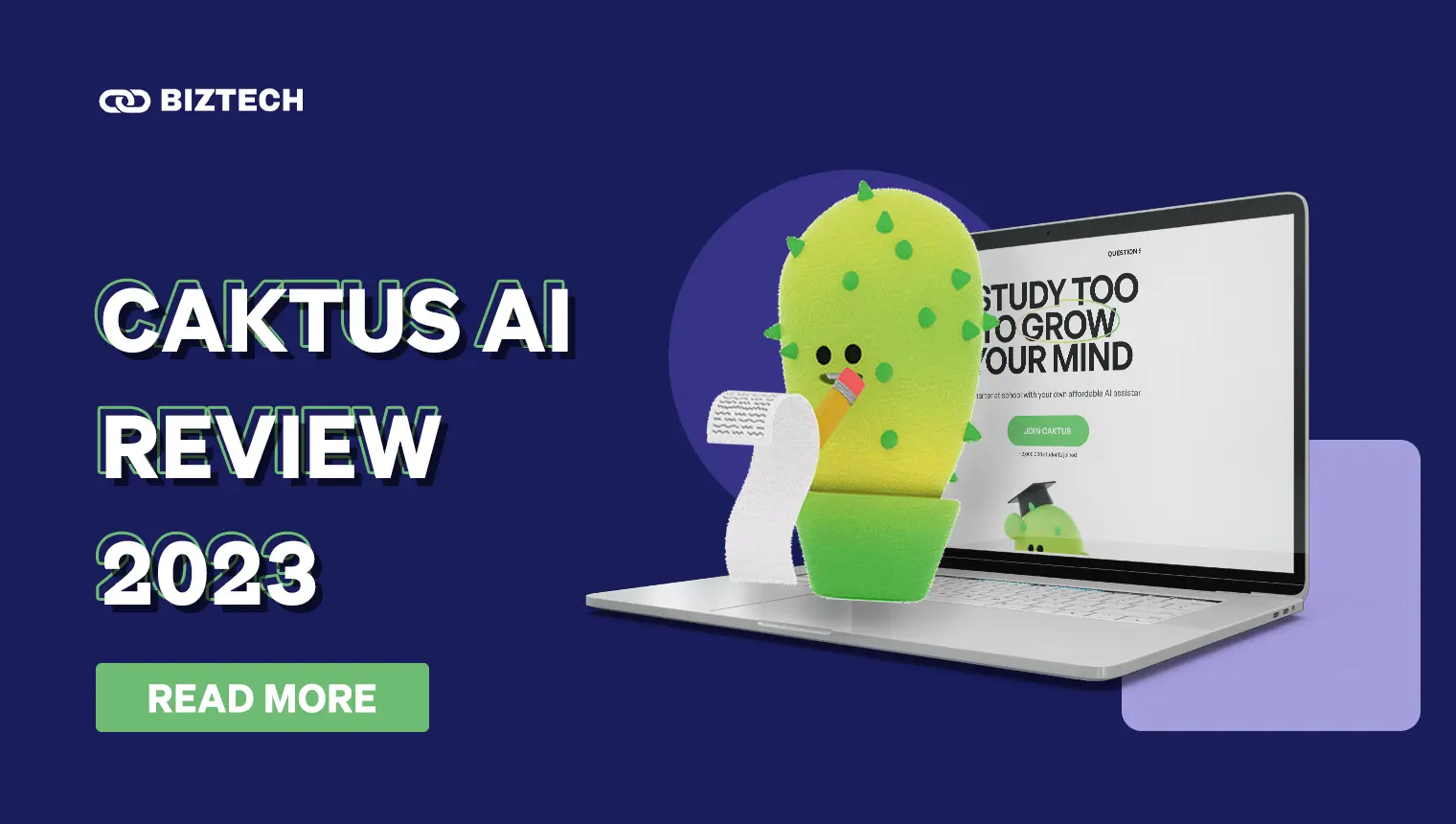
Caktus AI arrived in 2022 as a student-first writing helper, and when we first reviewed it back then it had a handful of tools and a straightforward “write my essay” pitch. Three years on, it looks like a different product: more than 25 academic tools, a limited free tier, real citation sourcing, an AI humanizer and detector, and — most notably — a hard pivot toward academic integrity rather than “beating the plagiarism checker.” This is our fully refreshed, honest 2026 Caktus AI review: what it actually does now, what it costs, where it helps, where it can get you into trouble, and the best alternatives — with a dedicated section for students in Malaysia and Singapore.
- What is Caktus AI in 2026?
- What changed since our first review
- A quick guide to getting started with Caktus AI
- Step 1: Create an account
- Step 2: Add your details
- Step 3: Start free, then pick a plan
- Step 4: Explore the dashboard
- Caktus AI features: a 2026 overview
- Essay writer + research and citation finder
- Step-by-step math and science solver
- Code writer
- Study tools: flashcards, summaries and notes
- Humanizer, AI detector and translator
- The full toolset at a glance
- Caktus AI pricing in 2026
- Caktus AI vs ChatGPT: which should a student use?
- How to decide if Caktus AI is right for you
- Common pitfalls to avoid
- Best Caktus AI alternatives in 2026
- Caktus AI for Malaysia and Singapore students
- Verdict: is Caktus AI worth it in 2026?
- Frequently Asked Questions
Verified July 2026. AI pricing and features change often (and Caktus no longer publishes a fixed price publicly) — always confirm the current plan and price on the provider’s site after signing up.
What is Caktus AI in 2026?
Caktus AI is an all-in-one, education-focused generative AI platform built specifically for students. It was founded in 2022 by Tao Zhang and Harrison Leonard, and the company now says it is used by more than 3 million students worldwide. Where a general chatbot answers anything, Caktus is purpose-built for coursework: it bundles an essay writer with real citations, a step-by-step math and science solver, a research and citation finder, study tools like flashcards and summaries, and writing utilities such as a paragraph generator, humanizer and email drafter — all under one subscription.
Caktus says its tools run on a purpose-built academic model (reported as its in-house “EGUANA” LLM, trained on hundreds of millions of research papers) rather than a general-purpose chatbot. That claim comes from the company and its partners, so treat the “academic-grade” positioning as marketing until you’ve tested the output on your own subject — but in practice the citation-finding and math-solver tools are more coursework-oriented than a vanilla chatbot. If you want a primer on how these tools differ under the hood, see our explainer on generative AI vs predictive AI.
What changed since our first review
If you read our original 2023 write-up, here’s what’s genuinely different in 2026 — and why we rewrote it from scratch:
| Then (2023) | Now (2026) |
|---|---|
| ~4 core tools (essay, code, language, learning support) | 25+ tools across writing, math, science, research and study |
| Paid-only, no free option | Limited free tier — try several tools before you pay |
| Marketed the ability to “get past” plagiarism detection | Rebuilt around academic integrity, real citations and “learning, not shortcuts” |
| Basic essay + code output | Real citation styles (APA, MLA, Chicago, Harvard), AI humanizer, AI detector, science assistants, presentation maker, notetaker and more |
| Immersive “language learning” module front-and-centre | Focus shifted to essays, STEM and research; a translator covers languages |
The integrity shift is the big one. The current Caktus explicitly frames itself as a study aid that “amplifies learning, not shortcuts,” with citation reminders and fact-verification prompts. That’s a healthier position — but as we explain below, it does not make AI-written work automatically safe to submit.
A quick guide to getting started with Caktus AI
Signing up is still quick, and you can now start on the free tier before committing to a paid plan.
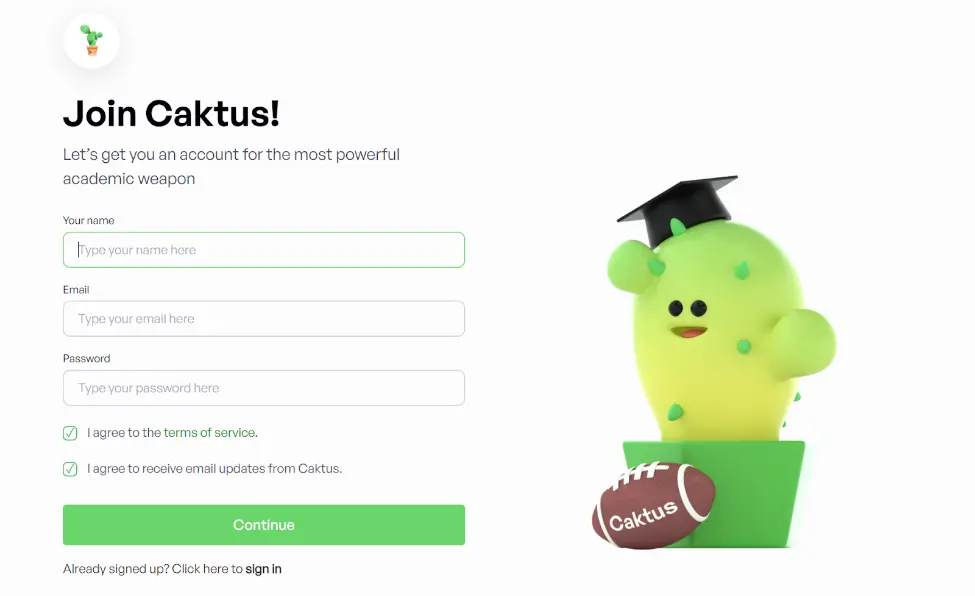
Step 1: Create an account
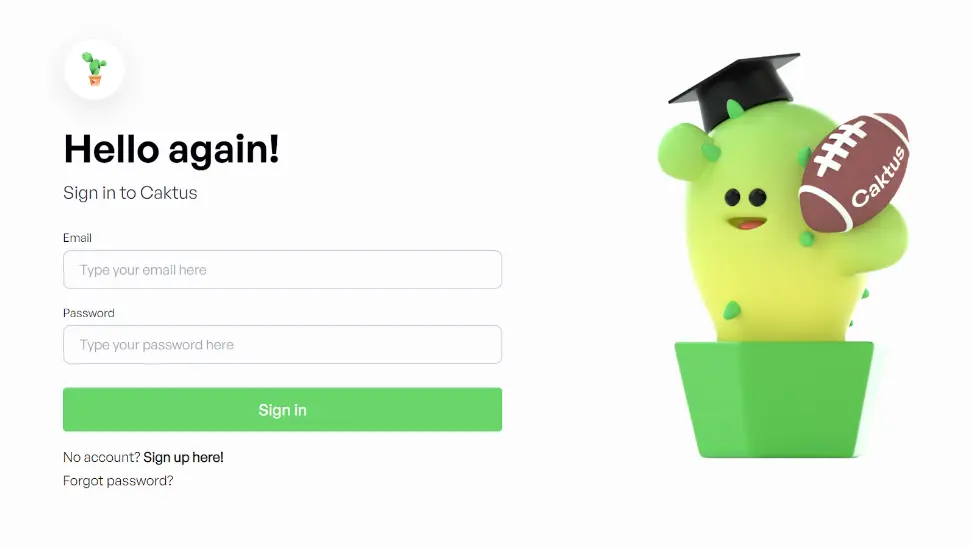
Go to caktus.ai and choose “Sign up.” You can register with an email address or a Google account.
Step 2: Add your details
The form is minimal — name, email and a password. Verify your email if prompted.
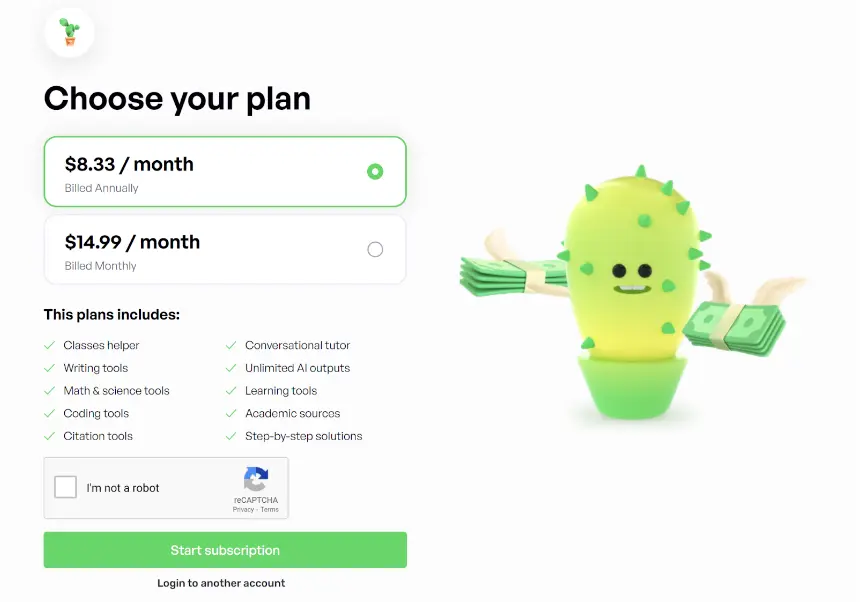
Step 3: Start free, then pick a plan
You’ll land in the dashboard with limited free access to several tools. When you hit the free limits or need premium features (real citations, longer outputs, document uploads), you’ll be prompted to subscribe. Note that plans and prices are only shown after sign-up and can vary by region and promotion — check the live price before you pay.
Step 4: Explore the dashboard
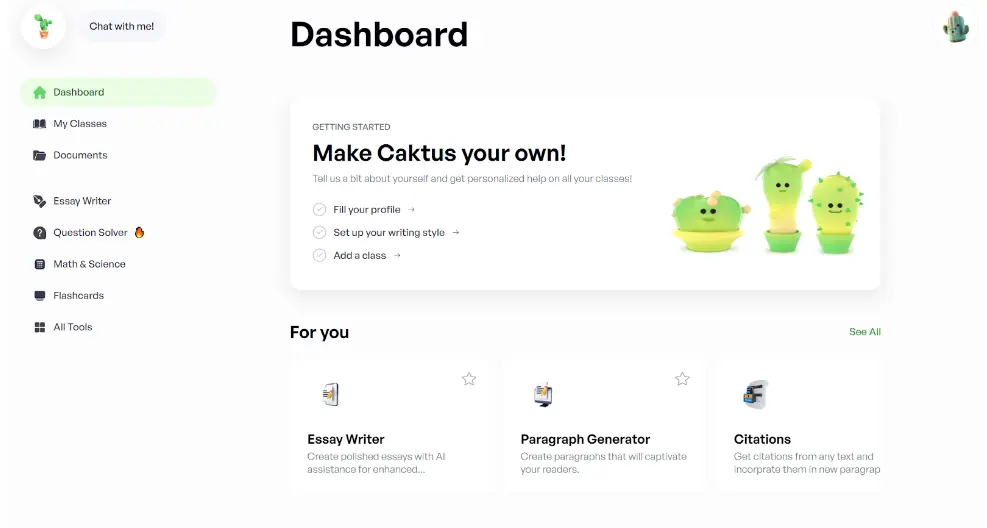
The dashboard groups tools by purpose — writing, math and science, research, and study aids. It’s clean and easy to navigate, and a dark mode is available for late-night sessions.
Caktus AI features: a 2026 overview
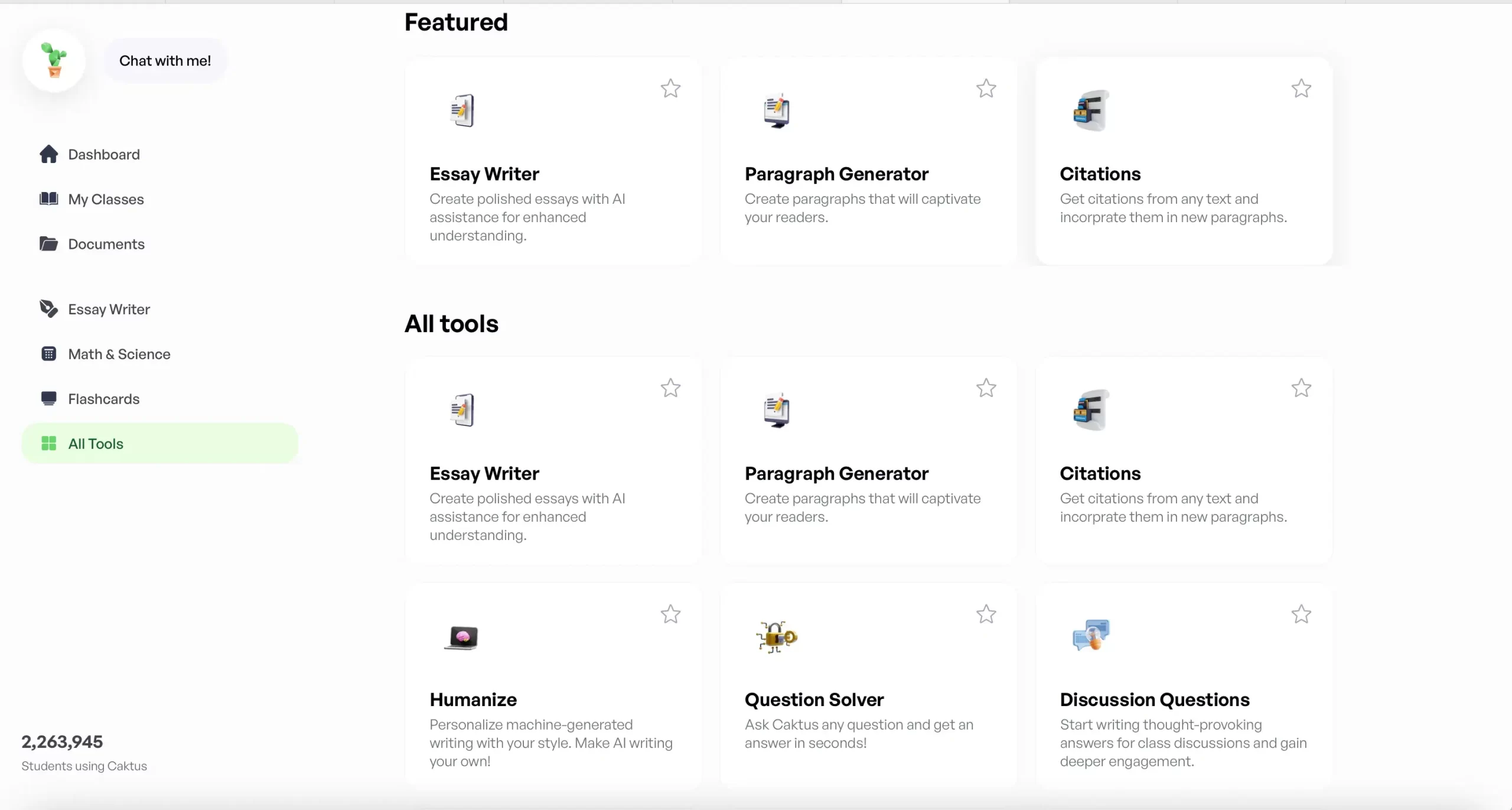
The toolset is much broader than it was. Here are the features that matter most for real coursework.
Essay writer + research and citation finder
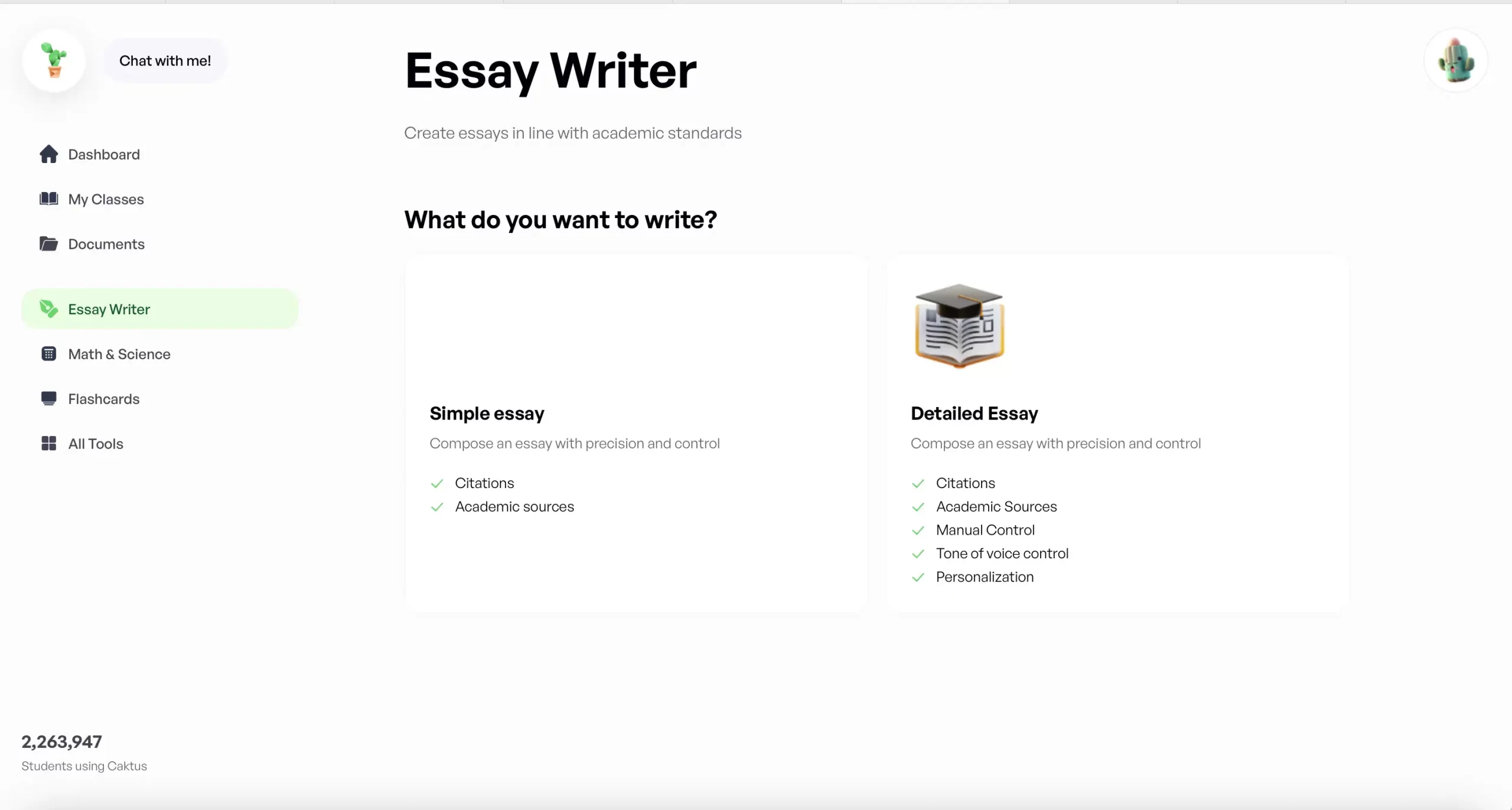
The Essay Writer lets you pick essay type, length, grade level and citation style (APA, MLA, Chicago or Harvard). The bigger upgrade is the Research and Citation Finder, which searches scholarly databases and inserts formatted in-text citations. This is genuinely useful — but you must open every source and confirm it exists and says what the tool claims. AI citation tools across the industry still occasionally surface mismatched or “hallucinated” references, so verification is non-negotiable for graded work. If you want to compare general writing engines, see our roundup of the best AI text generators.
Step-by-step math and science solver
The Math Solver shows working for algebra, calculus and statistics rather than just spitting out an answer, and dedicated physics, chemistry and biology assistants handle STEM tasks (balancing reactions, kinematics, genetics and so on). Showing the steps is what makes this defensible as a study tool — use it to check your own working, not to replace it.
Code writer
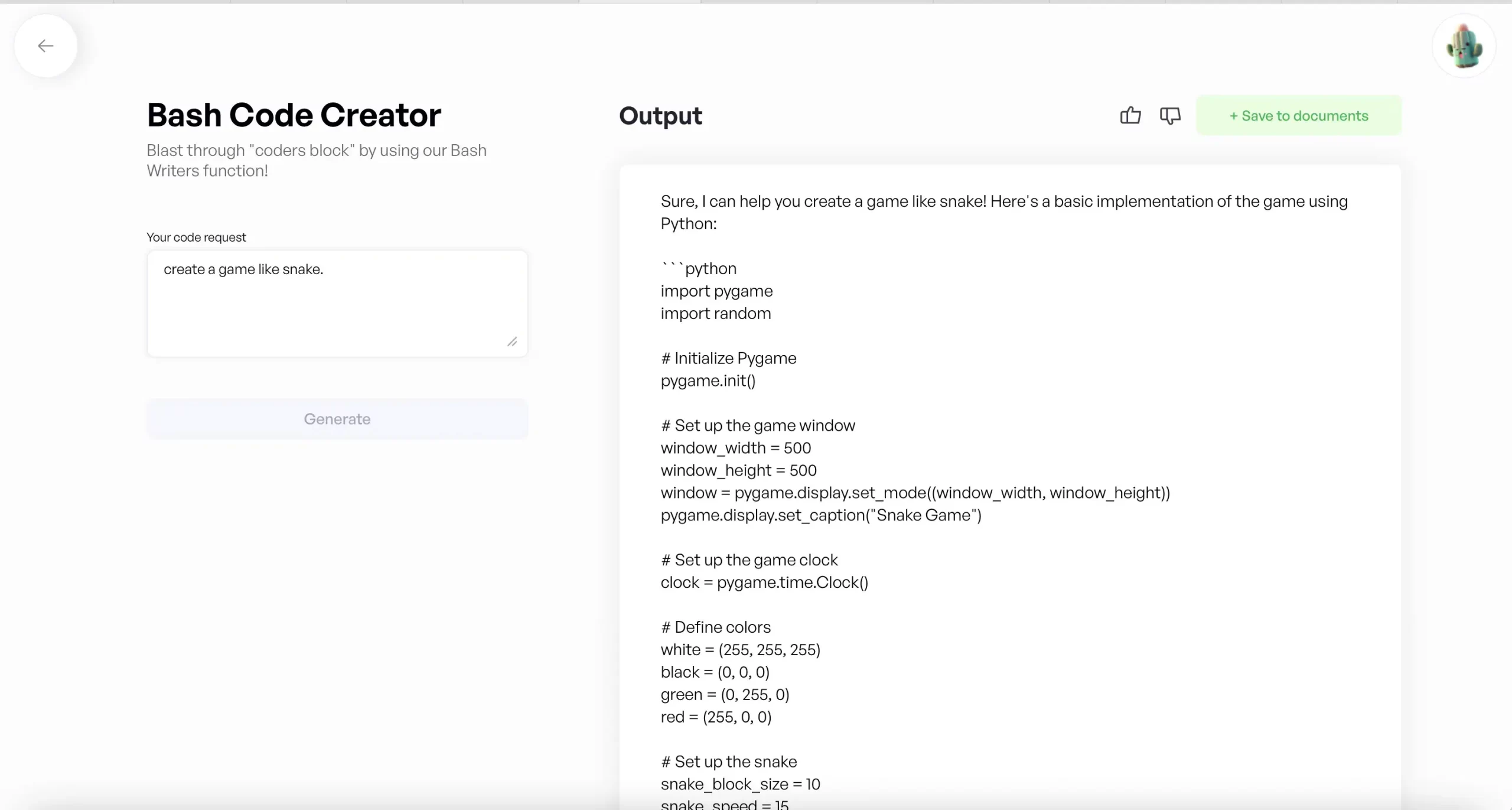
Describe what you need and the Code Writer generates snippets across common languages (Python, JavaScript, Java, C#, Ruby, Go, Rust, SQL and TypeScript). For learners it works well as a guided assistant that helps you spot mistakes. That said, dedicated developer tools have raced ahead — if coding is your main use case, compare it against the purpose-built options in our guide to the best AI coding tools.
Study tools: flashcards, summaries and notes
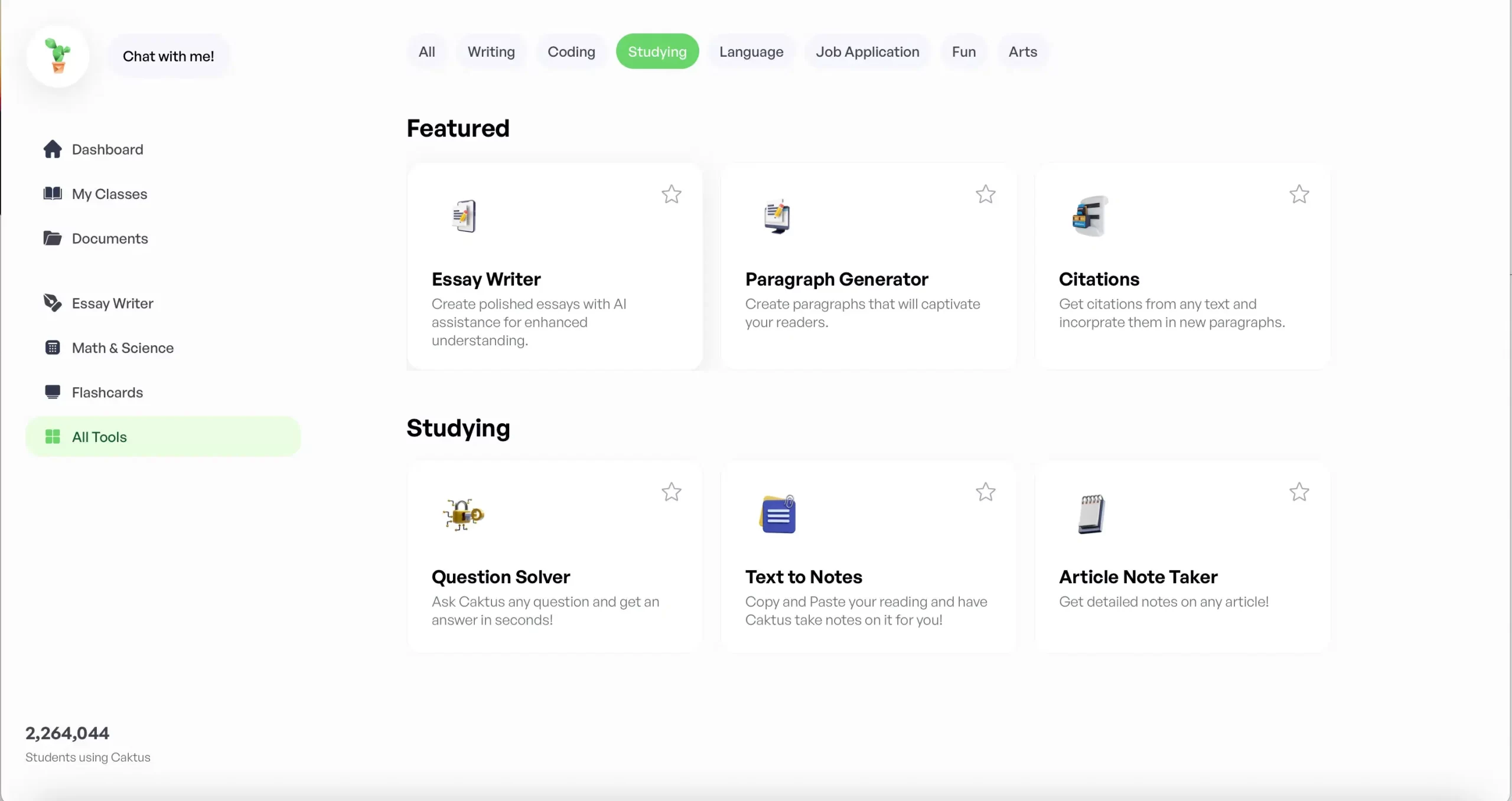
Upload lecture notes or a PDF and the Flashcard and Quiz Maker turns them into study-ready decks with spaced-repetition drilling. A summarizer condenses long articles and textbooks, and a notetaker and presentation maker round out the study kit. These are the least controversial, most genuinely helpful tools in the suite because they support revision rather than produce submittable work.
Humanizer, AI detector and translator
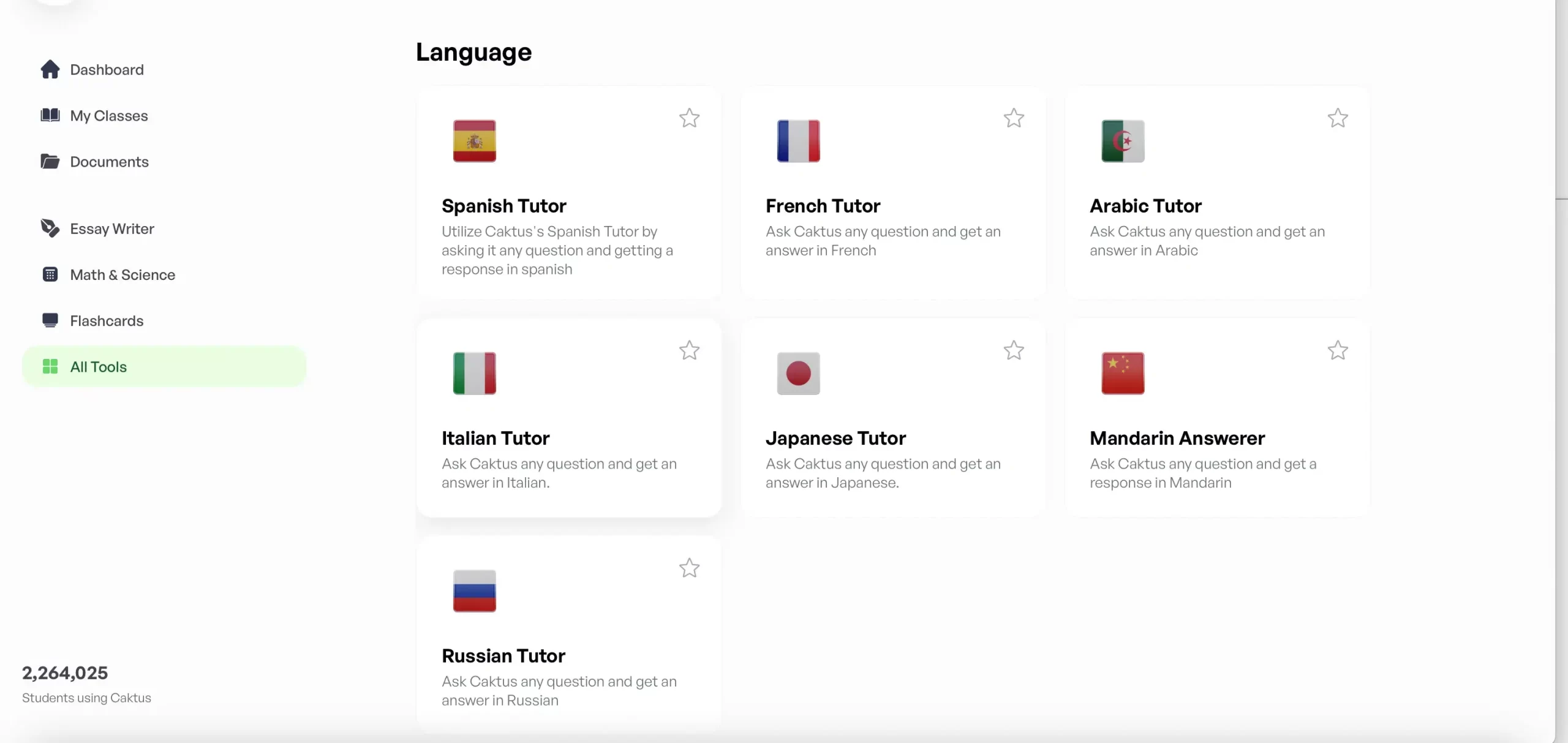
Caktus now includes an AI Humanizer (Standard, High School, College and Scholarly presets), an AI Detector, and a Translator for working across languages. Be realistic here: independent testers have found that content run through Caktus’s humanizer can still be flagged by AI detectors, and no humanizer reliably reaches 0% AI-detection. Treating the humanizer as a way to disguise AI-written work is exactly the behaviour that gets students into disciplinary trouble (more on that below).
The full toolset at a glance
| Category | Tools included |
|---|---|
| Writing | Essay writer, paragraph generator, discussion-board responder, email generator, humanizer, AI detector |
| Math & science | Step-by-step math solver, physics, chemistry and biology assistants |
| Research | Research tool, citation finder (APA/MLA/Chicago/Harvard), summarizer |
| Study | Flashcard & quiz maker, notetaker, presentation maker, interview-prep coach |
| Other | Code writer, translator, document uploads (PDF/Word/text) |
Caktus AI pricing in 2026
Is Caktus AI free? Partly — you can now sign up and try several tools at no cost, which is a change from the paid-only model at launch. To unlock unlimited use, longer outputs, real citations and document uploads, you need a subscription.
One important caveat for a money decision: Caktus no longer publishes a fixed price on its public site — you only see plans after you click through to sign up, and prices vary by region and promotion. Based on the most commonly reported 2026 figures (which we could not confirm against an official public price page), the plans look like this:
| Plan | Typical price (USD) | Best for |
|---|---|---|
| Free | $0 (limited tools & outputs) | Trying it before you buy |
| Monthly | ~$14.99/month | Short-term needs (exam season, one semester) |
| Annual | ~$99.99/year (≈$8.33/month) | Full-year users who want the lowest monthly cost |
Some third-party listings report a lower entry tier (around $9.99/month) and others report higher, which is exactly why you should treat the numbers above as a guide and confirm the live price on your account page before paying. In ringgit and Singapore-dollar terms, roughly $15/month is about RM65–70 or S$20, and the ~$100 annual plan is roughly RM450–470 or S$135 — before card and tax add-ons we cover in the Malaysia and Singapore section.
Caktus AI vs ChatGPT: which should a student use?
This is the comparison most readers care about. Caktus is a specialised academic suite; ChatGPT is a general assistant that can do academic work but isn’t built only for it. ChatGPT’s free tier now runs on GPT-5.3 (with usage caps, and sponsored results for US free users), while ChatGPT Plus remains $20/month — a price that hasn’t changed in years.
| Aspect | Caktus AI | ChatGPT |
|---|---|---|
| Main focus | Academic work: essays, math, science, research, study tools | General-purpose assistant: brainstorming, writing, coding, chat |
| Citations | Real citation finder with APA/MLA/Chicago/Harvard (still verify each source) | Can add citations if asked, but higher risk of invented references |
| Study features | Built-in flashcards, summaries, quizzes, STEM assistants | None built in; you prompt for them manually |
| Free option | Limited free tier | Free tier (GPT-5.3, capped) |
| Paid price | ~$14.99/month or ~$8.33/month annually (confirm live) | Plus $20/month; Go $8/month |
| Best if you want… | Coursework-shaped tools out of the box | One flexible tool for everything, including non-academic tasks |
Our take: if most of your work is essays, research and STEM problem-solving, Caktus’s ready-made academic tools save time. If you want one assistant for everything (and you’re comfortable prompting it), a general model like ChatGPT — or a free option such as DeepSeek — may be better value. Many students run both. For more ways to squeeze value out of ChatGPT specifically, see our guides to the best ChatGPT apps and top ChatGPT Chrome extensions.
How to decide if Caktus AI is right for you
Rather than “is it good,” ask “is it right for my situation.” A quick framework:
| If you… | Then… |
|---|---|
| Write lots of cited essays and reports | Caktus’s citation finder and essay tools are a strong fit — verify sources |
| Study STEM subjects and want worked solutions | The step-by-step math and science solvers are the highlight |
| Mainly want revision aids (flashcards, summaries) | A free tool like Khanmigo or Quizlet may cover you for less |
| Want one AI for everything, not just school | A general assistant (ChatGPT, Claude, Gemini) is more flexible |
| Are on a tight budget | Start on the free tier; only pay if you hit the limits regularly |
Common pitfalls to avoid
A few traps we’d flag before you rely on any student AI, Caktus included:
- Assuming AI text is undetectable. Humanized output can still be flagged, and submitting AI work as your own can breach academic-integrity rules. Use Caktus to draft, learn and check — then write in your own voice.
- Trusting citations blindly. Always open each source and confirm it exists and supports the claim. Fabricated or mismatched references are the fastest way to lose marks.
- Not checking your institution’s policy. Rules differ by university and even by lecturer. Some require you to declare AI use; others ban it for certain assessments.
- Forgetting it bills in USD. Malaysian and Singaporean students pay currency conversion and sometimes a foreign-transaction fee on top of the sticker price.
- Paying before testing. Use the free tier first on a real assignment to see whether the output quality justifies the subscription.
Best Caktus AI alternatives in 2026
Caktus isn’t the only option, and the landscape has changed since 2023. Notably, Socratic by Google — which we previously listed — retired its standalone app in late 2024 and folded its functionality into Google Lens, so it’s no longer a separate download. Here are current alternatives worth comparing:
| Alternative | Best for | Price (2026, confirm live) |
|---|---|---|
| Khanmigo (Khan Academy) | Integrity-first AI tutoring that guides rather than gives answers | ~$4/month or ~$44/year; Khan Academy core is free |
| ChatGPT / Claude / Gemini | One flexible assistant for school and everything else | Free tiers; paid from ~$8–$20/month |
| Gauth | Snap-a-photo homework help across subjects | Free tier + paid plans |
| Wolfram Alpha | Serious math, science and engineering with visual working | Free basics; Pro subscription for steps |
| Quizlet | Flashcards and spaced-repetition revision | Free tier; Plus subscription |
If your priority is learning (not just finishing an assignment), Khanmigo’s Socratic-style tutoring is the most integrity-friendly pick and is far cheaper. If flexibility matters more, a general assistant covers academic and everyday tasks.
Caktus AI for Malaysia and Singapore students
Caktus works fine in Malaysia and Singapore, but a few local realities are worth planning for:
- You’ll pay in USD. Budget for currency conversion, and check whether your card charges a foreign-transaction fee. Roughly, ~$15/month lands around RM65–70 or S$20; the ~$100 annual plan is around RM450–470 or S$135, depending on the exchange rate on the day.
- Digital-service tax applies. Malaysia charges 8% Sales and Service Tax on foreign digital services, and Singapore applies 9% GST — so your final charge may be a little above the headline USD price.
- Check your university’s AI policy first. Institutions here are actively setting rules. In Singapore, for example, NUS permits AI use for many assignments provided you follow academic-honesty rules and acknowledge the AI’s role; Malaysian universities and the higher-education sector are rolling out their own generative-AI guidelines. Many now expect you to declare AI assistance — and unauthorised use in exams or assessments is treated as misconduct.
- Language support. The translator and multilingual output help if you work across Bahasa Malaysia, Mandarin, Tamil or English, but always proofread academic writing in your submission language.
Bottom line for local students: Caktus can be a legitimate study aid here, but only if you use it transparently and within your institution’s rules — and if you’re comfortable with USD billing on top of tax.
Verdict: is Caktus AI worth it in 2026?
Caktus AI has matured from a narrow essay tool into a broad, genuinely useful academic suite, and its integrity-first repositioning is a welcome change. The citation finder, step-by-step STEM solvers and study tools (flashcards, summaries) are the standouts, and the free tier finally lets you test before paying. The honest caveats: pricing is no longer transparent up front, “humanized” text can still be flagged, citations must be checked every time, and — for students here — you’re paying in USD plus tax. Used as a study aid to draft, learn and revise (not to hand in AI work as your own), it’s a reasonable buy. If your main need is revision or you want one tool for everything, a cheaper or free alternative like Khanmigo, Quizlet or a general assistant may serve you better.
Disclaimer: This Caktus AI review is provided by KayaToday for general information only and reflects details verified in July 2026. Pricing, features and availability change frequently and vary by region — confirm the latest details with Caktus AI before subscribing. Always follow your school or university’s academic-integrity policies when using any AI tool; KayaToday does not endorse using AI to submit work dishonestly. External links are provided for reference and are not endorsements.
Frequently Asked Questions
Sources checked July 2026 include the official Caktus AI website, Khanmigo (Khan Academy) for alternative pricing, and Turnitin for context on AI-writing detection and academic integrity.