As a camera tester and photography enthusiast, I’ve spent years shooting with entry-level DSLR bodies hands-on to find the top options for beginners — and in 2026 the advice has shifted in one very important way.
- What’s Changed for DSLR Beginners in 2026
- Do Beginners Really Need a DSLR Camera?
- Top 10 Beginner-Level DSLR Cameras That Have Stood the Test of Time
- The 10 Best DSLR Cameras for Beginners (Review and Comparison)
- Canon EOS Rebel SL3 / EOS 250D
- Nikon D3500
- Canon EOS Rebel T8i / EOS 850D
- Nikon D5600
- Canon EOS Rebel T7 / EOS 2000D
- Canon EOS 90D
- Canon EOS Rebel T6 / EOS 1300D
- Pentax K-70
- Canon EOS Rebel T6i / EOS 750D
- Nikon D5300
- How to Choose the Best Entry-Level DSLR Camera in 2026
- Step 1: Set your budget (and split it)
- Step 2: New vs. used
- Step 3: Match features to how you’ll shoot
- Step 4: Check lens availability
- Worked example: a RM3,000 / ~0 beginner kit
- Common Beginner Pitfalls to Avoid
- Capture Mesmerizing Shots with the Best Entry-Level DSLR
- My Recommended Best DSLR Camera for Beginners
- Frequently Asked Questions (FAQs)
Here’s the honest 2026 reality: the DSLR is now a discontinued category. Canon and Nikon stopped developing new DSLRs years ago, and in 2026 even Pentax — the last holdout — had its remaining DSLR bodies listed as discontinued. That doesn’t make DSLRs a bad choice for a beginner. It just means you’re now shopping remaining new stock and the (excellent-value) used market rather than a fresh product line.
In this guide, I’ll share my picks for the 10 best DSLR cameras for beginners based on value, image quality, performance, features, and ease of use for new photographers — updated for 2026 with each model’s current availability, realistic street prices, and buy-new-vs-used advice.
Key Takeaways:
1. As of 2026, DSLRs are effectively a discontinued category — Canon and Nikon stopped new development years ago, and Pentax’s last DSLRs were listed as discontinued in 2026. You’re buying leftover new stock or (mostly) used.
2. That’s not bad news: used entry-level DSLRs and their lenses are now some of the best value in photography. A used body + kit lens + a cheap 50mm f/1.8 is arguably the ideal way to learn.
3. When choosing, weigh budget, image quality, low-light and autofocus performance, ergonomics, lens availability, and video — and for used bodies, check shutter count and sensor condition.
4. My overall pick if you want something still sold new is the Canon EOS Rebel T8i; on a tight budget, a used Nikon D3500 or Canon Rebel T7 delivers the most learning per dollar.
What’s Changed for DSLR Beginners in 2026
If you read an older “best beginner DSLR” list, the single biggest update is availability. The DSLR is no longer an actively developed camera type:
- Canon has not launched a new DSLR since 2020. It still ships remaining bodies (notably the Rebel T7, T8i, SL3 and EOS 90D in some regions), but development has clearly ended.
- Nikon has publicly stepped back from DSLR development to focus on its Z-mount mirrorless line. Popular beginner bodies like the D3500 and D5600 are discontinued and now sold used or as remaining stock.
- Pentax was the last brand actively backing DSLRs, but in 2026 its beginner-friendly KF and the enthusiast K-3 Mark III were listed as discontinued in key markets.
What this means for you as a beginner: don’t wait for a “newer” DSLR — there won’t be one. The smart play in 2026 is to treat DSLRs as a mature, deeply discounted platform. Because so many owners are migrating to mirrorless, used DSLR bodies and lenses are cheap and plentiful, which is fantastic for learning. If you’d rather buy into a system with a future for lenses and firmware, our guide to the best mirrorless cameras for beginners covers the alternative, and our overall best cameras for beginners compares categories side by side.
Prices below are verified as approximate July 2026 street/used-market figures and move constantly — always confirm the current price and condition with the retailer or seller before buying.
Do Beginners Really Need a DSLR Camera?
DSLR cameras are optional for beginners. You can certainly get started with a point-and-shoot, a mirrorless camera, or even your smartphone. In 2026, mirrorless is the “default” recommendation for most new buyers because that’s where new bodies and lenses are being made.
That said, a DSLR still offers real advantages — and in 2026 the price advantage is bigger than ever:
- Bigger sensors – The larger APS-C sensors in DSLRs capture more light than a phone, producing better image quality, especially in low light.
- Interchangeable lenses – Swapping lenses gives you creative flexibility — and used DSLR lenses are currently very cheap as owners switch to mirrorless.
- More manual controls – Direct access to aperture, shutter speed, and ISO helps you learn the exposure triangle the hands-on way.
- Longer battery life – Optical viewfinders draw far less power than mirrorless EVFs, so DSLRs routinely deliver 800–1,500 shots per charge.
- Unbeatable value – A used body plus a 50mm f/1.8 lens can cost less than a mid-range phone while teaching you more about photography.
The main trade-offs to accept: no new models are coming, in-body/live-view autofocus lags behind modern mirrorless, and for video most DSLRs top out at basic 1080p or early 4K. For a beginner who mainly wants to learn stills, none of that is a dealbreaker.
Top 10 Beginner-Level DSLR Cameras That Have Stood the Test of Time
After extensive research and hands-on evaluation, these are my top 10 picks for the best DSLR cameras for beginners in 2026 — all still findable new or (more often) used:
- Canon EOS Rebel SL3 / EOS 250D
- Nikon D3500
- Canon EOS Rebel T8i / EOS 850D
- Nikon D5600
- Canon EOS Rebel T7 / EOS 2000D
- Canon EOS 90D
- Canon EOS Rebel T6 / EOS 1300D
- Pentax K-70
- Canon EOS Rebel T6i / EOS 750D
- Nikon D5300
The 10 Best DSLR Cameras for Beginners (Review and Comparison)
The table below adds a 2026 availability column so you can see at a glance which bodies are still sold new versus used-only. Prices are approximate July 2026 street/used figures (body or kit) and vary by region and condition.
| Camera | Approx. Price (2026, used/street) | 2026 Availability | Sensor | Megapixels (MP) | ISO | Burst Rate (fps) | Video Resolution |
|---|---|---|---|---|---|---|---|
| Canon EOS Rebel SL3 | ~$650 new / ~$450 used | Remaining new stock + used | APS-C CMOS | 24.1 | 100-25600 | 5 | 4K (cropped) |
| Nikon D3500 | ~$400 used | Discontinued – used only | APS-C CMOS | 24.2 | 100-25600 | 5 | 1080p |
| Canon EOS Rebel T8i | ~$750 new / ~$600 used | Still sold new (limited) | APS-C CMOS | 24.1 | 100-25600 | 7.5 | 4K (cropped) |
| Nikon D5600 | ~$550 used | Discontinued – used only | APS-C CMOS | 24.2 | 100-25600 | 5 | 1080p |
| Canon EOS Rebel T7 | ~$400 new / ~$280 used | Still sold new (budget) | APS-C CMOS | 24.1 | 100-6400 | 3 | 1080p |
| Canon EOS 90D | ~$1,199 new / ~$850 used | Still sold new (enthusiast) | APS-C CMOS | 32.5 | 100-25600 | 11 | 4K (uncropped) |
| Canon EOS Rebel T6 | ~$300 used | Discontinued – used only | APS-C CMOS | 18 | 100-6400 | 3 | 1080p |
| Pentax K-70 | ~$550 used | Discontinued – used only | APS-C CMOS | 24 | 100-102400 | 6 | 1080p |
| Canon EOS Rebel T6i | ~$400 used | Discontinued – used only | APS-C CMOS | 24.2 | 100-12800 | 5 | 1080p |
| Nikon D5300 | ~$350 used | Discontinued – used only | APS-C CMOS | 24.2 | 100-12800 | 5 | 1080p |
Canon EOS Rebel SL3 / EOS 250D
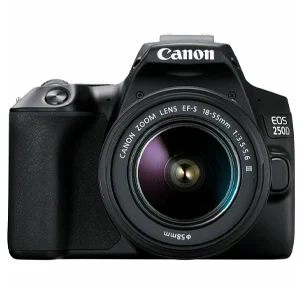
The Canon EOS Rebel SL3 (also known as the EOS 250D outside North America) hits a sweet spot for beginners looking for a compact yet capable DSLR. It packs excellent image quality into the smallest and lightest Canon DSLR ever made. In 2026 you can still find it as remaining new stock, but the used market is where the value is.
Key Features:
- 24.1MP APS-C sensor
- Dual Pixel CMOS AF (fast, reliable live-view focus)
- 4K video at 24fps (heavily cropped — a real limitation)
- Vari-angle touchscreen LCD
- Guided on-screen interface
Potential Drawbacks:
- 4K video is cropped and can’t use Dual Pixel AF, so it’s best treated as a 1080p camera for video.
- 9-point viewfinder AF system is basic compared with modern mirrorless.
- No in-body stabilization (you’ll rely on stabilized lenses).
Why It’s Great For Beginners:
The Rebel SL3 has an intuitive, easy-to-navigate interface with guided menus and built-in tips to help new users quickly learn settings and shooting modes. The touchscreen LCD tilts and rotates to face forward for selfies or vlogging.
The 24MP sensor uses Canon’s excellent color science to capture sharp, vivid images with great dynamic range, even in low light up to ISO 25600. Live-view autofocus is extremely accurate thanks to Dual Pixel CMOS AF. At just 15.8 ounces, the SL3 is the lightest DSLR here, making it comfortable to carry all day.
Nikon D3500
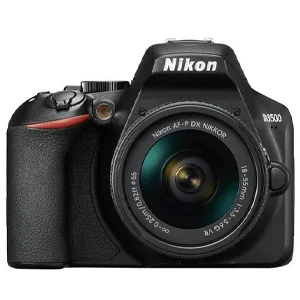
The Nikon D3500 is one of the best-value DSLR cameras for beginners ever made, delivering impressive image quality in an affordable, portable package. It’s now discontinued and sold used only — but that’s exactly why it’s such a bargain in 2026.
Key Features:
- 24.2MP APS-C sensor
- EXPEED 4 image processor
- Full HD 1080p video at 60fps
- Bluetooth and SnapBridge connectivity
- Class-leading ~1,550-shot battery life
Potential Drawbacks:
- Video limited to Full HD 1080p at 60fps — no 4K.
- Fixed (non-articulating) LCD screen.
- Basic 11-point AF system with only one cross-type point.
- SnapBridge image transfer can be slow; used-only availability.
Why It’s Great For Beginners:
The 24MP sensor produces clean, noise-free images even in low light at high ISOs. Colors are vivid and accurate with good dynamic range. Nikon’s interactive Guide Mode gives real-time tips to help beginners learn the camera, and the extraordinary 1,550-shot battery means you can shoot all day. Because so many owners are moving to Nikon Z mirrorless, D3500 bodies and Nikon DX lenses are plentiful and cheap secondhand.
Canon EOS Rebel T8i / EOS 850D
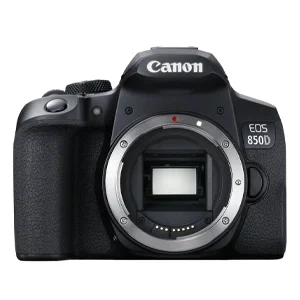
The Canon EOS Rebel T8i offers better performance and features than Canon’s more basic DSLRs while remaining beginner-friendly. It’s one of the very few beginner DSLRs still sold new in 2026, which makes it the natural pick if you want a warranty and fresh stock.
Key Features:
- 24.1MP APS-C sensor
- DIGIC 8 processor
- 45 cross-type AF points (viewfinder) + Dual Pixel AF in live view
- Vertical video shooting
- Fully articulating touchscreen LCD
- 4K 24p & Full HD 120p video
Potential Drawbacks:
- Pricier than entry-level DSLRs at around $750 new.
- Moderate battery life of about 800 shots per charge.
- 4K video is cropped and doesn’t use Dual Pixel AF.
Why It’s Great For Beginners:
Canon’s excellent Dual Pixel CMOS AF provides fast, accurate autofocus in live view and video, with 45 cross-type points covering a wide area through the viewfinder. The LCD tilts and rotates for high/low-angle work, and touchscreen operation makes menus intuitive. Built-in graphical guides explain core photography concepts as you learn. It shares Canon’s huge EF/EF-S lens ecosystem, which is now very affordable used.
Nikon D5600
A step up from the D3500, the Nikon D5600 adds useful features for new photographers who want a capable mid-range DSLR to grow into. It’s discontinued and used-only in 2026, but that keeps prices attractive.
Key Features:
- 24.2MP APS-C sensor
- EXPEED 4 processor
- 39-point AF system
- 3.2” articulating touchscreen LCD
- Full HD 1080p video @ 60fps
- Built-in Bluetooth and Wi-Fi
Potential Drawbacks:
- Video limited to 1080p Full HD — no 4K.
- Battery rated for about 820 shots per charge.
- SnapBridge can be unreliable; used-only availability.
Why It’s Great For Beginners:
Sharing the same proven 24MP APS-C sensor as the D3500, the D5600 delivers crisp detail, vivid color, and clean high-ISO performance. The touchscreen LCD articulates and rotates for self-portraits and video, and the 39-point AF system tracks subjects better than Nikon’s more basic beginner bodies. Built-in Bluetooth and Wi-Fi make wireless image transfer easier.
Canon EOS Rebel T7 / EOS 2000D
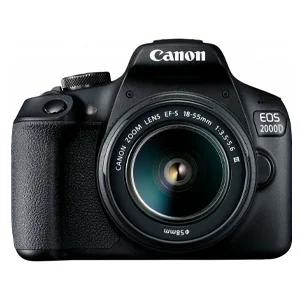
The Canon EOS Rebel T7 (EOS 2000D outside North America) gives beginners the essentials for learning DSLR photography on a tight budget, and it’s one of the last DSLRs still widely sold new in 2026 — often in an affordable twin-lens kit.
Key Features:
- 24.1MP APS-C sensor
- DIGIC 4+ image processor
- 9-point AF system
- Wi-Fi / NFC connectivity
- Full HD 1080p video at 30fps
Potential Drawbacks:
- Dated 9-point AF system with only one cross-type point.
- Weaker low-light performance at high ISOs (visible noise).
- No microphone input; slow live-view contrast AF.
Why It’s Great for Beginners:
It’s an extremely affordable entry point into Canon’s EOS DSLR system, often bundled with two lenses for around $400 new. It produces good-looking images with accurate colors and decent dynamic range, and the menu system is easy to navigate. Canon’s onboard graphic guides explain photography concepts clearly, and Wi-Fi/NFC makes transferring photos to phones simple.
Canon EOS 90D
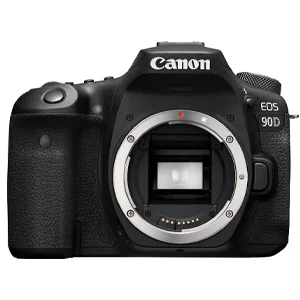
Priced above typical entry-level territory, the Canon 90D packs the performance and features that make it worth considering for new photographers who can stretch their budget — and it remains one of Canon’s few DSLRs still in production in 2026.
Key Features:
- 32.5MP APS-C sensor (highest resolution here)
- DIGIC 8 image processor
- 45 cross-type AF points
- 10–11 fps continuous shooting
- Fully articulating touchscreen LCD
- Uncropped 4K 30p & Full HD 120p video
Potential Drawbacks:
- Much pricier than other beginner DSLRs at around $1,199 new.
- Larger, heavier enthusiast body (over 1.5 lb with battery).
- Overkill for a true first-timer — more camera than most beginners need.
Why It’s Great For Beginners:
It produces incredibly detailed images and uncropped 4K video with its high-resolution 32.5MP sensor and impressive dynamic range. Dual Pixel CMOS AF excels at subject tracking in live view and video, the fully articulating touchscreen adds flexibility, and its fast 10–11 fps burst is great for action and sports. It’s the one body here you’re least likely to outgrow.
Canon EOS Rebel T6 / EOS 1300D
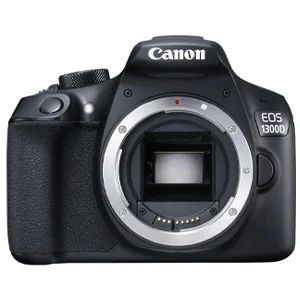
The Canon EOS Rebel T6 (EOS 1300D outside North America) is an older but still capable DSLR for beginners who want to spend as little as possible. It’s discontinued and used-only now, so it’s purely a budget-hunter’s pick.
Key Features:
- 18MP APS-C sensor
- DIGIC 4+ image processor
- 9-point AF system
- Wi-Fi / NFC connectivity
- Full HD 1080p video at 30fps
Potential Drawbacks:
- Very dated 9-point AF system with only one cross-type point.
- Significant noise at high ISOs; best kept to ISO 3200 or below.
- Lowest resolution here at 18MP; used-only availability.
Why It’s Great For Beginners:
Its rock-bottom used price makes it one of the cheapest ways into digital SLR photography — often around $300 used. Despite the low cost, it captures good-quality images with accurate colors in a compact package. Canon’s beginner-oriented graphical interface exposes all the settings and modes you need to learn, and built-in Wi-Fi/NFC keeps phone transfers simple.
Pentax K-70
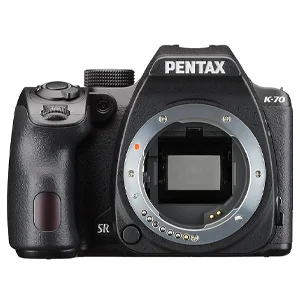
The Pentax K-70 is a weather-sealed mid-range DSLR with an unusual retro design that packs powerful features at an affordable price. Note for 2026: Pentax has discontinued the K-70 and its KF successor, so this is a used-only purchase — and Pentax’s smaller lens ecosystem matters more than ever now.
Key Features:
- 24MP APS-C CMOS sensor
- PRIME MII image processor
- Pixel Shift Resolution mode
- Fully articulating LCD
- In-body 5-axis image stabilization (works with any lens)
- Weather sealing — rare at this price
Potential Drawbacks:
- 11-point AF system with only one cross-type point — less advanced than rivals.
- Limited native K-mount lens options, now that Pentax has scaled back.
- Sold in fewer stores; used-only in 2026.
Why It’s Great For Beginners:
It produces excellent image quality with crisp detail, low noise, and vibrant color. Pixel Shift Resolution combines multiple frames into a higher-definition image, and its in-body sensor-shift stabilization works with any lens — a genuine advantage over Canon and Nikon beginner bodies. Weather sealing and a large, secure grip make it a distinctive, rugged choice for beginners who shoot outdoors.
Canon EOS Rebel T6i / EOS 750D
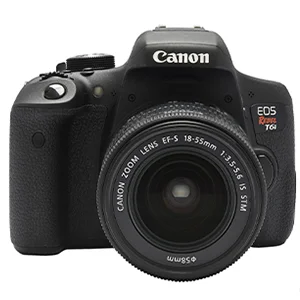
The Canon EOS Rebel T6i (EOS 750D outside North America) is an older but still capable DSLR that lets budget-minded beginners access higher-end specs cheaply. It’s discontinued and used-only in 2026.
Key Features:
- 24.2MP APS-C sensor
- DIGIC 6 image processor
- 19-point AF system
- Fully articulating touchscreen LCD
- Full HD 1080p video at 30fps
Potential Drawbacks:
- Canon no longer provides direct support for this aging model.
- No microphone input for advanced video work.
- Dynamic range trails newer sensors; 1080p max, no 4K.
Why It’s Great For Beginners:
Despite its age, the 24MP sensor still delivers excellent image quality with lifelike colors and good dynamic range across ISO 100–12800. Integrated Wi-Fi/NFC makes wireless connectivity painless, the fully articulating LCD adds flexibility for high/low-angle shooting, and the 19-point AF system tracks moving subjects well for the money.
Nikon D5300
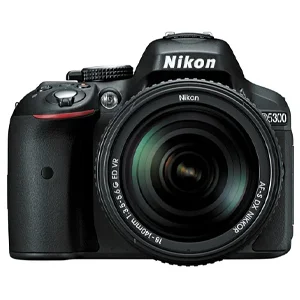
Discontinued but still capable, the Nikon D5300 remains a strong entry-level DSLR for new photographers who can find one cheaply. It was ahead of its time on features and holds up well as a used buy in 2026.
Key Features:
- 24.2MP APS-C sensor (no optical low-pass filter for extra detail)
- EXPEED 4 image processor
- 39-point AF system (9 cross-type)
- Built-in Wi-Fi / GPS
- Fully articulating LCD
- Full HD 1080p video at 60fps
Potential Drawbacks:
- Video limited to 1080p Full HD — no 4K.
- Mediocre battery life at about 600 shots per charge.
- Discontinued with irregular used availability.
Why It’s Great For Beginners:
Its 24MP sensor without an optical low-pass filter captures impressive detail, and the 39-point AF system (9 cross-type) locks focus quickly. The fully articulating LCD lets you shoot from creative angles, while built-in Wi-Fi and GPS add wireless control and geotagging.
(The Nikon D3500 also made our list of the overall best cameras for beginners.)
How to Choose the Best Entry-Level DSLR Camera in 2026
Because DSLRs are now a used/remaining-stock market, choosing well is less about “which is newest” and more about matching a proven body to your budget and buying it in good condition. Here’s a simple framework:
Step 1: Set your budget (and split it)
Entry-level DSLR bodies now range from around $280 used up to about $1,200 new (EOS 90D). Crucially, don’t spend it all on the body — a cheap 50mm f/1.8 “nifty fifty” (roughly $100–$150) will teach you more about light and depth of field than any body upgrade. A good starting split for a beginner is roughly 60% body/kit lens, 25% a fast prime, 15% a card, spare battery, and bag.
Step 2: New vs. used
Buy new only if you specifically want a warranty and are choosing one of the few still-produced bodies (Canon T7, T8i, SL3, 90D). Otherwise, used is the smarter buy in 2026 — prices are low because owners are migrating to mirrorless. For used bodies, check the shutter count (under ~30,000 is comfortable for entry-level models rated to ~100,000), inspect the sensor for dust or scratches, and buy from a reputable dealer with a return window (e.g. MPB, KEH, or a trusted local shop).
Step 3: Match features to how you’ll shoot
For everyday learning and portraits, any 24MP body here is excellent — pick on price and ergonomics. For action or kids/pets, prioritise faster burst and better AF (EOS 90D, T8i). For video/vlogging, an articulating screen and mic input matter (T8i, 90D) — but be aware DSLR video autofocus and 4K are dated, so a mirrorless body may serve you better. For outdoor/travel, the weather-sealed Pentax K-70 stands out.
Step 4: Check lens availability
Canon (EF/EF-S) and Nikon (F-mount DX) have the deepest, cheapest used lens pools — a big advantage now. Pentax K-mount is capable but the range is thinner and shrinking. Whichever system you choose, confirm that the lenses you’ll want (a 50mm prime, a telephoto zoom) are readily available secondhand.
Worked example: a RM3,000 / ~$650 beginner kit
Say you’re a beginner in Malaysia or Singapore with about RM3,000 (~$650) to spend and you mainly shoot family, travel, and portraits. A sensible 2026 build: a used Nikon D3500 or Canon Rebel T7 with kit 18–55mm lens (~RM1,600–2,000), plus a used 50mm f/1.8 prime (~RM500–700), a fast SD card and spare battery (~RM250), and a small bag (~RM150). That leaves you a complete, capable learning kit — body, two lenses, and accessories — for roughly the price of a mid-range phone, with money left to print your favourite shots.
Common Beginner Pitfalls to Avoid
- Overspending on the body. A cheaper body plus a 50mm f/1.8 beats an expensive body with only the kit lens for learning and image quality.
- Ignoring shutter count on used bodies. A tired shutter can fail; always ask for the count before buying.
- Expecting mirrorless-grade video. Most DSLRs here shoot only 1080p or cropped 4K with slow live-view AF — fine for stills, limiting for serious video.
- Buying into a shrinking lens system by accident. Canon EF/EF-S and Nikon F have the best used lens value; be sure before choosing Pentax.
- Chasing megapixels. 18–24MP is plenty for beginners; the 90D’s 32.5MP mostly matters for heavy cropping.
- Staying in Auto forever. The whole point of a DSLR is learning manual controls — use aperture-priority and manual modes to actually improve.
Capture Mesmerizing Shots with the Best Entry-Level DSLR
Here are some tips for capturing amazing images even as a beginner DSLR photographer:
Invest Time in Learning Manual Settings – While auto modes have their uses, you’ll gain far more creative control by learning to adjust aperture, shutter speed, and ISO yourself. Mastering the exposure triangle is key.
Use Quality Lenses – Consumer kit lenses are fine to start, but a good prime or higher-end zoom truly improves sharpness, low-light performance, and versatility — and they’re cheap used right now.
Leverage Built-In Shooting Modes – Most entry-level DSLRs include scene modes, effects, and creative filters to experiment with while you learn the basics.
Try a Prime Lens for Portraits – An affordable 50mm or 85mm prime at a wide aperture like f/1.8 gives beautiful background blur in portraits.
Experiment with Action Settings – For sports or fast-moving kids, use continuous autofocus, fast shutter speeds, and burst shooting.
Take Advantage of External Flash – An external flash unit produces far better portraits and indoor shots than the built-in flash.
The most important tip: don’t get intimidated. It takes practice, but a beginner DSLR gives you all the tools to learn at your own pace and capture stunning images.
My Recommended Best DSLR Camera for Beginners
After testing a wide range of models hands-on, my pick for the best entry-level DSLR you can still buy new in 2026 is the Canon EOS Rebel T8i.
The T8i stands out with its proven 24MP APS-C sensor, fast Dual Pixel live-view autofocus, fully articulating touchscreen, vertical video support, and 4K recording. Image quality is excellent across the board, and the vari-angle screen makes getting creative intuitive. It costs more than Canon’s other entry-level options, but beginners who can stretch their budget are rewarded with a capable, still-supported body.
That said, in 2026 my value pick is different: if your goal is to learn photography for the least money, a used Nikon D3500 or Canon Rebel T7 paired with a 50mm f/1.8 delivers the most learning per dollar. And if you’d prefer a system with a future for new lenses, seriously consider mirrorless before committing — see our best mirrorless cameras for beginners and best compact cameras for beginners guides.
All prices and availability were verified in July 2026 against retailer and used-marketplace listings and reputable reviews such as DPReview and Digital Camera World. Camera stock and pricing change quickly — please confirm the current price and condition with the retailer or seller before buying.
Frequently Asked Questions (FAQs)
Disclaimer: This guide is provided by KayaToday for general informational purposes only. Camera prices, stock, and availability change frequently — especially for discontinued DSLR models — so always verify current details with the retailer or seller before purchasing. KayaToday may not be held liable for pricing or availability that has changed since publication.