Are you a beginner looking to buy your first video camera and start your videography journey? This comprehensive guide will help you find the best video camera for beginners, updated for 2026 with current models, prices, and buying advice for shoppers in Malaysia and Singapore.
- What’s changed for beginner video cameras in 2026
- Our verified 2026 shortlist (cameras you can buy new today)
- Do beginners really need a dedicated video camera?
- Compare the 10 video cameras for beginners (2026 status)
- The 10 video cameras for beginners, reviewed
- 1. Canon VIXIA HF R800 (Discontinued – used only)
- 2. Sony FDR-AX43 (Still current)
- 3. Panasonic HC-V180K (Largely discontinued)
- 4. GoPro HERO8 Black (Discontinued → HERO13 Black)
- 5. DJI Osmo Pocket 3 (Our 2026 top pick)
- 6. Canon VIXIA HF G50 (Discontinued)
- 7. Sony FDR-AX700 (Still findable, premium)
- 8. Panasonic HC-X1500 (Still current)
- 9. Nikon D5600 (Discontinued → Nikon Z30 / Z50 II)
- 10. JVC GY-HM250 (Pro camcorder, still available)
- How to choose the right beginner video camera
- Worked example: a RM3,000 beginner setup
- Common beginner mistakes to avoid
- Start recording with the best video camera for beginners
- Frequently Asked Questions (FAQs)
We compare cameras across the factors that actually matter to a beginner – image quality, autofocus, stabilization, audio, ease of use, and price – and, just as importantly, we flag which older models have been discontinued so you don’t overpay for outdated gear.
[su_box title=”Key Takeaways” box_color=”#000877″ title_color=”#ffffff” radius=”6″]
1. The video-camera landscape has shifted since this guide first published: the market has moved away from traditional camcorders toward compact vlogging cameras, pocket gimbals, and mirrorless bodies.
2. For most beginners in 2026, our top overall pick is the DJI Osmo Pocket 3 – a pocket-sized gimbal camera with a 1-inch sensor and stabilized 4K/120fps video (about US$599 / ~RM2,800). It is the easiest way to get smooth, professional-looking footage with almost no learning curve.
3. Want a camera you can grow into? The Sony ZV-E10 II (about US$999 / ~RM4,700) is the best interchangeable-lens choice under US$1,000, while the GoPro HERO13 Black (US$399 / ~RM1,900) is unbeatable for action and travel.
4. Several older camcorders on this list (Canon VIXIA HF R800, GoPro HERO8, the original DJI Osmo Pocket, Nikon D5600) are now discontinued. We’ve marked each one and pointed you to its current successor.
[/su_box]
What’s changed for beginner video cameras in 2026
If you last shopped for a video camera a few years ago, the market looks very different today. Three shifts matter most for beginners:
Camcorders are fading; vlogging cameras have taken over. Canon, Sony, and Panasonic have quietly retired most of their consumer “handycam” style camcorders. In their place are purpose-built creator cameras like the Sony ZV series and Canon PowerShot V series, plus pocket gimbals.
Pocket gimbals are the new default. The DJI Osmo Pocket 3 packs a 1-inch sensor and mechanical 3-axis stabilization into something the size of a chocolate bar. For casual creators it has replaced the bulky camcorder entirely.
Autofocus and audio are the real deciders. Modern beginner cameras all shoot sharp 4K, so image resolution is rarely the bottleneck. What separates a frustrating camera from a joyful one is reliable subject-tracking autofocus and clean audio – the two things viewers notice first.
Below you’ll find our current 2026 shortlist of cameras you can actually buy new today, followed by the full comparison of ten models (with discontinued units clearly flagged), then a plain-English guide to choosing the right one for you.
Our verified 2026 shortlist (cameras you can buy new today)
These are the models we’d recommend to a beginner shopping in 2026. Prices are USD manufacturer/street prices verified in July 2026; Malaysian ringgit figures are rough conversions (about RM4.7 to US$1) and will vary by retailer, import, and promotion – always confirm locally.
| Camera | Approx. Price (USD) | Approx. Price (RM) | Type | Sensor | Max Video | Best For |
|---|---|---|---|---|---|---|
| DJI Osmo Pocket 3 | $599 | ~RM2,800 | Pocket gimbal | 1” | 4K/120fps | Best overall for most beginners |
| GoPro HERO13 Black | $399 | ~RM1,900 | Action cam | 1/1.9” | 5.3K/60fps | Action, travel, POV |
| Canon PowerShot V10 | $349–399 | ~RM1,650–1,900 | Compact vlog cam | 1” | 4K/30fps | Grab-and-go vlogging |
| Sony ZV-1 II | ~$899–999 | ~RM4,200–4,700 | Compact 1” | 1” | 4K/30fps | Wide-angle solo vlogging |
| Sony ZV-E10 II | $999 (body) | ~RM4,700 | APS-C mirrorless | APS-C 26MP | 4K/60fps | Room to grow, interchangeable lenses |
| Sony FDR-AX43 | ~$780–950 | ~RM3,700–4,500 | Traditional camcorder | 1/2.5” | 4K/30fps | Long zoom, events & family |
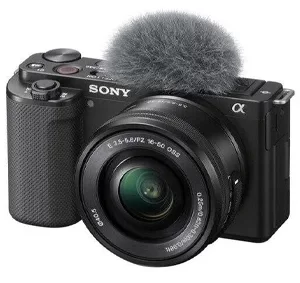
If you just want the short answer: get the DJI Osmo Pocket 3 if you value simplicity and stabilization, the Sony ZV-E10 II if you want a “real camera” you can add lenses to later, or the GoPro HERO13 Black if your footage involves motion, water, or adventure. For a deeper dive into non-video options, see our guide to the best camera for beginners across 5 categories and our best mirrorless cameras for beginners.
Do beginners really need a dedicated video camera?
Modern smartphones shoot excellent 4K video, and for many casual clips your phone is genuinely good enough. So be honest about your goals before spending. That said, a dedicated video camera still offers real advantages once you get serious:
Superior image quality and low light: Larger sensors and lenses optimized for motion capture smoother footage with better color and low-light performance than a phone.
More controls and features: Manual exposure, frame-rate options, time-lapse, WiFi remote control, and proper zoom – capabilities phones only partly replicate.
Better stabilization: Optical stabilization, mechanical gimbals, viewfinders, and hand grips make smooth handheld footage far easier.
Better audio: External mic inputs (or bundled wireless mics, as with the Osmo Pocket 3 Creator Combo and Sony ZV cameras) instantly lift your production quality – and audio is what viewers forgive least.
Future-proofing: 4K/60fps or higher gives you room to crop, stabilize, and slow footage in editing while preserving quality.
Bottom line: if you’re filming a wedding, a YouTube channel, sports, or travel content, a dedicated camera earns its keep. For occasional family clips, your phone plus a cheap gimbal may be all you need.
Compare the 10 video cameras for beginners (2026 status)
Here is the full comparison. We’ve added a 2026 status column so you can instantly see which models are still current and which are discontinued (buy used, or choose the noted successor). Legacy prices below are original launch/street prices and are approximate; verify current pricing before buying.
| Camera | Price | Resolution | Max FPS | Zoom | Sensor | 2026 Status |
|---|---|---|---|---|---|---|
| Canon VIXIA HF R800 | ~$249 | 1080p | 60fps | 57x | 1/4.85” | Discontinued → used only / Canon PowerShot V10 |
| Sony FDR-AX43 | ~$780–950 | 4K | 30fps | 20x | 1/2.5” | Still available (current) |
| Panasonic HC-V180K | ~$262 | 1080p | 60fps | 50x | 1/5.8” | Largely discontinued → limited stock |
| GoPro HERO8 Black | ~$299 | 4K | 60fps | Digital only | 1/2.3” | Discontinued → GoPro HERO13 Black |
| DJI Osmo Pocket (original) | ~$299 | 4K | 60fps | Fixed focus | 1/1.7” | Discontinued → DJI Osmo Pocket 3 |
| Canon VIXIA HF G50 | ~$843 | 4K | 30fps | 15x | 1/2.3” | Discontinued → used / pro camcorders |
| Sony FDR-AX700 | ~$1,439 | 4K | 24/30fps | 12x | 1” | Still findable (premium) |
| Panasonic HC-X1500 | ~$1,699 | 4K | 60fps | 24x | 1/2.3” | Still available (current) |
| Nikon D5600 | ~$869 | 1080p | 60fps | Interchangeable | APS-C | Discontinued → Nikon Z30 / Z50 II |
| JVC GY-HM250 | ~$1,995 | 4K | 60fps | 12x | 1/2.3” | Pro camcorder (still available) |
The 10 video cameras for beginners, reviewed
Now a closer look at each model. Where a camera has been discontinued, we’ve noted its current replacement so you can decide between buying used or going with the newer option.
1. Canon VIXIA HF R800 (Discontinued – used only)
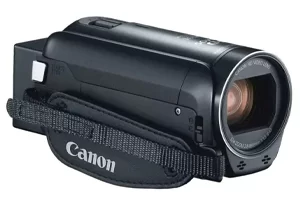
2026 note: Canon has discontinued the VIXIA HF R800 and exited most of its consumer camcorder line. You can still find it used for around US$200–300, but for a similar budget we’d steer beginners toward the newer Canon PowerShot V10 vlogging camera instead.
The VIXIA HF R800 was a favourite for casual home movies, family events, and vacations. It records smooth full HD 1080p at up to 60fps and pairs a lightweight body with a powerful 57x advanced zoom to reach distant action.
Low-light performance is decent thanks to the 1/4.85” CMOS sensor and DIGIC DV4 processor, and the 3” touch panel makes framing easy. If you find one used and only need casual HD footage with lots of reach, it still holds up – just know there’s no 4K and no mic input.
Standout Features:
- 57x Advanced Zoom
- Full HD 60fps
- Dual Recording
- 3” Touch Panel LCD
[su_row][su_column]
Reasons to Buy:
- Extremely easy to use
- Powerful 57x zoom
- Shoots Full HD 1080p at 60fps
- Cheap on the used market
[/su_column][su_column]
Reasons to Avoid:
- Discontinued – no warranty when bought used
- No external mic input
- No 4K; small sensor struggles in low light
[/su_column]
[/su_row]
2. Sony FDR-AX43 (Still current)
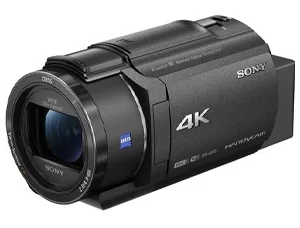
The Sony FDR-AX43 remains one of the few consumer 4K camcorders still on sale in 2026, typically around US$780–950. If you specifically want a traditional camcorder body with a long zoom – for recitals, sports, weddings, or family events – this is the pick.
It captures detailed 4K at 30fps, and the Zeiss Vario-Sonnar 20x optical zoom covers a wide 24mm angle with smooth motorized control. A 273-point phase-detection AF locks onto moving subjects, while 5-axis Balanced Optical SteadyShot delivers steady handheld shots. The 1/2.5” Exmor R sensor handles tricky light well, and WiFi/NFC enable live streaming.
Standout Features:
- 4K 30fps Recording
- Zeiss 20x Optical Zoom
- Phase Detection AF
- 5-axis Balanced Optical SteadyShot
[su_row][su_column]
Reasons to Buy:
- One of the last true 4K camcorders
- Fast, accurate autofocus
- Long, steady optical zoom
- Great for events and family
[/su_column][su_column]
Reasons to Avoid:
- No 4K/60fps mode
- Pricey for the sensor size
- Camcorder form factor is less social-media friendly
[/su_column]
[/su_row]
3. Panasonic HC-V180K (Largely discontinued)
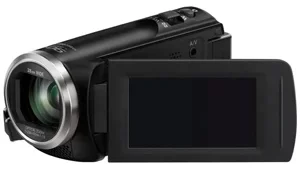
2026 note: Stock of the HC-V180K is drying up as Panasonic winds down budget camcorders. It’s still findable new for around US$260 while supplies last; after that, a used unit or the DJI Osmo Pocket 3 are the sensible alternatives.
For beginners who wanted a budget high-definition camera with huge zoom, the HC-V180K long punched above its price. It shoots full HD 1080p at 60fps and its 50x optical zoom stays sharp across the range, with 5-axis hybrid O.I.S. keeping fully-zoomed footage steady. WiFi allows remote control and easy sharing. It remains a fine value pick for zoom-heavy HD shooting – just no 4K and a small 1/5.8” sensor.
Standout Features:
- Full HD 1080p 60fps
- 50x Optical Zoom
- 5-axis Hybrid O.I.S.
- BSI Sensor
[su_row][su_column]
Reasons to Buy:
- Extreme 50x zoom range
- Shoots 60fps Full HD
- Excellent value while stock lasts
- Beginner-friendly menus
[/su_column][su_column]
Reasons to Avoid:
- Being phased out – limited availability
- No external mic input; no 4K
- Small 1/5.8” sensor
[/su_column]
[/su_row]
4. GoPro HERO8 Black (Discontinued → HERO13 Black)
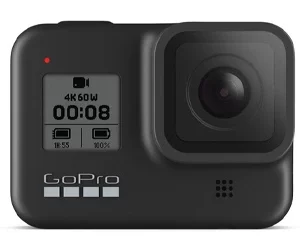
2026 note: The HERO8 is long discontinued. Its current successor is the GoPro HERO13 Black (US$399 / ~RM1,900), which shoots up to 5.3K/60fps with even better HyperSmooth stabilization and swappable HB-series lenses. If you want a GoPro today, buy the HERO13 – the advice below applies to the whole line.
GoPro’s action cameras are the best video cameras for beginners who want immersive point-of-view footage for sports, adventures, and travel. HyperSmooth stabilization delivers gimbal-like smoothness, the pocketable design goes anywhere, and rugged waterproof construction lets you shoot in almost any environment. Beginners will appreciate the touch interface and voice control.
Standout Features:
- Class-leading HyperSmooth Stabilization
- Up to 5.3K/60fps (HERO13)
- Touch Zoom & Voice Control
- Rugged, Waterproof Design
[su_row][su_column]
Reasons to Buy:
- Incredible image stabilization
- Rugged and waterproof
- Immersive high-frame-rate video
- Perfect for unique angles
[/su_column][su_column]
Reasons to Avoid:
- Ultra-wide look isn’t for everything
- Small sensor limits low light
- Menus can overwhelm at first
[/su_column]
[/su_row]
5. DJI Osmo Pocket 3 (Our 2026 top pick)
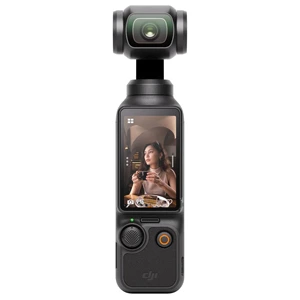
2026 note: This entry has been updated from the original Osmo Pocket to the current DJI Osmo Pocket 3 (about US$599 / ~RM2,800). The big upgrades are a much larger 1-inch sensor, 4K/120fps, a 2” rotatable touchscreen, and full-pixel fast autofocus.
DJI packs cinema-level stabilization into a device that fits in your jeans pocket. The integrated 3-axis mechanical gimbal produces buttery-smooth handheld footage, and the 1-inch sensor captures vivid, clean video with accurate colours – a real step up in low light over the original. Intelligent tracking keeps you or your subject centred, and the Creator Combo bundles a DJI Mic 2 for clean audio. For most beginners who just want great footage without fiddling, this is the easiest recommendation on the list.
Standout Features:
- 3-axis Mechanical Gimbal
- 1-inch CMOS Sensor
- 4K/120fps Video
- Subject Tracking & Rotatable Touchscreen
[su_row][su_column]
Reasons to Buy:
- Best-in-class built-in stabilization
- Big 1-inch sensor in a tiny body
- Effortless for total beginners
- Optional bundled wireless mic
[/su_column][su_column]
Reasons to Avoid:
- No optical zoom
- Small screen; fixed lens
- Battery life is modest for long shoots
[/su_column]
[/su_row]
6. Canon VIXIA HF G50 (Discontinued)
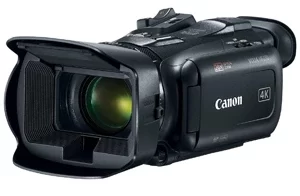
2026 note: The HF G50 has been discontinued and is now scarce. If you need a prosumer 4K camcorder, look at current pro camcorders or, for a beginner budget, the Sony FDR-AX43 above.
Canon’s VIXIA HF G50 shoots detailed 4K thanks to its 1/2.3” CMOS sensor and DIGIC DV 6 processor. The wide-angle 29.3mm lens offers a 15x optical zoom with auto/manual control, and beginners benefit from the streamlined interface, priority AE modes, 5-axis stabilization, and dual SD slots for extended recording. A strong choice for straightforward 4K – if you can find one.
Standout Features:
- 4K Recording
- 15x Optical Zoom Canon Lens
- 5-axis Image Stabilization
- Dual SD Card Slots
[su_row][su_column]
Reasons to Buy:
- Cinematic 4K footage
- Wide-angle 29.3mm Canon lens
- Good low-light capabilities
- Simplified controls for beginners
[/su_column][su_column]
Reasons to Avoid:
- Discontinued and hard to find
- No ND filters
- Only 15x optical zoom
[/su_column]
[/su_row]
7. Sony FDR-AX700 (Still findable, premium)
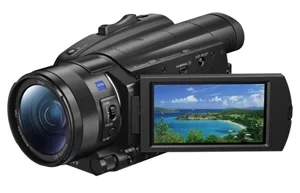
If you want the highest pro-level 4K quality in a camcorder and don’t mind paying a premium, the Sony FDR-AX700 is still on the shortlist. It captures cinematic 4K across a 14.2MP 1” Exmor RS sensor with a refined Zeiss 12x zoom, and its 273-point phase-detection AF tracks subjects quickly. Beginners can grow into the rings, dials, ND filters, and manual controls over time.
Standout Features:
- 1” Exmor RS Sensor
- Zeiss 12x Zoom Lens
- Phase Detection AF with Face Tracking
- Built-in ND Filters
[su_row][su_column]
Reasons to Buy:
- Excellent 4K image quality
- Large 1” sensor for low light
- Lens rings for manual control
- Live streaming capable
[/su_column][su_column]
Reasons to Avoid:
- Very high price for a beginner
- Complex menus and controls
- Heavy for extended handheld use
[/su_column]
[/su_row]
8. Panasonic HC-X1500 (Still current)
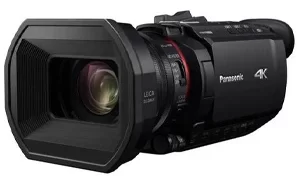
The do-it-all Panasonic HC-X1500 combines 4K/60p recording, twin-camera functionality, and multi-camera live streaming in a familiar camcorder body – useful if you shoot live events. Its 1/2.3” sensor and Venus engine keep noise low, and a 24x optical zoom, 4-mode hybrid O.I.S., and dual SD slots simplify run-and-gun productions. HDMI output lets you mix real-time feeds. Best suited to beginners with live-streaming or multi-cam ambitions rather than casual creators.
Standout Features:
- 4K/60fps + Full HD Twin Recording
- 24x Leica Dicomar Zoom Lens
- Live Multi-Camera Streaming
- Dual SD Card Slots
[su_row][su_column]
Reasons to Buy:
- Twin-recording versatility
- Solid 4K/60fps quality
- Multi-camera production abilities
- Good value for its features
[/su_column][su_column]
Reasons to Avoid:
- No phase-detection autofocus
- Smaller sensor struggles in low light
- Bulky and heavy
[/su_column]
[/su_row]
9. Nikon D5600 (Discontinued → Nikon Z30 / Z50 II)
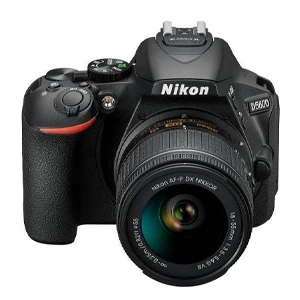
2026 note: Nikon has wound down its consumer DSLR line, and the D5600 is discontinued. For a beginner who wants interchangeable lenses today, Nikon’s mirrorless Z30 (creator-focused, no viewfinder) or Z50 II are the natural successors – both add 4K and modern autofocus.
The D5600 remains a capable hybrid on the used market, combining changeable lenses, a large APS-C sensor, fast autofocus, and full manual controls. It shoots clean full HD 1080p at 60fps with an external mic jack for pro audio and a vari-angle touchscreen. The catch: no 4K, and a DSLR’s bulk and complexity. For video specifically, a modern mirrorless body is the better buy in 2026.
Standout Features:
- Interchangeable Lens Mount
- External Microphone Jack
- 3.2” Vari-Angle Touchscreen
- Full Manual Exposure Controls
[su_row][su_column]
Reasons to Buy:
- Beautiful Full HD 60fps video
- Large APS-C sensor
- Great hybrid for photos and video
- Cheap used with lots of lenses available
[/su_column][su_column]
Reasons to Avoid:
- Discontinued; no 4K
- Bulky DSLR body
- Contrast-only AF in video is dated
[/su_column]
[/su_row]
Also see this model in our roundup of the best DSLR cameras for beginners.
10. JVC GY-HM250 (Pro camcorder, still available)
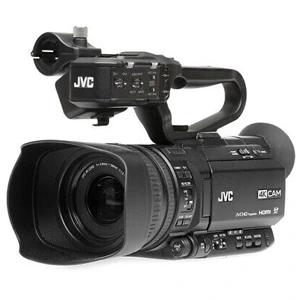
At the high end of this list, the JVC GY-HM250 delivers 4K/60p across a wide-angle 1/2.3” CMOS sensor with 10-bit colour for rich grading, plus a detachable handle with pro XLR audio inputs and an OLED viewfinder with focus peaking. It’s really a professional tool – overkill for casual beginners, but a strong choice for a dedicated newcomer aiming straight at pro-level productions or streaming.
Standout Features:
- 4K/60p Recording
- Integrated 12x Zoom Lens
- 10-bit Colour Depth
- XLR Audio Inputs
[su_row][su_column]
Reasons to Buy:
- Cinematic 4K video quality
- 10-bit colour for advanced grading
- XLR inputs for pro audio
- Excellent focus-assist tools
[/su_column][su_column]
Reasons to Avoid:
- Expensive and complex
- Best suited to advanced users
- Fixed lens lacks versatility
[/su_column]
[/su_row]
How to choose the right beginner video camera
Don’t start with the spec sheet – start with what you’re filming. Work through these questions in order and the right category almost picks itself:
1. What will you film most? Walking-and-talking vlogs point you to a pocket gimbal (Osmo Pocket 3) or compact vlog cam (Canon PowerShot V10, Sony ZV-1 II). Action, sports, or water point to a GoPro. Events, recitals, and anything needing long zoom point to a camcorder (Sony FDR-AX43). Wanting a “proper” camera you’ll grow with points to mirrorless (Sony ZV-E10 II).
2. How much will you carry? Be realistic. The best camera is the one you actually bring. If it won’t fit in a pocket or small bag, many beginners leave it at home. Pocket gimbals and compacts win here.
3. Do you appear on camera alone? Solo creators need a flip-around/front-facing screen and reliable face-tracking autofocus – the Osmo Pocket 3, ZV-1 II, and ZV-E10 II all nail this. A camcorder is harder to self-monitor.
4. How important is audio? Very. Prioritize a camera with a mic input or a bundled wireless mic (the Osmo Pocket 3 Creator Combo and Sony ZV cameras include or support this). Bad audio sinks more beginner videos than any image flaw.
5. What’s your realistic budget? Set a total that includes a memory card, spare battery, and a small tripod or grip – not just the body. These accessories typically add RM150–500.
Worked example: a RM3,000 beginner setup
Say you’re a Malaysian student starting a YouTube channel with about RM3,000 (~US$640) to spend. Here’s how we’d allocate it:
- Camera: DJI Osmo Pocket 3 – ~RM2,800 for the standard kit. It gives you stabilized 4K, face tracking, and a rotatable screen in one pocketable device.
- If you need better audio out of the box: step down slightly and buy the Osmo Pocket 3 in a promotion, or pair a Canon PowerShot V10 (~RM1,800) with a small clip-on wireless mic (~RM400), leaving room for a memory card and tripod.
- Essentials: a fast microSD/SD card (RM80–150), a spare battery or power bank (RM100–200), and a mini tripod or grip (RM60–150).
For that budget, the Osmo Pocket 3 gives the most polished results with the least effort. If you’d rather have a “real camera” you can upgrade with lenses, save toward the Sony ZV-E10 II instead – it costs more but lasts through years of skill growth.
Common beginner mistakes to avoid
A few pitfalls trip up almost every first-time buyer:
Buying a discontinued model at full price. Several cameras still listed online (VIXIA HF R800, HERO8, original Osmo Pocket, D5600) are end-of-life. Buying used can be smart, but don’t pay new-model money for old stock – check our 2026 status column above.
Ignoring audio. Spending everything on the camera and nothing on sound is the classic beginner error. Budget for a mic from day one.
Chasing specs you won’t use. 8K, 10-bit colour, and huge zoom sound impressive but add cost and complexity. Match the camera to your actual content, not the spec sheet.
Forgetting the ecosystem. Storage, batteries, tripods, and lenses add up. A cheaper body with expensive accessories can cost more than a pricier all-in-one.
Over-buying for “someday.” Start with something you’ll enjoy using now. You’ll learn faster on a simple camera you carry everywhere than on a complex one that intimidates you.
Start recording with the best video camera for beginners
After weighing image quality, autofocus, stabilization, audio, ease of use, and value, our overall 2026 pick for most beginners is the DJI Osmo Pocket 3. It delivers stabilized 4K footage, dependable subject tracking, and pocketable convenience for around US$599 (~RM2,800) – the shortest path from “press record” to genuinely good-looking video.
That said, choose the camera that fits your use case. Want to grow into interchangeable lenses? The Sony ZV-E10 II is the best sub-US$1,000 mirrorless option. Filming action or travel? The GoPro HERO13 Black is unbeatable. Shooting recitals and events with long zoom? The Sony FDR-AX43 camcorder still delivers. On a tight budget? The Canon PowerShot V10 is a fuss-free grab-and-go vlogger.
Whichever you pick, the most important thing is to start shooting, experiment with your settings, and have fun learning – that’s what turns a new camera into better videos.
Prices and availability verified July 2026 and can change quickly; always confirm the current price and stock with the retailer or manufacturer before buying. Ringgit figures are approximate conversions for guidance only.
Frequently Asked Questions (FAQs)
Disclaimer: This guide is provided by KayaToday for general informational purposes only and reflects prices and product availability verified in July 2026. It does not constitute purchasing or financial advice. Specifications, pricing, and stock change frequently – always confirm the latest details with the manufacturer or an authorised retailer before making a purchase.