Imagine walking into a clean home where the dishes are washed, the laundry is folded, and the clutter has been cleared away — all by a machine that never gets tired. For years that was pure science fiction. In 2026, it is finally, partly, real: you can now pre-order a full-size home humanoid robot. But the gap between the marketing videos and everyday reality is still wide, and the price tags are eye-watering.
- What is a robot butler, and what can it actually do in 2026?
- How much does a robot butler cost in 2026?
- The Real Robot Butlers You Can Buy or Pre-Order in 2026
- 1X NEO — the first true home humanoid you can reserve
- Tesla Optimus and Figure 03 — promising, but not on sale to you
- Roborock Saros Z70 — the butler you can genuinely buy today
- Earlier Robot Butlers — and What Happened to Them
- 1. Keecker
- 2. Ewaybot MoRo
- 3. Alfie
- How to Choose a Robot Butler in 2026
- Worked example: a Malaysian family with an RM6,000 budget
- Common pitfalls to avoid
- Things To Consider Before Purchasing a Robot Butler
- Reality Check: Are Robot Butlers Worth It Yet?
- Frequently Asked Questions
- Conclusion
A robot butler combines artificial intelligence with smart-home integration to take on household tasks. The big shift this year is that genuine two-legged home helpers — led by the 1X NEO — have moved from concept reels to actual pre-order pages, while the most useful “butler” most people can buy today is still a very clever robot vacuum.
In this guide we break down what a robot butler actually does in 2026, how much you should expect to pay, the real models you can buy or reserve right now, and a simple framework for deciding whether one belongs in your home yet — with notes for readers in Malaysia and Singapore, where humanoids are not shipping locally and a premium robot vacuum is the practical option.
What is a robot butler, and what can it actually do in 2026?
A robot butler is designed to help with a range of household tasks — cleaning, tidying, carrying, monitoring, even a little entertainment. Unlike a single-purpose gadget such as a robotic arm on a factory line, a butler is meant to multitask and adapt to your home using cameras, microphones, sensors and voice control.
In practice, “robot butler” in 2026 covers three very different things:
- Single-task helpers — robot vacuums and mops that clean floors autonomously. Reliable, affordable and genuinely useful today.
- Advanced task robots — a new breed of robot vacuum with a mechanical arm that can pick small objects off the floor, blurring the line between “vacuum” and “helper”.
- Home humanoids — full-size two-legged robots like the 1X NEO that aim to do open-ended chores. These have arrived, but with major caveats on price and autonomy.
The most important thing to understand this year is autonomy. The headline humanoids are not fully self-driving. The 1X NEO, for example, handles routine tasks on its own but leans on a human operator wearing a VR headset — teleoperating the robot remotely — for anything complex. 1X estimates NEO is only around 60–70% autonomous in 2026. So the “robot that does everything by itself” is still a work in progress.
How much does a robot butler cost in 2026?
Price still depends heavily on capability, and the range is enormous — from a couple of hundred dollars for a floor cleaner to six figures for a research-grade humanoid. Here is how the market breaks down this year, with approximate Malaysian ringgit conversions (rates and local pricing vary, so treat RM figures as estimates):
| Tier | What it does | Typical price (USD) | Approx. RM |
|---|---|---|---|
| Single-task helper (robot vacuum/mop) | Cleans floors autonomously; LiDAR mapping on mid-range models | ~$150 – $1,500 | ~RM650 – RM6,300 |
| Advanced task robot (vacuum with arm) | Cleans and picks up small objects like socks | ~$1,300 – $2,600 | ~RM5,500 – RM11,000 |
| Home humanoid (e.g. 1X NEO) | Full-size helper for open-ended chores (part-teleoperated) | $20,000 outright, or ~$499/month | ~RM84,000, or ~RM2,100/mo |
| Research / enterprise humanoid | Lab, factory and pilot deployments; not sold to consumers | ~$50,000 – $100,000+ | ~RM210,000 – RM420,000+ |
The takeaway: the more a robot can do — and the more it moves like a person — the steeper the price. A basic floor cleaner is an easy purchase; a humanoid butler is a serious, early-adopter investment. Prices above were verified in August 2026 and change frequently.
The Real Robot Butlers You Can Buy or Pre-Order in 2026
This is where the story has changed most since a couple of years ago. Instead of a handful of niche gadgets, the 2026 shortlist is dominated by serious humanoid programmes plus one genuinely clever cleaner you can actually buy today.
| Model | Type | Price | Availability (2026) | Best for |
|---|---|---|---|---|
| Roborock Saros Z70 | Robot vacuum + mop with mechanical arm | ~$1,299 – $2,599 | On sale now (incl. Malaysia) | Real, buy-today floor help |
| 1X NEO | Home humanoid (part-teleoperated) | $20,000 or ~$499/mo | Pre-order; US & Canada deliveries from H2 2026 | Early adopters in North America |
| Tesla Optimus | Humanoid | Target $20,000 – $30,000 | No consumer pre-orders; internal use only | Watch-and-wait |
| Figure 03 | Humanoid | Home model floated at ~$600/mo | Enterprise only; home use in alpha | Not yet a consumer buy |
| Budget robot vacuum | Single-task cleaner | Under ~$300 | Widely available | Most households, today |
1X NEO — the first true home humanoid you can reserve
The 1X NEO is the closest thing to the classic “robot butler” dream. It stands about 5 ft 6 in (168 cm), weighs roughly 30 kg, has a soft body and dexterous 22-degree-of-freedom hands, and is built specifically for messy, unstructured homes. Pre-orders opened in late 2025 at $20,000 outright or $499 a month (with a $200 refundable deposit), and 1X says the first deliveries begin in the US and Canada in the second half of 2026.
The catch is big enough that you should read it twice: for anything beyond simple routines, NEO is guided by a remote human operator wearing a VR headset who can see into your home to complete “Expert Mode” tasks. 1X adds privacy protections — you can set no-go zones, blur people from the operator’s view, operators need your approval to take control, and all operators are background-checked — but a camera-equipped, sometimes-human-controlled robot in your living room is a genuine privacy trade-off worth thinking through, much like the concerns around any connected device (see our guide to IoT cybersecurity). As of mid-2026, independent, verified customer deliveries had not yet appeared, so treat launch timing with healthy caution.
Tesla Optimus and Figure 03 — promising, but not on sale to you
Tesla’s Optimus is the most talked-about humanoid, with a long-term price target of $20,000–$30,000. But there are no consumer pre-orders or waitlists; V3 production was targeted to start in summer 2026, and every unit so far is used internally at Tesla. First outside sales are aimed at enterprise customers, with consumer availability unlikely before the end of 2027 at the earliest. Our Tesla Bot review digs into whether it lives up to the hype.
Figure’s Figure 03 is similar: impressive demos, real enterprise deployments, but no public list price and only internal “alpha” home testing. CEO Brett Adcock has floated a future home subscription around $600 a month, while the six-figure numbers circulating online are unverified. For now, neither is something an ordinary household can actually buy.
Roborock Saros Z70 — the butler you can genuinely buy today
If you want a robot that does a physical “butler” chore beyond vacuuming — right now — the Roborock Saros Z70 is it. It is the first mainstream robot vacuum and mop with a five-axis OmniGrip mechanical arm that can pick up socks, small toys and light clutter and drop them in a bin, paired with strong 22,000Pa suction and a slim 3.14-inch body. It launched at $2,599 but has been selling for around $1,299 in 2026, and it is listed on Roborock’s Malaysia store.
Manage expectations: reviewers put the arm’s pick-up success rate at roughly 50%, so it is more clever proof-of-concept than tireless maid. But as an actual, available product that cleans well and occasionally tidies, it is the most “butler-like” purchase most people can make this year. To understand the mechanics behind that arm, see our explainer on the types of robotic arm.
Worth a mention: Samsung’s long-teased Ballie home robot has been delayed repeatedly and, by early 2026, was described more as an internal research platform than a shipping product — a reminder that home-robot timelines slip often.
Earlier Robot Butlers — and What Happened to Them
It is worth remembering how we got here, because a few of the “robot butlers” featured in older buying guides are no longer something you should try to purchase. Their stories are a useful warning about how young and unstable this market still is.
1. Keecker
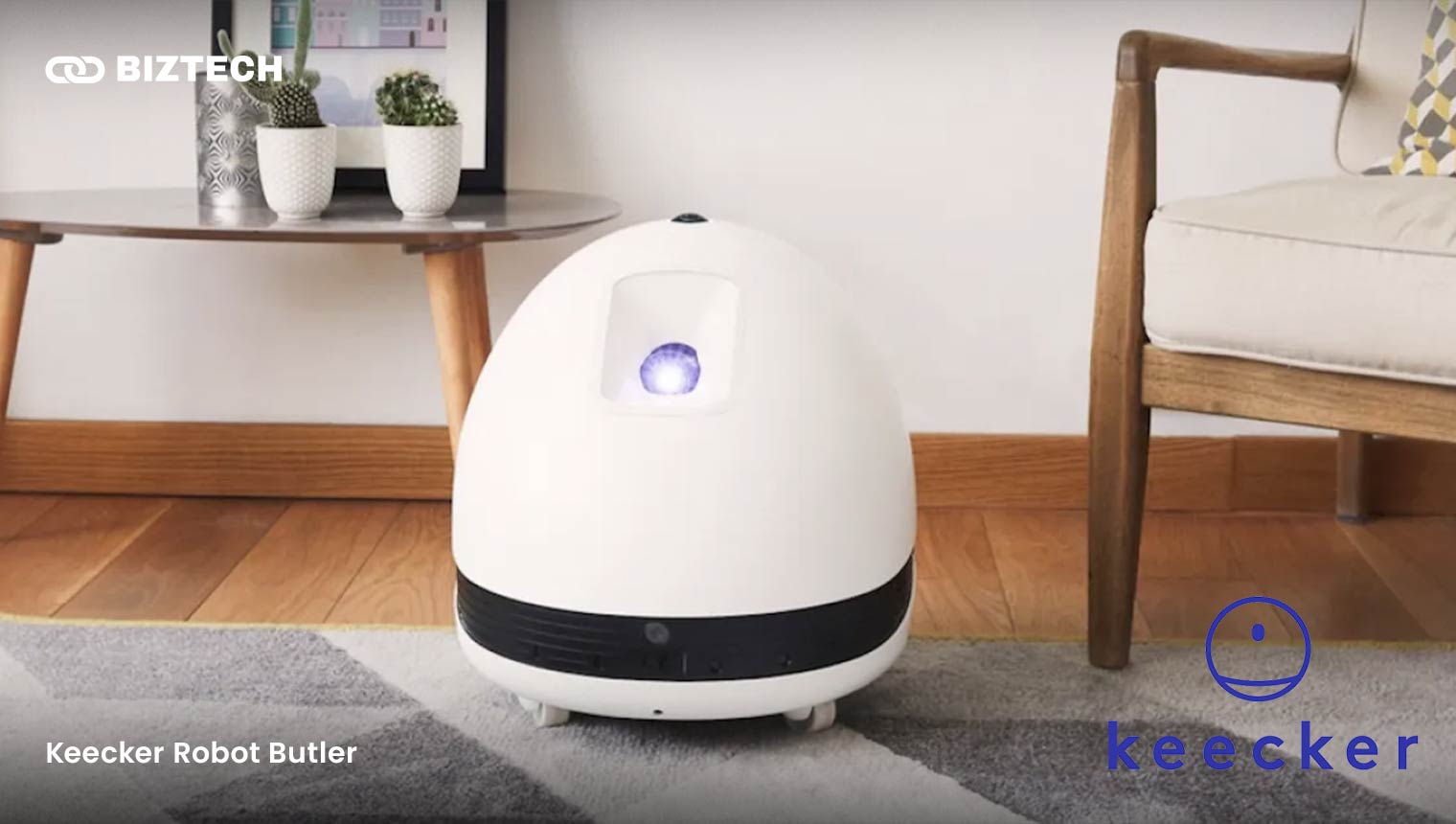
Keecker was a mobile home-entertainment robot — essentially a roving video projector with a 360-degree sound system that could move room to room. It was charming, but its French maker shut down and went into liquidation, so Keecker is no longer available to buy or support. If you see it recommended in an old list, skip it — this is exactly the kind of stranded product to avoid.
2. Ewaybot MoRo
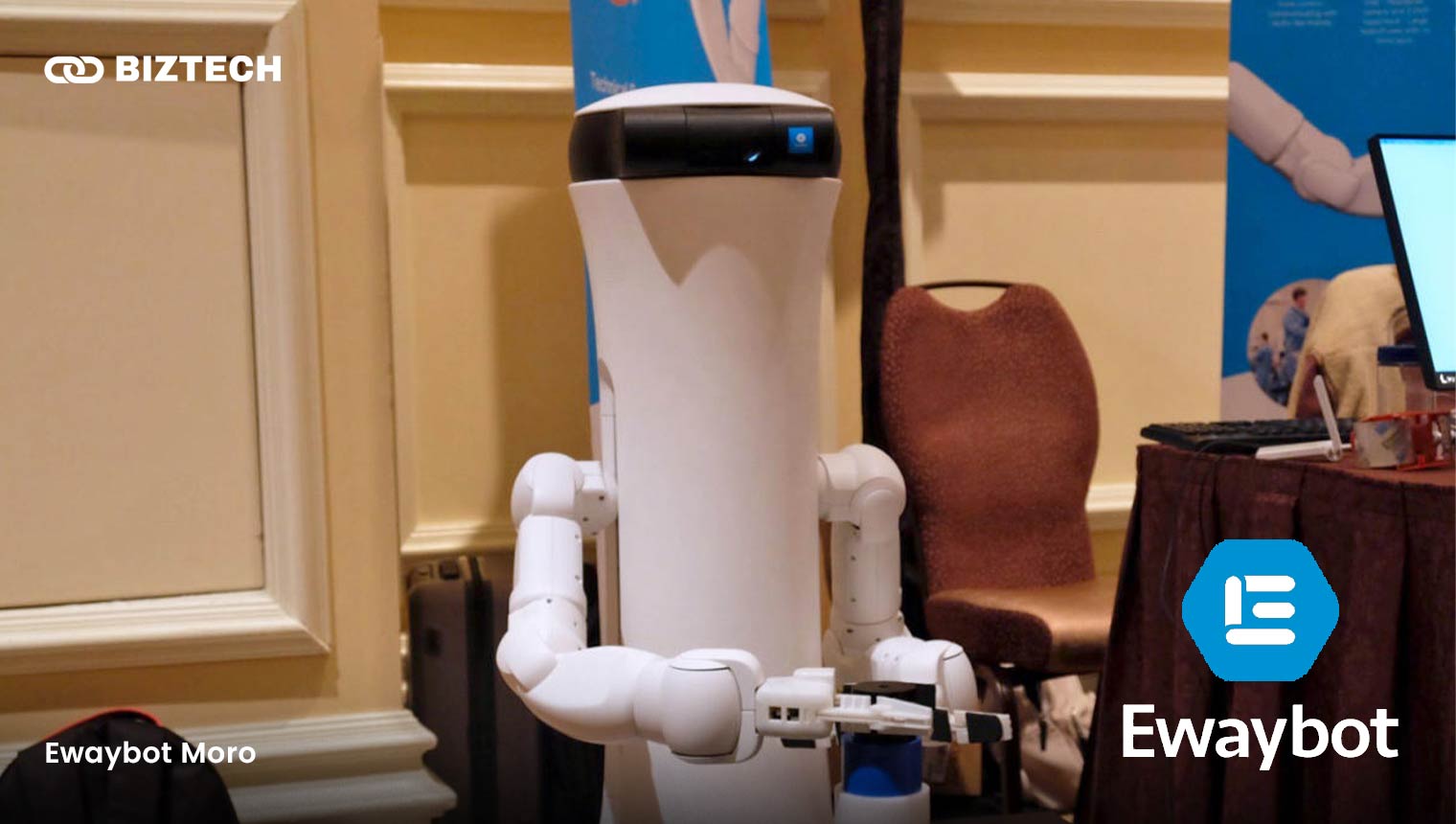
MoRo was an ambitious wheeled robot with an arm and an Intel RealSense “face”, pitched at around $30,000. In reality it was aimed at labs and universities rather than living rooms, and it never became a mainstream consumer home butler. It is best understood as an early research platform, not a product you would equip your house with today.
3. Alfie
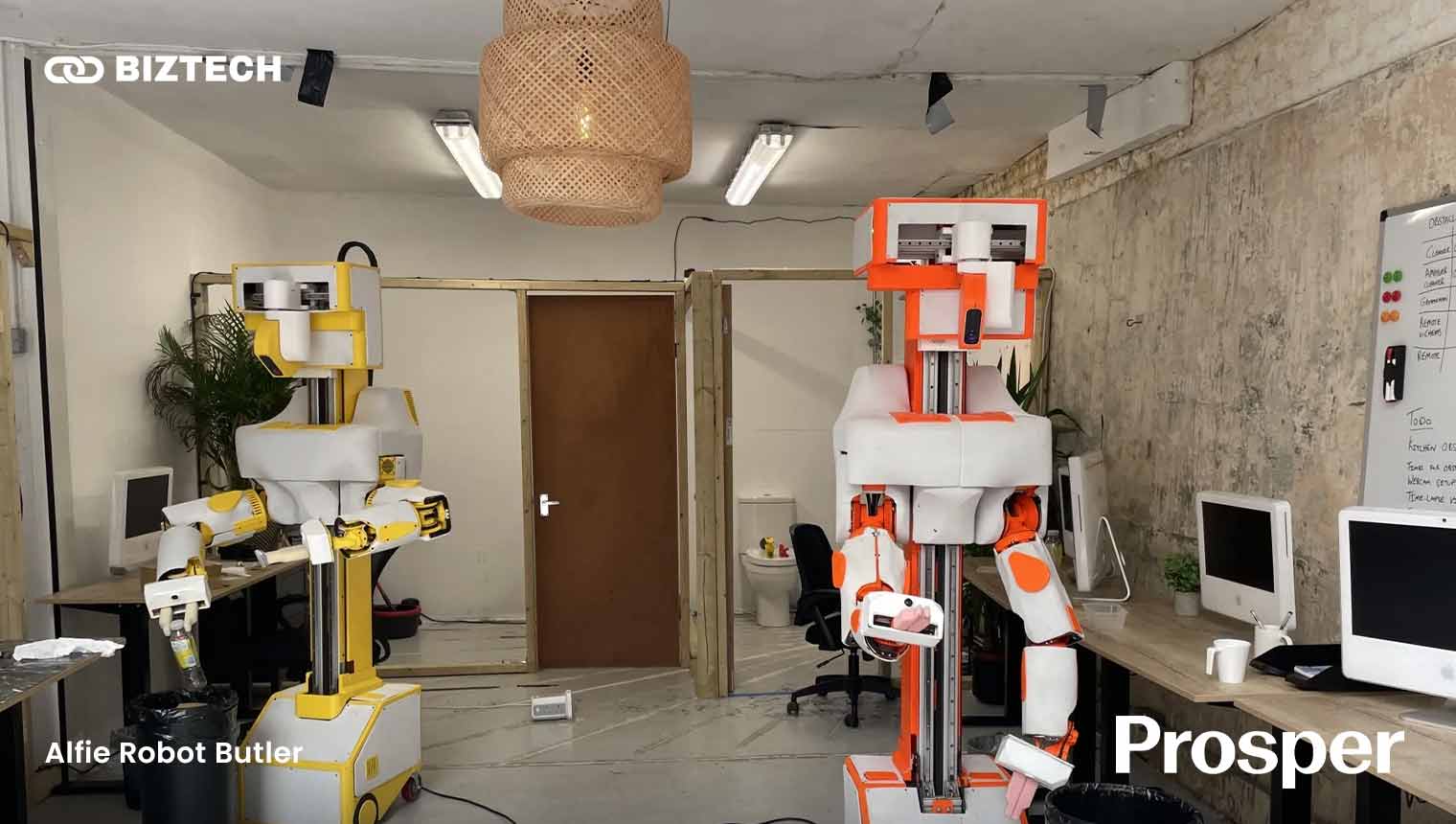
Alfie was an early voice-controlled personal-assistant robot concept with LiDAR navigation and smart-home hooks. Like many first-wave home robots, it never reached wide availability. The lesson from all three: in a market this new, a promising demo is not the same as a product you can rely on for years — always check that the company and its support are still around before you buy.
How to Choose a Robot Butler in 2026
Because “robot butler” spans a $150 vacuum and a $20,000 humanoid, choosing well is really about matching the machine to the job. Here is a simple framework:
- 1. Define the actual chore. Be specific. “Keep my floors clean” points to a robot vacuum. “Tidy stray clutter” points to an arm-equipped model like the Saros Z70. “Do open-ended household tasks” points to a humanoid — and a very different budget.
- 2. Match the machine to the job. Don’t buy more robot than the task needs. A humanoid is overkill (and unproven) if what you really want is clean floors.
- 3. Set a realistic budget. Include accessories, dock refills, and — for humanoids — subscription fees. A $499/month robot is ~RM2,100 every month, not a one-off cost.
- 4. Check integration and privacy. Decide whether you need smart-home/voice control, and get comfortable with cameras and, for teleoperated robots, the idea of a remote human helper. Configure no-go zones and blurring where offered.
- 5. Be honest about autonomy. The headline humanoids are only partly self-driving in 2026. If you expect a fully independent maid, you will be disappointed; if you expect an evolving assistant, you will be happier.
- 6. Confirm local availability and support. In Malaysia and Singapore, humanoids like NEO are not shipping yet. A robot vacuum from a brand with local service is the sensible choice.
Worked example: a Malaysian family with an RM6,000 budget
Say a family in Kuala Lumpur wants “a robot that keeps the house tidy” and can spend up to about RM6,000. A humanoid is out of reach and not sold locally, so the realistic shortlist is floor-cleaning robots. For most of that budget, a strong mid-range robot vacuum-and-mop with LiDAR mapping and a self-emptying dock (well under RM3,000) does 90% of the everyday work. If the family specifically wants the “picks up socks” trick, the Roborock Saros Z70 stretches the budget but is the only buy-today option that attempts it. The smart move for most households: spend less on a proven cleaner, and revisit humanoids in a year or two once prices fall and autonomy improves.
Common pitfalls to avoid
- Believing the demo reels. Marketing videos are often teleoperated or staged. Look for independent reviews and verified deliveries.
- Ignoring the subscription. A low monthly figure adds up fast over a few years and may exceed the outright price.
- Overlooking privacy. Camera-equipped and teleoperated robots see inside your home — set boundaries before you power one on.
- Buying orphaned products. As Keecker showed, a shut-down company means no updates, parts or support.
- Expecting full autonomy. In 2026 that does not exist for open-ended home chores. Buy for what the robot does today, not what the roadmap promises.
Things To Consider Before Purchasing a Robot Butler
Beyond the framework above, a few practical checks before you commit:
- Assess your real needs. Many “butlers” only do one thing well. Match capabilities to the chores that actually bother you.
- How much can you spend — including running costs? Prices climb quickly, and subscriptions and consumables matter as much as the sticker price.
- Do you need smart-home integration? Voice and app control are handy if you already own smart devices, and largely irrelevant if you don’t.
- Support and warranty. Favour brands with a local presence in Malaysia or Singapore so repairs and spares are realistic.
- Privacy and data. Understand what the robot records, where data goes, and who — human or algorithm — can control it.
Reality Check: Are Robot Butlers Worth It Yet?
The dream of a tireless mechanical helper is closer than ever, but the honest 2026 verdict is “not quite, for most people.” The affordable robots do one job; the do-everything humanoids are expensive, region-limited and still partly driven by humans behind a headset.
That scepticism has a long pedigree. As Olivia Solon of Wired put it, many of these machines are “lovely and costly toys — as opposed to viable butlers, nurses, or companions. Our expectations are, frankly, too great.” Years on, the caveat still fits: the technology is advancing fast, but a fully autonomous home butler for everyone is not here yet.
The practical advice hasn’t changed much: invest in the robots that are genuinely good today. A quality robot vacuum — increasingly one that can also nudge clutter out of the way — will save you real time now, for a fraction of a humanoid’s price. Keep an eye on NEO, Optimus and Figure, and let the early adopters iron out the wrinkles.
Frequently Asked Questions
Conclusion
Robot butlers are no longer pure fantasy. In 2026 you can pre-order a full-size home humanoid, buy a vacuum that tidies as well as cleans, and watch heavyweight programmes from Tesla and Figure inch toward the living room. But the honest picture is one of early days: the truly useful robots still do narrow jobs, and the do-everything humanoids are costly, region-limited and only partly autonomous.
For most households — especially in Malaysia and Singapore — the smart play is to buy the robot that already earns its keep today, a good robot vacuum, and keep watching the humanoid race. The butler of your dreams is coming; it just isn’t quite ready to answer the door yet.
Read also: Tesla Bot Review: Is it Worth The Hype?
Prices, specifications and availability in this guide were verified in August 2026 from sources including The Robot Report and Engadget. This is a fast-moving category — always confirm the latest price and availability with the manufacturer or an authorised local retailer before buying.
Disclaimer: This article is provided by KayaToday for general information only and is not financial or purchasing advice. KayaToday does not sell robots and earns no commission on the products mentioned. Ringgit figures are approximate conversions and will vary by retailer, import duties and exchange rates.