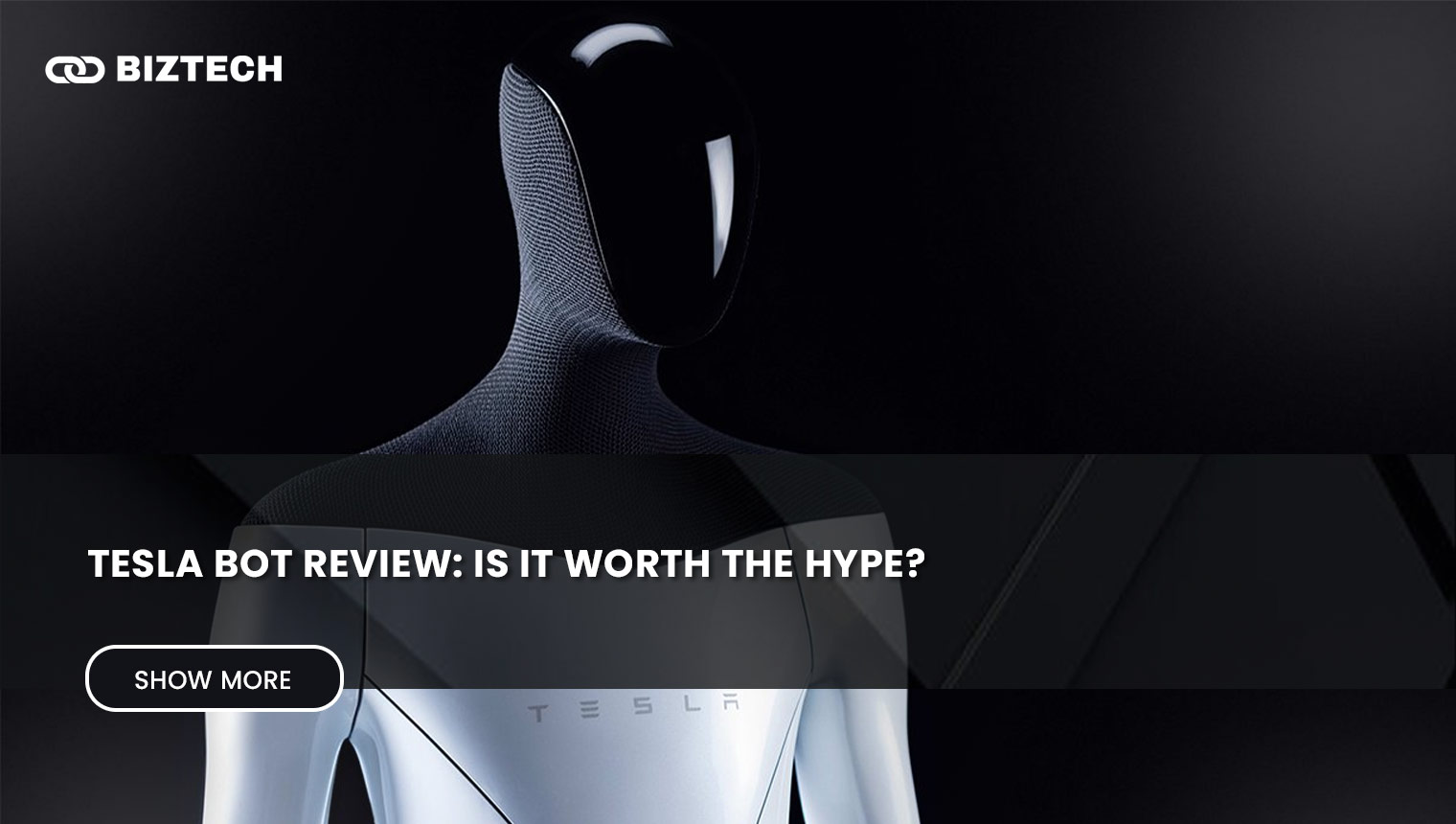
Tesla’s cars have been all the buzz for years now. But did you know about their robot? Chances are, a headline on social media or Google led you to this review of Tesla’s humanoid, Optimus.
- What is the Tesla Bot?
- Feature 1: Tesla’s Self-Driving AI, Applied to a Body
- Feature 2: Humanoid Design and Dexterous Hands
- Feature 3: Safety-First Operation
- Purpose and Applications of the Tesla Bot
- How Does the Tesla Bot Work?
- How Does the Tesla Bot Compare to Its Competitors?
- Is a Humanoid Robot Worth It? A Simple Decision Framework
- Tesla Bot Benefits Across Industries
- Manufacturing & Logistics
- Healthcare & Eldercare
- Retail
- Cons and Concerns About the Tesla Bot
- Tesla Bot Price: What Will It Cost?
- Opinions on the Tesla Bot
- Conclusion: Is It Worth the Hype?
- FAQ
Tesla Bot is Elon Musk’s attempt to build a general-purpose humanoid robot — a machine designed to take mundane, repetitive, and dangerous tasks off our hands so people can focus on creative work instead. Musk has called it “the biggest product ever,” and Wall Street now assigns a large chunk of Tesla’s valuation to it.
But hype and reality are two different things. As of mid-2026, Optimus still is not doing meaningful commercial work, its next-generation design keeps slipping, and rival robots are already inside factories doing real jobs. So the question stands: is the Tesla Bot worth the hype? This review examines its capabilities, current status, competitors, price, and — most importantly — how to decide whether a humanoid robot is actually something you or your business should wait for.
What is the Tesla Bot?
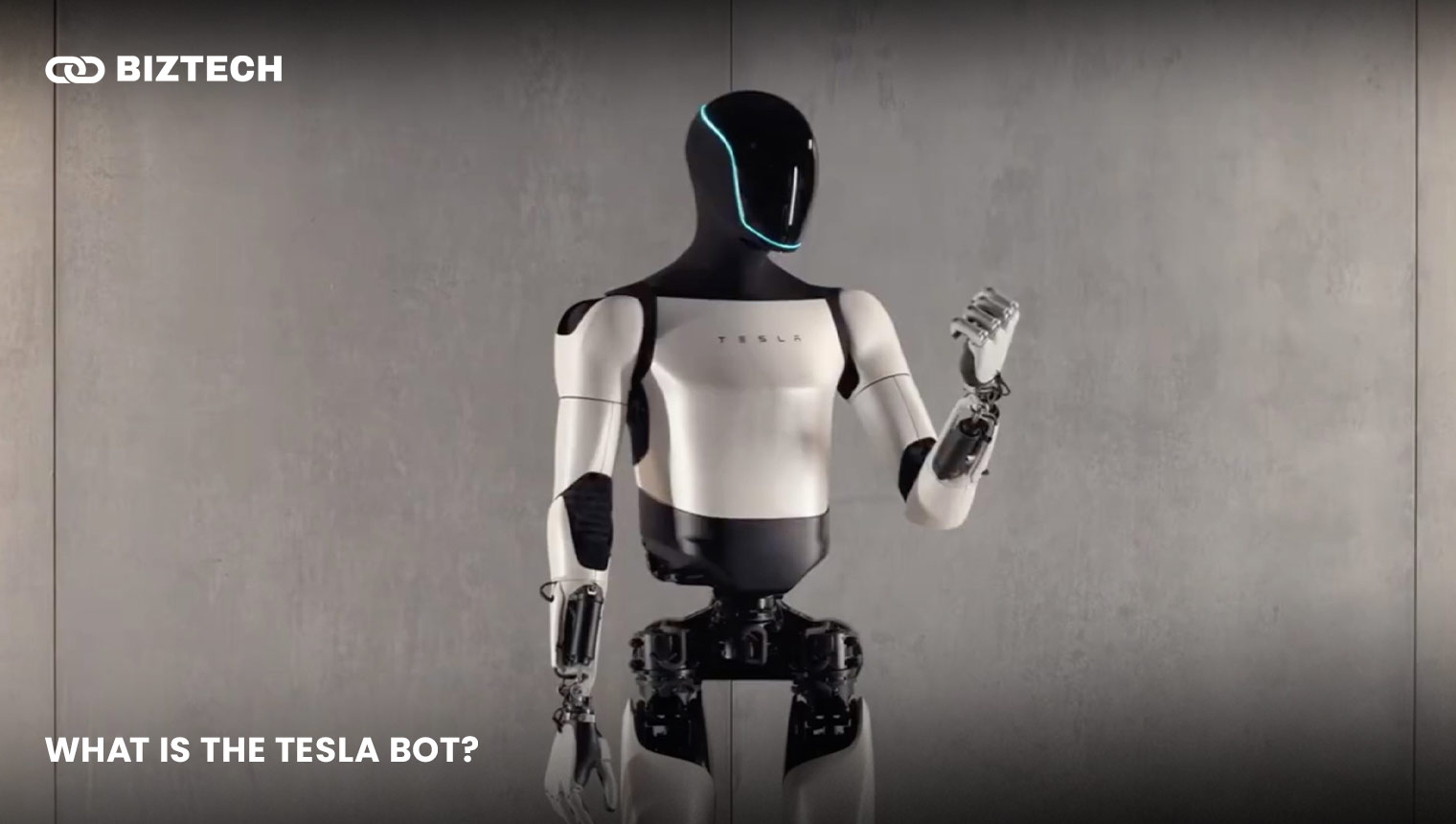
The Tesla Bot, officially called Optimus (detailed on Tesla’s official AI & robotics page), is a humanoid robot built to closely mimic human form and movement. It stands roughly 173 cm tall and weighs about 57 kg — deliberately human-sized so it can operate in spaces and use tools designed for people.
The current-generation hardware carries a payload of up to around 20 kg and walks at roughly 8 km/h. Its most recent iterations use dexterous 22-degrees-of-freedom hands, Tesla’s in-house AI5 inference chip, and Grok-powered voice interaction. The robot is aimed at tasks that are dangerous, dull, or repetitive — work that does not need human creativity.
One important reality check for 2026: the widely anticipated Gen 3 (V3) redesign had not been publicly revealed as of July 2026. The reveal slipped from early 2026 to “mid-year” and then again, largely because Tesla struggled to finalise the dexterous hand system. So while Optimus looks impressive in demos, the version you can actually buy does not exist yet.
Let’s look at its headline features and capabilities.
Feature 1: Tesla’s Self-Driving AI, Applied to a Body
Optimus runs on the same lineage of AI that powers Tesla’s Autopilot and Full Self-Driving. It uses cameras and a neural network to study its environment, process data in real time, and make decisions without step-by-step programming.
In theory, this lets it adapt to new tasks quickly — locating items in a warehouse, navigating narrow aisles, or sorting parts. Tesla’s big bet is that the enormous fleet-driving data pipeline it built for cars gives Optimus a training advantage no other robot company has. The catch is that, in practice, this general capability is still being trained rather than deployed for productive work.
Feature 2: Humanoid Design and Dexterous Hands
The humanoid form means Optimus can, in principle, use the same doors, stairs, and tools we do. The hardest and most valuable part is the hands: the latest design targets 22 degrees of freedom so the robot can grip, fold, and manipulate delicate objects the way a person would. Tesla has repeatedly said the hand and forearm assembly is the single biggest engineering bottleneck — which is exactly why the Gen 3 reveal keeps getting pushed back.
Feature 3: Safety-First Operation
Optimus is engineered to move slowly and predictably around people, with built-in safeguards and manual override. The idea is a “friendly” machine that can share a factory floor — carrying boxes, for example — without endangering nearby workers. As with any early robot, though, real-world safety at scale is still unproven.
Purpose and Applications of the Tesla Bot
Optimus is meant to perform tasks that are too dangerous, dull, or repetitive for humans — lifting and moving boxes, assembling components, or acting as a household helper. Musk’s stated vision is to curb labour shortages, boost efficiency, and cut costs. “The costs of products and services will decline dramatically,” he has claimed.
Longer term, Tesla imagines Optimus handling caregiving, emergency response, and other complex jobs as its AI improves. It is worth being clear-eyed here: as of Tesla’s Q2 2026 earnings call, the first Optimus units being built are earmarked for training data collection and further development, not customer deployment. If you want to see what a purpose-built industrial robot already does today, our guide to robotic arm technology and the different types of robotic arm is a useful reality check.
How Does the Tesla Bot Work?
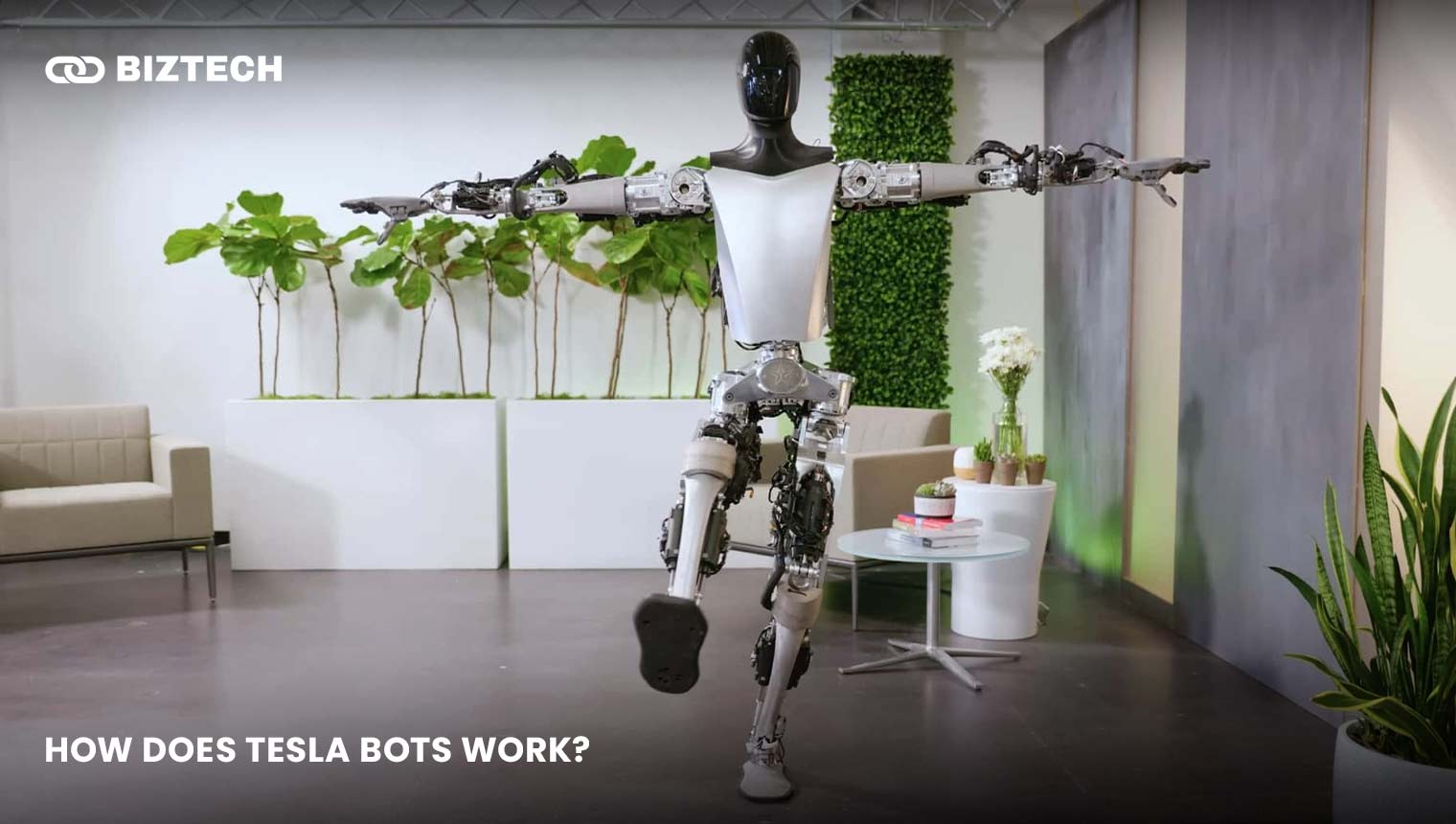
Optimus perceives the world through cameras that feed into a neural network — a system that loosely emulates the way our brains process visual information. The network interprets what the cameras see and decides what the robot should do next.
The humanoid body then executes those decisions: walking, bending, balancing, and grasping. Because the system relies on machine learning rather than hard-coded instructions, Tesla’s goal is for the robot to improve over time and generalise to new tasks. That is also the hardest part of the problem — Musk himself called Optimus “the hardest product to scale manufacturing that we’ve ever made,” because nearly every component is new.
How Does the Tesla Bot Compare to Its Competitors?
When this review first published, the obvious comparison was Boston Dynamics’ four-legged “Spot.” The 2026 landscape is very different: there is now a genuine humanoid race. The most relevant rivals are Boston Dynamics’ electric Atlas, Figure (02/03), and China’s Unitree G1. Here is how they stack up in 2026.
| Feature | Tesla Optimus | Figure (02/03) | Boston Dynamics Atlas | Unitree G1 |
| Type | Humanoid, general-purpose | Humanoid, industrial | Humanoid (electric), industrial | Humanoid, compact/entry-level |
| Real-world use (2026) | Internal training only; no useful work yet | Deployed at BMW and Amazon sites | Commercial production; allocated to Hyundai & Google DeepMind | Shipping commercially to researchers & developers |
| Est. price | $20,000–$30,000 target (not yet for sale) | $100,000+ (estimated) | $140,000–$150,000 (est; not for public sale) | ~$16,000–$23,000 |
| Availability | Consumer ~2027–2029 (no pre-orders) | Enterprise pilots | Enterprise only | Available now |
The takeaway: Tesla has the boldest price target and arguably the deepest AI-training pipeline, but in 2026 it is behind Figure and Atlas on real deployment, and Unitree is the only humanoid an ordinary buyer can actually get today. (Prices and availability move fast — always confirm current figures on each maker’s official page.)
Is a Humanoid Robot Worth It? A Simple Decision Framework
Because you cannot actually buy an Optimus yet, the more useful question is: should you wait for one, buy a rival, or stick with a proven tool? Run through these questions before getting swept up in the hype:
- Is your task repetitive and well-defined, or unpredictable? For a fixed, repetitive job (welding, pick-and-place), a purpose-built robotic arm is cheaper, faster, and available today. A humanoid only makes sense where the task genuinely needs a human-shaped body moving through human spaces.
- How soon do you need it? If the answer is “this year,” Optimus is not the option — it has no consumer availability and near-zero commercial deployment in 2026.
- What is your budget and payback period? A $20,000–$30,000 price is a target, not today’s reality. Compare the honest total cost (hardware, support, downtime) against the labour it would replace.
- Can you tolerate first-generation risk? Early robots break, need updates, and raise data-privacy and safety questions. If a failure would halt your operations, wait for a proven track record.
Worked example. Say a small Malaysian warehouse wants to automate moving 15 kg boxes between two stations. A humanoid at a hypothetical $25,000 sounds appealing — but it does not exist to buy, and even Unitree’s available humanoid is not built for that payload. A fixed conveyor plus a robotic arm, costing far less and available now, solves the same problem today. The lesson: match the tool to the task, and treat “a humanoid can do anything” marketing with caution.
Tesla Bot Benefits Across Industries
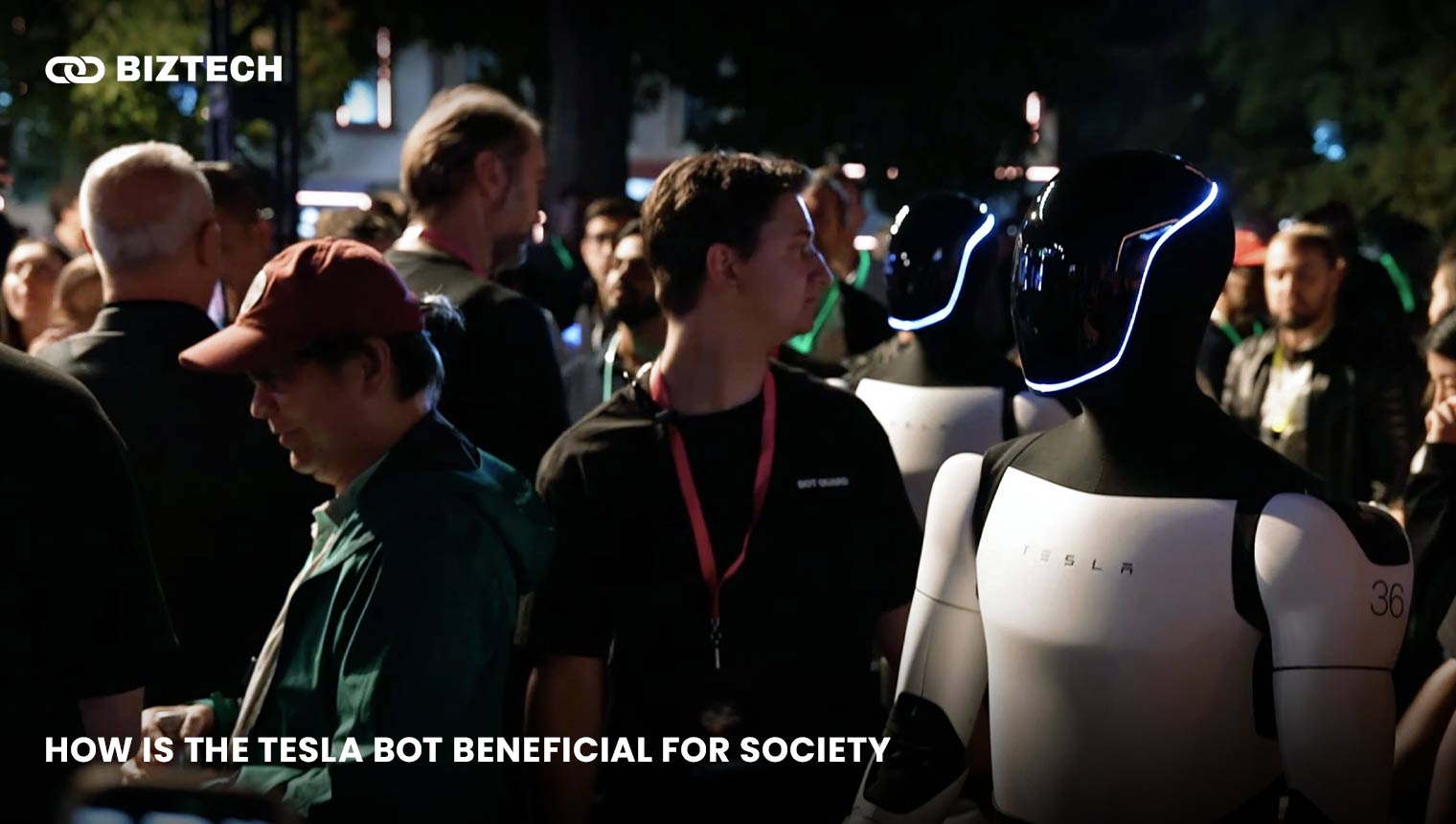
Assuming Tesla delivers, here are the industries a general-purpose humanoid could reshape:
Manufacturing & Logistics
Repetitive assembly and warehouse transport are the obvious first markets — robots can, in theory, run around the clock. This is exactly where Figure and Atlas are already piloting, which tells you where Optimus will have to prove itself first.
Healthcare & Eldercare
With aging populations worldwide, a humanoid could deliver medications or assist people with mobility issues. This is a long-term, high-sensitivity application that will demand heavy regulation before it is realistic.
Retail
A humanoid could guide customers, answer basic questions, or handle simple checkout tasks. Again, promising in principle — but well behind the current industrial focus.
Cons and Concerns About the Tesla Bot
Not every innovation story is rosy. Alongside the enthusiasts sit plenty of skeptics, and the concerns are real:
- Repeated delays: The Gen 3 reveal slipped through 2026, and Musk himself calls this the hardest product Tesla has ever tried to manufacture. Timelines have a history of slipping further.
- No proven “useful work” yet: As of the Q2 2026 earnings call, Optimus units are for training data, not paying customers — while rivals are already inside real factories.
- Job displacement: Automation boosts efficiency but reduces demand for human labour, a genuine social concern.
- High real-world cost: The “affordable” $20K–$30K figure is a future target; early units will cost far more, if you can get one at all.
- Reliability, safety, and data privacy: A camera-driven robot in your home or workplace raises the same questions we cover in our guide to IoT cybersecurity — who holds the data, and how is it secured?
Tesla Bot Price: What Will It Cost?
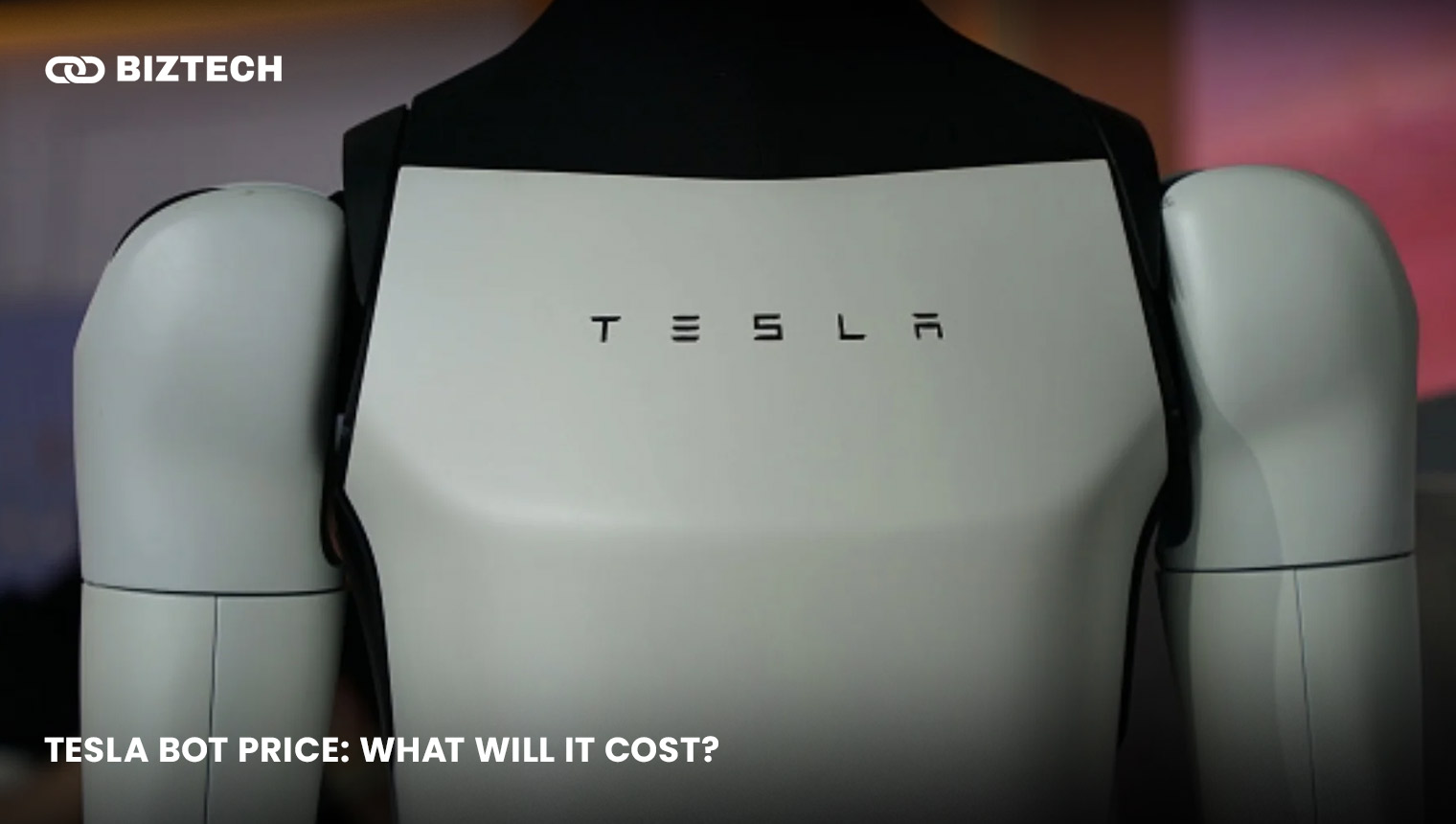
Musk has repeatedly said Optimus should eventually be affordable — his long-term consumer target is $20,000 to $30,000 per unit, and he has suggested it could ultimately cost “less than a car.” That price only becomes possible once production is scaled to high volume.
For context, rival humanoids are far pricier today: Figure is estimated at over $100,000 and Boston Dynamics’ Atlas at roughly $140,000–$150,000 (and not for public sale). The one exception is Unitree’s G1 at roughly $16,000–$23,000 — the most accessible humanoid on the market. Crucially, as of July 2026 there are no public Optimus sales, pre-orders, or waitlists, and consumer availability is realistically 2027 at the earliest, with 2028–2029 the more common analyst estimate.
Opinions on the Tesla Bot
What a time to be alive, right? The idea of capable robots easing daily life is genuinely exciting, especially given how fast AI is advancing. As a piece of engineering ambition, Optimus is remarkable, and Tesla’s data-training approach is unlike anyone else’s.
That said, healthy caution is warranted. On its Q2 2026 earnings call, Tesla acknowledged its robots are not yet doing useful work and that scaling manufacturing will be brutally hard. Analysts such as Forrester’s Paul Miller have noted these robots “have a wow factor, but may not have the best form factor” for industry’s dull, dirty, and dangerous tasks — a fixed machine often does the job better and cheaper.
So the open questions remain: Can Tesla hit its timelines after repeated slips? Can it reach the “affordable” price at scale? And can it answer the ethical and data-privacy concerns before robots enter our homes? For now, the excitement is justified — but so is patience.
Read also: Do You Need to Buy A Robot Butler To Help with Your House Chores?
Conclusion: Is It Worth the Hype?
The Tesla Bot represents a real leap toward general-purpose humanoid robots, and Tesla’s engineering and AI credentials make it a serious contender for the long haul. If any company can eventually make a capable humanoid affordable, Tesla is a plausible candidate.
But in 2026 the honest verdict is: impressive vision, unproven product. Optimus is not yet doing useful work, its next-gen design keeps slipping, rivals are already deployed in factories, and you cannot buy one. If you need automation today, a purpose-built tool or an available humanoid like Unitree’s G1 is the pragmatic choice. If you are simply excited about the future — that excitement is well placed, as long as you keep expectations grounded in what Tesla has actually delivered so far.
Figures verified July 2026 from Tesla’s Q2 2026 earnings commentary and reputable robotics coverage. Specs, prices, and timelines for early-stage robots change quickly — always confirm the latest details on the manufacturer’s official channels before making a decision.
Disclaimer: This review is provided by KayaToday for general information only and does not constitute purchasing, financial, or professional advice. KayaToday is not affiliated with Tesla. Do your own research before making any buying decision.