Starting an online business in Malaysia has never been more accessible. The country’s digital economy is booming: information, communication technology and e-commerce together made up 23.4% of GDP (RM451.3 billion) in 2024, and total e-commerce income reached a record RM1.29 trillion that year (Department of Statistics Malaysia). With internet penetration near 98% and more than 35 million connected Malaysians, a laptop and a good idea are often all you need to begin. Whether you want a home-based side hustle or a full-scale e-commerce brand, this guide walks you through every essential step in 2026 — from choosing a structure and registering with SSM, to staying legally compliant, setting up payments, and marketing your store.
- Why More Malaysians Are Starting Online Businesses
- A Permanent Digital Shift
- Low Startup Costs & Flexible Models
- Local Success Stories
- Best Online Business Models in Malaysia
- E-Commerce (Product-Based)
- Service-Based Online Businesses
- Digital Content & Info Products
- Emerging Online Business Opportunities in Malaysia
- Online Tuition and Coaching
- Sustainable and Eco-Friendly Products
- Smart Home and IoT Devices
- AI-Enabled Services and Tools
- Subscription Boxes and Curated Products
- Step-by-Step Guide to Registering an Online Business in Malaysia
- Step 1 — Decide on Your Business Structure
- Step 2 — Prepare Your Business Details
- Step 3 — Register Online via SSM ezBiz
- Step 4 — Collect Your Business Certificate
- Legal Requirements for Online Businesses (2026)
- Business Registration and Licensing
- New: Consumer Protection (Electronic Trade Transactions) Regulations 2024
- Electronic Commerce Act 2006
- Taxes, E-Invoicing, and SST
- Consumer Protection and Data Privacy
- Setting Up Your Online Business Infrastructure
- Website and E-Commerce Platforms
- Social Media Storefronts
- Delivery and Fulfilment
- Getting Paid: Payments & Banking
- Payment Gateways
- Business Bank Accounts
- Promoting Your Online Business
- Organic Marketing Tactics
- Paid Advertising
- Building Customer Loyalty
- Digital Marketing Trends to Leverage in 2026
- Social Commerce Dominance
- AI-Powered Automation
- Personalised, Mobile-First Experiences
- Sustainability Messaging
- Omnichannel Integration
- Government Support and Resources for Online Entrepreneurs
- Grants and Financing
- Digital Upskilling and Training
- Support for Women and Youth Entrepreneurs
- How to Choose the Right Setup: A 4-Question Framework
- A Realistic Lean Launch Budget
- Emerging Trends and Insights for 2026
- E-Commerce Keeps Growing
- Seamless, Hybrid Commerce
- Inspiring Malaysian Entrepreneurs to Learn From
- Final Thoughts: Build Smart, Stay Legal, and Grow Fast
- Frequently Asked Questions
- Useful Resources
Why More Malaysians Are Starting Online Businesses
A Permanent Digital Shift
The pandemic accelerated digital adoption, but the habit has stuck. Malaysians now shop, bank, and transact online as a default — 95.3% of establishments had internet access in 2024, and B2C e-commerce alone was worth RM336.6 billion in the first nine months of 2025. For entrepreneurs, that means a large, ready audience already comfortable buying from small independent sellers.
Low Startup Costs & Flexible Models
One of the biggest advantages of an online business is the low barrier to entry. Unlike a physical shop, you don’t need premises or heavy capital. Dropshipping and print-on-demand let you sell without holding inventory, so you can start part-time from home for well under RM1,000 and scale only when demand is proven. If you are still weighing what to sell, our roundup of small business ideas in Malaysia is a useful starting point.
Local Success Stories
Plenty of Malaysians have turned online stores into serious brands on Shopee, Lazada, TikTok Shop, Instagram, and Facebook. Freelancers offering design, writing, and digital marketing have scaled into agencies. These stories show the ceiling is high — and that starting small is completely normal.
Best Online Business Models in Malaysia
There is no single “right” model — the best choice depends on your budget, the time you can commit, and whether you want to sell products, services, or knowledge. Here is a quick at-a-glance comparison of the most common models in 2026:
| Business Model | Upfront Cost | Effort Level | Best For |
|---|---|---|---|
| Marketplace selling (Shopee, Lazada, TikTok Shop) | Low | Medium | Physical products with existing demand |
| Dropshipping / Print-on-Demand | Very low | Medium | Testing products with no inventory risk |
| Service / freelance | Very low | High (time-based) | Skilled individuals (design, writing, VA, accounting) |
| Digital products & courses | Low–Medium | High upfront, passive later | Experts and creators |
| Subscription boxes | Medium–High | High (fulfilment-heavy) | Niche communities and repeat buyers |
E-Commerce (Product-Based)
Selling physical products is still the most popular route. You can list on Shopee, Lazada, or TikTok Shop; use dropshipping or print-on-demand to avoid holding stock; or resell imported and local products. Marketplaces give you instant traffic, while your own store (via Shopify or WooCommerce) gives you control over branding and customer data.
Service-Based Online Businesses
Digital services are in high demand and need almost no capital: freelance design, copywriting, bookkeeping, coaching, online tutoring, and virtual assistance. If you have a skill, you can be earning within days rather than months.
Digital Content & Info Products
If you have expertise or a creative streak, sell online courses, eBooks, templates, or stock media, or monetise a YouTube channel, blog, or TikTok account through ads and sponsorships. These carry low overheads and can generate income long after they are created.
Emerging Online Business Opportunities in Malaysia
Malaysia’s digital economy is evolving fast, opening fresh niches beyond traditional retail. Several ideas are gaining real traction in 2026:
Online Tuition and Coaching
Demand for online education remains strong. If you can teach English, mathematics, coding, music, or a professional skill, tuition and coaching scale well over Zoom or Google Meet, reaching students nationwide from a single desk.
Sustainable and Eco-Friendly Products
Malaysian shoppers are increasingly sustainability-minded. Reusable household items, biodegradable packaging, and organic personal-care products tap a growing, values-driven segment.
Smart Home and IoT Devices
As tech adoption rises, smart-home gadgets — security cameras, smart lighting, and connected devices — are among the fastest-growing e-commerce categories for tech-savvy Malaysians.
AI-Enabled Services and Tools
The AI boom has created a market for practical services: AI-assisted content, chatbot setup, prompt libraries, and automation consulting for small businesses. Low overheads, high perceived value, and rising demand make this a standout 2026 opportunity.
Subscription Boxes and Curated Products
Subscription models for niches like snacks, beauty, or hobby kits build customer loyalty and recurring revenue. Curate something genuinely unique and the repeat-purchase economics can be excellent.
Each niche rewards proper market research — validate demand before you invest heavily.
Step-by-Step Guide to Registering an Online Business in Malaysia
Registering a business is a legal requirement under the Registration of Businesses Act 1956 (for sole proprietorships and partnerships). Skipping it exposes you to fines and makes it harder to open a business bank account or get approved for payment gateways. For a company (Sdn Bhd) route, see our full walkthrough on how to register a company in Malaysia.
Step 1 — Decide on Your Business Structure
Most solo entrepreneurs start as a Sole Proprietorship because it is simple and cheap. Partnering with others? A Partnership follows the same process. Planning to scale, raise capital, or protect personal assets? Choose a Private Limited Company (Sdn Bhd). Note: only Malaysian citizens and permanent residents can register a sole proprietorship or partnership — foreigners must incorporate a Sdn Bhd. Compare the options at a glance:
| Structure | Who Can Register | SSM Cost | Liability | Tax Treatment |
|---|---|---|---|---|
| Sole Proprietorship | MY citizens / PR only | RM30 (personal name) or RM60 (trade name) per year | Unlimited (personal) | Personal income tax (0–30%) |
| Partnership | MY citizens / PR (2–20 partners) | RM60 per year | Unlimited (shared) | Each partner taxed personally |
| Private Limited (Sdn Bhd) | Locals & foreigners | RM1,000 + RM50 name search (MyCoID) | Limited to shares | Tiered SME corporate tax 15% / 17% / 24% |
Unsure which entity fits? Our guide to choosing the right business entity breaks down the trade-offs in detail.
Step 2 — Prepare Your Business Details
- Choose a business name and check availability on the SSM ezBiz portal (ezbiz.ssm.com.my).
- Pick your business activity code (MSIC) — e.g. online retail, content creation, or freelance services.
- Have your MyKad (IC), phone number, email, and business address ready.
Step 3 — Register Online via SSM ezBiz
- Go to ezbiz.ssm.com.my and sign up using your NRIC and full name as per MyKad.
- Complete identity verification — SSM now offers a video-call check (an officer verifies your MyKad over WhatsApp).
- Under My Business Services > New Business Registration, fill in your business name, activity, and address, then submit.
- Pay online: RM30/year for a personal name or RM60/year for a trade name (plus RM5 per branch, and RM30 for trade-name approval if applicable).
Step 4 — Collect Your Business Certificate
Approval is fast — often within one hour to one working day. Download your SSM e-Certificate; you will need it to open a business bank account and to apply for many platforms, payment gateways, and grants. Remember: renewal is annual (same fee), and letting it lapse can trigger penalties.
[su_note note_color=”#ffffff” text_color=”#000000″ radius=”10″]Pro Tip: Once your business name is approved, secure the matching .com.my or .my domain straight away. It strengthens your branding, improves trust, and helps customers find you online.[/su_note]
Legal Requirements for Online Businesses (2026)
Business Registration and Licensing
Registering with the Companies Commission of Malaysia (SSM) is mandatory. If you sell regulated products — food, cosmetics, health supplements, or medical devices — you may need extra approvals from bodies such as the National Pharmaceutical Regulatory Agency (NPRA) or the Medical Device Authority (MDA). See our overview of the business licenses you may need in Malaysia.
New: Consumer Protection (Electronic Trade Transactions) Regulations 2024
This is the update most 2026 guides miss. The Consumer Protection (Electronic Trade Transactions) Regulations 2024 came into force on 25 December 2024, replacing the older 2012 rules. If you sell through a website or online marketplace, you must clearly display:
- Your name (or business/company name) and your SSM business registration number;
- Your contact details — address, email, and telephone number;
- Accurate product descriptions, pricing, and clear terms; and
- A record of transactions (marketplace operators have added record-keeping duties).
In short: transparency is now a legal obligation, not just good practice. Make sure your storefront and product pages show who you are and how to reach you.
Electronic Commerce Act 2006
The Electronic Commerce Act legally recognises electronic contracts and digital signatures, so your online sales, terms, and agreements are valid and enforceable.
Taxes, E-Invoicing, and SST
- Income tax: Register with the Inland Revenue Board (LHDN) and declare your business income. Sole proprietors and partners are taxed at personal rates; a Sdn Bhd pays the tiered SME corporate rate.
- E-invoicing (MyInvois): Contrary to older advice, e-invoicing is not blanket-mandatory for small sellers. On 6 December 2025 the Government raised the exemption threshold to RM1 million in annual turnover — businesses below that are exempt (though voluntary adoption is encouraged). Mandatory e-invoicing for businesses with turnover of RM1 million to RM5 million now begins 1 January 2027, with a penalty-free relaxation period extended to 31 December 2027.
- Sales & Service Tax (SST): Following the SST expansion on 1 July 2025, you generally register for service tax once taxable turnover crosses RM500,000 (higher thresholds apply to some categories). Most small online sellers won’t hit this immediately — but plan for it as you grow. See our full breakdown of Sales and Service Tax (SST) in Malaysia.
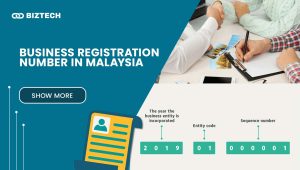
Displaying your registration number ties directly into the tax system too — if you’re unsure how it works, read our quick guide to your business registration number.
Consumer Protection and Data Privacy
Follow guidelines from the Ministry of Domestic Trade and Cost of Living (KPDN), including clear refund, delivery, and privacy policies. If you collect customer data, you must also comply with the Personal Data Protection Act (PDPA).
Setting Up Your Online Business Infrastructure
Website and E-Commerce Platforms
- Build your own store with Shopify, EasyStore, or WordPress WooCommerce.
- List on marketplaces such as Shopee, Lazada, or TikTok Shop for instant reach.
- Integrate local payment gateways (see below) that support DuitNow QR, FPX online banking, Touch ‘n Go eWallet, and Boost, alongside global options like Stripe and PayPal.
Social Media Storefronts
- Use TikTok, Instagram, and WhatsApp Business to showcase products and engage customers directly.
- Tools like Linktree or Beacons consolidate your links into one shoppable bio.
Delivery and Fulfilment
Partner with reliable couriers such as Ninja Van, J&T Express, Flash Express, Lalamove, or Pos Laju, and invest in tidy packing and branding. Shipping cost is one of the biggest levers on your margins — our guide to e-commerce logistics in Malaysia compares courier rates and shows how to keep delivery costs low.
Getting Paid: Payments & Banking
Payment Gateways
The right gateway makes checkout smooth and builds trust. Here are the leading options for Malaysian online businesses in 2026:
| Payment Gateway | Features | Best For |
|---|---|---|
| iPay88 | Wide local coverage — FPX, DuitNow QR, e-wallets, cards; fraud tools; recurring billing | Established MY businesses wanting broad local reach |
| Fiuu (formerly Razer Merchant Services / MOLPay) | FPX, Touch ‘n Go, Boost, GrabPay, BNPL, cards | SMEs & startups wanting local e-wallet + BNPL |
| Billplz | Simple FPX & DuitNow billing, quick setup, low fixed cost | Micro-sellers, freelancers, associations |
| SenangPay | Flat pricing, social-selling payment links, recurring billing | Social-commerce and small sellers |
| Stripe | Global cards, subscriptions, developer-friendly APIs | Cross-border sales and digital products |
| PayPal | Global recognition, buyer protection | Freelancers and international customers |
Business Bank Accounts
Keep personal and business money separate by opening a dedicated business account — it simplifies bookkeeping and tax. Popular SME options include Maybank SME First, CIMB Business, and MAE Biz. If you need working capital to grow, compare the best SME loans in Malaysia.
Promoting Your Online Business
Organic Marketing Tactics
- Create engaging Instagram Reels and TikTok videos — short-form video is the top discovery channel.
- Build community and run promotions through WhatsApp groups and broadcast lists.
- Collaborate with local micro-influencers for authentic, affordable reach.
Paid Advertising
- Facebook and Instagram Ads offer precise audience targeting.
- Shopee Ads and TikTok boosting lift visibility right where people buy.
Building Customer Loyalty
- Start collecting emails and phone numbers early — you own that channel.
- Share genuinely useful, shareable content to stay top of mind.
- Deliver standout customer service to earn repeat orders and referrals.
Digital Marketing Trends to Leverage in 2026
To compete in Malaysia’s crowded online market, apply the trends shaping 2026:
Social Commerce Dominance
TikTok Shop and live-selling continue to drive discovery, with a large share of Malaysians finding new brands through social media. Pair influencer collaborations with short-form video and live streams to convert browsers into buyers.
AI-Powered Automation
Use AI tools to draft content, schedule social posts, and run chatbots for instant customer support. Automation frees your time and keeps response times fast — a real edge for solo founders.
Personalised, Mobile-First Experiences
With smartphone use near-universal, a fast, mobile-friendly store is non-negotiable. Use data and segmentation to send tailored offers and product recommendations that lift conversion.
Sustainability Messaging
Many Malaysian consumers weigh sustainability in their choices. Communicate eco-friendly practices honestly to build trust and loyalty — but avoid greenwashing.
Omnichannel Integration
Shoppers mix online and offline. Smooth transitions between your store, social channels, and any physical touchpoints improve satisfaction and repeat purchases.
Government Support and Resources for Online Entrepreneurs
Grants and Financing
Malaysia offers several grants and micro-financing schemes for SMEs and micro-entrepreneurs:
- TEKUN Nasional: Microcredit financing (typically RM1,000–RM10,000) with flexible repayment — ideal for small online businesses needing working capital or equipment.
- BSN Micro Financing: Bank Simpanan Nasional schemes for micro and small businesses, with minimal collateral, supporting working capital and expansion.
- SME digitalisation support: Government-backed grants have long subsidised the cost of adopting e-commerce, digital marketing, and accounting tools — check the current SME Corp and MDEC programmes for the latest matching-grant amounts.
For a broader view of financing routes, see our guide to the best SME loans in Malaysia.
Digital Upskilling and Training
- Malaysia Digital Economy Corporation (MDEC): Free and subsidised programmes covering social media marketing, e-commerce, SEO, and data analytics.
- HRD Corp: Subsidised training for Malaysian SMEs on digital marketing, customer engagement, and online business management.
- Marketplace academies: Shopee and TikTok run free seller training and webinars — from store setup and listing to ads and customer service.
Support for Women and Youth Entrepreneurs
Inclusive initiatives help women and young founders get started — offering mentorship, networking, and funding. Programmes have included the Women Entrepreneur initiatives and youth business schemes (such as Program Belia Niaga) for Malaysians aged 18–30, alongside beginner seller training from major marketplaces. Availability changes year to year, so confirm current intakes with the relevant agency.
How to Choose the Right Setup: A 4-Question Framework
Feeling overwhelmed? Answer these four questions and your path becomes clear:
| Ask Yourself | If Yes… |
|---|---|
| Are you a MY citizen/PR testing a small, low-risk idea? | Start as a Sole Proprietorship (RM30–60/year) |
| Starting with co-founders but staying lean? | Register a Partnership |
| Planning to scale, raise capital, hire, or limit liability? | Incorporate a Sdn Bhd |
| Are you a foreigner? | Sdn Bhd only — sole prop/partnership aren’t available to you |
A Realistic Lean Launch Budget
You can start leaner than most people think. A rough first-month budget for a marketplace seller:
- SSM registration: RM30–60
- .my domain (optional but recommended): ~RM60–100/year
- Branding/logo: RM0–300 (free design tools work fine to start)
- Initial inventory: RM500–2,000 — or RM0 with dropshipping/POD
- Payment gateway: usually no/low setup, ~1.5–2.5% + a small fee per transaction
- Starter ads (optional): RM300–500
Skip inventory and ads at first and you can realistically launch for under RM1,000 — proving demand before you commit more. For tax-efficient ways to reinvest profits as you grow, see our tips on reducing company income tax in Malaysia.
Emerging Trends and Insights for 2026
E-Commerce Keeps Growing
Malaysia’s e-commerce income hit a record RM1.29 trillion in 2024, and revenue rose 1.9% to RM937.5 billion in the first nine months of 2025. The market is maturing rather than slowing — meaning more competition, but also more buyers and better infrastructure than ever.
Seamless, Hybrid Commerce
Consumers expect a smooth experience across online and offline channels — researching online before buying in-store, or vice versa. Brands that invest in live streaming, fast shipping, and joined-up inventory will have the edge.
Inspiring Malaysian Entrepreneurs to Learn From
- Henry Ting built TTRacing into a leading ergonomic gaming-chair brand serving over a million users across Asia, the US, and Australia.
- Bryan Loo grew Tealive past 1,000 stores across more than a dozen countries after early setbacks.
- Eric Cheng turned Carsome into Southeast Asia’s largest used-car platform and Malaysia’s first unicorn, most recently valued at around US$1.7 billion.
- Grab Malaysia’s leadership has championed inclusive digital business models that bring more Malaysians into the online economy.
Their journeys share three threads: solve a real problem, stay resilient, and use digital platforms to scale fast.
Final Thoughts: Build Smart, Stay Legal, and Grow Fast
Starting an online business in Malaysia is about more than launching a website. Success comes from a solid legal foundation, the right digital tools, and consistent marketing. Register early, keep your finances (and records) organised, stay compliant with the 2024 e-commerce and tax rules, and tap the government programmes built to support digital entrepreneurs. With the right mindset and persistence, your online business can thrive in 2026 and well beyond.
Frequently Asked Questions
Useful Resources
- SSM ezBiz Portal — register and renew your business online
- LHDN MyTax / MyInvois — income tax and e-invoicing
- Malaysia Digital Economy Corporation (MDEC) — digital upskilling and grants
- Shopee University & TikTok Shop Academy — free seller training
Information verified in August 2026. Rules, fees, and thresholds change — always confirm the latest details with SSM, LHDN, and the relevant agency before acting. This guide is provided by KayaToday for general information only and is not legal, tax, or financial advice.